LM-79 Moving Detector Goniophotometer (Mirror Type C)
LSG-6000
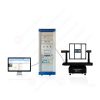
High Precision Rotation Luminaire Goniophotometer
LSG-1890B
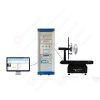
High Precision Rotation Luminaire Goniospectroradiometer
LSG-1890BCCD

Goniophotometer for Automotive and Signal Lamps
LSG-1950
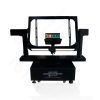
Goniophotometer for Traffic Signal Lamps
LSG-1950S
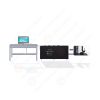
Compact Goniophotometer
LSG-1200A
Near Field Moving Detector Goniophotometer
LSG-1900B
 LEDs and Luminaire Test Solutions
 LM-79 and LM-80 Test Solutions
 LED Driver Test Solutions
 Household Appliances Test Solutions
 Mobile and Network Test Solutions
 Automotive Electronics Test Solutions
 Audio-Video and IT Test Solutions
 Cable and Wire Test Solutions
 Plugs and Sockets Test Solutions
 Power Switch Test Solutions
 Transformer Test Solutions
 Electric Toys Test Solutions
 Energy Meter Test Solutions
 Motor-Operated Tool Test Solutions
Select an organization
to browse standards
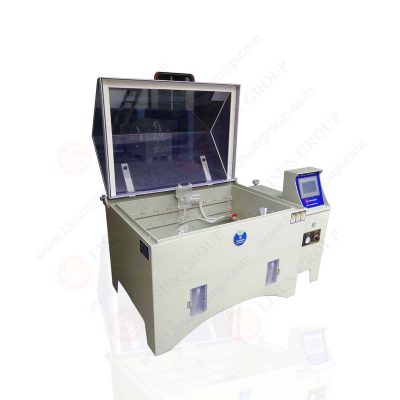
Corrosion is considered to be one of the most intractable problems of the manufacturers of the metal components, coating, electronic enclosures as well as industrial hardware. When subjected to moisture, salt, changes of temperature, and other elements in the atmosphere, the materials become weak, and the image quality may be failed as time goes by, and they might completely end up in a structural failure. By looking at the resistance to corrosion before the product goes to the market is what is necessary in industries which require long term usage. Salt spray chambers offer a laboratory procedure that would offer a strong foundation of controlled and highly accelerated measures of assessing corrosion performance under standardized conditions within ASTM B117.
Such chambers are a recreation of one of the most hostile conditions in the laboratory testing: a constantly fogging salt-laden atmosphere. With the materials being subjected to this controlled fog, the engineers are able to determine the behavior of the coatings, metals, layers of plating, fasteners, and protective treatments over a span of time. The test has certain significance to marine equipment, automotive hardware, construction components, and industrial machinery that frequently experience corrosive environment.
ASTM B117 is one of the earliest and most used standards in the world in relation to corrosion tests. It gives specific requirements in the preparation of salt solutions, chamber temperature, e, and specimen position. The aim of the standard is not to mimic actual conditions of the natural environment corrosion but is rather to provide a consistent and controlled environment to speed up the corrosion process to be compared.
ASTM B117 salt spray chambers have been found useful to test products but mainly:
• Surface integrity
• Adhesion strength
• Plating quality
• Immunity of metals to corrosive assault.
• Timely awareness of coating faults
The findings assist manufacturers to compare the formulations, determine weak stages and determine whether the protective procedures are up to the expectations in the industry.
Distribution is done in a salt spray chamber whereby fine spray of sodium chloride solution is created with atomizing nozzles. Mist is produced within a closed testing enclosure to maintain a constant temperature usually around 35°C. Mog density, mixture concentration and air pressure are all strictly controlled.
Samples are put in corrosion resistant racks inside the chamber and they are all subjected to even exposure all around. Smog circulation ensures that salt is deposited continuously on the specimen surface that breaks down protective layers faster.
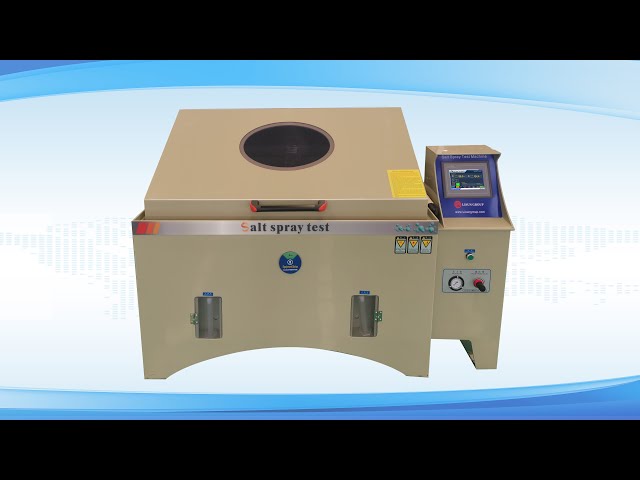
Modern chambers include:
• Digital temperature controllers
• Automatic water replenishment systems and salt replenishment systems.
• Interior corrosion resistant.
• Precision atomizers
• Crystalline lids that can be seen through.
• Safety protection systems
Laboratories that operate with solutions of a reputable producer in the market of salt spray chambers like LISUN enjoy consistent distribution of the mist, proper control of temperature as well as long term durability.
The salt spray testing is therefore effective when the standardized conditions are followed to the letter.
• Temperature: Standard 35°C fog exposure
• Fog deposition rate: 1 to 2 mL / hour on 80 cm² collection surface
• Air pressure: Maintained because it is constantly needed to atomize
• Specimen angle: The average is between 15 and 30 degrees
Salt spray chambers find extensive application in the industries which require much reliance on resistant corrosion.
Automotive components
A constant exposure of automotive components to salted roads in winters, humidity, and temperature is carried out by brackets, fasteners, suspension components, brake components, and exterior trims. Salt spray testing assists in checking the resistance of coating and the metals.
Marine hardware
Among the corrosive environments in the world is the marine environment. Boat fittings, anchors, ship components and stainless-steel structures need outstandingly high levels of resilience to corrosion. The long-term performance of metal treatments is detected by salt fog testing.
Construction materials
Outdoor lights, fences, galvanized steel, roof facade and structural metal and metals have to endure the long exposure of moisture and salt-contaminated air, primarily in coastal settings.
Metal finishing and coating industries
Salt spray tests are conducted on electroplated parts, powder coated parts, anodized surfaces, and chrome plated parts to determine whether their protective layers are of quality.
Table: Typical salt spray test durations
The reference table of the commonly used exposure durations of various materials is illustrated below.
| Material or Coating Type | Common Exposure Duration | Purpose |
| Zinc plated steel | 48 to 96 hours | Evaluates white rust formation |
| Powder coated metals | 250 to 500 hours | Checks coating adhesion |
| Anodized aluminum | 336 to 720 hours | Tests surface breakdown |
| Stainless steel | 500 to 1000 hours | Confirms resistance to pitting |
| Marine grade alloys | 1000+ hours | Long term durability assessment |
Engineers pull out the samples after the exposure and test the surface. The indicators assessed depending on the type of the product are the following:
• White corrosion (of zinc coated material)
• Red rust (on steel or iron)
• Blistering
• Pitting
• Coating delamination
• Surface discoloration
• Cracking or peeling
In other industries, rating scales are ASTM D610 or ISO 4628 to measure the state of corrosion and compare it with the results. This assessment is done to see whether the protective treatment is still functioning or it needs further enhancement.
Salt spray testing has a number of benefits:
1. Highly accelerated corrosion exposure
After a few days, the resulting results that would take months of outdoor exposures to be seen can be realized.
2. Consistency and repeatability
Another significant advantage of having an established manufacturing company producing the equipment is the possibility of reproducing the tests under the same conditions.
3. Cost effective screening method
It enables one to easily compare multiple coatings or materials without having to subject them to several outdoor tests.
4. Early detection of failures
Defects during in the manufacturing of the thickness of coating, adhesion during plating, or surface preparation are noticed easily.
5. Supports product certification
Numerous businesses need the outcome of salt spray tests to satisfy the terms of their contracts or legal requirements.
In order to have credible results, there are some best practices that laboratories should adhere to:
• On the salt solution, make it properly on the high purity of salt
• Keep the air pressure and temperature constant
• Wipe the specimens then insert them into the chamber
• Assure uniformness of fog distribution
• Do not drip condensed water on samples
• List all the conditions and exposure times
LISUN systems are useful in keeping these requirements under control with the aid of automated controllers and high-accuracy fog control.
Salt spray chambers are important to assess the corrosion resistance on ASTM B117 condition. They offer controlled and repeatable environment that increases the rate of corrosion and manufacturers can test material resistivity, coating and long-term functioning. Salt spray tests provide a good method of determining the weak points of the product early in the product life cycle in the automotive and marine sectors, as well as electronics, construction sectors and metal finishing sectors. Selecting the equipment of a proven manufacturer of salt spray chambers guarantees a comparable result, stable conditions in the chamber, and the acceptance of the equipment by the world testing standards.
Lisun Instruments Limited was found by LISUN GROUP in 2003. LISUN quality system has been strictly certified by ISO9001:2015. As a CIE Membership, LISUN products are designed based on CIE, IEC and other international or national standards. All products passed CE certificate and authenticated by the third party lab.
Our main products are Goniophotometer, Integrating Sphere, Spectroradiometer, Surge Generator, ESD Simulator Guns, EMI Receiver, EMC Test Equipment, Electrical Safety Tester, Environmental Chamber, Temperature Chamber, Climate Chamber, Thermal Chamber, Salt Spray Test, Dust Test Chamber, Waterproof Test, RoHS Test (EDXRF), Glow Wire Test and Needle Flame Test.
Please feel free to contact us if you need any support.
Tech Dep: [email protected], Cell/WhatsApp:+8615317907381
Sales Dep: [email protected], Cell/WhatsApp:+8618117273997
Your email address will not be published. Required fields are marked *

 English
 中文简体
中文简体 English
 Русский
 Español
 Português
 Türkçe
 العربية
 Deutsch
 Polski
 Italiano
 Français
 한국어
한국어 ไทย
ไทย Tiếng Việt
 日本語
日本語