LM-79 Moving Detector Goniophotometer (Mirror Type C)
LSG-6000
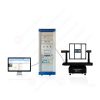
High Precision Rotation Luminaire Goniophotometer
LSG-1890B
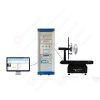
High Precision Rotation Luminaire Goniospectroradiometer
LSG-1890BCCD

Goniophotometer for Automotive and Signal Lamps
LSG-1950
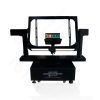
Goniophotometer for Traffic Signal Lamps (Economical Model)
LSG-1950S
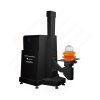
Goniophotometer for Airfield Lighting
LSG-1940
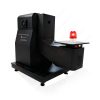
VAD Fire Alarm Visual Alert Device Goniophotometer
LSG-1930
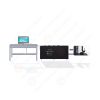
Compact Goniophotometer
LSG-1200A
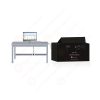
LED Goniophotometer
LSG-1100
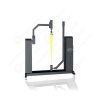
Near Field Moving Detector Goniophotometer
LSG-1900B
 LEDs and Luminaire Test Solutions
 LM-79 and LM-80 Test Solutions
 LED Driver Test Solutions
 Household Appliances Test Solutions
 Mobile and Network Test Solutions
 Automotive Electronics Test Solutions
 Audio-Video and IT Test Solutions
 Cable and Wire Test Solutions
 Plugs and Sockets Test Solutions
 Power Switch Test Solutions
 Transformer Test Solutions
 Electric Toys Test Solutions
 Energy Meter Test Solutions
 Motor-Operated Tool Test Solutions
Select an organization
to browse standards
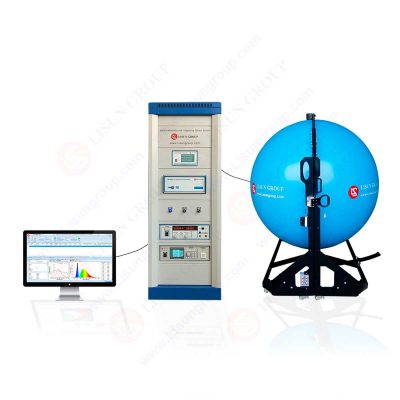
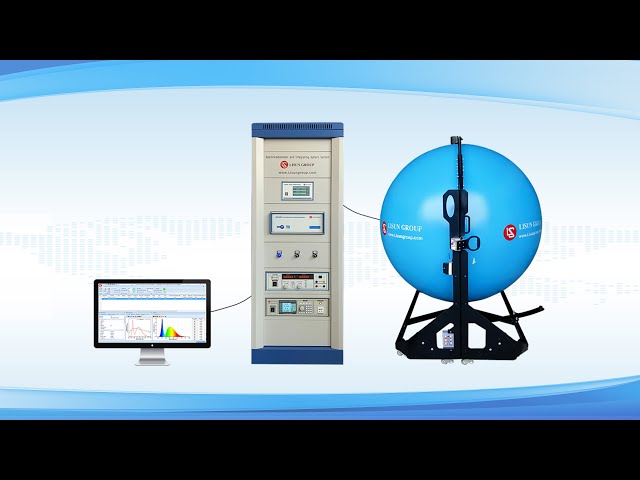
Precise optical measurements require the capability to acquire the light yield correctly, or repeatably. This is common with a sphere light source which is an integrating source since it modular directional light into a diffuse and uniform light source which can be measured accurately. In practice within laboratory settings, the system is commonly known as a photometric sphere with its primary use being in a standardized photometric assessment and not necessarily light generation. On the first steps to the field of optical testing, one needs to have some knowledge of how an integrating sphere light source functions and why it is utilized before proceeding to a higher level of measurement like luminous flux, intensity distribution, or spectral analysis.
However, unlike direct light measurement techniques, which may require large reliance on beam direction, range, and orientation, an integrating sphere does not rely on angle. As soon as light is penetrating the sphere, it reflects severally against the inner coating aptly forming a radiance field that is homogenous. This standardization enables detectors to record the overall light yielding clearly despite the initial shape of the beam. Owing to this property, sphere systems have found extensive application in LED tests, lamp tests, sensor tests and optical software.
The working principle of a light source that is incorporated within a sphere is diffuse reflection. The inside of the sphere is covered with a very reflective substance which reflects the incoming light in every direction. The device emits light again and again on the inside wall when a light source is introduced by means of an input port. Following numerous reflections, the spatial information regarding the original beam direction is lost and a light field that is inside the sphere becomes even-handed.
This even light field enables detectors at given ports to sense overall radiant or luminous emission. The detector does not see the source of light, rather, it senses an average light field generated within the sphere. This is the important benefit of a photometric sphere because it eliminates alignment bias and measure bias due to directional emission sources.
Measurement accuracy is affected by the size of the sphere, reflectance of the coating and the geometry of the port. Greater values of spheres are more effective in space averaging and larger values of reflectance coating are more effective in sensitivity of measurement through less absorption loss.
Most of the light producers, particularly the LED, do not produce light equally. There are those that create thin beams as well as those that create angular patterns complicated. These sources can only be measured with the help of classic photometric configurations which demand a high degree of alignment and distance control. The misalignment causes huge errors of measurement.
The solution to this dilemma is an integrating sphere light source which absorbs all the emitted light irrespective of direction. It does not matter whether the source has a narrow beam type or a wide flood type, the sphere combines the result into an independent quantity, which can subsequently be measured. This renders the method particularly very effective when comparing various sources of light in an objective manner.
Repeatability is the other benefit. Due to the uniformity in the light field inside the system, repeated measurements will also give consistent results. This is especially critical in manufacturing testing virtual surroundings, where vast amounts of equipment have to be tested under the same circumstances.
Integrating sphere systems can be very common in the characterization of LEDs. One of the most widely used applications is the luminous flux measurement as it directly represents the amount of light that a source produces. Luminous flux measured in the sphere is a total flux compared to the case of illuminance measurements, which use distance.
Integrating spheres are also applied in testing lamps, laser sources, display backlights and optical sensors besides the LEDs. They are also used in the calibration work where known light levels must be taken to ensure the correctness of the detector. Acting as integrators of spectral measurements, spectral analyses of wavelength distribution and total output are measured at research laboratories through integrating spheres that are coupled to spectroradiometers.
Some manufacturers like LISUN, have integrating sphere systems designed in both research and industrial applications, which have free standing light sources, calibrated detectors and optimized sphere finishings to provide consistent light measurements in a wide range of applications.
Much relies on the reflectance of the inner coating in order to optimize the performance of an integrating sphere light source. The materials that have high reflectance reduce light absorption and thus have numerous reflections before it gets absorbed.
The coating may become contaminated or aged over time reducing the reflectance causing drift in measurements. Good maintenance is provided by proper handling, cleanliness, and controlled conditions of operation. Modern systems have a durable coating which is resistant to discoloration and degradation hence stability in the long run.
The consistency of the reflecting uniformity at the surface of the sphere is also vital. Any local difference is able to add bias to the integrated light field. The manufacturing process of the coating is controlled by quality control, which guarantees the consistency of the coating over the sphere interior.
Light is able to enter the sphere through ports and internal light field is detected using detectors. The ports however also present spaces where light can escape or be absorbed. Position and size of the port is thus designed so as to give careful optimization ensuring there is accessibility and also the accuracy of the measurements.
To avoid the light source being detected by the detector, baffles are sometimes located inside the sphere. This is because measurements will reflect integrated light and not direct radiation. Designing of the baffles properly is critical towards consistency and prevention of systematic errors.
Port configuration might require modification when the users add some sources of light in the sphere of the same. Flexible designs make laboratories add adaptive designs of the system to test different situations without affecting performance.
To be precise it has to be calibrated. The sphere light sources are integrated, then one calibrates them with reference lamps or traceable standards of light. Calibration takes into consideration the geometry of the sphere, coating reflectance, detector sensitivity and losses of the system.
Traceability leads to the fact that the outcomes of a measurement can be traced to national or international standards. This applies particularly in compliance testing and quality assurance. Frequent calibration keeps drifts to a minimum and ensures that one is confident in the measurement data.
Contemporary systems will typically have software that provides management of the calibration data, automatically applies correction factors and indicates when the recalibration is required. This eliminates embarrassment of the operator and enhances the efficiency of the workflow.
Temperature and humidity are some of the environmental factors that affect optical measurements. Too much temperature change could have an impact on the response or light source output of a detector. The operation of integrating the sphere systems is usually in controlled laboratory conditions to reduce such effects.
It is also contributed by stable power supplies. The intensity of the light sources is alterable by fluctuations in the input power and therefore, results in unstable measurements. Good systems of integrating sphere light sources have regulated power modules to stabilize the output when the test is performed.
An integrating sphere light source offers a very straightforward and non-complex solution to measuring the light output in a reliable and consistent manner. With directional dependency being removed and alignment sensitivity being nullified by developing a homogenous internal light field across a photometric sphere, the system can be used by amateurs and experienced users alike. Its capacity to combine the light of the complex sources allows it to assess the LEDs, lamps and optical elements in a broad spectrum of applications.
Integrating sphere systems can provide reliable results with minimal variability in their design, high values of reflectance, the optimization of the port geometry, and essential calibration to facilitate research and development and quality control over the results.
Your email address will not be published. Required fields are marked *

 English
 中文简体
中文简体 English
 Русский
 Español
 Português
 Türkçe
 العربية
 Deutsch
 Polski
 Italiano
 Français
 한국어
한국어 ไทย
ไทย Tiếng Việt
 日本語
日本語