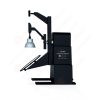
LM-79 Moving Detector Goniophotometer (Mirror Type C)
LSG-6000
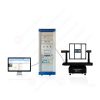
High Precision Rotation Luminaire Goniophotometer
LSG-1890B
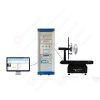
High Precision Rotation Luminaire Goniospectroradiometer
LSG-1890BCCD

Goniophotometer for Automotive and Signal Lamps
LSG-1950
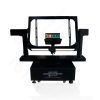
Goniophotometer for Traffic Signal Lamps (Economical Model)
LSG-1950S
VAD Fire Alarm Visual Alert Device Goniophotometer
LSG-1930
Goniophotometer for Airfield Lighting
LSG-1940
Compact Goniophotometer
LSG-1200A
LED Goniophotometer
LSG-1100
Near Field Moving Detector Goniophotometer
LSG-1900B
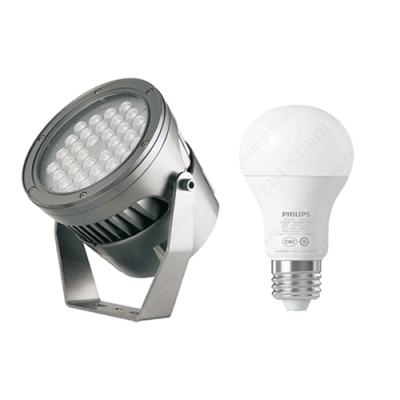 LEDs and Luminaire Test Solutions
 LM-79 and LM-80 Test Solutions
 LED Driver Test Solutions
 Household Appliances Test Solutions
 Mobile and Network Test Solutions
 Automotive Electronics Test Solutions
 Audio-Video and IT Test Solutions
 Cable and Wire Test Solutions
 Plugs and Sockets Test Solutions
 Power Switch Test Solutions
 Transformer Test Solutions
 Electric Toys Test Solutions
 Energy Meter Test Solutions
 Motor-Operated Tool Test Solutions
Select an organization
to browse standards
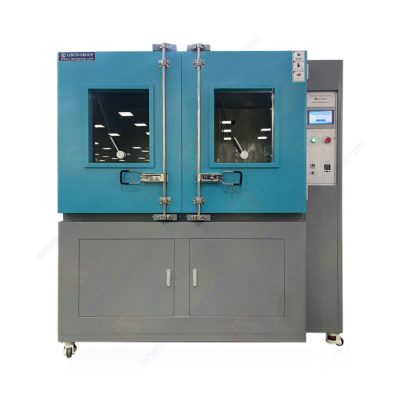
Products that are to be used outdoors, in industrial, military or desert conditions must show good performance under the exposure of airborne particles. These deplorable conditions can be reproduced in controlled laboratory conditions in a sand dust test chamber which enables manufacturers to check sealing integrity, mechanical durability, and functional reliability. The IEC 60529 dust test defines the ingress protection requirements with respect to environmental compliance, yet MIL-STD-810 covers more intense environmental stresses experienced in the military and aerospace environment. Proper chamber setup, as opposed to test performance, is important to give the correct result to both criteria.
Standardized sand and dust testing in contrast to casual dust exposure needs a tight control over airflow, particle concentration, differentials in pressure and duration of test. Minor adjustments made in the set-up parameters may cause wrongful conclusions regarding the strength of the product. It is on this basis that laboratories need to get familiar and adhere to stringent requirements of setting up before embarking on any formal evaluation.
IEC 60529 framework concentrates on ingress protection ascertaining whether dust may form an enclosure in such volumes as to affect or impair operation or safety. It focuses on enclosure sealing performance in specific airflow environments of negative pressure situations. The test does not aim at destroying the item, but to ensure that the ingress of dust does not exceed normal level.
MIL-STD-810, in its turn, mimics the severe environment. Its dust and sand processes are associated with increased airflow velocities and particle sizes, which are desert storms, rotor wash, and the movement of vehicles in arid desert environment. The products tested to this standard need to be able to operative during the testing and after the exposure which is usually when powered. The intent difference implies that the setup in chambers should be flexible and still adhere to both the methodologies.
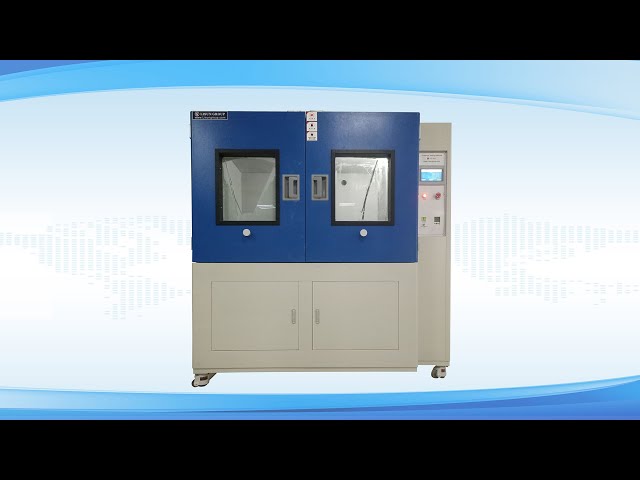
The key factor that causes dust movement in a sand dust test chamber is airflow. Good installation will involve having calibrated blowers which can control the constant movement of air throughout the test volume. In the case of IEC testing, the airflow is normally reduced and is aimed at maintaining dust facade, but avoiding mechanical erosion. In the case of MIL-STD-810, airflow is actually more vigorous to push particles against the enclosure surfaces to reveal weak points.
It is necessary to have uniform distribution of airflow. Dead zones give a chance to settle dust prematurely with excessive turbulence possibly resulting in uneven distributions of dust. Airflow ducts, internal geometry of chambers and the baffles position should be checked prior to testing. Chambers of high-quality employ computationally optimized airflow directions in order to obtain stable particle suspension.
The validity of tests directly depends on the kind of dust that is used. Fine talcum powder, which is used to model fine intrusion of particles, is defined as per IEC 60529, whereas both fine dust and coarse sand are covered in MIL-STD-810. Laboratories are required to check the consistency of particle size distribution before installation so that it complies with the relevant criterion.
Another important amphibious factor is moisture content. Dust should also be dry in order to be suspended and act in a uniform manner. Minimal amounts of humidity by absorption modify the particle cohesion, and diminish suspension time and modify ingress behavior. The preconditioned dust stored in humidity-controlled entities should be put in chambers.
In setup, the required dust loading amount should be of standard requirements. Overloading brings in over-concentration whereas underloading decreases the severity of the test. Weighing and controlled feeding mechanisms offer accuracy between test cycles.
The use of negative force within the device being tested is one of the key characteristics of IEC 60529 dust test. This is a mimic to changes in the pressure system in the real world when the temperature changes or when the altitude changes. The sand dust test chamber should be furnished with pressure control mechanisms that will be able to sustain a constant pressure difference without interfering with airflow.
Connection of the pressure should be not leaked and should be sealed well to prevent false results. Where the chamber imposes a pressure variation rather than on the test specimen, it reduces the reliability of the test. To ensure accuracy, pressure sensors must be calibrated prior to the commencement of test-to-test sequence.
The exposure severity depends on the position of the test specimen in the chamber. The products are supposed to be mounted in a manner that they reflect on the desired way they are intended. Inaccurate arrangement can either cover sensitive places or unrealistic surfaces.
A sufficient distance in the surroundings of the specimen allows free air movement and dust circulation. The artificial barriers are the result of contact with the walls of the chamber that help to minimize the exposure to dust. Mounting fixtures should be non-reactive and should not produce turbulence which changes the distribution of dust.
Cords and vents, and interfaces should be left in their usable status during installation. The closure of components in question should not be artificially strengthened unless this is prescribed by the standard in an explicit manner.
Dust behavior and response of materials have temperature influence. Warmer air decreases the density and changes the suspension properties and cooler climate might lead to condensation which entraps dust. Ambient temperature in Sand dust test chambers ought to be constant during the test.
Preconditioning of specimen to test temperature aids in preventing change of internal pressure which is not connected to the test standard. Unexpected changes in temperature during exposure can cause undesirable differentials of pressure, altering ingress behavior.
Good-quality chambers have an insulation and temperature check so that as test is prolonged, we can be on the same side without fluctuations as test may take several hours or days as per the standard.
Checking of the setups does not stop when the test commences. It is necessary to have continuous control of air velocity, dust concentration, pressure difference, and temperature levels. These parameters are data logged to prove and provide post-test analysis.
The operators can use visual inspection windows to verify the quality of dust suspension without having to open the chamber. It is falsifying the results and the distinction of the chamber during testing. Automated control systems reduce the level of interventions of the operator, and test environments remain constant.
LISUN chambers are frequently provided with real-time monitoring interfaces which notify the users of the deviations before they can influence the test validity.
The enclosure needs to be opened too fast or in uncontrolled situations and lead to dust that will cover any sign of ingress pathways.
The inspection has to adhere to the general rules, specifications of the dust concentration sites, the deterioration of the functions, and mechanical damage. The outcomes are contrasted with acceptance characteristics established by either IEC 60529 or MIL-STD-810.
Proper chamber preparation will give results that are accurate and their effect with the product and not with testing artifacts.
The proper setup of sand dust test chamber is a prerequisite of proper evaluation by IEC 60529 and MIL-STD-810. Airflow calibration and dust composition control, pressure difference management and specimen orientation, among other settings, are the parameters of every setup changing the credibility of the test. IEC 60529 dust test dwells on ingress protection in controlled conditions unlike MIL-STD-810 that tests products subjected to extreme environmental conditions.
Through proper set-up procedures and properly designed chambers by manufacturers like LISUN, a laboratory can achieve consistent reproducible results as a real representation of on-the-job exposure. When sand and dust testing are done properly, it becomes a process rather than a procedural issue to benefit the durability of the products and their capacity to endure in the environment.
Your email address will not be published. Required fields are marked *

 English
 中文简体
中文简体 English
 Русский
 Español
 Português
 Türkçe
 العربية
 Deutsch
 Polski
 Italiano
 Français
 한국어
한국어 ไทย
ไทย Tiếng Việt
 日本語
日本語