LM-79 Moving Detector Goniophotometer (Mirror Type C)
LSG-6000
High Precision Rotation Luminaire Goniophotometer
LSG-1890B
High Precision Rotation Luminaire Goniospectroradiometer
LSG-1890BCCD

Goniophotometer for Automotive and Signal Lamps
LSG-1950
Goniophotometer for Traffic Signal Lamps (Economical Model)
LSG-1950S
VAD Fire Alarm Visual Alert Device Goniophotometer
LSG-1930
Goniophotometer for Airfield Lighting
LSG-1940
Compact Goniophotometer
LSG-1200A
LED Goniophotometer
LSG-1100
Near Field Moving Detector Goniophotometer
LSG-1900B
 LEDs and Luminaire Test Solutions
 LM-79 and LM-80 Test Solutions
 LED Driver Test Solutions
 Household Appliances Test Solutions
 Mobile and Network Test Solutions
 Automotive Electronics Test Solutions
 Audio-Video and IT Test Solutions
 Cable and Wire Test Solutions
 Plugs and Sockets Test Solutions
 Power Switch Test Solutions
 Transformer Test Solutions
 Electric Toys Test Solutions
 Energy Meter Test Solutions
 Motor-Operated Tool Test Solutions
Select an organization
to browse standards
Abstract: In the global conformity certification of consumer electronics, household appliances, and lighting equipment, preventing human contact with hazardous live parts represents the core requirement of safety design. The articulated test finger, serving as a standardized detection tool that simulates human finger contact behavior, is crucial for verifying the effectiveness of enclosure protection.
This article aims to provide an in-depth analysis of What is jointed test finger. By examining key standards such as IEC 61032 (Test Probe B) and GB 4706, this paper analyzes the geometric configuration, physical and mechanical characteristics, and application logic of this tool in electric shock protection testing. Combining the technical advantages of the LISUN SMT-1 Standard Test Finger, this article demonstrates the necessity of high-precision manufacturing processes for ensuring laboratory data consistency, providing reference guidelines for enterprises to establish standardized safety testing protocols.
Throughout the research, development, and production lifecycle of electrical and electronic products, safety testing remains the non-negotiable threshold for overcoming international trade barriers. Among the numerous safety indicators, preventing users from accidentally contacting dangerous voltages, mechanical moving parts, or high-temperature zones inside equipment is of paramount importance. At this juncture, testing engineers must understand a fundamental technical question: What is jointed test finger?
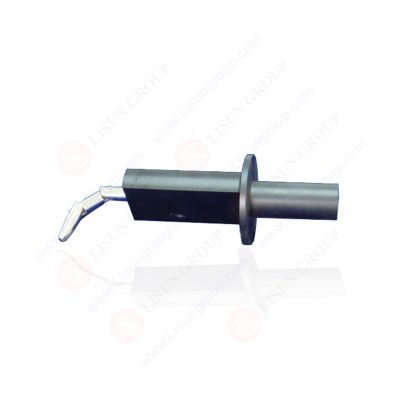
Put simply, the articulated test finger is a precision probe scaled strictly according to human anatomical proportions with multi-joint linkage capabilities. It evaluates whether openings and gaps in equipment enclosures pose safety threats to users by simulating the bending and touching motions of a human finger. As a global leading supplier of testing instruments, LISUN’s SMT-1 Standard Test Finger (articulated test finger) has become standard equipment in numerous international certification laboratories. This article elaborates on the connotation of this tool from both academic and engineering perspectives.
The articulated test finger is internationally recognized as IEC 61032 Test Probe B. Its physical specifications, tolerance ranges, and usage methods are clearly defined in the following standards:
The human finger consists of multiple phalanges with high flexibility. When touching equipment enclosures, fingers can not only thrust straight but also bypass barriers and bend into gaps. Therefore, the test probe must be designed as “articulated”—connected through three simulated finger joints allowing the probe to bend freely within a 90° range, thereby accurately reproducing the most extreme probing capabilities of a human finger.
Every component of the articulated test finger has strict dimensional requirements to ensure it represents the finger size of a typical adult:
To accurately determine whether live parts are contacted during testing, the LISUN SMT-1 employs high-specification material combinations:
After understanding the theoretical foundation of what a jointed test finger refers to, laboratories prioritize manufacturing precision when selecting equipment. The LISUN SMT-1 model offers significant competitive advantages in the industry.
| Parameter Item | SMT-1 (Standard Test Finger) | Corresponding Standard (IEC 61032 Fig. 2) |
| Jointed Finger Diameter | 12 mm | ± 0.05 mm ultra-narrow tolerance |
| Jointed Finger Length | 80 mm | Strict adherence to ergonomic proportions |
| Stop Face Thickness | 20 mm | Standard insulating stop face design |
| Stop Face Diameter | 50 mm | Prevents non-finger intrusion |
| Handle Diameter | 10 mm | Insulated anti-slip handle |
| Joint Rotation Angle | 90° ± 2° | Flexible articulation system |
| Socket Configuration | Dedicated conductive socket | Supports anti-electric shock alarm connection |
| Manufacturing Material | Stainless steel + Industrial plastic | Corrosion-resistant, high-frequency usage |
LISUN incorporates CNC precision machining technology in the SMT-1 production process. Standards impose extremely strict tolerance requirements on test probes—minute dimensional deviations (such as fingertip radius exceeding by 0.1 mm) could result in openings that should fail testing being deemed “pass,” thereby creating significant product safety hazards. The LISUN SMT-1 maintains core dimensional tolerances within 50% of national standard limits, substantially enhancing experimental authority.
When conducting anti-electric shock testing, the use of the articulated test finger follows rigorous scientific procedures rather than random contact.
Different product standards require varying forces applied to the test finger:
To more precisely determine whether internal live parts are contacted, laboratories typically connect the SMT-1 to low-voltage alarm systems.
Operators must attempt probing in both “straight” and “bent” postures at all possible locations on the equipment enclosure. Particularly for grilles, ventilation holes, and around control knobs, the flexibility of the articulation structure must be fully utilized for indirect probing.
From an academic research perspective, the design logic of the articulated test finger embodies the “worst-case principle”:
Through the systematic discussion in this article, we have gained a clear answer to the question “What is jointed test finger?”: It is not merely a simple geometric measurement tool, but a precision standard component in modern safety engineering that simulates human physical interaction.
The LISUN SMT-1 Standard Test Finger, with its geometric precision strictly aligned with IEC 61032, highly reliable stainless steel construction, and ergonomic insulated handle design, provides unparalleled detection accuracy for laboratories worldwide. Whether facing complex household appliance enclosures or precision optical instrument structures, the SMT-1 enables engineers to accurately locate safety blind spots. For enterprises pursuing high-quality development and aiming to penetrate global markets, configuring a standardized, high-precision articulated test finger is an essential path to ensuring products meet anti-electric shock safety requirements.
In summary, clarifying the definition of a jointed test finger holds profound significance for establishing comprehensive product safety testing systems. LISUN will continue to deeply cultivate the precision testing field, safeguarding the compliance export of “Made in China” products.
Tags:SMT-1Your email address will not be published. Required fields are marked *

 English
 中文简体
中文简体 English
 Русский
 Español
 Português
 Türkçe
 العربية
 Deutsch
 Polski
 Italiano
 Français
 한국어
한국어 ไทย
ไทย Tiếng Việt
 日本語
日本語