LM-79 Moving Detector Goniophotometer (Mirror Type C)
LSG-6000
High Precision Rotation Luminaire Goniophotometer
LSG-1890B
High Precision Rotation Luminaire Goniospectroradiometer
LSG-1890BCCD

Goniophotometer for Automotive and Signal Lamps
LSG-1950
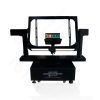
Goniophotometer for Traffic Signal Lamps (Economical Model)
LSG-1950S
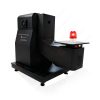
VAD Fire Alarm Visual Alert Device Goniophotometer
LSG-1930
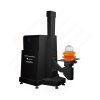
Goniophotometer for Airfield Lighting
LSG-1940
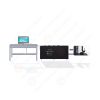
Compact Goniophotometer
LSG-1200A
LED Goniophotometer
LSG-1100
Near Field Moving Detector Goniophotometer
LSG-1900B
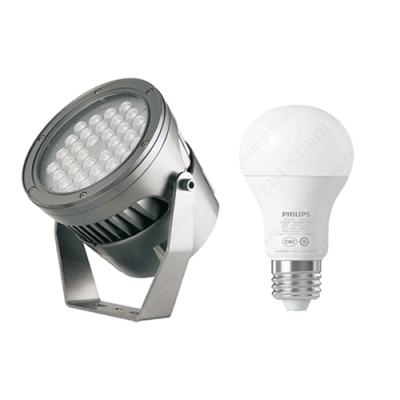 LEDs and Luminaire Test Solutions
 LM-79 and LM-80 Test Solutions
 LED Driver Test Solutions
 Household Appliances Test Solutions
 Mobile and Network Test Solutions
 Automotive Electronics Test Solutions
 Audio-Video and IT Test Solutions
 Cable and Wire Test Solutions
 Plugs and Sockets Test Solutions
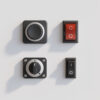 Power Switch Test Solutions
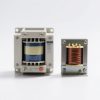 Transformer Test Solutions
 Electric Toys Test Solutions
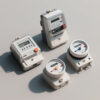 Energy Meter Test Solutions
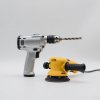 Motor-Operated Tool Test Solutions
Select an organization
to browse standards
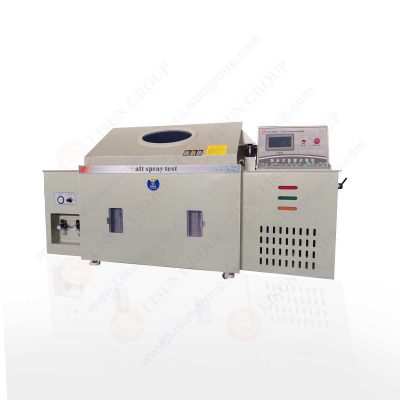
The corrosion resistance is an urgent performance criterion of products that can be applied to industrial, automotive, marine, construction, and infrastructure applications. Salt-contaminated air, dampness, and change of temperature can easily degrade protected materials and coatings when they are not covered. The creation of a salt spray test machine actually creates such aggressive environments in a controlled laboratory environment that enables manufacturers to test the behavior of corrosion under standardized conditions. Within professional testing, the system is also known as a salt mist chamber due to its application of uniform saline fog that is used to simulate coastal and industrial atmospheres with high repeatability.
It is based on the use of salt spray testing due to reasons such as a realistic balance of realism and acceleration as required by international corrosion standards. Whereas field corrosion grows over several years, field tests in the laboratory can condense exposure to manageable intervals without sacrificing a comparison. Adherence to these standards is not only on the performance of test but also on the stability, accuracy and records of the salt spray machine.
Corrosion standards are designed so that materials and protective systems will be consistent throughout the different environment and manufacturers. These criteria stipulate the test time, salt level, temperature, rate of deposition of the fog and the criterion of evaluation to allow results to be objectively compared.
This goal is achieved with the help of a salt spray machine that ensures a high level of environmental control. The test is not an attempt to duplicate all the characteristic of outdoor exposure but concentrates upon the factors that are the most violent in corrosion. The test exposes materials to a sustained saline mist, exposing the materials to these conditions; dangerously so in terms of their wear and tear, surface treatment and material choices which would otherwise not be readily seen until they get into the field.
Formation of a fine and uniform saline mist is the main characteristic of a salt mist chamber. This fog has to be the same at a long test duration to give valid results. This is done by a salt spray machine via controlled atomization, constant air pressure and accurate delivery of the solution.
There must be environmental stability. Corrosion rates can change greatly depending on temperature changes or un-even spraying of mist. The systems are highly developed hardware which controls the airflow and internal temperature such that the test specimens all receive equal exposure. Such consistency enables attributing observed variations of corrosion behavior to even material performance and not chamber variability.
Manufacturers like LISUN have salt spray machine designs with an optimized fog generation community that retains consistent levels of deposition during long periods of testing, which enabled some level of consistency in the evaluation of compliance.
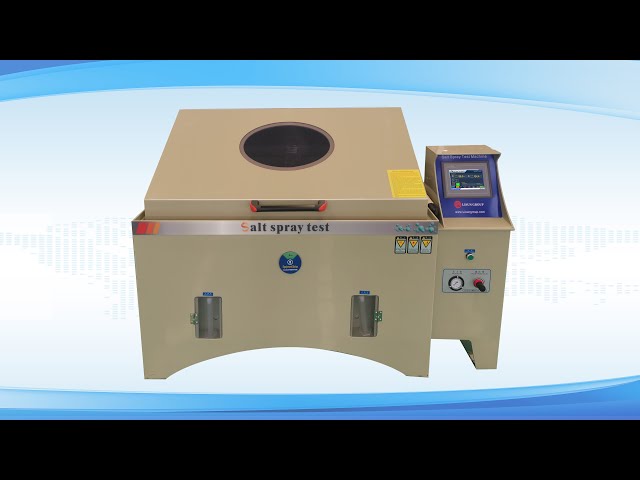
International corrosion standards have been stated to operate under strict parameters. These are specific salt concentration, usually depending on the amount of sodium chloride content, controlled pH, and desired deposition rate, measured in collected condensate. Any salt spray machine should comply with these parameters in order to generate valid data of compliance.
The control systems of the chamber control solution preparation, atomization pressure and temperature to conform to normal standards. Collectors test to ensure that the deposition of mists does not exceed levels of specification. This validation plays a critical role in showing the compliance during the audit or the review of the certification.
Within these established limits, the salt spray machine guarantees that the world accepts test results by the regulatory agencies and consumers.
The fact that salt spray testing is effective in comparison testing is one of the main reasons why international standards take it as a reference testing. Frequently manufacturers will construct comparative tests of different types of corrosion resistance by applying a number of coatings, surface treatments, or material variants adjacent to each other.
With a salt spray machine, all the specimens are exposed to the same conditions and, therefore, meaningful comparison can be made. Variations in the onset, progress and extent of corrosion are seen in controlled period. This knowledge will inform the choice of materials and optimization of processes.
The international standards must be complied with in details. This is supported by a salt spray machine that allows a stable and measurable test condition that may be recorded and reported. Parameters of the test like temperature, duration of exposure, and rate of deposition are recorded and observations of the specimen are recorded.
The attribute of traceability is of particular importance in situations where a regulatory submission or a contractual requirement will involve the utilization of test results. It is seen that the testing was done as per the accepted standards and not in an informal manner as written evidence shows.
Consistent records also secure the manufacturers in case of disagreement since they indicate that the performance of corrosion has been established under tested, standard environments.
Car parts and raw materials are subjected to corrosive conditions on the roadway, at the shore, and inside the industries. These applications are usually subject to compliance with corrosion standards.
Salt spray machines allow manufacturers to verify the components including fasteners, brackets, housings, and coated assemblies prior to mass production. Testing is done to ascertain that protective systems can fulfill their durability requirements and helps minimize the probability of premature failures of the field.
To suppliers, performing up to international standards of corrosion proves of greater force to the customers and helps to qualify the supplier in the long term.
Although salt spray tests are able to hasten corrosion, it should not create artificial loads that would nullify the results. An appropriately adjusted salt mist chamber provides a compromise between aggressiveness and control that makes sure that the corrosion processes are never too unrealistic in representing the real world.
Unrealistic aggressive conditions could result in failure modes that are not present during service whereas inadequate exposure could not show weaknesses. The accuracy of salt spray machine enables the laboratories to pursue this balance so that the accelerated test matches with the real performance expectation.
There are numerous corrosion requirements that have exposure durations of between a number of hours and thousands of hours. Such durations are technical due to the need to keep the conditions constant. The salt spray machine should be constantly run with minimal variation in the temperature, density of the fog, and concentration of the solution.
Long-term consistency makes sure that the evolution of corrosion has its regular patterns. Any kind of interruption, or unsteadiness in the process of testing, invalidates the results. Good systems are designed to have long life/span thus less time is spent on maintenance and also minimizes downtimes.
LISUN salt spray machine is designed to sustain long term tests and retain environmental stability which means that they can be used in rigorous compliance programs.
In addition to qualification starting at the beginning, salt spray testing is frequently combined with continuous quality control. It is regularly done by testing production samples to ensure that manufacturing alterations have not led to the reduction of corrosion resistance.
Continuous compliance is favored by this continued validation, and performance degradation is minimized due to its inconspicuousness. Manufacturers are able to stay consistent across generations of the product with the same salt spray machine and test protocol.
A salt spray test machine can take centre stage in aiding adherence to international corrosion requirements by offering a controlled and repeatable and documented test environment. The salt mist chamber establishes the reliable assessment of materials and protective systems through the stable saline mist generation, the control of the environment, and the creation of a uniform environment. Salt spray testing promotes certification, comparative and long-term quality assurance by matching test conditions with the requirements in the international scope. Companies like LISUN are still upgrading the technology of the salt spray machines so that labs can be able to handle any changing standard of corrosion with ease.
Tags:YWX/Q-015Your email address will not be published. Required fields are marked *

 English
 中文简体
中文简体 English
 Русский
 Español
 Português
 Türkçe
 العربية
 Deutsch
 Polski
 Italiano
 Français
 한국어
한국어 ไทย
ไทย Tiếng Việt
 日本語
日本語