LM-79 Moving Detector Goniophotometer (Mirror Type C)
LSG-6000
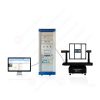
High Precision Rotation Luminaire Goniophotometer
LSG-1890B
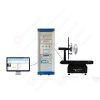
High Precision Rotation Luminaire Goniospectroradiometer
LSG-1890BCCD

Goniophotometer for Automotive and Signal Lamps
LSG-1950
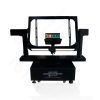
Goniophotometer for Traffic Signal Lamps (Economical Model)
LSG-1950S
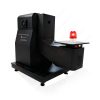
VAD Fire Alarm Visual Alert Device Goniophotometer
LSG-1930
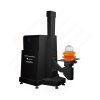
Goniophotometer for Airfield Lighting
LSG-1940
Compact Goniophotometer
LSG-1200A
LED Goniophotometer
LSG-1100
Near Field Moving Detector Goniophotometer
LSG-1900B
 LEDs and Luminaire Test Solutions
 LM-79 and LM-80 Test Solutions
 LED Driver Test Solutions
 Household Appliances Test Solutions
 Mobile and Network Test Solutions
 Automotive Electronics Test Solutions
 Audio-Video and IT Test Solutions
 Cable and Wire Test Solutions
 Plugs and Sockets Test Solutions
 Power Switch Test Solutions
 Transformer Test Solutions
 Electric Toys Test Solutions
 Energy Meter Test Solutions
 Motor-Operated Tool Test Solutions
Select an organization
to browse standards
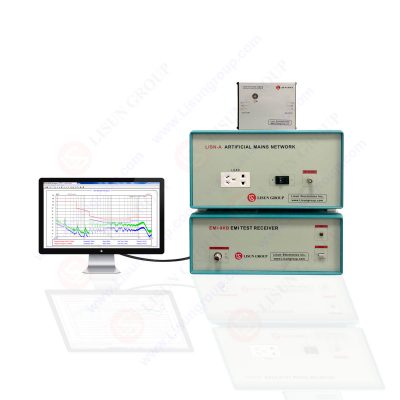
The choice of the appropriate measurement instrument is regarded as one of the most significant choices of any EMC laboratory. EMI test receiver is an integrated instrument in the assessment of undesired electromagnetic pollution that is produced by electronic products. In preliminary design validation up to formal compliance preparation, the quality and consistency of this measure has a direct ratio to test confidence. Practically, the receiver should be capable of maintaining credible test performance under various product, conditions and frequency applications in the laboratory without bringing into doubt, and unjustified complexity.
As opposed to a general-purpose spectrum analyzer, an EMI test receiver is designed to be representative of the way regulatory standards consider emissions. Selection of the appropriate receiver does not just require a comparison of specifications. Laboratories should take into consideration test purpose, anticipated workload, scalability and nature of the products under test. An excellent receiver enhances efficiency and minimizes risk when being certified.
To select an EMI test receiver, the first step would be to clarify what your laboratory will test or intends to test. Other labs are more development and debugging-oriented, whereas the other labs assist in pre-compliance validation or even full compliance preparation. The receiver should be in line with these objectives.
Labs that are development oriented may require rapid scanning, time-bent platform and user-friendly interfaces to help in immediate noise source detection. Labs that are compliance orient have to meet strict standards of standard bandwidths and detectors. In the event the receiver fails to replicate Chinese behavior of compliance measurement, there is lack of congruency of results with accredited test laboratories.
It is also necessary in the future. One lab which begins with conducted testing of emissions can eventually graduate to radiated testing or can be associated with higher frequencies products. Early obsolescence is prevented by choosing a receiver with scalable capabilities.
The modern electronic products work over a broad frequency range. Digital interfaces, switching power supplies, wireless modules, and high-speed processors produce emissions between the kilohertz and gigahertz range. The frequency range should be covered by an EMI test receiver depending on your product portfolio.
In addition to the basic frequency coverage, flexibility of measurements is important. The recipient must support multiple resolution bandwidths and detection settings which are demanded by other test specifications. A receiver that requires one to make workarounds or manual modifications will enlarge the probability of error and impede testing.
Laboratories that deal with a variety of products find the receivers that support configuration presets. This provides reliability in terms of testing and makes it easy to train operators.
A detector behavior is one of the characteristics of an EMI test receiver. Regulatory standards are based on the use of definite detection conditions in order to evaluate the effects of interference. The receiver should reproduce these responses of detecting to give meaningful results.
Improper implementation of the detectors results in false emission of licenses. To guarantee that results are an indication of how the emissions will be perceived in the process of formal certification, it is proper to select a receiver whose accuracy to detectors is verified.
Coherence is also very crucial. The detector response should also be stable in reference to time and repeated measurements. Drift compromises both the confidence and comparison between test sessions.
The force of the emission of the electronic products is varied. Some are high interfering ones and some are those that operate along the regulatory threshold. The two should not be distorted and masked by an EMI test receiver.
HDR would allow the receiver to overshoot high-dynamically placed signals at full scale and still draw low-emissions around the noise floor. Small and smooth noise floor increases sensitivity and enables one to detect the cases of suspect cases in time.
Attenuation or some complex set-up adjustments to minimize test uncertainty may also be necessary to receivers with low dynamic range. The advantages of the laboratories are receiving devices generated that creates wide signal variation in a natural format.
Speed plays a significant role as far as testing is concerned especially at stages of development where the various designs are tested every day. Receivers are highly scanning and will reduce the test time and also improve productivity. It should however not be the speed that comes at the cost of accuracy.
The stability of the measurement is sacrificed in other receivers in relation to faster sweeps. The right EMI test receiver is slower though it has more measurement integrity than the left EMI test receiver, and can be scanned quickly when troubleshooting, but provides accurate measurements where required.
The state-of-art receivers can be set to a variable scan speed to allow the concerned laboratories to modify the device according to the aim of the test.
The EMI test receiver must facilitate good working processes instead of making this complicated. Operators are able to assess results promptly by helpful visualization, logical menus and clear user interfaces.
Difficult or non-user-friendly interfaces drive up training needs and increase the chances of errors during setup. Multi-user laboratories also enjoy the advantage of having receivers that are usually consistent, irrespective of the level of expertise of the operator.
Workflow is also improved by automation capabilities. Test sequencing, data logging and report generation Receivers that are integrated with software result in less manual effort and more consistency.
The EMI test receiver is a long-lasting investment. Years of service are as reliable as initial performance. Constant stops and unstable calibration create inconvenience to the testing schedules and drives up the maintenance costs.
The high quality of receivers is provided where strong inner parts and constant reference system are created to reduce drift. Performance should be corrected through regular calibration instead of often correcting deviations.
Stability Manufacturers like LISUN emphasize on long-term stability and therefore they take care to ensure that receivers are accurate over a long period of use and when subjected to repetitive testing.
The correlation of the results provided by a given EMI test receiver and the accredited compliance laboratories is one of the most crucial parameters in the selection of a test receiver. Low correlation means that there are uncertainty and wastage of effort.
A receiver exhibiting normal behavior of measurement gives assurance that pre-compliance measurements are significant. Engineers are able to make decisions with regard to design margins and mitigation plans.
Close association also minimizes redesign cycles to be completed after formal testing which saves time and cost of development.
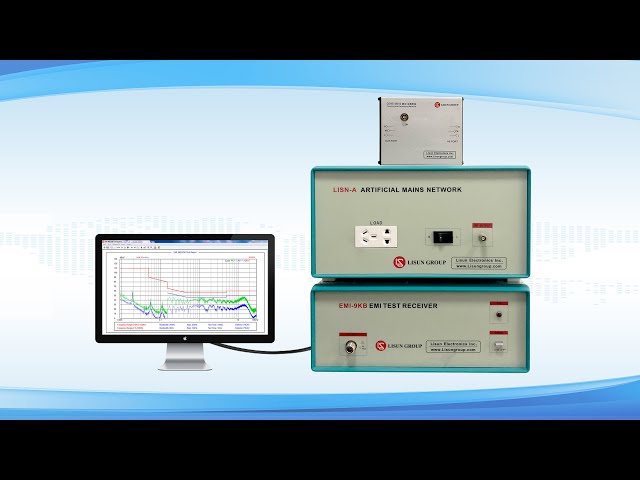
Other tools employed in most laboratories are the LISNs, antennas, preamplifiers and the turntables. These components will require the EMI test receiver to blend in with them.
The suitability with standard interfaces and accessories makes the installation easier and minimizes unforeseen problems. EMC test receiver designs usually provide standardization of connections and control possibilities.
The integration is also found in software. The compatibility of data with analysis and reporting products improves the efficiency and traceability of workflow.
The issue of budget conception is inevitable, yet compromise can easily be made when based on purchase price only. The cheaper receiver that fails to meet the necessary features might have to be upgraded or replaced faster than anticipated. Maintenance, impact on productivity, calibration, and future expansion should be also counted along with initial cost.
It may be less costly in the long-run to pick a receiver that can satisfy both current and future expectations.
To select the appropriate EMI test receiver to use in your laboratory you need to consider closely the technical performance, usability and long term performance. A receiver that will allow proper execution of EMI testing, consistent detector operation and good correlation to compliance outcome is established as a basis to confident EMC testing.
Engineers will be able to know the capabilities of the receiver and set the goals of the laboratory and growth in the future to minimize the uncertainty about testing and enhance efficiency. Manufacturers like LISUN are still working on the EMI test recipient and find a balance between performance, stability, and usability to cater to the laboratories in development, in pre-compliance, as well as quality assurance.
An adequate selection of EMI test receiver is not just a measure of interference. It facilitates a better based design choice, robust development schedules and instills better confidence in product compliance even prior to formal certification.
Your email address will not be published. Required fields are marked *

 English
 中文简体
中文简体 English
 Русский
 Español
 Português
 Türkçe
 العربية
 Deutsch
 Polski
 Italiano
 Français
 한국어
한국어 ไทย
ไทย Tiếng Việt
 日本語
日本語