LM-79 Moving Detector Goniophotometer (Mirror Type C)
LSG-6000
High Precision Rotation Luminaire Goniophotometer
LSG-1890B
High Precision Rotation Luminaire Goniospectroradiometer
LSG-1890BCCD

Goniophotometer for Automotive and Signal Lamps
LSG-1950
Goniophotometer for Traffic Signal Lamps
LSG-1950S
VAD Fire Alarm Visual Alert Device Goniophotometer
LSG-1930
Compact Goniophotometer
LSG-1200A
LED Goniophotometer
LSG-1100
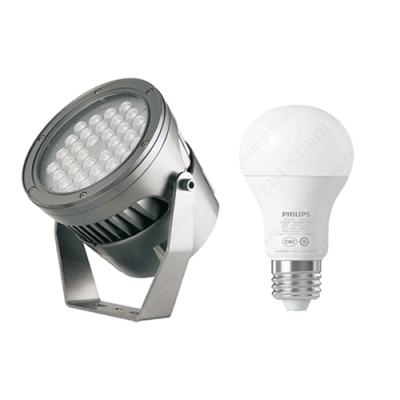 LEDs and Luminaire Test Solutions
 LM-79 and LM-80 Test Solutions
 LED Driver Test Solutions
 Household Appliances Test Solutions
 Mobile and Network Test Solutions
 Automotive Electronics Test Solutions
 Audio-Video and IT Test Solutions
 Cable and Wire Test Solutions
 Plugs and Sockets Test Solutions
 Power Switch Test Solutions
 Transformer Test Solutions
 Electric Toys Test Solutions
 Energy Meter Test Solutions
 Motor-Operated Tool Test Solutions
Select an organization
to browse standards
Abstract
The selection of thermocouple type directly impacts the accuracy, reliability, and cost-effectiveness of temperature measurement in industrial applications. Among the many standardized types, Type K and Type E thermocouples are the most widely used due to their excellent overall performance, yet they exhibit significant differences in material composition, output characteristics, and suitability for specific scenarios. This article aims to systematically analyze what is the difference between Type K and Type E thermocouples. It begins with the fundamental working principle of thermocouples and proceeds with a comparative analysis of Type K (Nickel-Chromium / Nickel-Silicon) and Type E (Nickel-Chromium / Constantan) across key aspects such as temperature range, thermoelectric EMF (sensitivity), stability, cost, and operating environment. Practical selection guidance is provided based on typical application scenarios. Finally, the article discusses how modern Multiplex Temperature Testers can be utilized to efficiently and accurately manage and acquire data from multiple thermocouples in multi-channel monitoring systems, ensuring maximum value from measurement results.
Introduction
Accurate temperature measurement is fundamental for ensuring process control, equipment safety, and product quality in industrial processes, equipment condition monitoring, and laboratory research. Thermocouples have become the dominant choice for contact temperature measurement due to their simple construction, wide temperature range, fast response, and ruggedness. However, engineers often face selection challenges among the many standardized types, such as J, K, T, E, N, S, R, and B. The question of what is the difference between Type K and Type E thermocouples is one of the most frequently asked in practice. Although both are base metal thermocouples with relatively low cost, their inherent physical and chemical properties define their unique “character” and optimal “stage.” Understanding these differences is a prerequisite for avoiding misselection and achieving an optimal measurement solution. This article will provide an in-depth analysis of these two thermocouple types and offer insights into the integration of efficient multi-point temperature measurement systems.
1. Thermocouple Working Principle and Common Foundations
Before discussing the differences, it is essential to understand their common operating principle. Thermocouples operate based on the “Seebeck Effect”: when a closed circuit is formed from two dissimilar conductors (or semiconductors) A and B, and the two junctions are at different temperatures (T, T0), a thermoelectromotive force (EMF) is generated in the circuit. This EMF has a functional relationship with the temperature difference between the junctions. By measuring this EMF, the temperature at the measuring junction (T) can be determined. All standardized thermocouples follow this principle. The difference lies in the specific pairing of electrode materials, which leads to different temperature-EMF relationships (i.e., reference tables), physicochemical properties, and application scopes.
1.1 Type K Thermocouple: The Versatile Workhorse
The Type K thermocouple has a positive leg made of Nickel-Chromium (Ni-Cr) alloy and a negative leg made of Nickel-Silicon (Ni-Si) alloy (also referred to as Nickel-Aluminum in some regions). It is the most widely used base metal thermocouple.
1.2 Type E Thermocouple: The High-Sensitivity Star
The Type E thermocouple has a positive leg made of Nickel-Chromium (Ni-Cr) alloy (same as Type K) and a negative leg made of Constantan (Cu-Ni) alloy. Its most distinguishing feature is high sensitivity.
2. Core Differences Comparison and Selection Guidelines
The table below systematically summarizes the core differences between Type K and Type E thermocouples, providing a clear reference for selection.
Table 1: Core Characteristics Comparison of Type K vs. Type E Thermocouples
| Comparison Dimension | Type K Thermocouple (Ni-Cr / Ni-Si) | Type E Thermocouple (Ni-Cr / Constantan) | Selection Guidance |
|---|---|---|---|
| Temperature Range | -200°C ~ +1250°C (Continuous use advised ≤1200°C) | -200°C ~ +900°C (Continuous use advised ≤800°C) | For measurements above 800°C, Type K is mandatory. For the overlapping mid-to-low temperature range, other characteristics should be considered. |
| Thermal EMF / Sensitivity | Relatively High (~41 µV/°C @0°C) | Highest (~68 µV/°C @0°C) | For applications requiring extreme sensitivity to detect minute temperature changes (e.g., precise low-temperature lab measurements), Type E is preferred. |
| Suitable Atmosphere | Excellent oxidation resistance, suitable for oxidizing atmospheres. Prone to degradation in reducing or sulfur-bearing atmospheres. | Good oxidation resistance, suitable for oxidizing and inert atmospheres. Weak resistance to reducing and sulfur-bearing atmospheres. | Both are suitable in clean oxidizing environments. For complex or reducing atmospheres, select an appropriate protective sheath material for the thermocouple. |
| Stability | Good stability over a wide range, but potential for short-term cycling fluctuations in the 250-550°C region. | Excellent stability in the low-temperature range (especially -200°C to 200°C), typically better than Type K. | Type E is the first choice for precise low-temperature measurement. For processes involving repeated thermal cycling in the mid-temperature region, evaluate the potential impact on Type K. |
| Linearity | Relatively good linearity over a wide range. | Acceptable linearity, but its high sensitivity may make nonlinearity effects more noticeable over wide spans, requiring careful compensation. | Type K holds a slight advantage for applications requiring simple linear processing. |
| Typical Cost | Very low, most widely used, highest cost-effectiveness. | Very low, in the same cost range as Type K. | Cost is typically not a deciding factor between the two. |
| Typical Application Scenarios | Steel metallurgy, heat treatment furnaces, gas-fired equipment, engine exhaust, general industrial process monitoring (<1200°C). | Cryogenic freezing equipment, environmental test chambers, biopharmaceutical processes, plastic molding machines, mid-to-low temperature R&D experiments requiring high resolution. | Make the primary decision based on the upper temperature limit and sensitivity requirement. |
3. Integration of Multi-Channel Temperature Measurement Systems: The Key to Data Acquisition
Regardless of whether Type K or Type E thermocouples are selected, practical applications often require simultaneous temperature monitoring at multiple points. Examples include temperature uniformity testing in multi-zone heat treatment furnaces, thermal distribution surveys of full set, or multi-point temperature rise recording during product reliability tests. This is where the value of a Multiplex Temperature Tester becomes evident.
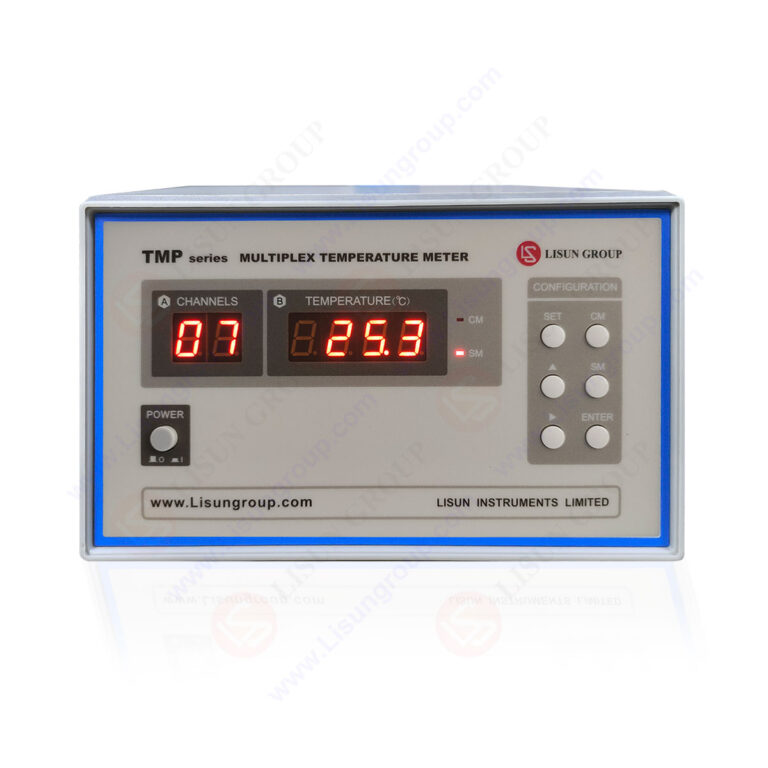
Taking the LISUN TMP-16 Multiplex Temperature Tester as an example, it is a device specifically designed for efficient management of multi-point temperature data. Although this model is configured to support Type K thermocouples by default, its design philosophy perfectly aligns with the needs of multi-channel, automated temperature measurement:
For applications using Type E thermocouples, a correspondingly configured tester model would be required, but the system integration logic remains the same. This integrated approach addresses the inefficiency and dispersion issues associated with traditional single-point temperature instruments, allowing engineers to focus their efforts from tedious data recording to deeper data analysis and process optimization.
Conclusion
What is the difference between Type K and Type E thermocouples? In summary, Type K is a versatile “all-rounder” known for its wide temperature span and excellent oxidation resistance, while Type E is a “specialist” distinguished by its ultra-high sensitivity and superior low-temperature stability. During selection, the upper limit of the measured temperature should be the primary consideration: for temperatures exceeding 800°C, Type K is the only choice. Within the overlapping mid-to-low temperature range, further trade-offs should be made based on requirements for measurement sensitivity, signal strength, and the specific environmental atmosphere.
After making the correct sensor selection, the next crucial step is how to efficiently and reliably acquire and manage temperature data from multiple measurement points. Modern Multiplex Temperature Testers, such as the LISUN TMP-16, are precisely the tools designed for this task. By integrating multi-channel signal acquisition, high-precision measurement, flexible data processing, and communication functions into a single unit, they not only fully leverage the sensing performance of Type K or Type E thermocouples but also elevate multi-point temperature monitoring to a new level of automation and intelligence. Understanding the differences between the sensors themselves and effectively utilizing advanced acquisition systems are both essential for building truly reliable and efficient temperature measurement solutions。
Tags:TMP-16Your email address will not be published. Required fields are marked *

 English
 中文简体
中文简体 English
 Русский
 Español
 Português
 Türkçe
 العربية
 Deutsch
 Polski
 Italiano
 Français
 한국어
한국어 ไทย
ไทย Tiếng Việt
 日本語
日本語