LM-79 Moving Detector Goniophotometer (Mirror Type C)
LSG-6000
High Precision Rotation Luminaire Goniophotometer
LSG-1890B
High Precision Rotation Luminaire Goniospectroradiometer
LSG-1890BCCD

Goniophotometer for Automotive and Signal Lamps
LSG-1950
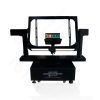
Goniophotometer for Traffic Signal Lamps
LSG-1950S
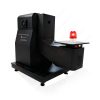
VAD Fire Alarm Visual Alert Device Goniophotometer
LSG-1930
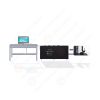
Compact Goniophotometer
LSG-1200A
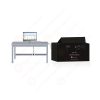
LED Goniophotometer
LSG-1100
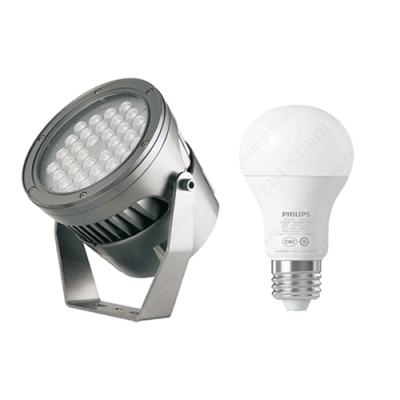 LEDs and Luminaire Test Solutions
 LM-79 and LM-80 Test Solutions
 LED Driver Test Solutions
 Household Appliances Test Solutions
 Mobile and Network Test Solutions
 Automotive Electronics Test Solutions
 Audio-Video and IT Test Solutions
 Cable and Wire Test Solutions
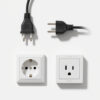 Plugs and Sockets Test Solutions
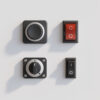 Power Switch Test Solutions
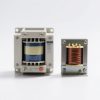 Transformer Test Solutions
 Electric Toys Test Solutions
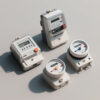 Energy Meter Test Solutions
 Motor-Operated Tool Test Solutions
Select an organization
to browse standards
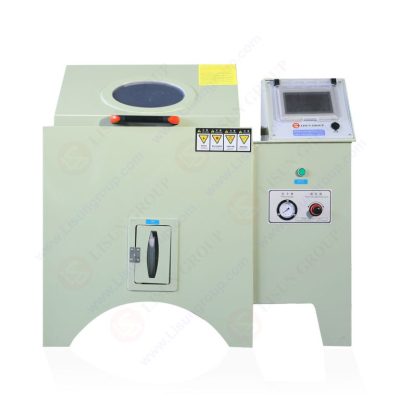
One of the most widely used accelerated corrosion tests, which is used to assess the action of metals and protective coating under constant applications, is the salt fog test. When you have to budget a test system or suppliers, it may be helpful to know the salt spray chamber price can begin in the low-thousand US dollars for basic benchtop systems and escalate well beyond that amount, to large cabinets with climate capability and turnkey test line sales. Both purchasing options and capability of the chambers determine the degree to which the test is true to specimen and how helpful it is in predicting actual world performance.
Such standardized salt fog tests (such as the ASTM B117 and ISO 9227) require a neutral salt solution usually 5% sodium chloride by mass, an ambient chamber temperature of approximately 35 °C and a droplet deposition regime that maintains the specimens constantly moist under a fine spray. The neutral salt spray solution is normally maintained with a pH of approximately 6.5 to 7.2. The resulting nominal settings form a very corrosive, oxygenated aqueous film on the exposed surfaces which increases the electrochemical attack rate on the surface significantly faster than in most ambient atmospheres. The tests can be repeatable across labs because of conformance to the standard procedure, of the solution concentration, tolerance to temperature, and checks of the collection/deposition.
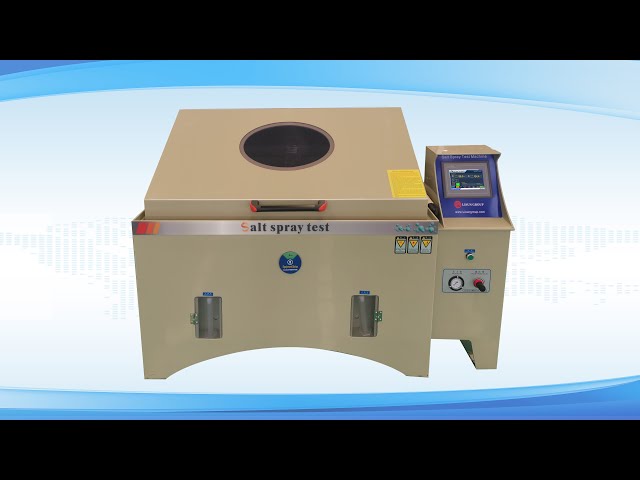
The main corrosion rates in the mist chamber are caused by salt concentration and temperature. When the amount of NaCl is increased, the ionic conductivity of the surface films is enhanced and more intense galvanic currents will occur between the faults on coating and the underlying metal which increases the rate of localized rusting and corrosion affecting the results of underfilm corrosion. Similarly, with increasing temperature in the chamber, the rate of chemical reactions grows, and usually the oxygen solubility in the thin film decreases, both of which may alter the uniform versus pitting-type corrosion balance. Standards stabilize concentration and temperature as slight deviations cause significant and non-linear shifts in time-to-failure; non-conforming laboratories could have data that do not correlate with normative data.
A combination of atomizer, nozzle design and airflow pattern within the cabinet carrying out the nozzle controls distribution of the droplet size and rate of deposition to surfaces of the specimen. A fine aerosol forms an appropriately thin and continuous film of water which prefers constant electrochemical attack, but larger droplets form discontinuous coats of water and pools which can magnify crevices and localized pools that can amplify localized corrosion. The standard mandates that the rate of collection (mass of condensate picked up per unit area per hour) is monitored since this is a factor which is linked to level of wetness to which the specimen is subjected and hence level of test severity.
The one variant is neutral salt spray (NSS). Intentionally lowered pH or the addition of aggressive ions to tests aims to model more hostile or more specific conditions in the field, e.g., acidified or copper-accelerated tests (AASS and CASS). Faster blistering of paint and degrading adhesives are stimulated by acidification, and tarnishing and quick failure of specific coats is facilitated by additions of copper-salt. Selection of the correct variant is also very important: improper test may underestimate or overestimate field behavior, therefore the laboratories and specifiers should align the test chemistry to the anticipated service environment.
The performance of a coating in a salt fog test is based on three simultaneous characteristics of it: its barrier properties, its adhesion to the substrate, and its behavior at defects. Fullan quality barrier coatings retard both uniform and underfilm propagation, retard ion ingress and limit electrolyte access to the metal. Adhesion inhibits coating delamination in the case of the accumulation of osmotic or corrosive pressures at the interface; weak adhesion transforms a slow metal oxidation into a rapid blister and underfilm creep. Localized cells begin to develop at small pinholes, scribe lines or porosity, and this reduces the protection life of the coating of such systems by a very significant margin. Salt fog tests are specifically aimed to exaggerate such failure modes that enamel, powder coat, conversion coating, primers and topcoats can be reliably compared on a controlled stress test.
When a coating is tested in a salt fog test, the results of the test are rooted in three concomitant qualities of the coating namely, its barrier properties, its adhesion to the substrate and how it behaves at defects. Fullan quality barrier coats inhibit uniform and underfilm propagation, inhibit ion ingress and restrict access of electrolyte to the metal. In situations where osmotic or corrosive pressure may accumulate at the interface, adhesion prevents delamination of coating, a tough adhesion will turn a slow metal oxidation into a rapid blister and cream crack. Localized cell formation starts at minuscule punctures, scribe lines or porosity and this diminishes the protective life of the covering of such systems by an extremely considerable percentage. Salt migration testsare explicitly designed to stress such failure models which storage can enamel, powder coat, conversion coating, primers and topcoats can be accurately compared in a controlled stress test.
A choice of chamber and test method involves making a compromise between budget, throughput and representativeness. Simple benchtop salt fog chambers are less expensive, and can be used in the acceptance testing of production-level, although more advanced cabinets with the capability of controlled heating, superior deposition uniformity and automated data recording are very expensive. Using supplier companies such as LISUN, you will discover a variety of machines, accessories that are available to match the size of the work room units through large ones with increased temperature control and nozzle systems; to find the exact price quotes in salt spray chambers that best suit your needs and specification requirements, it is quicker to contact the suppliers directly.
Another option of chamber and test method is to compromise between budget and throughput and representativeness. Less costly is simple benchtop salt mist chambers, and they can be utilized in the acceptance research of production level, though more sophisticated cabinets with the capacity to have controlled heating, excellent deposition uniformity and automated data recording are extremely costly. In supplier firms like LISUN, however, you will then find an assortment of machinery, all of which come in the form of additional accessories, which are available to fit the size of the items of the work room up to large items with inbuilt temperature adjustments and nozzles; to find the precise estimates of price in salt spray chambers that best suit your demands and specifications, it is faster to communicate with the suppliers themselves.
Salt fog test is an effective accelerated test to expose the weak points of the coating and the comparative quality of protective measures yet the test strength is very contingent. Modest alterations in the concentration of NaCl, temperature, droplet deposition, and addition of acids or copper result in significant movement by the corrosion kinetics and the failure modes. Know the usual parameters, select the suitable variant to the conditions of the service and decipher the outcomes as relative predictors instead of exact forecasts of life.
Tags:YWX/Q-015Your email address will not be published. Required fields are marked *

 English
 中文简体
中文简体 English
 Русский
 Español
 Português
 Türkçe
 العربية
 Deutsch
 Polski
 Italiano
 Français
 한국어
한국어 ไทย
ไทย Tiếng Việt
 日本語
日本語