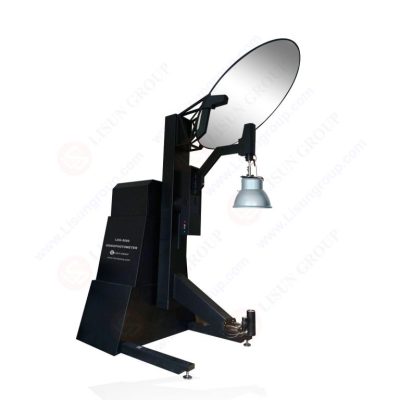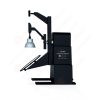
LM-79 Moving Detector Goniophotometer (Mirror Type C)
LSG-6000
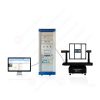
High Precision Rotation Luminaire Goniophotometer
LSG-1890B
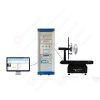
High Precision Rotation Luminaire Goniospectroradiometer
LSG-1890BCCD

Goniophotometer for Automotive and Signal Lamps
LSG-1950
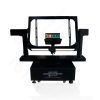
Goniophotometer for Traffic Signal Lamps
LSG-1950S
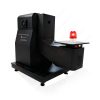
VAD Fire Alarm Visual Alert Device Goniophotometer
LSG-1930
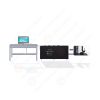
Compact Goniophotometer
LSG-1200A
LED Goniophotometer
LSG-1100
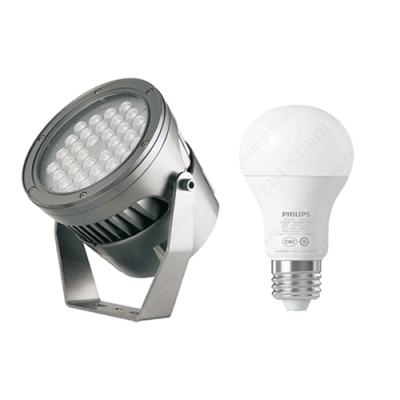 LEDs and Luminaire Test Solutions
 LM-79 and LM-80 Test Solutions
 LED Driver Test Solutions
 Household Appliances Test Solutions
 Mobile and Network Test Solutions
 Automotive Electronics Test Solutions
 Audio-Video and IT Test Solutions
 Cable and Wire Test Solutions
 Plugs and Sockets Test Solutions
 Power Switch Test Solutions
 Transformer Test Solutions
 Electric Toys Test Solutions
 Energy Meter Test Solutions
 Motor-Operated Tool Test Solutions
Select an organization
to browse standards
One of the major requirements of assessing LED luminaires deployed in the commercial, industrial, and outdoor setting is an accurate photometric measurement. An LED goniophotometer will be the main testing tool when the manufacturer requires an intense data, spatial distribution of light, and total luminous flux at standardized conditions. This paper describes the minimum setup specification of LM-79-compliant testing with a primary emphasis on mechanical alignment, electrical stabilization, environmental control, and data integrity along with the real considerations that are applied to an actual laboratory and manufacturing setting.
LM-79 is a commonly accepted standard showcasing certified approaches towards electrical and photometric assessment of products of light in a solid state. LM- 79 unlike a basic lumen measurement using an integrating sphere impact on spatially resolved photometers. Here an LED goniophotometer takes a central part.
An LED goniophotometer is used to measure to the luminous intensity distribution by rotating a photometric detector or a luminaire about specified axes. Under these angular measurements, very important parameter including total luminous flux, the distribution curves of intensity, beam angle and efficiency are determined. Since LM-79 results are frequently utilized in certifications, tenders as well as compliance documentation, the setup precision of the goniophotometer is equally significant to the tool.

Mechanical alignment is one of the most important setup factors of an LED goniophotometer. The tested luminaire should be mounted in such a way that the photometric center of the luminaire is directly facing the rotational axes as spelled out by the system design. Any offset will cause cosine error and distortion of the resulting distribution of intensities.
To meet LM-79 requirements, the mounting specimen must:
• There should be no deformation in holding the luminaire.
• Allow fine three-dimensional positional adjustments.
• Stop motion during prolonged tests
The various luminaires need varying mounting strategies. Smaller interior lights can be attached straight onto standardized fittings whereas streetlights or high-bay lights typically require customized fitting. Professional as well as systems such as that manufactured by LISUN generally have modular mounting accessories with the capability to provide a broad spectrum of luminaire geometries whilst ensuring alignment.
LM-79 does not specify any one goniophotometer geometry, although it has the requirement that the system selected should be appropriate to the size of the luminaire and the light distribution.
The most popular type C systems used with LED luminaires are those used with general lighting. The luminaire is also rotating on two axes and the detector is fixed in this setup. The geometry is easy to interpret data and is compatible with many photometric file formats including IES and EULUMDAT.
In any form, the LED goniophotometer should have a smooth motion, angular resolution sharp and reproducible to position the photometric measurement data, that should be within LM-79 limits.
LM-79 needs tests of luminaires in steady-state electrical and thermal condition. This implies that the LED goniophotometer system should have a low-ripple, stable power supply, with the capability to deliver the manufacture specified input voltage and frequency. Prior to commencement of photometric reading.
One should place the luminaire until it reaches the thermal equilibrium:
• One should place the luminaire until it reaches the thermal equilibrium.
• Monitoring and recording of input voltage and current and power should be done.
• Any embedded drivers or control gears should be working under normal conditions
Unstable power may also cause oscillation of light, and this directly influences the intensity readings. Power analyzers are interlaced with the goniophotometer system into an advanced testing setup with the electrical and photometric results being collected and measured simultaneous to each other.
Temperature affects LED performance directly hence environmental control is an important LM-79 requirement. The test space should not allow any external airflow, hot radiators or temperature variations with the space that may cause changes in luminaire behaviour during testing.
LM-79 photometric testing is normally done in a dark room or a special photometric laboratory where the ambient temperature is controlled. The LED goniophotometer itself is not designed to block the airflow around the luminaire nor should it be a heat sink and artificially cools the LEDs.
In the case of large or high-powered luminaires, the time of thermal stabilization may be significant. Test operators should also note that measurements should not be started until the light output has become steady because an early test will give overstated values of the performance.
Goniophotmetric photometric measure needs that the detector be located in the far-field of the luminaire. The angular light distribution does not vary with the distance in the far field and thus the intensity calculations can be made correctly.
The distance of the minimum detector is determined by:
• The maximum bright dimension of the luminaire.
• Optical design and powder Beam spread
In testing LM-79, this distance is required to be enough to preclude near-field effects. The best LED goniophotometer setups provide suggested distances and do contain calibration programs to determine appropriate geometry. The non-compliance of results can occur due to failure to fulfill far-field conditions in distorting beam angles and intensity peaks.
The main aspect of LM-79 compliance is calibration. The photometer stamping in conjunction with the LED goniophotometer has to be checked by means of references that are traceable. This has the luminous intensity responsivity and angular response calibration.
Calibration should be periodically performed, and all the records of the calibration have to be reported in the test reports. A large number of labs use reference lamps or controlled LED sources to check the performance of their systems prior to and following a test. An example of systems used is LISUN systems, which is set to accommodate traceable calibration processes, which ease compliance documentations.
Software used in control of LED goniophotometer is very important in LM-79 experiments. It has to be able to accurately record the angular positions, synchronize the detector readings and do the appropriate photometric calculations. It should also support the standardized output of the software that is admitted by the lighting designers and certification bodies.
The data integrity requirements consist of:
• Authenticated angular resolution and scanning speed.
• Appropriate detector sensitivity correction made.
• Raw and processed data storage security
The additional error check and repeatability analysis performed automatically also increase the confidence level of the results of photometric measurements reported.
LM-79 compliance is not limited to measurement but is as well regarding the transparent reporting. Test reports should cover the description of the LED goniophotometer system, environmental parameters, electrical parameters, calibration, and the absence of measurement uncertainties.
Formal documentation also means that one can review the results, perform an audit, and reproduce them in case this is necessary. Such rigor is necessary in a case that photometric data applied at regulatory compliance, energy saving initiatives or even large-scale lighting projects.
An LED goniophotometer is a strong instrument in LM-79 compliant measurements however its functionality wholly relies on proper adjustment and stabilization. Proper mechanical centration, reliability in electrical service, thermal stabilization, proper detector geometry, and provenance to calibration are all needed to have reliable photometric measurement. By adhering to these requirements in setup and by utilizing professionally-designed systems like those provided by LISUN, labs and manufacturers can produce LM-79 data with accuracy and repeatability and which can be relied upon throughout the entire lighting sector in the world.
Tags:LSG-6000Your email address will not be published. Required fields are marked *

 English
 中文简体
中文简体 English
 Русский
 Español
 Português
 Türkçe
 العربية
 Deutsch
 Polski
 Italiano
 Français
 한국어
한국어 ไทย
ไทย Tiếng Việt
 日本語
日本語