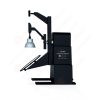
LM-79 Moving Detector Goniophotometer (Mirror Type C)
LSG-6000
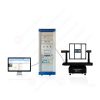
High Precision Rotation Luminaire Goniophotometer
LSG-1890B
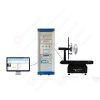
High Precision Rotation Luminaire Goniospectroradiometer
LSG-1890BCCD

Goniophotometer for Automotive and Signal Lamps
LSG-1950
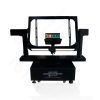
Goniophotometer for Traffic Signal Lamps (Economical Model)
LSG-1950S
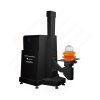
Goniophotometer for Airfield Lighting
LSG-1940
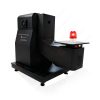
VAD Fire Alarm Visual Alert Device Goniophotometer
LSG-1930
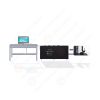
Compact Goniophotometer
LSG-1200A
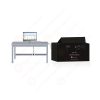
LED Goniophotometer
LSG-1100
Near Field Moving Detector Goniophotometer
LSG-1900B
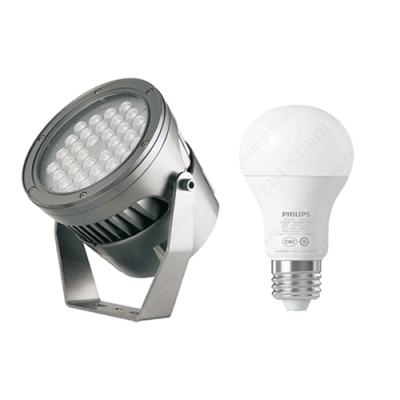 LEDs and Luminaire Test Solutions
 LM-79 and LM-80 Test Solutions
 LED Driver Test Solutions
 Household Appliances Test Solutions
 Mobile and Network Test Solutions
 Automotive Electronics Test Solutions
 Audio-Video and IT Test Solutions
 Cable and Wire Test Solutions
 Plugs and Sockets Test Solutions
 Power Switch Test Solutions
 Transformer Test Solutions
 Electric Toys Test Solutions
 Energy Meter Test Solutions
 Motor-Operated Tool Test Solutions
Select an organization
to browse standards
Abstract
Damped oscillatory magnetic fields are a typical transient electromagnetic interference triggered by switching operations or fault events in power systems. In the laboratory, precise simulation of this interference using professional Magnetic Field Generators is crucial for evaluating the electromagnetic compatibility of electronic devices. This article delves into the technical principles and standard frameworks of this test. Using the Lisun DOMF61000-10 Damped Oscillatory Magnetic Field Immunity Test System as a technical example, it details how modern instruments achieve this test with high precision, providing a core verification method for ensuring the stable operation of critical equipment in fields like power protection and industrial control within complex electromagnetic environments.
1. Introduction
In modern industrial and power systems, electronic devices are densely deployed within complex electromagnetic environments. Transient processes generated instantaneously during switching operations, lightning strikes, or system faults can induce high-intensity damped oscillatory magnetic fields and damped oscillatory waves in space and on equipment conductors. Characterized by high frequency (typically 100kHz and 1MHz) and damped oscillation, this interference can easily penetrate devices, leading to severe consequences such as microprocessor resets, relay malfunctions, or protection device failures, directly threatening system safety and stability. Therefore, precisely simulating and replicating this interference scenario in a laboratory environment using professional Magnetic Field Generators is of paramount importance for assessing and improving the electromagnetic compatibility (EMC) of electronic devices.
2. Technical Principle Analysis of Damped Oscillatory Magnetic Fields
The damped oscillatory magnetic field immunity test is a standardized method for evaluating whether electrical and electronic equipment can maintain normal performance when subjected to such transient magnetic field interference. Its technical core lies in accurately simulating the time-domain and frequency-domain characteristics of the interference.
This test strictly adheres to a series of international and national standards. Among them, IEC 61000-4-10 and its equivalent GB/T 17626.10 are the foundational standards, specifying the test levels, waveforms, methods, and site requirements. Simultaneously, standards like IEC 255-22-1, IEC 255-22-3, ANSI C37.90, and GB/T 14598.13 provide more specific test requirements for particular devices, such as relay protection equipment which is critical to power systems, with a particular focus on 1MHz damped oscillatory immunity.
The core measurement metrics of the test include:
• Magnetic Field Strength: Simulates the intensity of the interference, typically ranging from 0 to 100 A/m, corresponding to different severity levels.
• Oscillation Frequency: Determines the primary frequency points where interference energy is distributed. Standards specify two key frequencies: 100kHz and 1MHz.
• Waveform Parameters: Include Rise Time (required to be 75ns±20%, determining the steepness of the interference) and Attenuation Characteristics (required to decay to half of the first peak’s value between the 5th and 10th peaks). These two are key to defining the damped oscillatory waveform and ensuring test consistency and comparability.
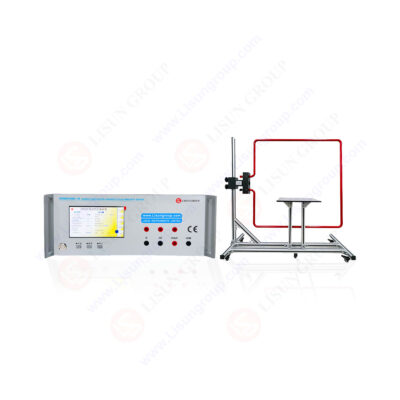
DOMF61000-10__Damped Oscillatory Magnetic Field Immunity Tester
3. Modern Instrument Implementation: The Example of Lisun’s DOMF61000-10
The Lisun DOMF61000-10 Damped Oscillatory Magnetic Field Immunity Test System is a prime example of a modern instrument that accurately implements the aforementioned technical principles. This integrated system, comprising a damped oscillatory wave generator and a single ring coil, transforms the abstract parameters from standard documents into a precisely reproducible physical magnetic field in the laboratory through high-precision digital control and power amplification technology.
The system ensures test accuracy and efficiency through the following designs:
• Fully Programmable Parameter Control: Users can continuously and finely adjust all key parameters via a large LCD touch screen, including magnetic field strength, oscillation frequency, pulse polarity (positive, negative, or auto-alternating), repetition frequency, burst width, and interval, meeting both standard requirements and custom research needs.
• High-Fidelity Waveform Reproduction: The core circuitry of the generator is specially designed to ensure the output waveform’s rise time and attenuation characteristics strictly comply with standard tolerances, guaranteeing the accuracy of the test stimulus signal from the source.
• Built-in Automated Test Procedures: The system incorporates IEC standard-recommended test levels and step voltage test functions, guiding users to quickly complete standard compliance testing, improving efficiency and reducing human setup errors.
The table below details the technical parameters of the DOMF61000-10 for achieving core test requirements:
| Technical Parameter | Specification and Capability | Technical Value Provided |
|---|---|---|
| Magnetic Field Strength | 0 ~ 100 A/m, Continuously Adjustable | Fully covers IEC standard-defined test levels 1 to 5, meeting evaluation needs from general to extremely harsh environments. |
| Oscillation Frequency | 100kHz, 1MHz | Precisely locks onto the two standard characteristic frequencies, simulating the most typical mid-to-high-frequency transient interference. |
| Pulse Polarity | Positive, Negative, Positive/Negative Auto-Alternating | Simulates unpredictable polarity in real interference, enabling more comprehensive and rigorous device immunity testing. |
| Rise Time | 75ns ± 20% | High-precision control of the pulse leading edge ensures the transient characteristics of the interference match the standard definition. |
| Attenuation | Decays to half of the first peak’s value between the 5th and 10th peaks | Precision damping control circuitry ensures the envelope attenuation of the oscillatory waveform conforms to the standard, a key distinction from ordinary pulses. |
| Repetition Frequency | 1~80Hz (at 100kHz); 1~500Hz (at 1MHz), Adjustable | Simulates the repetition rate of interference, allowing evaluation of device performance stability under continuous disturbance. |
| Burst Width / Interval | 1~9999s, Adjustable | Supports long-duration steady-state testing and complex timing burst testing, suitable for a wide range of application scenarios. |
4. Application Scenarios and Industry Value
The damped oscillatory magnetic field immunity test is not an abstract laboratory exercise but directly serves product quality and system safety in several key industries. By conducting pre-compliance testing and problem diagnosis using systems like the DOMF61000-10, companies can effectively enhance product reliability and reduce market risks.
The table below elaborates on the practical problems this test solves across different industries:
| Application Industry | Typical Equipment Under Test | Interference Scenarios Faced & Problems Solved by Testing |
|---|---|---|
| Power Systems & Protection | Relay Protection Devices, Smart Meters, Merging Units | Circuit breaker operations and isolator switching within substations generate intense damped oscillatory magnetic fields, which may cause protection maloperation or failure, leading to significant incidents. Testing verifies their reliability under standard-specified (e.g., IEC 255-22-1) 1MHz burst interference. |
| Industrial Automation & Control | PLCs, Industrial PCs, Sensors, Variable Frequency Drives | The start/stop of high-power motors, VFDs, and the operation of relay cabinets in factories create complex electromagnetic environments. Testing ensures control cores do not experience program crashes or I/O signal errors under interference, guaranteeing continuous and stable production line operation. |
| Automotive Electronics | Engine ECUs, Battery Management Systems, On-Board Chargers | In automotive electrical systems, ignition coils, relay actions, and DC motor commutation all generate damped oscillatory transients. Testing is a crucial step in meeting standards like ISO 7637, ensuring driving safety and functional integrity. |
| Medical Devices & Lab Equipment | Vital Signs Monitors, High-Precision Analytical Instruments | Ensures equipment does not exhibit display errors, data fluctuation, or functional failure in hospital or laboratory electromagnetic environments (e.g., near large equipment start-up), which is critical for diagnostic accuracy and patient safety. |
5. Conclusion
In summary, damped oscillatory magnetic fields, as a distinct and significantly harmful type of electromagnetic interference, require standardized testing as an indispensable verification step in the electromagnetic compatibility design of electronic devices. Modern Magnetic Field Generators, exemplified by the Lisun DOMF61000-10, translate international standards into executable, reproducible test solutions through high-precision, flexible engineering implementation. This not only provides R&D engineers with reliable tools for optimizing product design but also establishes objective and consistent evaluation criteria for quality inspection departments. Furthermore, it promotes the safe, reliable, and stable operation of critical infrastructure in power, industry, transportation, and other fields within complex electromagnetic environments. Its value extends far beyond a single test, forming an essential cornerstone supporting product quality and industrial technological advancement.
Your email address will not be published. Required fields are marked *

 English
 中文简体
中文简体 English
 Русский
 Español
 Português
 Türkçe
 العربية
 Deutsch
 Polski
 Italiano
 Français
 한국어
한국어 ไทย
ไทย Tiếng Việt
 日本語
日本語