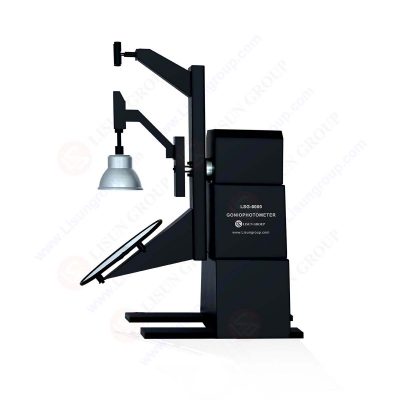
LM-79 Moving Detector Goniophotometer (Mirror Type C)
LSG-6000
High Precision Rotation Luminaire Goniophotometer
LSG-1890B
High Precision Rotation Luminaire Goniospectroradiometer
LSG-1890BCCD

Goniophotometer for Automotive and Signal Lamps
LSG-1950
Goniophotometer for Traffic Signal Lamps (Economical Model)
LSG-1950S
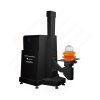
Goniophotometer for Airfield Lighting
LSG-1940
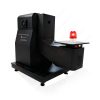
VAD Fire Alarm Visual Alert Device Goniophotometer
LSG-1930
Compact Goniophotometer
LSG-1200A
LED Goniophotometer
LSG-1100
Near Field Moving Detector Goniophotometer
LSG-1900B
 LEDs and Luminaire Test Solutions
 LM-79 and LM-80 Test Solutions
 LED Driver Test Solutions
 Household Appliances Test Solutions
 Mobile and Network Test Solutions
 Automotive Electronics Test Solutions
 Audio-Video and IT Test Solutions
 Cable and Wire Test Solutions
 Plugs and Sockets Test Solutions
 Power Switch Test Solutions
 Transformer Test Solutions
 Electric Toys Test Solutions
 Energy Meter Test Solutions
 Motor-Operated Tool Test Solutions
Select an organization
to browse standards
Proper testing of performance of lighting is the key to product safety, efficiency and acceptance regarding regulations in the global market. Goniophotometry is of a central importance in the process as they offer a detailed analysis of light distribution, and light intensity by the aid of a highly controlled instrument for measuring light intensity able to capture directional photometric data. International photometric standards are based on this approach since it reports the performance of a luminaire in practice in a real setting and not on some unrealized laboratory assumption.
The solution to lighting regulations is not confined to the magnitude of a source at one point. Rather they consider the distribution of light in space, its efficiency to light productive target regions, and its visual comfort effects. Goniophotometry allows the assessment by simply rotating either the luminaire or detector around set angular values and measuring the intensity at each position. The obtained data is the foundation of the documentation of compliance in the global framework.
Photometric requirements are specified in angular terms of intensity distribution on an international standard, like CIE, IEC or regional standards. These standards presuppose that the light output depends on the direction and the change has to be measured with accuracy. Goniophotometry is actually made to satisfy this need with the measurement of luminous intensity at an angle.
Goniophotometry also unlike simplified testing which assumes symmetrical or uniform emission captures optical lens, reflector, diffuser, and geometry asymmetries of the housing. This is specifically relevant to contemporary LED lighting sources, where in many cases the design of the light is done using a complex optical system to create the desired light patterns. Standards of compliance refer to photometric files created using goniophotometric measurement, thus taking this approach an obligatory step rather than an optional addition.
Standards regulatory bodies use standardized data in photometry to ensure that the products do not exceed the service and safety standards. Goniophotometric determinations produce intensity distributions curves which describe light behaviour in every direction. Based on such data, engineers come up with major compliance parameters, including total luminous flux, beam angle, cutoff angle and luminous intensity maxima.
These parameters are compared with regulatory parameters. In roadway lighting, for instance, the standards that are set indicate the minimum and maximum values of lighting intensity at a given angle in order to avoid glare and at the same time the lighting is adequate. Light laws can establish the maximum reach of the upwards lights to limit light pollution. Goniophotometry gives the raw data that can be used to carry out these comparisons correctly.
Since the angular positions are frequently mentioned in standards, goniophotometric measurement is the only way to achieve the resolution required to indicate conformity. The other procedures are not as detailed as they should be to allow regulatory acceptance.

Not only is accuracy required in compliance testing, it needs repeatability as well. Goniophotometric systems would adhere to specified measurement geometries such that their results would be repeatable in other laboratories. The angular step size, distance between the luminaire and the detector and the rotational axes are all standardized to a minimum level of variation.
A good goniophotometer will have good alignment and control of motion to have an understanding that every angular measure gets an equivalent of the direction of interest. Any variance would add uncertainty to the information, which might create compliance conflicts.
Repetition is of particular concern to products being tested on a number of occasions during development or in batches of production. Regular goniophotometric standards enable engineers to check the design changes unbiasedly and ensure that the design margins are not reduced.
In the case of compliance documentation, it is customary to hand in standardized photometric information files. Some formats like the IES, EULUMDAT and CIE files are directly based on goniophotometric measurements. These files are the angular intensity files which are used by lighting designers, regulators, and certification bodies to recreate real life lighting situations.
These formats are supported by Goniophotometry which produces complete angular data sets as opposed to partial measurements. Measurement data are then processed by software and transformed and standardized into files, without interpolation errors. This immediate connection between documentation and measurement will make the results more trustworthy and make regulation review easier.
These file formats with no goniophotmetric input would be inaccurate to do meaningful simulation and compliance testing.
Several global photometric standards have standards of glare and psychological comfort. High-angle intensities may be uncomfortable or unsafe especially in roads and the workplace. These high-angle emissions are found very accurately using goniophotometry.
Goniophotometric data shows the angular range of an object where a luminaire is higher than the glare limits specified in a lighting standard. Before full certification engineers are then able to adjust optical materials to eliminate undesirable emissions. This active measure prevents the redesigning that is costly following regulatory testing.
Directional data is essential in calculating visual comfort measures, which may explain why goniophotometry is a compliance instrument and not an analytical one.
Energy efficiency requirements usually measure the efficiency of a luminaire with regard to the conversion of electrical power to usable light. Goniophotometric measurements assist in ascertaining the proportion of emitted light that is utilized in the functional illumination to the amount that is squandered as spill or loss to the surroundings.
Through angular distribution, regulators will be able to determine the way a product presents light at the point of need. This helps in adhering to the energy efficiency labels and regulations. Goniophotometry therefore makes the performance directly connected to sustainability goals.
This process works to the advantage of manufacturers because goniophotometric data is used to maximize optical design, and enhance compliance as well as competitiveness in the market.
Traceable measurement accuracy is needed on regulatory compliance. Goniophotometric systems are calibrated against reference light sources and detectors with which measurements are connected with national or international standards. Such traceability guarantees the application of actual photometric performance data, and not instrument bias in reporting data.
Calibration Tests Detector sensitivity and angular positioning precision and system stability check. In the event that test reports are examined by compliance authorities, traceable calibration is used to ensure that the results are credible. Manufacturer supplied systems like LISUN are also based on the principle of supporting everyday calibration without interrupting the laboratory processes to preserve the integrity of measurements over time.
The goods exported to foreign markets have to meet various regulations, most of which have photometric underpinnings in common. Goniophotometry provides manufacturers with the capability to produce a single high quality data set that can be used to make a variety of compliance submissions.
Companies do not need to take the measurements again in every market instead they use the standardized goniophotometry that is universally accepted. This saves the cost of testing, shortens the process of product certification, and makes products launches easier. The approach hence becomes an interface between the engineering development and certifications.
Goniophotometry plays a major role in proving the compliance with international photometric standards as it is a determination of accurate directional light intensity data through an efficient instrument for measuring light intensity. Its capability to acquire full angular distributions facilitates regulatory check, glare test, energy efficiency test and standardized report. Modern lighting products were not determinable where there was no goniophotmetric measurement against global standards of compliance.
Companies like LISUN are continuing to develop this technology which means that laboratories are able to comply with even stricter regulatory demands with confidence. With the continuing development of lighting criteria and the optical innovation, goniophotometry is still one of the pillars of compliant, safe and efficient lighting design.
Your email address will not be published. Required fields are marked *

 English
 中文简体
中文简体 English
 Русский
 Español
 Português
 Türkçe
 العربية
 Deutsch
 Polski
 Italiano
 Français
 한국어
한국어 ไทย
ไทย Tiếng Việt
 日本語
日本語