LM-79 Moving Detector Goniophotometer (Mirror Type C)
LSG-6000
High Precision Rotation Luminaire Goniophotometer
LSG-1890B
High Precision Rotation Luminaire Goniospectroradiometer
LSG-1890BCCD

Goniophotometer for Automotive and Signal Lamps
LSG-1950
Goniophotometer for Traffic Signal Lamps
LSG-1950S
Compact Goniophotometer
LSG-1200A
Near Field Moving Detector Goniophotometer
LSG-1900B
 LEDs and Luminaire Test Solutions
 LM-79 and LM-80 Test Solutions
 LED Driver Test Solutions
 Household Appliances Test Solutions
 Mobile and Network Test Solutions
 Automotive Electronics Test Solutions
 Audio-Video and IT Test Solutions
 Cable and Wire Test Solutions
 Plugs and Sockets Test Solutions
 Power Switch Test Solutions
 Transformer Test Solutions
 Electric Toys Test Solutions
 Energy Meter Test Solutions
 Motor-Operated Tool Test Solutions
Select an organization
to browse standards
Abstract
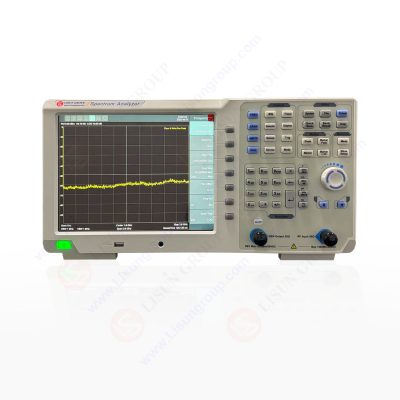
The spectrum analyzer, a core testing instrument in the RF and microwave engineering fields, plays a key role in converting time-domain electrical signals into frequency-domain spectra, visually displaying the signal’s frequency components and power distribution. This article aims to systematically answer the fundamental question: “What is a Spectrum Analyzer Used For?“. First, it explores the basic principles and technical evolution of spectrum analysis, then delves into its critical applications in communications R&D, electronic manufacturing, and scientific research. By introducing key technical specifications of modern spectrum analyzers, with a focus on LISUN’s SPA series (specifically the SPA-3P6G portable spectrum analyzer), the article provides engineers, researchers, and industry enthusiasts with a clear framework for understanding the practical value of spectrum analyzers and how to choose the right model.
1. Introduction: Unveiling the “Frequency Spectra” of the Signal World
In modern electronic systems such as wireless communication, broadcast navigation, and radar, signals are often carried as electromagnetic waves in the frequency domain. A seemingly simple time-domain waveform may be a complex superposition of multiple sine wave components at different frequencies and amplitudes. Observing such a waveform on an oscilloscope is like trying to identify the ingredients of a mixed soup just by looking at its color—it’s not easy to extract the essential information. To accurately analyze the frequency composition, power strength, modulation quality, and interference of signals, a specialized instrument is required—the spectrum analyzer.
So, when we ask “What is a Spectrum Analyzer Used For?”, the core answer is: It serves as a “radio telescope” for observing, measuring, and analyzing the frequency spectrum structure of signals. It helps answer key questions such as “What frequency components are in the signal?”, “What is the strength of each component?”, and “Are there any unwanted spurious signals or interference?”. Whether ensuring clear calls on mobile phones, validating Wi-Fi router performance, or diagnosing complex electromagnetic interference issues, the spectrum analyzer is an indispensable tool for engineers.
2. Spectrum Analyzer: Working Principle and Technology Types
2.1 Basic Principles: From Time Domain to Frequency Domain Conversion
The core mathematical basis for spectrum analyzers is the Fourier transform. Its physical implementation mainly follows two technological paths:
• Sweep Spectrum Analyzer: Traditional and widely used, this method works similarly to a narrowband filter whose central frequency can be automatically adjusted. The internal local oscillator performs a linear sweep, gradually converting different frequency components of the input signal to a fixed intermediate frequency for filtering and amplitude detection. The amplitude variation across the frequency is displayed as a frequency spectrum on the screen. This approach offers large dynamic range and high precision.
• Fast Fourier Transform (FFT) Analyzer: Based on digital signal processing, this method samples the input signal at high speed, digitizes the time-domain waveform, and then applies an FFT algorithm to directly compute its frequency-domain representation. This method is extremely fast, capable of capturing transient signals, and ideal for real-time analysis.
Modern high-end spectrum analyzers often integrate the benefits of both technologies, forming an “FFT-Sweep Hybrid” analysis mode, to handle testing needs ranging from steady-state signals to transient pulses.
2.2 Key Performance Parameters Explained
To understand “What is a Spectrum Analyzer Used For?”, one must know how key specifications determine its applicability:
• Frequency Range: The minimum and maximum frequencies the instrument can analyze, determining its application scope (e.g., audio, RF, microwave).
• Resolution Bandwidth (RBW): The smallest frequency gap between two adjacent signals that the analyzer can distinguish. The narrower the RBW, the better it can resolve closely spaced spectral components.
• Displayed Average Noise Level (DANL): The intrinsic noise level of the instrument, affecting its ability to detect weak signals. The lower the DANL, the higher the sensitivity.
• Phase Noise: An indicator of the short-term stability of the signal’s frequency, affecting the ability to measure pure signals and identify nearby spurious signals.
3. Core Applications: How Spectrum Analyzers Solve Real-World Problems
The answer to “What is a Spectrum Analyzer Used For?” comes to life in various engineering applications.
3.1 Wireless Communication System R&D and Deployment
This is the most classic application of a spectrum analyzer. In the development of base stations, mobile phone modules, and Bluetooth/Wi-Fi chips, engineers use spectrum analyzers to measure key parameters such as transmitter output power, spectral emission templates, adjacent channel leakage ratio (ACLR), and modulation accuracy, ensuring compliance with communication standards. In network deployment and maintenance, they are used for site frequency clearance, interference source detection, and signal coverage quality assessment.
3.2 Electronic Device Design and Electromagnetic Compatibility (EMC) Testing
Any electronic device may inadvertently emit electromagnetic noise or be affected by external interference. During EMC pre-compliance testing, spectrum analyzers, combined with near-field probes, help locate radiation sources on circuit boards, assisting design engineers in optimizing layouts and wiring. In formal certification tests, spectrum analyzers are crucial for measuring conducted and radiated emissions, ensuring devices don’t interfere with other equipment or cause electromagnetic pollution.
3.3 Education and Scientific Research
In university laboratories, spectrum analyzers serve as visual aids for teaching communication principles and signal processing courses. In research, they are used to analyze acoustic signals, vibration signals, optical spectra (after photoelectric conversion), making them versatile tools for both basic research and cutting-edge explorations.
3.4 Manufacturing Testing and Fault Diagnosis
In manufacturing, spectrum analyzers are used for quick functional verification of wireless modules on production lines. During equipment maintenance, comparing the spectral characteristics of normal versus faulty devices helps engineers quickly locate faults in RF links, such as insufficient amplifier gain, distorted filter characteristics, or local oscillator lock failures.
| Application Area | Specific Tasks | Core Function of Spectrum Analyzer | Key Measurement Parameters |
|---|---|---|---|
| Communication R&D | Transmitter Testing | Verify signal purity and compliance | Output power, ACLR, EVM, spectral template |
| Communication R&D | Receiver Testing | Assess receiver sensitivity and interference immunity | Channel power, SNR, blocking and intermodulation characteristics |
| EMC Testing | Pre-compliance Diagnosis | Locate electromagnetic leakage points | Narrowband/broadband noise amplitude, radiation frequencies |
| EMC Testing | Standard Certification | Quantify device electromagnetic emission levels | Peak/average emission values under detection |
| Field Maintenance | Wireless Network Optimization | Evaluate channel occupancy and interference | Channel power spectrum density, occupancy, interference signal frequency and strength |
| Field Maintenance | Interference Troubleshooting | Locate and identify abnormal signal sources | Signal frequency, modulation type, direction (with antenna) |
| Manufacturing | Module Functional Testing | Quickly verify RF module performance | Key frequency point power, frequency errors |
| Education/Research | Signal Analysis Experiments | Visually display signal frequency spectrum | Sine wave spectrum, AM/FM sidebands, digital modulation spectrum |
4. Modern Portable Solutions: The LISUN SPA-3P6G Example
As technology advances, spectrum analyzers are evolving towards portability and smart functionality. The SPA-3P6G portable spectrum analyzer by LISUN exemplifies how laboratory-grade functions can be integrated into a field-ready device, addressing the real-world question: “What is a Spectrum Analyzer Used For?” in the field.
The SPA-3P6G covers a wide frequency range from 9 kHz to 6 GHz, capable of handling testing needs from traditional broadcast to 4G/5G, Wi-Fi, and other mainstream wireless technologies. It boasts a low Displayed Average Noise Level (DANL) of -165 dBm/Hz, ensuring exceptional sensitivity to detect weak signals. The instrument supports various demodulation functions (AM/FM/ASK/FSK), enabling it to not only “see” signals but also “interpret” some of them, which is vital for interference identification and signal monitoring.
Its portability and rugged design make it easy for engineers to carry the device to towers, rooftops, and factory floors for real-time spectrum monitoring, interference detection, or wireless device installation and tuning. The long-lasting battery and intuitive touchscreen UI significantly lower operational barriers, making it an ideal tool for network optimization engineers, field maintenance personnel, and educational institutions. The SPA-3P6G portable spectrum analyzer extends the power of spectrum analysis from the laboratory to every location where it’s needed.
5. Conclusion: An Indispensable RF Multimeter
Returning to the original question, “What is a Spectrum Analyzer Used For?“, we can clearly see that its applications are far from limited to a single measurement task. It is the “check-up doctor” for wireless communication systems, the “detective” for electromagnetic compatibility, the “stethoscope” for electronic fault diagnosis, and the “decoder” for understanding complex signal worlds.
From large desktop analyzers to compact portable devices, the technical forms of spectrum analyzers continue to evolve, but their fundamental mission remains unchanged: to convert invisible electromagnetic waves into visible, quantifiable data, providing the essential technical support needed
Tags:SPA-3P6GYour email address will not be published. Required fields are marked *

 English
 中文简体
中文简体 English
 Русский
 Español
 Português
 Türkçe
 العربية
 Deutsch
 Polski
 Italiano
 Français
 한국어
한국어 ไทย
ไทย Tiếng Việt
 日本語
日本語