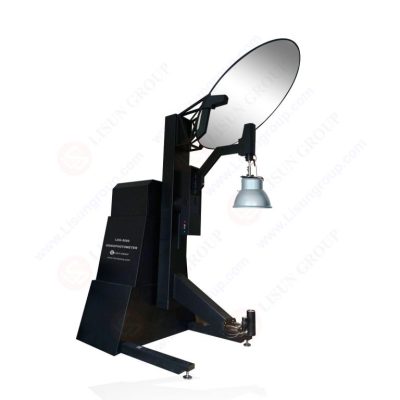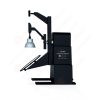
LM-79 Moving Detector Goniophotometer (Mirror Type C)
LSG-6000
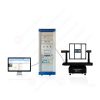
High Precision Rotation Luminaire Goniophotometer
LSG-1890B
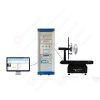
High Precision Rotation Luminaire Goniospectroradiometer
LSG-1890BCCD

Goniophotometer for Automotive and Signal Lamps
LSG-1950
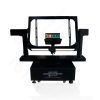
Goniophotometer for Traffic Signal Lamps (Economical Model)
LSG-1950S
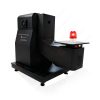
VAD Fire Alarm Visual Alert Device Goniophotometer
LSG-1930
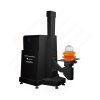
Goniophotometer for Airfield Lighting
LSG-1940
Compact Goniophotometer
LSG-1200A
LED Goniophotometer
LSG-1100
Near Field Moving Detector Goniophotometer
LSG-1900B
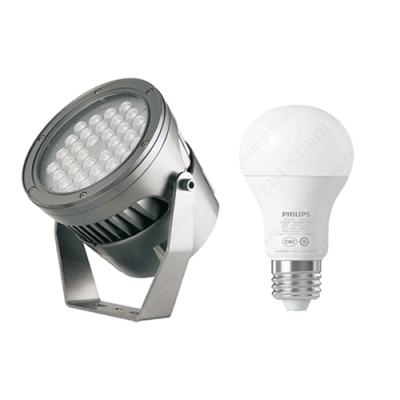 LEDs and Luminaire Test Solutions
 LM-79 and LM-80 Test Solutions
 LED Driver Test Solutions
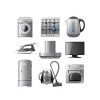 Household Appliances Test Solutions
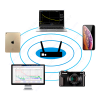 Mobile and Network Test Solutions
 Automotive Electronics Test Solutions
 Audio-Video and IT Test Solutions
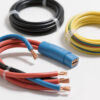 Cable and Wire Test Solutions
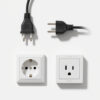 Plugs and Sockets Test Solutions
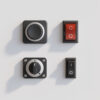 Power Switch Test Solutions
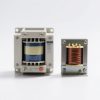 Transformer Test Solutions
 Electric Toys Test Solutions
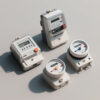 Energy Meter Test Solutions
 Motor-Operated Tool Test Solutions
Select an organization
to browse standards
The current LED lighting systems no longer have bare power and brightness values in printed packets or packaging. End users require real-life lighting behaviour, i.e. what is the width of the beam, how evenly illuminated an object is, and at what currents will the light remain constant. These values are a subject of laboratory measurements done with a specialized device called a goniophotometer, which measures the luminous intensity in a series of angular orientations of the measuring apparatus. A rotating system, unlike static integrating spheres to take, receives directional output profile and recovers full-angular distribution.
Optics, reflectors, diffusers, lens and asymmetric beam-forming geometry are some of the common optics used in LED luminaires. Due to the application-based lighting of modern lighting: roadway illumination, stage lighting, architectural facade lighting, industrial workspace lighting, a directional measurement system offers real performance data beyond the labels of luminance.
The distribution features of the light define the successful work of an LED luminaire in real conditions. When a lamp creates large luminous flux but concentrates the majority of it in a small cone, the light scattering is great in other directions. An example is street lighting which should cast an illumination to areas adjacent to reduce dark areas in between lights. The lighting of the tasks done within the premises should be uniform. This performance when measured on one front reading cannot give complete output behavior.
In a goniophotometer, the luminaire is rotated to many angular positions and the intensity of radiant output is measured at each angular position. The resultant information will be an intensity distribution curve. Photometric spread, beam divergence and zone-based efficiency are examined by LISUN by use of this curve.

Goniophotometric system goniophotometric system A goniophotometric system measures the light emitted by the object under study at various angles based on mechanical rotation. Generally it can be divided into two, rotating-mirror systems and moving-detector ones. With rotating-fixture, the LED product turns around.
Whichever set up chosen, the instrument records luminous intensity at a given angular range. The detector is adjusted to be proportional to the real visible energy as opposed to the glare perception. After a measurement points are taken, it is interpolated with giving a continuous graph using software. This graph is able to convert intensity data which is directional to luminous flux as total values.
Directional values are used to determine total luminous flux instead of its actual values. The process incorporates the intensities in the sphere of measurement. When there is no change in intensity with angle, the overall calculation of flux gets predictable. Most luminaires are, however, very different between the center and the edges. A single area can produce three times the amount of energy as another.
Localized changes in the intensity of the goniophotometer are captured and valued as part of composite fluxes. This rebuilt flux is specifically applicable to luminaires based on reflector-shaping elements, LED COB modules with secondary collimation optics and semi-customized retail lighting modules.
The beam angle of the luminous intensity is the point where the luminous intensity has reduced by half. A great number of LEDs producers mark their luminaires as 30°, 60°, or 120° spreads. This angle cannot be determined visually and one has to detect it with great accuracy at slightly changing angles.
Intensity decreases slowly with the center axis. The goniophotmetric instrument determines the points at which the intensity is less than 50 of the peak level of intensities. Examples can include roadway luminaires, where the angles along the length of the roadways tend to be steep as compared to the width.
Once angular profile data is created, engineers have a calibrated illumination meter that they make use of to confirm values on the surfaces. This proves not only emitted power, but provided enlightenment. Goniophotometry explains the behavior of emission, and surface measure confirms use.
Light meters will give the readings of lux at real mounting distances. Such a correlation has shown efficiency of the system following losses of optically by the installation height, lenses diffusion, air scattering, and surface reflectance.
The surface lighting is discontinuous when the intensive is changing by sharply varying between angles. Uniform arrangement is needed in industrial settings to eliminate any shadows around the assembly areas. Soft-edge gradients are also more appealing to architectural lighting designers to prevent a visual hinge.
Standard photometric files in either IES or LDT format are given by a goniophotometer. These files are the mathematical definition of spatial distribution and they are represented by software to simulate the lighting layout way before it is installed. Contractors install luminaires virtually and analyze their coverage and fix spacing between the fixtures.
Calibration makes the measurements accurate in the measurement process. Sensors become bad with time passing through the aging of photodiodes, addition of heat and dust. Measurement of unknown luminaires can be tested even after the calibration to assure valid baseline output has been met.
Calibration is the consideration of stray light in an environment of the measuring chamber. Properly designed goniophotometric room excludes external sources of lighting such that sensor measurements represent the true performance of luminaires only.
The policies on energy focus on lumens per watt rating and not wattage. A highly efficient luminaire with angular distribution of light may be technically efficient and weak in light of areas. There is actual utilization ratio which is seen by photometric distribution.
Energy efficiency is authenticated by guidelines in the directional values. In case goniophotometric measures demonstrate too much loss of output at the periphery of the beam, there must be product claims adjusted. Some of the certificates usually tend to demand photometric evidence of uniform distribution at specified mounting heights.
The goniophotometric results have been used in the quality categorization processes to develop a development of fittings. Distribution curves among batches are compared between the manufacturers which make the stability among production runs. Angular spread is also altered by the tiniest angular movements of LED lens position or reflector design.
Purchases of similar optical output are placed in binning systems which are fed by data collected. Angular spread modules having the same electrical effectiveness are separated according to target applications.
The behavior of beam varies with the distance. A lamp with a projected lumens of 2000 lumens can produce a small focused light in the short distance but weak in the long distances. Narrow beam fixtures on the other hand provide usable light over long distances although it looks less bright in proximity.
The conversion is proved by the illumination meter. As the goniophotometer defines angular shape, field usability is measured by lux measurements. Both sets of results are correlated by engineers in specification of commercial fixtures.
A modern goniophotometer is used to measure the luminous flux and beam angle distribution by measuring the directional intensities by angular steps. It builds entire lighting profiles mathematically, and it is a good predictor of how equipment is going to act in real-life applications. Photometric testing is complete, not partial, through rotational assessment, complete measurement of surface illumination through an illumination meter, and complete calibration.
The tool is still vital in the development of LED fixtures, planning roads and buildings, architectural modeling, energy efficiency testing and certification of products. Correct angular characterization guarantees the designers the knowledge of both emitted power and usable illumination, which allows its successful use in the real lighting systems.
Lisun Instruments Limited was found by LISUN GROUP in 2003. LISUN quality system has been strictly certified by ISO9001:2015. As a CIE Membership, LISUN products are designed based on CIE, IEC and other international or national standards. All products passed CE certificate and authenticated by the third party lab.
Our main products are Goniophotometer, Integrating Sphere, Spectroradiometer, Surge Generator, ESD Simulator Guns, EMI Receiver, EMC Test Equipment, Electrical Safety Tester, Environmental Chamber, Temperature Chamber, Climate Chamber, Thermal Chamber, Salt Spray Test, Dust Test Chamber, Waterproof Test, RoHS Test (EDXRF), Glow Wire Test and Needle Flame Test.
Please feel free to contact us if you need any support.
Tech Dep: Service@Lisungroup.com, Cell/WhatsApp:+8615317907381
Sales Dep: Sales@Lisungroup.com, Cell/WhatsApp:+8618117273997
Your email address will not be published. Required fields are marked *

 English
 中文简体
中文简体 English
 Русский
 Español
 Português
 Türkçe
 العربية
 Deutsch
 Polski
 Italiano
 Français
 한국어
한국어 ไทย
ไทย Tiếng Việt
 日本語
日本語