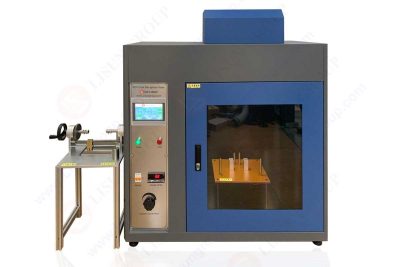
Abstract In the safety design of electrical and electronic products, preventing the ignition of surrounding materials due to overheating of internal heating elements (such as resistance wires, motor windings) is a crucial issue. The Hot Wire Ignition (HWI) test, as a standardized method simulating such overheating fault scenarios, provides key data for evaluating the resistance to ignition of soli...

Abstract: This paper explores the critical role of Hot Wire Flammability Testing Equipment in evaluating the ignition hazards of electronic and household appliance materials. The focus is on the LISUN RSY-LT RF Hot Wire Ignition Tester, a state-of-the-art tool designed to simulate real-world conditions for testing the fire safety of various materials. We delve into its technical specifications, o...

Abstract As the demand for consumer electronics and household appliances increases, so does the need for stringent safety measures to ensure that the materials used in these products do not pose significant fire risks. Flammability test methods are essential for evaluating the fire resistance of materials in electronics and household appliances. This paper provides an in-depth overview of the Hot ...

What is Hot Wire Test? Hot wire test is a common experiment methodology that is used to study the combustibility and thermal stability of materials. By placing the material above the hot wire and heating the hot wire, it is possible to evaluate the fire hazard and fire protection performance of the material by observing whether the material is ignited and the burning behavior after ignition. Prin...

 中文简体
中文简体 English
 Русский
 Español
 Português
 Türkçe
 العربية
 Deutsch
 Polski
 Italiano
 Français
 한국어
한국어 ไทย
ไทย Tiếng Việt
 日本語
日本語