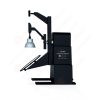
LM-79 Moving Detector Goniophotometer (Mirror Type C)
LSG-6000
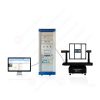
High Precision Rotation Luminaire Goniophotometer
LSG-1890B
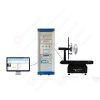
High Precision Rotation Luminaire Goniospectroradiometer
LSG-1890BCCD

Goniophotometer for Automotive and Signal Lamps
LSG-1950
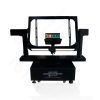
Goniophotometer for Traffic Signal Lamps (Economical Model)
LSG-1950S
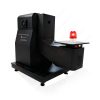
VAD Fire Alarm Visual Alert Device Goniophotometer
LSG-1930
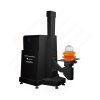
Goniophotometer for Airfield Lighting
LSG-1940
Compact Goniophotometer
LSG-1200A
LED Goniophotometer
LSG-1100
Near Field Moving Detector Goniophotometer
LSG-1900B
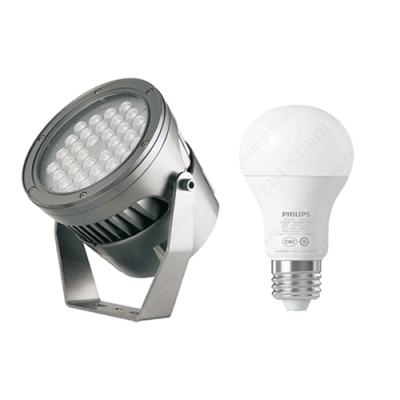 LEDs and Luminaire Test Solutions
 LM-79 and LM-80 Test Solutions
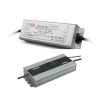 LED Driver Test Solutions
 Household Appliances Test Solutions
 Mobile and Network Test Solutions
 Automotive Electronics Test Solutions
 Audio-Video and IT Test Solutions
 Cable and Wire Test Solutions
 Plugs and Sockets Test Solutions
 Power Switch Test Solutions
 Transformer Test Solutions
 Electric Toys Test Solutions
 Energy Meter Test Solutions
 Motor-Operated Tool Test Solutions
Select an organization
to browse standards
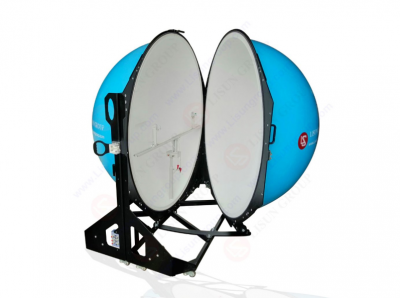
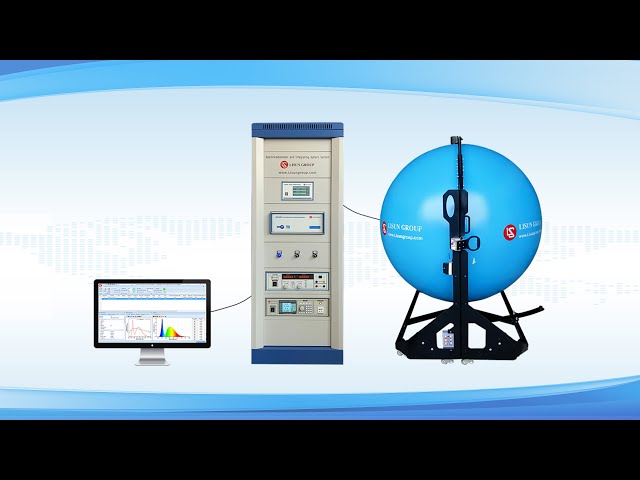
The high rate of development of solid-state lighting has generated the demand of precise and dependable luminous flux measurements. To develop energy-saving LED systems, the optical output, color stability, heating impacts and reality lumen depreciation have to be evaluated accurately. The most common method of this measure is one found on an integrating sphere which is an optical enclosure that is specially designed to receive the emitted total light of a lamp or semiconductor emitter irrespective of the direction of the emitted light.
As opposed to point-based measurement techniques, via diffuse reflective walls, the integrating sphere takes an average of the radiant energy. This averaging removes the effects caused by an angle and a real value of total luminous output is obtained. This technique is extremely important in manufacturers, certification laboratories and photometric R&D centers, where traceable measurement accuracy is needed with regard to LED testing instruments.
Spatial averaging is the principle behind the very heart of an integrating sphere measurement system. Light emitted by an LED only a small portion hits the detector in a direct manner. Most of them strike the inner surface of the ball, and scatter in every direction before reaching to the sensor. Such multi-scatterers produce a homogenous photometric interior surface.
Quality measurement highly depends on the coating material. High-performance integrating spheres employ the reflectance values of above 95 and extremely low fluorescence in their coatings. Due to the high peak wavelengths of LEDs, spectral neutrality of coating is of extreme substance.
The sphere diameter is very important to select. In case the sphere is too small, self-absorption can be high since the LED and its holder will block internal reflections. When the sphere is too huge the optical attenuation is large resulting to weak detector response.
Normal sphere diameters when working with LED measuring tools are 0.3 meters to 2 meters in dependability on the size of a product and the quantity of luminous intensity produced. Larger sphere is preferable to use lamps, luminaires or multi-chip modules whereas smaller spheres are perfect to use single-LED die evaluation activities.
Spatial uniformity is also subject to inner geometry. Direct light must be prevented to fall upon the detector because direct incidence adjusts detector amplitude artificially. An integrating sphere is designed with many sets of baffles such that light to the detector has gone through a series of reflective interactions and averaging accuracy is enhanced.
In the measurement of luminous flux, it is mandatory to temperature stabilize LED. The luminous flux variation of LEDs is caused by the heating of the junction points and thus the output has to be measured under constant electrical and thermal conditions.
Professional laboratories ascertain:
• A specified period of stabilization.
• Uniform current compliance.
• Regulated heat dissipation.
• Start of measurement when stabilization threshold of flux is achieved
Lumen difference, even in small changes of the junction temperature, can be measured particularly between prototypes, production lots, or other thermal degradation conditions used in LM-80 aging tests.
An integrating sphere is a measured instrument of accurate luminous flux that takes a methodological approach. This is done by initially taking an ambient reference, system baseline calibration before followed by standardized testing. The calibration step involves the use of laboratory quality reference lamps which already contain traceable optical values. Measurement of such lamps is done in the sphere to establish conversion coefficients between photodiode measurements and absolute luminous flux measurements.
The manufacturers LISUN produce high-grade systems that combine these calibration cycles using automated sequences, photometric linearity correction, spectral error compensation, and as well as digital calibration recall.
After calibration of the system, LED samples are excited. The detectors collect emitted flux and convert it into photometric units by taking the integrating sphere and the detector respectively.
Table: Typical calibration values used in sphere-based luminous measurements
| Calibration Parameter | Typical Range | Notes |
| Sphere reflectance | ≥ 95% | Ensures uniform scattering efficiency |
| Photodetector accuracy | ±1% | Higher precision ensures reliable flux conversion |
| Temperature stability | ±0.5°C | Necessary for LED stabilization |
| Calibration lamp uncertainty | ≤ ±2% | Traceability requirement |
| Stabilization time | 10–30 minutes | Depends on LED power rating |
The luminous output by LED is highly variable with the temperature. When forward current is increased junction temperature reduces in a non-linear fashion. This degradation takes a character of that commonly 10-20% along with high-stress temperature situations. Mechanisms of thermal stabilization have to be incorporated in order to counter this effect to integrate the sphere systems.
Professional setups use:
• Heat-sink mounting brackets
• Precision current drivers
• Low-resistance wiring connections Low resistance wiring.
• Logging of data using temperature change.
Junction heat is not the only environmental impact. Output consistency is affected by ambient chamber temperature, pre-burn period and ripple in the waveform.
In cases where the LEDs are used to generate spectral distributions with sharp peaks, the conventional photometric sensors may cause bias in the measurement. When detector sensitivity fails to conform to the luminous efficiency curve of human incumbering matter, spectral discrepancy takes place. The integrating sphere counters this replacement by calibrated spectroradiometric sensors, rather than the simple photodiodes.
New LED testing devices have inbuilt spectrometers with inbuilt spectral correction. Correction algorithms use the lamp spectrum weighting store to come up with correct luminous flux without the manual compensation process.
Heatsinks, LED packages, wiring fixtures, as well as mounting accessories absorb some luminous flux. This is what is referred to as self-absorption. Otherwise, it will not pay, and will give incorrectly calculated lumens.
Professional procedures of measurement compensate by:
1. Measurement of sphere baseline in the absence of DUT.
2. Measurement when DUT is off
3. Measuring with DUT powered on
4. Applying correction coefficients.
This makes sure that end-results of final measurements are not distorted by light absorption by supporting structures.
With the developments of LED modules of museum status, saturation of the detector can occur. The exposure above sensor linear areas will give false reads. Laboratories can avoid this by either using attenuation filters or choosing high flux detector channels with low sensitivity.
Properly designed integrating sphere measurement systems include:
• Dual detector channels
• Auto-ranging detective circuits.
• Low-noise amplification
• Unnecessary redundant calibration coefficients
This guarantees proper flux capture in both low and high intensity in use.
The centers conducting research which assesses LED phosphor mixes use sphere systems which are used to check the efficiency of phosphor conversion. Manufacturers that measure driver thermal load profile test the flux variation at varying temperatures. The creators of high-brightness modules measure the luminous decay in accelerated aging. Batch production teams are used to certify suppliers. These groups can measure the performance metrics in an objective manner using a calibrated integrating sphere.
Integrating sphere is one of the most accurate optical working instruments that are applied in the field of evaluation on full luminous flux in LED. Thermal stability in mounting and complex sensor compensation logic, the sphere is able to make very reliable measurements. The accuracy or repeatability of spectral stability available in modern systems embedded in LED testing instruments is not repeatable using conventional directional methods of measurement. Laboratories fitted out with systematic processes have acquired jotting amount in making sense of quantifying LED performance at each phase of product growth between material formulation and market manufacturing, so that engineering decisions are in accordance to genuine luminous ability, as opposed to calculation variability.
Lisun Instruments Limited was found by LISUN GROUP in 2003. LISUN quality system has been strictly certified by ISO9001:2015. As a CIE Membership, LISUN products are designed based on CIE, IEC and other international or national standards. All products passed CE certificate and authenticated by the third party lab.
Our main products are Goniophotometer, Integrating Sphere, Spectroradiometer, Surge Generator, ESD Simulator Guns, EMI Receiver, EMC Test Equipment, Electrical Safety Tester, Environmental Chamber, Temperature Chamber, Climate Chamber, Thermal Chamber, Salt Spray Test, Dust Test Chamber, Waterproof Test, RoHS Test (EDXRF), Glow Wire Test and Needle Flame Test.
Please feel free to contact us if you need any support.
Tech Dep: Service@Lisungroup.com, Cell/WhatsApp:+8615317907381
Sales Dep: Sales@Lisungroup.com, Cell/WhatsApp:+8618117273997
Your email address will not be published. Required fields are marked *

 English
 中文简体
中文简体 English
 Русский
 Español
 Português
 Türkçe
 العربية
 Deutsch
 Polski
 Italiano
 Français
 한국어
한국어 ไทย
ไทย Tiếng Việt
 日本語
日本語