LM-79 Moving Detector Goniophotometer (Mirror Type C)
LSG-6000
High Precision Rotation Luminaire Goniophotometer
LSG-1890B
High Precision Rotation Luminaire Goniospectroradiometer
LSG-1890BCCD

Goniophotometer for Automotive and Signal Lamps
LSG-1950
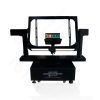
Goniophotometer for Traffic Signal Lamps (Economical Model)
LSG-1950S
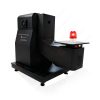
VAD Fire Alarm Visual Alert Device Goniophotometer
LSG-1930
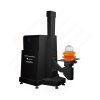
Goniophotometer for Airfield Lighting
LSG-1940
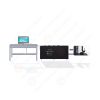
Compact Goniophotometer
LSG-1200A
LED Goniophotometer
LSG-1100
Near Field Moving Detector Goniophotometer
LSG-1900B
 LEDs and Luminaire Test Solutions
 LM-79 and LM-80 Test Solutions
 LED Driver Test Solutions
 Household Appliances Test Solutions
 Mobile and Network Test Solutions
 Automotive Electronics Test Solutions
 Audio-Video and IT Test Solutions
 Cable and Wire Test Solutions
 Plugs and Sockets Test Solutions
 Power Switch Test Solutions
 Transformer Test Solutions
 Electric Toys Test Solutions
 Energy Meter Test Solutions
 Motor-Operated Tool Test Solutions
Select an organization
to browse standards
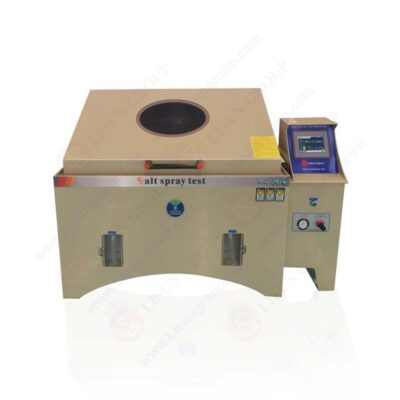
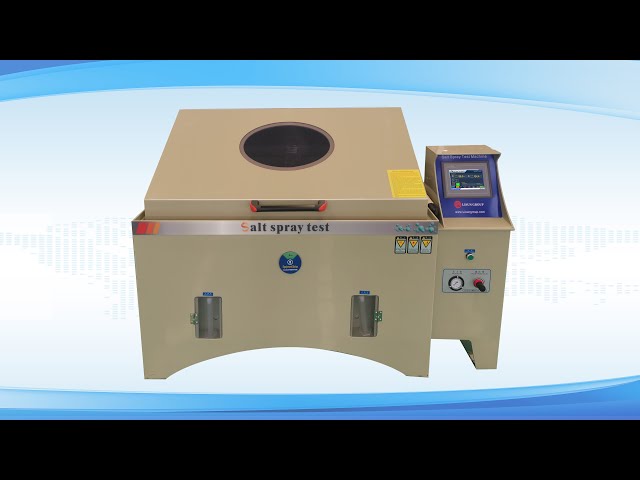
Testing corrosion resistance is an essential demand in marine hardware, industrial hardware, metal surface finishes, connector housing, electro-plated parts, valves and in coated automotive hardware. In such applications, the corrosion process does not have an immediate effect; it develops slowly by a combination of atmospheric moisture, ionic contaminants and oxygen. In long periods of time under conditions of controlled exposure, a salt mist test chamber allows the development of natural mechanism of corrosion, and the density of the provided mist is constant. The consistency of the fog maintained during several hours comes to be the basis of the correct predictive performance.
Contrary to the traditional environmental testing, salt mist testing will need a homogenized salt particle distribution so that sample surfaces all obtain equal loads of corrosive. The inconsistency of the occurrence of the fog density results in conflicting results: the parts that are in the proximity of fog nozzle can corrode more rapidly than the parts at the edges of the chamber. A controlled room, consequently, incorporates no location-bias, and scientific reliability is guaranteed. The stability is of particular concern to such surface finishes as comparing varying surface finish, thermally cured paints, zinc layers, anodized finishes, or multilayer chemical finishes.
Pressurized air combines with a 2.0 M (Molar) sodium chloride solution when the chamber begins to form salt mists. The mechanism of fog formation is not just an atomization but a selective transformation of liquid into the small particles of each similar size that may remain suspended in the air long enough to evenly settle in the atmosphere. This is because proper attainment of the fog is reliant on-air pressure, nozzle geometry, purity of brine, temperature of solution, stability in solubility concentration, and resonance of atomization piping. Too dry air forms non-uniform particulate clusters whereas, too wet air influences the settling rate.
In a properly constructed salt mist laboratory, fog settles slowly in a chamber that is properly designed. This eliminates high deposition in the nozzle and low deposition in the extreme opposite end. To ensure such a balance, the airflow is added at controlled intervals that ensure the mist distribution is saturated. Any irregularity in this beat alters the level of corrosion and interferes with the timelines of coating evaluation.
Accurate corrosion study requires homogenous temperatures since variation in temperature affects the rate of ionic reactions. Due to this reason, both internal aires and solution temperatures are stabilized at the same chamber. The sodium chloride solution contained in the reservoir is already preheated such that droplets of the fog leaving the nozzle are similar in temperature behavior as they condense on the samples.
The temperature anomaly causes incorrect interpretation particularly of painted or powder-coated panels. Certain coatings resist diffusion of corrosion more in gradients of temperature constant, other finite corrosion at the onset of changes in humidity levels. These properties are determined by the manufacturers under controlled chamber exposure.
Heating systems in chambers to the industrial level are thermally isolated to the exterior cabinet such that the outer thermal loss has no impact on the internal equilibrium.
In order to ensure uniformity of corrosion, there must be stability of concentration. An average salt mist test normally uses NaCl at given percentages. Monitoring is necessary on a daily basis since the evaporation subtly changes values on changes in concentration. A proper chamber can exclude unreasonable evaporation through control of the temperature of brine and closure of vapor avenues. At lower grade designs, there is a significant change in salt concentration changes and the aggressiveness of the fog.
Droplet neutrality requires droplets not to be chemically shift anisotropic in terms of transport. Corrosion changes according to variations in the PH. According to plated zinc products, one is the pH difference that accelerates the formation of white rust. Equally, thin chrome finishes acquire dark oxidation points sooner, in a stronger acidic environment. The constant pH conditions enable the engineers to make a scientific comparison of the coating formulations. LISUN provides the best salt spray test chamber.
In cases where the density of the fog is constant, the corrosion thickness develops in predictable rates. Deposition rate, however, does not simply depend on droplet concentration, and highly depends on specimen orientation. Vertical panels do not carry the spray as the horizontal mounted spray panels do. Even stainless-steel chambers need so accurately spaced sample holders such that the liquid run-off of high samples will not contaminate the low sample areas.
The internal mount positions ensure that no sample is shadowed by another sample in order to do uniform corrosion analysis. The design of sound chambers guarantees the delivery of a low velocity in the fog to avoid directional biasing, but to be active enough to retain aerosol suspension.
Depending on specification, corrosion test can take as long as 36 hours, 72 hours, 240 hours or even 1000 hours. During these extended periods, there is mechanical wear of the equipment used in generating mogs, sedimentation of solutions, scaling of the nozzle and diversion of air. This is corrected by a consistent salt mist test chamber, via an automatic nozzle flushing cycle, pressurized pump stabilization, and in some designs solution recirculation bypass design.
The value of re-circulation should not pollute concentration values. Rather it maintains consistency of distribution of fogs even during changes in external humidity. Other more sophisticated systems use dehumidification of make-up air to clean the chamber but make sure it does not condense on the walls of the chamber but instead on the surfaces where corrosion should occur.
The generation of fogs is associated with certain values of air pressure, which should not change during tests. Using low air pressure results in big droplets which are immediately settled. You have high pressure, which causes very fine particles which pose excessive air time. Balancing between the two dynamic areas can be used to make sure that the thickness of the deposition is in line with certified standards of corrosion.
In modern systems, the airflow is continuously monitored by feedback regulators to eliminate variable values of pressure. The compressed air is filtered by the moisture control, and then mixed with brine to avoid non-standard condensation.
Laboratories are used to confirm the density of mists beforehand by means of a set of sampling plates. These plates accumulate deposition rate of salts during a period of control. The outcome gives values of deposition of the mass of the fog. Calibration guarantees that the conditions in the real chambers are set to the industrial standards and, therefore, there is a predictable corrosion trend.
The calibration is also done periodically not just at the beginning of the testing, but also at other times when the long-cycle is running. The loss of weight of samples during the course of tests is also monitored by engineers to ensure corrosion looks. This high traceability creates trust in the comparative analysis among the suppliers of coating.
The comparison of specifications to budget expectation is an important business goal of organizations that examine various models, as exposure time impacts laboratory operation cost. Others compare using price of salt spray test without remembering that only price cannot be used to define the accuracy of assessments. The real cost is in the fact that stability of fog density is long-term, nozzle architecture is designed without any need of maintenance, and heating modules have to last long.
With time, the system of low grade will move in fog concentration making retesting necessary. Retesting networks of sample batches can frequently cost more than the difference in price of lower-grade designs and laboratory-grade designs in the first instance.
An efficient salt mist test chamber with a constant fog concentration, constant droplet concentration and constant ionic deposition will ensure that samples corrode in a uniform pattern over a sample. The true evaluation reliability can be observed when temperature, purity of solution, and precision of pressure and saturation of the fog are the same. In situations when the coating performance, efficacy of sealing, stability of metal substrate, the plating adhesion, or post-treatment effect are studied in the laboratory, the most significant parameter will be the fog control.
Salt spray test price alone solely as a selection criterion with no technical controls will result in low consistency and low correlations between the laboratory data and actual deployment life cycle. High stability chambers enable corrosion findings to be transformed into engineering documentation as opposed to experimentation disparities, enhancing their formulation validation and forecasting a sustainable evaluation.
Lisun Instruments Limited was found by LISUN GROUP in 2003. LISUN quality system has been strictly certified by ISO9001:2015. As a CIE Membership, LISUN products are designed based on CIE, IEC and other international or national standards. All products passed CE certificate and authenticated by the third party lab.
Our main products are Goniophotometer, Integrating Sphere, Spectroradiometer, Surge Generator, ESD Simulator Guns, EMI Receiver, EMC Test Equipment, Electrical Safety Tester, Environmental Chamber, Temperature Chamber, Climate Chamber, Thermal Chamber, Salt Spray Test, Dust Test Chamber, Waterproof Test, RoHS Test (EDXRF), Glow Wire Test and Needle Flame Test.
Please feel free to contact us if you need any support.
Tech Dep: Service@Lisungroup.com, Cell/WhatsApp:+8615317907381
Sales Dep: Sales@Lisungroup.com, Cell/WhatsApp:+8618117273997
Your email address will not be published. Required fields are marked *

 English
 中文简体
中文简体 English
 Русский
 Español
 Português
 Türkçe
 العربية
 Deutsch
 Polski
 Italiano
 Français
 한국어
한국어 ไทย
ไทย Tiếng Việt
 日本語
日本語