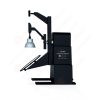
LM-79 Moving Detector Goniophotometer (Mirror Type C)
LSG-6000
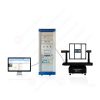
High Precision Rotation Luminaire Goniophotometer
LSG-1890B
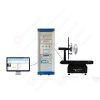
High Precision Rotation Luminaire Goniospectroradiometer
LSG-1890BCCD

Goniophotometer for Automotive and Signal Lamps
LSG-1950
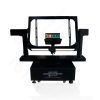
Goniophotometer for Traffic Signal Lamps (Economical Model)
LSG-1950S
VAD Fire Alarm Visual Alert Device Goniophotometer
LSG-1930
Goniophotometer for Airfield Lighting
LSG-1940
Compact Goniophotometer
LSG-1200A
LED Goniophotometer
LSG-1100
Near Field Moving Detector Goniophotometer
LSG-1900B
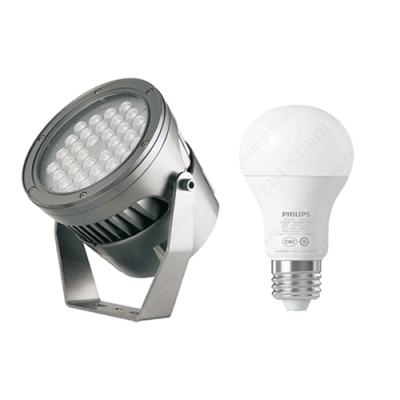 LEDs and Luminaire Test Solutions
 LM-79 and LM-80 Test Solutions
 LED Driver Test Solutions
 Household Appliances Test Solutions
 Mobile and Network Test Solutions
 Automotive Electronics Test Solutions
 Audio-Video and IT Test Solutions
 Cable and Wire Test Solutions
 Plugs and Sockets Test Solutions
 Power Switch Test Solutions
 Transformer Test Solutions
 Electric Toys Test Solutions
 Energy Meter Test Solutions
 Motor-Operated Tool Test Solutions
Select an organization
to browse standards
In November 2025, a severe fire in Tai Po, Hong Kong, filled people’s hearts with profound sorrow. Amid the roaring flames, textiles inside the building, such as curtains, carpets and decorative fabrics, burned rapidly. The toxic smoke released and the fast-spreading blaze not only narrowed the escape routes but also posed immense challenges to the rescue operations. This tragedy serves as a stark reminder once again: the flame-retardant properties of textiles are by no means mere cold technical figures, but a crucial line of defense safeguarding life safety. And professional combustion testing technologies and equipment stand as the core force in curbing risks at their source.
In fire scenarios, the combustion characteristics of textiles directly determine the window of opportunity for evacuation. Statistics show that toxic gases like carbon monoxide emitted from burning textiles can cause asphyxiation within 30 seconds. Each extra second of accelerated flame spread leads to a significant drop in the survival rate of those trapped. Had the textiles used at the scene of the Tai Po fire undergone rigorous flame-retardant tests, with properties of slowing down flame spread and reducing smoke emission, they might have bought more evacuation time for the trapped people and lowered the risk of casualties. This lies at the very essence of textile combustion testing—it is not a perfunctory procedure conducted in laboratories, but a proactive safeguard that uses scientific methods to predict risks and protect lives.
Flame-retardant safety of textiles has long permeated every corner of daily life. Indicators such as after-flame time, flame spread rate and damaged area of burning textiles—ranging from children’s pajamas and household quilts to decorative fabrics in shopping malls, hotel carpets, and even protective clothing for firefighters and power workers—are directly related to the users’ life safety. Just imagine: overly fast-burning children’s pajamas could inflict fatal harm on kids; decorative fabrics in public places lacking flame retardancy would act as accelerants once a fire breaks out; and if protective clothing fails to fend off flame attacks, frontline workers would be directly exposed to high-risk environments. Therefore, comprehensive and rigorous combustion testing of textiles is an indispensable requirement for ensuring public safety and safeguarding family happiness.
Scientific combustion testing cannot be achieved without precise technical standards and professional testing equipment. Comprehensive testing standards have long been formulated domestically and internationally for textiles used in different scenarios and of various types, such as ASTM D6413 – 99, GB/T 14645 – 2014 and ISO 6941. These standards provide a unified “safety benchmark” for flame-retardant performance testing, ensuring that test results are objective, comparable and authoritative. The series of textile flame-retardant testing equipment developed by Shanghai Lisung Group serves as a vital means to implement these standards, leveraging technological strength to make safety verification more accurate and reliable.
For close-fitting textiles like children’s pajamas, LISUN’s vertical combustion testing equipment complies with the ASTM D6413 – 99 standard. By simulating combustion scenarios where textiles are vertically hung, it accurately records key data including ignition time and after-flame time. Equipped with a timer with a precision of 0.01 seconds, it can capture the smallest changes during combustion, ensuring that products meet the required flame-retardant performance standards. Models integrated with fume hoods can also properly handle test smoke, balancing environmental protection and operational safety. For decorative fabrics in public venues such as shopping malls and hotels, the LS-GBT14645 45° angle combustion testing equipment adheres to standards like GB/T 14645 – 2014. It accurately measures the damaged area and ignition time from a testing angle that closely mimics real – world usage, providing scientific basis for the selection of fabrics in public spaces.
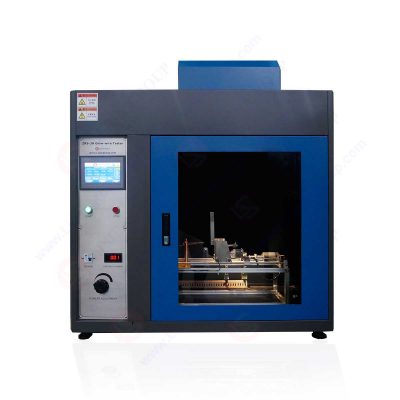
In terms of flame spread rate testing, the dedicated LS-GBT14644-2 equipment eliminates human operational errors through precise timing and automatic data storage, enhancing the reliability of test results. As for testing equipment designed for textiles used in specialized fields like protective clothing, it complies with the ISO 6941 standard and can simulate flame conditions under various scenarios, strictly ensuring the quality of the “protective armor” for frontline workers. These devices carry no complicated commercial gimmicks; instead, they integrate the concept of “preventing problems before they occur” into every test through solid technical performance.
The tragedy of the Tai Po fire has already happened, but the warning it leaves behind deserves to be etched in memory forever: flame-retardant safety of textiles has never been an “additional question” in industrial development, but a “mandatory question” concerning public safety. Every link, from the formulation of standards and the R&D of testing equipment to enterprise quality control and industry supervision, bears the responsibility of protecting lives. The testing equipment developed by Shanghai Lisung is just one of the many guardians of safety. With its precise technologies and humanized designs, it strengthens the line of defense for textile safety.
The ultimate value of technology lies in protecting human lives. Only when every textile product undergoes rigorous combustion testing and meets all flame-retardant safety standards can we secure an extra second of survival when a fire strikes. It is hoped that in the future, flame-retardant testing will become a standard factory – exit procedure for every textile product. May tragedies similar to the Tai Po fire never repeat themselves, and may the warmth of technology build an impenetrable safety barrier for everyone’s life.
Tags:LS-ASTMD6413 , LS-GBT14644-2 , LS-GBT14645Your email address will not be published. Required fields are marked *

 English
 中文简体
中文简体 English
 Русский
 Español
 Português
 Türkçe
 العربية
 Deutsch
 Polski
 Italiano
 Français
 한국어
한국어 ไทย
ไทย Tiếng Việt
 日本語
日本語