LM-79 Moving Detector Goniophotometer (Mirror Type C)
LSG-6000
High Precision Rotation Luminaire Goniophotometer
LSG-1890B
High Precision Rotation Luminaire Goniospectroradiometer
LSG-1890BCCD

Goniophotometer for Automotive and Signal Lamps
LSG-1950
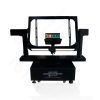
Goniophotometer for Traffic Signal Lamps
LSG-1950S
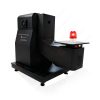
VAD Fire Alarm Visual Alert Device Goniophotometer
LSG-1930
Compact Goniophotometer
LSG-1200A
LED Goniophotometer
LSG-1100
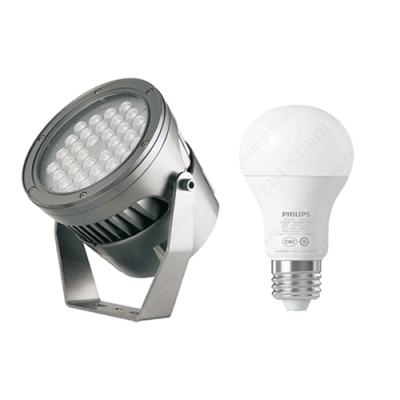 LEDs and Luminaire Test Solutions
 LM-79 and LM-80 Test Solutions
 LED Driver Test Solutions
 Household Appliances Test Solutions
 Mobile and Network Test Solutions
 Automotive Electronics Test Solutions
 Audio-Video and IT Test Solutions
 Cable and Wire Test Solutions
 Plugs and Sockets Test Solutions
 Power Switch Test Solutions
 Transformer Test Solutions
 Electric Toys Test Solutions
 Energy Meter Test Solutions
 Motor-Operated Tool Test Solutions
Select an organization
to browse standards
Ferrite core testing is a critical quality assurance process in electronic component manufacturing, ensuring magnetic performance and reliability across diverse applications. Ferrite core testing methods have evolved significantly with advancements in measurement technology, enabling precise evaluation of magnetic flux density, permeability, and core losses.
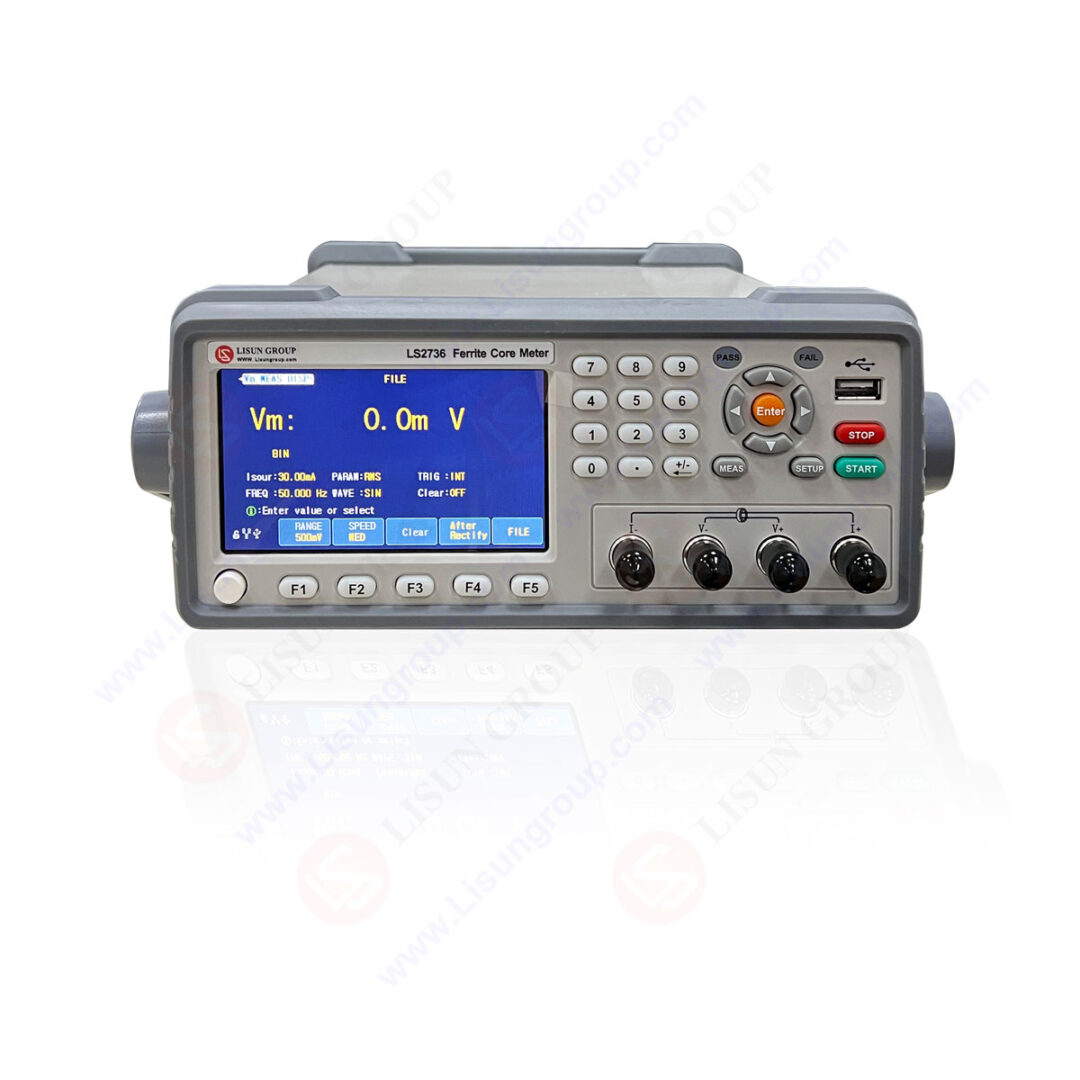
This paper examines comprehensive testing methodologies, including the intelligent Ferrite Core Meter series (LS2736/LS2737), which combines true RMS and average measurement modes for enhanced accuracy. The integration of AC constant current source functionality and millivoltmeter capabilities in modern testing equipment has revolutionized magnetic core characterization, supporting both sine wave and distorted waveform analysis. Ferrite core testing protocols must adhere to established standards while addressing industry demands for faster measurement speeds, higher precision, and automated sorting capabilities.
This study provides detailed technical insights into testing procedures, equipment specifications, and engineering applications, establishing a complete framework for effective ferrite core testing in modern manufacturing environments.
The electronics industry relies heavily on ferrite cores for inductors, transformers, and various electromagnetic applications where magnetic performance directly impacts device efficiency and reliability. As electronic devices become increasingly compact and power-dense, the demand for precise magnetic core characterization has intensified significantly. Traditional testing methods often lacked the speed and accuracy required for high-volume manufacturing environments, leading to quality control bottlenecks and inconsistent product performance. Ferrite core testing challenges include measuring induced voltages at microvolt levels, evaluating core losses across different frequencies, and distinguishing between acceptable and defective cores within tight tolerance ranges. The industry has responded with intelligent testing solutions that integrate advanced measurement capabilities with automated sorting functions, enabling manufacturers to maintain rigorous quality standards while optimizing production throughput.
This paper aims to provide a comprehensive technical guide for ferrite core testing methodologies, covering both theoretical principles and practical implementation strategies. The objectives include evaluating modern testing equipment capabilities, establishing standardized testing protocols, and analyzing performance criteria for quality assurance applications. Specific focus areas encompass measurement accuracy, testing speed optimization, multi-mode functionality, and integration with manufacturing systems. This study will explore the engineering requirements for testing equipment, demonstrate practical applications in core sorting environments, and provide selection guidance for implementing effective ferrite core testing solutions in manufacturing facilities. The ultimate goal is to equip engineers and quality professionals with actionable insights for optimizing ferrite core testing processes through advanced ferrite core testing methodologies.
The evolution of magnetic core testing standards reflects the increasing sophistication of electronic component manufacturing and measurement technology. Early standards focused primarily on basic inductance measurements at power frequencies (50Hz/60Hz), with limited emphasis on waveform analysis or high-precision measurements. The International Electrotechnical Commission (IEC) and various national standards bodies have progressively developed comprehensive specifications covering magnetic material testing procedures, measurement accuracy requirements, and quality assurance protocols. Standard IEC 60404-2, first published in the 1990s and subsequently updated, establishes fundamental methods for magnetic core characterization, including measurements of magnetic flux density, coercivity, and core losses. The introduction of true RMS measurement capabilities and multi-frequency testing requirements in subsequent revisions addressed the growing complexity of electronic applications and the need for more precise magnetic performance evaluation.
Modern ferrite core testing standards emphasize several critical requirements essential for ensuring reliable magnetic performance assessment. Testing must be conducted under controlled environmental conditions (typically 0-40°C, relative humidity ≤75%) to maintain measurement accuracy and repeatability. Standard IEC 60404-2 specifies that induced voltage measurements should resolve down to microvolt levels (1μV minimum) to detect subtle variations in magnetic properties. Testing frequencies must match actual operating conditions, commonly 50Hz and 60Hz for power applications, with additional frequencies specified for high-frequency applications. Measurement accuracy requirements typically mandate precision within ±1% including both voltage and current measurements, ensuring that cores meet tight magnetic flux density specifications. Modern standards also address waveform considerations, requiring true RMS measurement capabilities for distorted waveforms while preserving average value measurement options for historical data comparison and compatibility with legacy testing protocols.
Ferrite core testing operates on the fundamental principle of measuring induced voltage generated by a single turn winding under specific operating conditions. When an AC current flows through a test winding around the magnetic core, the varying magnetic flux induces a voltage proportional to the rate of change of flux according to Faraday’s law of electromagnetic induction. The Ferrite Core Meter simulates this condition by applying a controlled AC current (typically 1mA to 300mA, extendable to 10A for high-power applications) to the test specimen and measuring the resulting induced voltage. This induced voltage directly correlates with the magnetic flux density and permeability characteristics of the core material.
The testing process must maintain precise control over current amplitude and frequency while simultaneously measuring microvolt-level induced voltages with high accuracy. True RMS measurement capability becomes critical when testing cores that will be used in applications with non-sinusoidal current waveforms, as it accurately captures the heating effects and magnetic saturation characteristics regardless of waveform distortion.
Advanced ferrite core testing equipment incorporates dual measurement modes to address different application requirements and historical data compatibility. True RMS mode provides highly accurate measurements for distorted waveforms by calculating the root-mean-square value over the entire waveform cycle, essential for modern applications involving switching power supplies, variable frequency drives, and pulse-width modulation circuits. Traditional average mode calculates the arithmetic mean of the absolute waveform values, facilitating direct comparison with legacy measurement data and historical test results accumulated over years of production.
This dual-mode capability creates versatility in testing environments where both new and established production lines coexist. The intelligent switching between modes enables manufacturers to maintain consistency with historical quality records while leveraging modern measurement accuracy for new product development. Measurement ranges typically span from 1μV to 1.0V, accommodating the full spectrum of core sizes and materials from miniature signal transformers to large power magnetic components.
Manufacturing efficiency demands require ferrite core testing equipment capable of high-throughput operation without compromising measurement accuracy. Modern Ferrite Core Meters offer selectable testing speeds optimized for different production scenarios: fast mode (approximately 40 measurements per second) for high-volume sorting, medium mode (approximately 20 measurements per second) for balanced throughput and accuracy, and slow mode (approximately 6 measurements per second) for precision measurements or detailed characterization. The sorting functionality incorporates multiple binning categories (BIN1-BIN14) with programmable upper and lower limits, enabling classification of cores into precise performance categories. Comparator outputs include visual indicators (LED displays), audible alerts (buzzer prompts), and electronic signals for integration with automated handling systems. This high-speed sorting capability is essential for manufacturers producing millions of ferrite cores annually, allowing efficient segregation of premium-grade cores for critical applications while identifying defective or out-of-specification components before assembly.
Comprehensive ferrite core testing requires robust data management capabilities for quality assurance, traceability, and process optimization. Advanced testing systems incorporate internal memory storage (typically 50 groups) for immediate data retention and external storage options (USB flash drives supporting up to 500 groups) for extended data archiving and analysis. Multiple communication interfaces enable seamless integration with manufacturing execution systems: GPIB (optional) for legacy test automation systems, RS232C for industrial equipment connectivity, USB Host and USB Device for peripheral attachment and computer control, and Handler interfaces for automated test handler integration. These connectivity options support various operational modes including internal triggering for autonomous operation, manual triggering for operator-controlled testing, automatic triggering for continuous production monitoring, external triggering for synchronization with production line equipment, and bus communication for remote control and data acquisition applications. System integration capabilities enable real-time quality monitoring, statistical process control, and automated yield management in modern manufacturing environments.
Table 1: Technical Specifications of LS2736 Series Ferrite Core Testing Equipment
| Measurement Parameter | LS2736 Standard | LS2736-05 Extended | LS2737-10 High Power | Unit | Accuracy |
| Test Frequency | 50Hz, 60Hz | 50Hz, 60Hz | 50Hz, 60Hz | Hz | N/A |
| Measuring Range | 1-500mV | 1-800mV | 10μV-1.0V | mV | ±1% |
| Test Current | 1-300mA | 1-500mA | 1mA-10A | mA | ±1% |
| Test Speed (Fast) | 40/sec | 40/sec | 40/sec | Hz | N/A |
Table 2: Performance Characteristics and Application Range of LS2736 Series Ferrite Core Testing Equipment
| Performance Characteristic | Minimum Resolution | Maximum Display | Application Range |
| Voltage Measurement | 1μV | 999.99mV | Signal to Power Cores |
| Current Range | 1mA | 10A | Miniature to Large Cores |
| Temperature Range | 0°C | 40°C | Standard Industrial Environment |
| Relative Humidity | 0% | 75% | Non-Condensing Conditions |
Ferrite core testing equipment must be constructed from materials that ensure measurement stability, electromagnetic compatibility, and long-term reliability in industrial environments. Precision measurement circuits require high-quality printed circuit boards with controlled dielectric properties to minimize signal attenuation and maintain accuracy across the full measurement range from microvolts to volts. Magnetic components within the testing instrument, including internal transformers and chokes, must utilize high-permeability ferrite materials with low core losses to prevent interference with measurements of external test specimens. Mechanical fixtures for core positioning and test winding connections should employ non-magnetic materials such as aluminum or brass to avoid magnetic coupling that could affect measurement accuracy. The enclosure must provide electromagnetic shielding to prevent external electromagnetic interference from compromising microvolt-level measurements, while also containing internal electromagnetic emissions to comply with electromagnetic compatibility regulations for industrial equipment operating in factory environments with other sensitive electronic devices.
The physical design of ferrite core testing equipment must balance measurement precision with operational durability and manufacturing integration requirements. Test fixtures require precise alignment mechanisms to ensure consistent winding placement and contact pressure across multiple test cycles, critical for maintaining measurement repeatability at high testing speeds. The instrument chassis should provide vibration damping to minimize mechanical disturbances during fast measurement cycles (up to 40 measurements per second) while withstanding continuous operation in industrial environments. Front panel layout must facilitate efficient operator interaction with clear displays of measurement results, binning indicators, and status information, supplemented by intuitive control interfaces for parameter adjustment. Rear panel design needs to accommodate multiple communication interfaces (GPIB, RS232C, USB) with robust connector protection and cable management to prevent accidental disconnection during automated operation. Overall dimensions must optimize bench space utilization while providing adequate internal spacing for thermal management of power supply and measurement circuitry, particularly important for high-current models (LS2737-10) capable of delivering up to 10A test current.
The LISUN Ferrite Core Meter series (LS2736 family) offers three distinct models optimized for different testing applications and production requirements. The LS2736 standard model provides comprehensive testing capabilities with measurement ranges from 1μV to 500mV and test current up to 300mA, ideal for general-purpose ferrite core sorting and quality control applications. The LS2736-05 extended model increases the measuring range to 800mV and test current to 500mA, accommodating larger cores and higher power applications while maintaining the same compact form factor. The LS2737-10 high-power model extends capabilities to 10A test current with measurement ranges up to 1.0V, designed for testing large power magnetic cores used in industrial transformers and high-power inductors. All models share common features including true RMS and average measurement modes, multiple testing speeds, comprehensive binning capabilities, and extensive communication interfaces, allowing manufacturers to select the optimal model based on their specific core size range, current requirements, and production volume considerations.
Each model in the Ferrite Core Meter series delivers precise measurement performance with voltage accuracy of ±1% (±3μV minimum for LS2736, ±10μV for LS2736-05) and current accuracy of ±1% across all ranges. Display capabilities show resolution down to 0.001mV, enabling detection of subtle variations in magnetic properties that indicate core quality or potential defects. Range modes provide flexible measurement options: LS2736 offers 500mV, 200mV, 20mV, and 3mV ranges; LS2736-05 provides 800mV, 200mV, 20mV, and 3mV ranges; LS2737-10 includes 1V, 200mV, 20mV, and 3mV ranges. All models measure sine waveforms with LS2736 and LS2736-05 additionally supporting half-wave and full-wave measurements for specialized applications. Operating power requirements accommodate global industrial voltages (100-242VAC, 46-64Hz) with power consumption exceeding 85VA. Physical dimensions scale from 216×87×300mm and 3.2kg for the compact LS2736 to 400×130×450mm and 10kg for the high-power LS2737-10, reflecting the increased power handling capacity and thermal management requirements of higher current models.
Ferrite Core Meters find extensive application across diverse manufacturing sectors requiring precise magnetic component quality control. Consumer electronics manufacturers utilize these instruments for testing inductors in switching power supplies, ensuring efficiency and reliability in smartphones, laptops, and televisions. Automotive electronics producers employ ferrite core testing for components in electric vehicle inverters, charging systems, and engine control modules, where magnetic performance directly impacts vehicle safety and efficiency. Industrial automation companies use magnetic core characterization for transformers in variable frequency drives, motor controllers, and power conversion equipment, demanding tight tolerance control for optimal performance. The telecommunications industry relies on ferrite core testing for RF components and signal processing equipment, where magnetic material quality affects signal integrity and system performance. Research and development laboratories leverage the multi-mode measurement capabilities for characterizing new ferrite materials and optimizing core designs for next-generation applications, supporting innovation across all sectors of the electronics industry.
When selecting ferrite core testing equipment, manufacturers must carefully evaluate their specific application requirements against available instrument capabilities. Core size and power requirements represent primary selection criteria: small-signal cores typically require microvolt resolution with milliamperes of test current (LS2736 standard), while power applications demand higher current capability (LS2737-10 with 10A range). Production volume determines necessary testing speed requirements: high-volume manufacturers benefit from fast mode (40 measurements/second) capabilities, while lower-volume operations may prioritize precision measurement modes. Measurement accuracy requirements should match application criticality: aerospace and medical applications typically require instruments with ±1% accuracy and microvolt resolution, while consumer electronics may accept slightly looser tolerances. Budget considerations must balance initial equipment cost against long-term value: the dual-mode capability (true RMS and average) preserves compatibility with historical data while supporting modern waveform analysis, protecting investment across product generations. Communication interface selection should match existing manufacturing infrastructure: legacy systems may require GPIB support, while Industry 4.0 implementations benefit from USB and Ethernet connectivity for real-time data integration.
Implementing ferrite core testing in production environments requires careful attention to multiple engineering factors to ensure reliable operation and meaningful quality assurance. Environmental control is essential: testing should be conducted within specified temperature (0-40°C) and humidity (≤75% RH) ranges, with stable ambient conditions preventing measurement drift caused by thermal effects on magnetic material properties. Calibration procedures must establish traceability to national measurement standards, with periodic verification intervals determined by production volume and application criticality.
Test fixture design requires precise mechanical alignment to ensure consistent core positioning and test winding placement, particularly important for high-speed testing where small variations can significantly impact measurement repeatability. Grounding and shielding practices must prevent electromagnetic interference from affecting microvolt-level measurements, requiring proper cable routing, ground loops elimination, and possibly the use of shielded test enclosures. Operator training programs should cover both technical operation and quality interpretation, ensuring that measurement results are correctly understood and applied to sorting decisions, particularly for binning applications where cores are classified into multiple performance categories.
The future of ferrite core testing technology points toward increased automation, artificial intelligence integration, and enhanced measurement capabilities to support emerging applications. Industry 4.0 initiatives are driving development of fully automated testing systems that integrate with robotic handling and real-time quality monitoring, using IoT connectivity for remote diagnostics and predictive maintenance. Machine learning algorithms will enhance analysis of measurement data, identifying subtle correlations between magnetic properties and product performance that escape traditional statistical methods.
Higher frequency testing capabilities will become increasingly important as power conversion frequencies continue to increase, requiring ferrite core testing equipment to operate well beyond the traditional 50Hz/60Hz range into kilohertz and megahertz frequencies. Non-contact measurement techniques using advanced magnetic field sensors may supplement or replace traditional winding-based methods for certain applications, enabling faster testing without physical connection requirements. These technological advances will continue improving the precision, speed, and intelligence of ferrite core testing, supporting the evolving needs of electronic component manufacturing across all industry sectors.
Ferrite core testing represents a critical quality assurance discipline in electronic component manufacturing, requiring precise measurement techniques, advanced equipment capabilities, and systematic implementation strategies to ensure reliable magnetic performance. This paper has comprehensively examined the technical principles, equipment specifications, and engineering practices associated with modern ferrite core testing methodologies, highlighting the capabilities of intelligent Ferrite Core Meter systems such as the LS2736/LS2737 series. The integration of true RMS and average measurement modes, high-speed testing capabilities, multi-binning classification, and comprehensive system integration features enables manufacturers to implement rigorous quality control processes while optimizing production efficiency.
As electronic devices continue to advance in complexity and performance requirements, the importance of accurate ferrite core testing will only increase, driving continued innovation in measurement technology and testing methodologies. Manufacturers investing in advanced ferrite core testing equipment and implementing best practices outlined in this study will achieve significant competitive advantages through improved product quality, reduced field failures, and enhanced manufacturing efficiency. Ferrite core testing remains essential for ensuring the reliability and performance of electronic products across all industries, from consumer electronics to automotive and aerospace applications.
Tags:LS2736Your email address will not be published. Required fields are marked *

 English
 中文简体
中文简体 English
 Русский
 Español
 Português
 Türkçe
 العربية
 Deutsch
 Polski
 Italiano
 Français
 한국어
한국어 ไทย
ไทย Tiếng Việt
 日本語
日本語