
LM-79 Moving Detector Goniophotometer (Mirror Type C)
LSG-6000
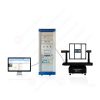
High Precision Rotation Luminaire Goniophotometer
LSG-1890B
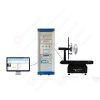
High Precision Rotation Luminaire Goniospectroradiometer
LSG-1890BCCD

Goniophotometer for Automotive and Signal Lamps
LSG-1950

Goniophotometer for Traffic Signal Lamps
LSG-1950S
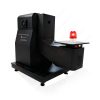
VAD Fire Alarm Visual Alert Device Goniophotometer
LSG-1930

Compact Goniophotometer
LSG-1200A

LED Goniophotometer
LSG-1100
 LEDs and Luminaire Test Solutions
 LM-79 and LM-80 Test Solutions
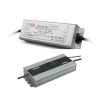 LED Driver Test Solutions
 Household Appliances Test Solutions
 Mobile and Network Test Solutions
 Automotive Electronics Test Solutions
 Audio-Video and IT Test Solutions
 Cable and Wire Test Solutions
 Plugs and Sockets Test Solutions
 Power Switch Test Solutions
 Transformer Test Solutions
 Electric Toys Test Solutions
 Energy Meter Test Solutions
 Motor-Operated Tool Test Solutions
Select an organization
to browse standards
How does an XRF analyzer work? This fundamental question addresses the core mechanism behind one of the most reliable non-destructive testing methodologies in modern materials science. X-ray fluorescence (XRF) spectrometry enables rapid, in-situ elemental analysis through the interaction of primary X-ray excitation with atomic electron shells, producing characteristic secondary emissions that serve as elemental fingerprints.
This paper presents a systematic examination of the underlying physics governing energy-dispersive XRF systems, including photoelectric excitation, characteristic radiation emission, semiconductor detection, and fundamental parameter quantification algorithms. Through analysis of engineering design requirements for portable alloy analyzers and evaluation of compliance frameworks including ASTM E1476 and GBZ 115-2002, this study establishes critical technical benchmarks for field-deployable material verification instruments. The discussion integrates specific engineering implementations from the EDX-3 Portable X-ray Spectrometer to illustrate practical applications in industrial alloy identification and quality assurance protocols.
X-ray fluorescence (XRF) analysis represents a cornerstone technique in elemental composition determination, offering non-destructive, rapid, and multi-element characterization capabilities across diverse industrial sectors. The fundamental operational principle relies on the interaction of high-energy X-ray photons with atomic structures, inducing inner-shell ionization and subsequent characteristic radiation emission. When an X-ray analyzer irradiates a metallic sample, the incident photons dislodge inner-shell electrons—primarily from K or L shells—creating unstable ionized states. As outer-shell electrons transition to fill these vacancies, they emit fluorescent X-rays with energies specific to the elemental composition and electron orbital configuration of the target atom.
The technological evolution of XRF instrumentation has transitioned from laboratory-confined wavelength-dispersive systems to compact, field-deployable energy-dispersive analyzers capable of detecting elements from sulfur (Z=16) to uranium (Z=92). This progression enables real-time alloy grade verification, scrap metal sorting, and quality control applications in manufacturing environments where laboratory analysis proves impractical. The present examination synthesizes theoretical frameworks with engineering specifications to establish a comprehensive understanding of portable XRF operational mechanics.
The analytical reliability of XRF instrumentation depends critically upon adherence to established international standards governing measurement protocols and performance validation. ASTM E1476 provides standardized practices for conducting X-ray fluorescence spectrometric analysis of metallic materials, establishing guidelines for calibration procedures, sample preparation requirements, and uncertainty estimation methodologies. This standard ensures inter-laboratory reproducibility and defines acceptable performance criteria for quantitative elemental analysis in ferrous and non-ferrous alloys.
Complementing these analytical protocols, ISO/IEC 17025:2017 accreditation requirements govern the competence of testing laboratories utilizing XRF instrumentation, ensuring traceability of measurements to international standards and mandating rigorous quality management systems. For portable field applications, ASTM E1916-11 establishes performance evaluation criteria specifically tailored to handheld XRF analyzers used for mixed lot metal identification, addressing unique challenges associated with non-ideal sample geometries and surface conditions encountered in industrial environments.
The deployment of XRF analyzers necessitates strict compliance with ionizing radiation protection standards. The Chinese national standard GBZ 115-2002 (Health Protection Standards for X-ray Diffractometers and Fluorescence Analyzers) establishes maximum permissible exposure limits and mandatory safety interlock requirements for analytical X-ray equipment. Similarly, GB 18871-2002 (Basic Standards for Ionizing Radiation Protection and Radiation Safety) provides the foundational regulatory framework for occupational exposure management, requiring continuous radiation monitoring and administrative controls for device operation.
Contemporary portable analyzers incorporate multiple engineered safety mechanisms, including password-protected operation modes, automatic beam termination within 2 seconds upon sample removal detection, and real-time radiation status indicators. These safety architectures ensure that operational personnel remain within prescribed annual dose limits while maintaining analytical accessibility in field environments.
The primary excitation stage in XRF analysis involves the generation of high-energy X-ray photons through a micro-focus X-ray tube, typically utilizing a silver (Ag) target anode operating at voltages up to 50 kV and currents up to 200 µA. These operational parameters determine the bremsstrahlung continuum and characteristic line emissions that bombard the sample surface. The selection of tube target material critically influences excitation efficiency for specific elemental ranges; silver targets provide optimal K-shell excitation for transition metals while maintaining adequate L-shell excitation efficiency for heavier elements.
Upon interaction with sample atoms, the photoelectric effect dominates when incident photon energies exceed the binding energy of inner-shell electrons. The probability of this interaction follows the relationship σ ∝ Z⁴/E³, where σ represents the photoelectric cross-section, Z denotes atomic number, and E indicates photon energy. This strong atomic number dependence explains why XRF demonstrates enhanced sensitivity for heavy elements while requiring extended counting intervals or specialized conditions for lighter element detection.
Following inner-shell ionization, the excited atom undergoes relaxation through electron transitions from higher energy orbitals to fill the created vacancy. These transitions produce characteristic X-ray emissions with energies determined by the quantum mechanical differences between electron binding states. For K-series transitions, the Kα emission results from L→K shell transitions, while Kβ emissions correspond to M→K transitions, with energy differences typically spanning 50-100 eV for mid-range atomic numbers.
The uniqueness of these emission energies—described by Moseley’s Law (E ∝ (Z-σ)² where σ represents the screening constant)—enables unambiguous elemental identification. Energy-dispersive analyzers measure these photon energies with resolutions typically ranging from 145-190 eV (FWHM at Mn Kα), sufficient to resolve Kα/Kβ doublet separations for elements up to zirconium and L-series line separations for heavier elements. The intensity of characteristic emissions correlates with elemental concentration, though matrix effects—including absorption and secondary fluorescence—require mathematical correction through fundamental parameters algorithms or empirical calibration matrices.
The detection stage in energy-dispersive XRF employs semiconductor detectors—predominantly silicon PIN (Si-PIN) diodes or silicon drift detectors (SDDs)—that convert incident X-ray photons into proportional electrical pulses through the photoelectric effect within the silicon crystal lattice. Incident photons generate electron-hole pairs at an average rate of approximately 3.8 eV per pair; thus, a 5.9 keV Fe Kα photon produces approximately 1,550 charge carriers, creating measurable current pulses after integration by a charge-sensitive preamplifier.
Signal processing electronics discriminate pulse amplitudes through multi-channel analyzers, constructing histograms representing energy spectra with channel resolutions of 10-20 eV per channel. Advanced digital signal processing algorithms implement pulse pile-up rejection for count rates exceeding 10⁵ counts per second, dead-time correction for detector saturation effects, and escape peak removal for silicon K-α artifacts. Peak deconvolution algorithms—typically employing Gaussian-Lorentzian hybrid functions with non-linear least squares fitting—resolve overlapping elemental lines, enabling quantitative analysis of complex multi-element matrices such as high-temperature nickel-based superalloys or tool steel compositions.

The realization of field-deployable XRF instrumentation imposes stringent engineering constraints balancing analytical performance with operational portability and environmental robustness. Critical design specifications encompass thermal management, radiation shielding, mechanical durability, and ergonomic interface considerations.
Thermal and Mechanical Architecture: Continuous X-ray tube operation generates substantial thermal loads requiring engineered heat dissipation solutions. The integration of conductive thermal pathways coupled with active cooling fans maintains detector and tube housing temperatures below 50°C operational limits, preventing gain drift in the detection electronics and ensuring energy calibration stability. Instrument enclosures must demonstrate IP65 ingress protection against dust and moisture penetration while withstanding mechanical shocks equivalent to 1.5-meter drop impacts on concrete surfaces—essential specifications for industrial environments.
Detector Configuration and Signal Chain: High-performance Si-PIN detectors with optimized thickness (625 μm versus standard 400 μm configurations) provide enhanced quantum efficiency for high-energy photons (>25 keV) while maintaining energy resolution below 145 eV. The detector signal chain requires low-noise charge-sensitive amplification with peaking time selection balancing throughput (short peaking times for high count rates) against resolution (longer times for reduced electronic noise).
Radiation Shielding and Collimation: Integrated radiation safety architecture incorporates tungsten or brass shielding surrounding the X-ray tube, with beam collimation limiting irradiated spot diameters to 8 mm standard configurations. Safety interlock systems monitoring sample presence through proximity sensors must demonstrate fail-safe characteristics, terminating tube high voltage within 2 seconds of sample removal to comply with GBZ 115-2002 requirements.
| Technical Parameter | Performance Criterion | Engineering Rationale |
| X-ray Tube Voltage | 50 kV / 200 µA, Ag target | Optimal excitation for elements S-U |
| Detector Resolution | ≤145 eV (FWHM @ Mn Kα) | Resolve adjacent elemental lines |
| Detection Limit | ppm level, RSD <5% | Trace element quantification |
| Operational Temperature | -10°C to +50°C | Field environmental tolerance |
| Battery Duration | >6000 mAh, 8+ hours | Continuous shift operation |
| Data Storage | >64 GB, 200,000+ spectra | Extended field campaigns |
| Radiation Safety | Auto-shutdown <2 sec | Compliance with GBZ 115-2002 |
| Weight | <1.8 kg | Single-handed operation |
The engineering principles discussed above find practical implementation in the EDX-3 Portable X-ray Spectrometer, an integrated XRF system designed for rapid alloy identification and quantitative elemental analysis. This instrument exemplifies the convergence of compact mechanical design with analytical performance previously associated with laboratory-grade instrumentation.
The EDX-3 architecture incorporates a 50 kV micro-focus X-ray tube with silver target anode, delivering excitation power optimized for alloy matrices including stainless steels, nickel superalloys, and titanium grades. The detection subsystem utilizes an imported high-precision Si-PIN detector achieving 145 eV energy resolution, enabling clear spectral separation of overlapping lines common in complex alloy systems. The integrated grade database encompasses over 400 standard alloy specifications including GB (Chinese National Standards) and UNS (Unified Numbering System) classifications, with user-expandable capacity for 1,000 additional custom grades.
Operational efficiency distinguishes the EDX-3 design: the system identifies alloy grades within 5 seconds of measurement initiation, with 20-second integration periods providing quantitative major element concentrations with relative standard deviations below 5%. The industrial-grade computing platform—featuring a 1.4 GHz quad-core processor, 4 GB RAM, and 64 GB solid-state storage—supports real-time spectral processing without external data systems. The 5-inch LCD touchscreen interface, fixed at an ergonomic viewing angle relative to the measurement axis, facilitates single-handed operation in field environments.
Radiation safety engineering in the EDX-3 incorporates dual-layer protection: password-authenticated operation prevents unauthorized use, while automatic beam termination sensors halt excitation within 2 seconds of sample withdrawal. The instrument demonstrates compliance with GBZ 115-2002 and GB 18871-2002 radiation protection standards, with third-party CNAS/CMA-accredited testing verification. Environmental durability testing includes CE certification, IP65 sealing validation, and 1.5-meter drop survivability, ensuring operational reliability under industrial conditions ranging from scrap metal yards to manufacturing quality control stations.
Selecting appropriate XRF instrumentation for specific industrial applications requires systematic evaluation of analytical requirements against instrumental capabilities. For alloy verification applications, the critical parameter is not merely elemental range coverage but the density of the calibration database and the algorithmic approach to matrix effect correction.
Field-deployable analyzers face inherent limitations compared to laboratory systems: geometric constraints limit crystal optic configurations to energy-dispersive architectures rather than wavelength-dispersive systems with superior resolution. However, for alloy sorting and positive material identification (PMI) applications, the 145 eV resolution of modern Si-PIN detectors proves sufficient for unambiguous grade discrimination, particularly when coupled with robust fundamental parameters algorithms that compensate for inter-element absorption and enhancement effects.
Battery life and thermal stability emerge as practical differentiators for extended field campaigns. Systems incorporating >6000 mAh lithium cells with intelligent power management enable full-shift operation without battery exchange, while passive-active hybrid cooling maintains detector gain stability across ambient temperature variations encountered in outdoor industrial environments. The integration of multiple data export pathways—including USB, WiFi, and Bluetooth—facilitates integration with enterprise quality management systems and laboratory information management systems (LIMS).
For applications involving precious metal verification or regulatory compliance screening (RoHS, WEEE), detection limits in the ppm range become critical. The EDX-3 achieves these sensitivity levels through optimized excitation geometry, high-count-rate signal processing electronics, and extended measurement protocols while maintaining the portability essential for non-destructive testing of valuable artifacts or incoming material inspection.
The operational mechanism of X-ray fluorescence analyzers represents a sophisticated integration of quantum mechanical principles, semiconductor detection technology, and embedded signal processing algorithms. Understanding how an XRF analyzer works—encompassing excitation physics, characteristic radiation emission, energy-dispersive detection, and quantitative matrix correction—enables informed selection and deployment of these instruments for industrial material verification.
The EDX-3 Portable X-ray Spectrometer demonstrates the practical realization of these principles in a compact, field-deployable platform, delivering laboratory-grade analytical performance with the robustness required for industrial environments. Compliance with international standards including ASTM E1476 and radiation safety regulations ensures reliable, legally defensible measurement results across applications ranging from scrap metal sorting to aerospace alloy verification. As material specifications become increasingly stringent across manufacturing sectors, the systematic application of XRF technology provides essential quality assurance capabilities for modern industrial operations.
Tags:EDX-3Your email address will not be published. Required fields are marked *

 English
 中文简体
中文简体 English
 Русский
 Español
 Português
 Türkçe
 العربية
 Deutsch
 Polski
 Italiano
 Français
 한국어
한국어 ไทย
ไทย Tiếng Việt
 日本語
日本語