LM-79 Moving Detector Goniophotometer (Mirror Type C)
LSG-6000
High Precision Rotation Luminaire Goniophotometer
LSG-1890B
High Precision Rotation Luminaire Goniospectroradiometer
LSG-1890BCCD

Goniophotometer for Automotive and Signal Lamps
LSG-1950
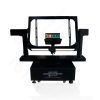
Goniophotometer for Traffic Signal Lamps
LSG-1950S
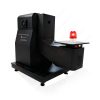
VAD Fire Alarm Visual Alert Device Goniophotometer
LSG-1930
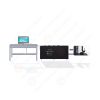
Compact Goniophotometer
LSG-1200A
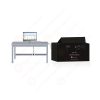
LED Goniophotometer
LSG-1100
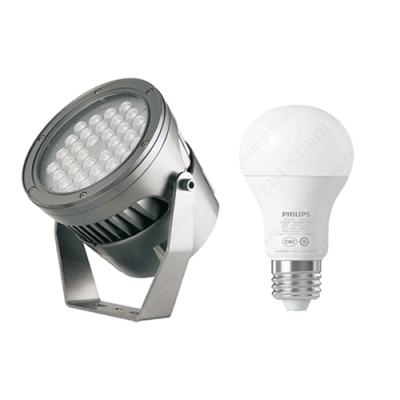 LEDs and Luminaire Test Solutions
 LM-79 and LM-80 Test Solutions
 LED Driver Test Solutions
 Household Appliances Test Solutions
 Mobile and Network Test Solutions
 Automotive Electronics Test Solutions
 Audio-Video and IT Test Solutions
 Cable and Wire Test Solutions
 Plugs and Sockets Test Solutions
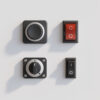 Power Switch Test Solutions
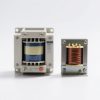 Transformer Test Solutions
 Electric Toys Test Solutions
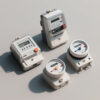 Energy Meter Test Solutions
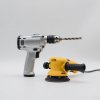 Motor-Operated Tool Test Solutions
Select an organization
to browse standards
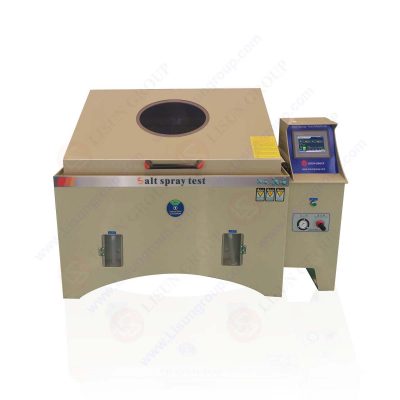
Salt spray test has also seen widespread use in order to hasten the corrosion processes such that the metal and protective finishes should be tested over practical laboratory duration. Exposure conditions are standardized when the real value of the test is found in the evaluation of results. Assessment methods put visual and quantifiable damage into an engineering choice of material coating methods and process control. Devoid of rigorous assessment protocols salt spray testing is bound to become an easy time-based analysis with reduced predictiveness. Elaborate evaluation procedures make sure that corrosion processes which are spotted in the chamber are manifestations of actual weaknesses and not results of shoddy examination or disparate standards.
Procurement and compliance are also determined based on the output of the evaluations in industrial settings. When establishing internal testing capability, buyers normally evaluate supplier performance and cost as well as price of salt test machine of the test. Nevertheless, reproducibility and reliability of evaluation techniques can be of more importance than the chamber itself in deciding whether to rely on test data.
The basis of salt spray test evaluation is still visual inspection. It gives instantaneous understanding of the commencement of corrosion coating faults and progressions. Visual assessment should however be of a standard so that the assessment is not subjective. Rust coverage blister density and coating degradation have international rating scales that are used to ensure that laboratories have the same results in the same areas.
Rust assessment normally entails an estimate of the indulgence of corrosion products on the surface. Inspectors use reference charts and photographic standards in giving a constant rating. In the case of coated samples, it is the disclosure of blisters cracks or delamination instead of pure metal corrosion. The angle of lighting and magnification determine the defects that can be seen and therefore the inspection conditions need to be specified and consistent.
Blister evaluation considers size frequency and distribution. Small dense blisters indicate different failure mechanisms than large isolated blisters. Recording these patterns supports root cause analysis such as osmotic blistering or adhesion failure. Filiform corrosion which appears as thread like tracks under coatings requires careful side lighting to detect early stages.
In order to ensure consistency numerous laboratories would train inspectors through reference panels as well as periodic cross checks. A record of inspection conditions and evaluator identity also enhances traceability and confidence over results.
Protective coatings Protective coatings scribe testing is among the most informative methods of evaluation. The coating includes a controlled scratch which exposes the substrate prior to the exposure to salt spray. Such defects can be simulated through mechanical damage during service and can be used to determine the propagation extent of corrosion beneath the coating.
Exposure is followed by the scribe creep as the lateral distance of corrosion that moving out of the scribe. Measurement is normally checked at various points along the scribe and means computed to eliminate variability. Standards have defined the limits of maximum allowable creep distance based on type of coating and use.
Assessment of underfilm corrosion must be done with extreme care to ensure that the loosely corroded material is removed without releasing the rest of the coating. Tools and procedures should be built so as not to artificially build the damage that is observed. High resolution and calibration of measuring equipment enhances precision and facilitates a record.
Differences between coating chemistries which might not be noticeable in general surface corrosion are also visible in scribe testing. Two coating can have close surface appearance but a high variance on the underfilm protection that has direct implication of long term durability characteristics.
The dominance of visual methods in salt spray test evaluation is balanced out by the addition of depth and objectivity of quantitative methods. The gravimetric analysis is a method that quantifies the mass loss caused by corrosion by weighing the specifications before and after exposure and cleaning. This method works very well when dealing with uncoated metals where the examples are uniformly corroded. Cleaning Operations It is necessary to remove the product of corrosion without dissolving base metal these cleaning operations must be following uniform chemical solutions and time.
The visual evaluation coupled with the use of gravimetric data will assist in differentiating cosmetic degradation and structural material loss. It is used in quality control setting such as statistical process control, and time-trend analysis using these quantitative measures.
It is impossible to evaluate without interpreting. Salt spray tests are continuous and vicious that over emphasize some corrosion reactions and inhibit others. Evaluators need to as such associate observed damages to anticipated service settings. As an example continuous wetting will favour chloride accelerated corrosion, but does not duplicate drying cycles, or ultraviolet exposure or mechanical stress in actual service.
Failure mode knowledge enhances decision making. The presence of edge corrosion can be an indication of poor control of coating thickness and extensive blistering may indicate the permeability of the moisture or lack of proper surface preparation. Galvanic corrosion patterns expose material compatibility problems that can be addressed in alterations in design and not upgrades of coating.
It is correlated with field data which increases confidence. Laboratory testing can be used to either confirm failures known in service that salt spray testing is a highly predictive tool. In any cases of discrepancy, extra tests may be necessary like cyclic corrosion or humidity to narrow down results.
Chamber performance is one of the factors in evaluation quality. Unstable temperature and stable solution chemistry through uniform spray distribution provide uniform specimen stress. The difference in exposure results in the difference in evident damage. Evaluation credibility should therefore include the choice of well-established equipment and the maintenance of the same equipment.
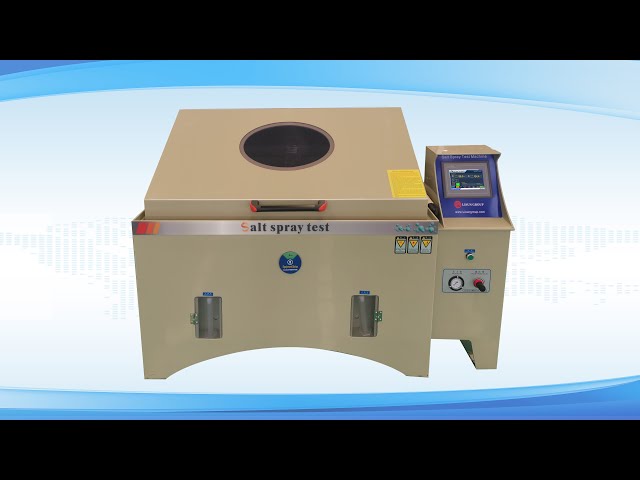
Laboratories usually approach the price of salt spray test machine when they are budgeting but long-term value is based on the documentation of stability and service support. The equipment which ensures a constant exposure and full logging streamlines the auditing and assessment procedure. The suppliers like LISUN put up salt spray systems, which are considered with uniformity in control and data recording which helps in providing equal evaluation among the test campaigns.
Practices of documentation are also important. Exposure criteria of the specimen preparation should be provided as well as photographic evidence included in evaluation reports. Under clear records it is possible to compare batches suppliers or design revision and support external audit.
The salt spray test is so simple and an exposure exercise until proper evaluation techniques are employed to convert it to a meaningful assessment of metal corrosion resistance and coating performance. Standardized rating systems associated with visual inspection rate measures and quantitative measures of creep have distinct information. In case of constant application and interpretation in the context of the real service conditions that it can regulate, such techniques inform the decision to improve the process of material selection and compliance. Although the choice of equipment and salt spray testing machine cost affect the capacity of the testing, it is disciplined analysis that conclusively reveals the worth and validity of the corrosion test results.
Tags:YWX/Q-015Your email address will not be published. Required fields are marked *

 English
 中文简体
中文简体 English
 Русский
 Español
 Português
 Türkçe
 العربية
 Deutsch
 Polski
 Italiano
 Français
 한국어
한국어 ไทย
ไทย Tiếng Việt
 日本語
日本語