LM-79 Moving Detector Goniophotometer (Mirror Type C)
LSG-6000
High Precision Rotation Luminaire Goniophotometer
LSG-1890B
High Precision Rotation Luminaire Goniospectroradiometer
LSG-1890BCCD

Goniophotometer for Automotive and Signal Lamps
LSG-1950
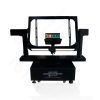
Goniophotometer for Traffic Signal Lamps
LSG-1950S
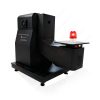
VAD Fire Alarm Visual Alert Device Goniophotometer
LSG-1930
Compact Goniophotometer
LSG-1200A
LED Goniophotometer
LSG-1100
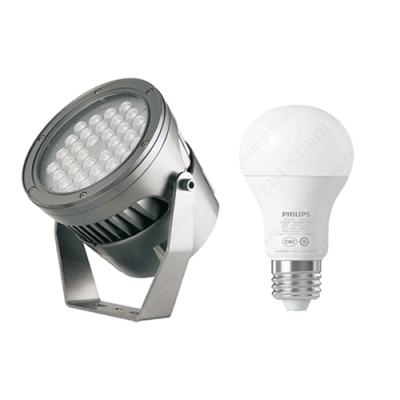 LEDs and Luminaire Test Solutions
 LM-79 and LM-80 Test Solutions
 LED Driver Test Solutions
 Household Appliances Test Solutions
 Mobile and Network Test Solutions
 Automotive Electronics Test Solutions
 Audio-Video and IT Test Solutions
 Cable and Wire Test Solutions
 Plugs and Sockets Test Solutions
 Power Switch Test Solutions
 Transformer Test Solutions
 Electric Toys Test Solutions
 Energy Meter Test Solutions
 Motor-Operated Tool Test Solutions
Select an organization
to browse standards
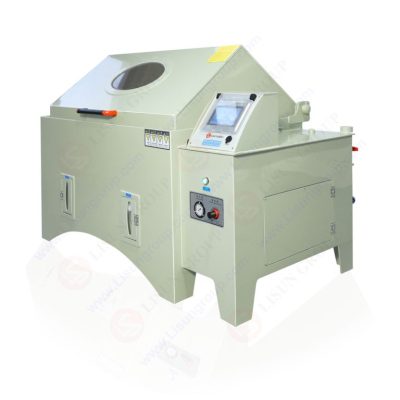
Effective assessment of corrosion is not only based on the length of exposure but the level of control of the test environment. A salt spray test is based on specifically controlled parameters to create the imitation of the aggressive corrosive environment, and even minor changes can distort an outcome. In an experimental corrosion test environment, calibration is used to assure that the temperature, fog density, solution chemistry and deposition rate stay within specified limits. Unless correctly calibrated, the corrosion outcomes become non-comparable and it is hard to evaluate the performance of coating, material durability, or conformance with international standards.
Since corrosion testing is normally conducted to justify certification, suppliers’ qualification as well as long term reliability claims, it is essential to ensure accuracy. Calibration makes a salt spray test more than simply an exposure procedure discussed in basic terms and more of a scientifically controlled assessment procedure yielding repeatable and defensible results across time and laboratories.
The corrosion processes are very sensitive to change in environment. Even very minor changes in temperature or salt content can also cause major changes in the rate of corrosion. When the salt spray test machine is run under skewed conditions, it is likely to either speed up or retard corrosion through artificial means giving mistaken conclusions.
Calibration provides an assurance that the corrosion test chamber produces standardized conditions. It specifies that each test cycle provides the same stress level giving the opportunity to make a significant comparison of various materials, coating, production lot. This consistency is necessary in the cases when the test outcomes are to be followed to make design choices or show the compliance with regulations.
System components will drift over time. Nozzles erode, sensors get older, heaters become ineffective and control systems do not operate as initially set up. Calibration is used to overcome this drift and put the chamber back in its desired operating state.
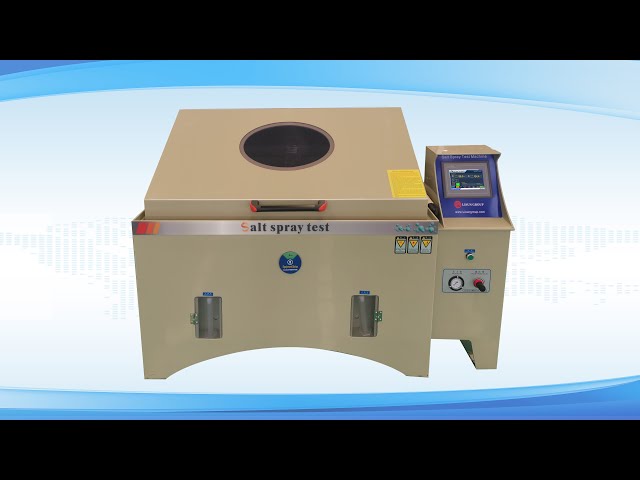
The calibration is aimed at those parameters that have a direct impact on corrosion behavior. One of the most important components is temperature control. Consistency in internal temperature of the chamber should be maintained during the whole test period because temperature influences the rate of evaporation, crystallization of salts, and reaction of electrochemical process on the metal surfaces.
Another important calibration point is the fog generation. The atomization system has to generate a fine and well dispersed salt mist. Calibration is done to determine that the rate of deposition of the mogs is within acceptable limits so that the specimens are exposed in the same way irrespective of their position within the chamber.
Solution chemistry must also be verified on a regular basis. Concentration of salt and pH influence aggressiveness of corrosion. Calibration can be used to ensure that the solution prepared meets the standards required and that it is not compromised by delivery systems during atomization.
The role of air pressure and flow stability is even less obvious though just as important. Varying airflow can lead to localized corrosion type which does not represent the actual behavior of the material. When airflow is properly calibrated, it is consistent with design.
LISUN and other manufacturers develop a more corrosion test chamber system that has an architecture, which is calibration friendly, and that technicians can check and tune these parameters without having to spend a long time offline.
Good calibration is a well-planned procedure and not an improvised one. Measurement points and sensors are checked against reference instruments which can be traced to ensure they are accurate. To ensure traceability, these references are usually put in value with respect to accepted national or international standards.
In calibration, stable test conditions are observed over an adequate period in order to identify variations. It cannot be achieved via short-term stability but it should be corrosion tests that have to be conducted on hundreds and thousands of hours. The parameters should be checked to ensure stability during prolonged operating of the parameters.
The process is inherently accompanied with documentation. There is evidence on calibration records that the machine was working well during the time of conducting the salt spray test. Such documentation facilitates test credibility, audit requirements and safeguard of test credibility on occasions where this test is revisited by customers or certification bodies.
The frequency of calibration is based on the intensity of usage, operating conditions, and internal standards of quality. Laboratories with heavy usage usually use a more regular cycle of verification to reduce the risk associated with drift. Most useful benefit of calibration can be observed in corrosion studies in the long term. In long tests that may take weeks or months of time, even simple instability can be converted into a massive error. Having a well-calibrated corrosion test chamber means to ascertain that the development of corrosion is really the action of the material and not the variability of the environment.
Repeatability between different test campaigns is also enhanced by accurate calibration. Through this, engineers are able to easily compare the old results to the new ones, and they are able to know the actual performance trends instead of the artifacts of the measurements. This continuity is necessary in product improvement program and lifecycle analysis.
In business terms, a consistent calibration of salt spray tests achieves fewer redesigns and retests that are expensive. The decisions made on the basis of reliable information reduce the development time and enhance trust in customers. Labs with high calibration standards stand at a better position to give consistent defensible results.
The key to achieving good corrosion outcomes is a rigorous calibration of all the key parameters in the test environment. A well-conducted salt spray test will be based on a strictly controlled corrosion test facility where the temperature of the test, fog density, solution chemistry, and airflux are limited within a standard of set parameters. Calibration guarantees that it is the material performance that is measured and not that the systems vary.
Laboratories safeguard the integrity of their corrosion data through the exploitation of arranged calibration measures and verifiability practices. Having strong chamber designs of the manufacturers like LISUN, the calibration accuracy is a feasible and reproducible procedure. Regular calibration, in the long run, will make the salt spray test a tool of high quality, a potent and reliable tool of exposing the corrosion performance.
Your email address will not be published. Required fields are marked *

 English
 中文简体
中文简体 English
 Русский
 Español
 Português
 Türkçe
 العربية
 Deutsch
 Polski
 Italiano
 Français
 한국어
한국어 ไทย
ไทย Tiếng Việt
 日本語
日本語