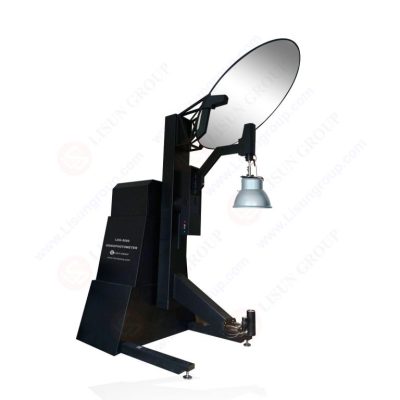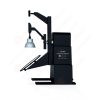
LM-79 Moving Detector Goniophotometer (Mirror Type C)
LSG-6000
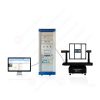
High Precision Rotation Luminaire Goniophotometer
LSG-1890B
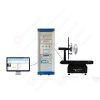
High Precision Rotation Luminaire Goniospectroradiometer
LSG-1890BCCD

Goniophotometer for Automotive and Signal Lamps
LSG-1950
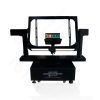
Goniophotometer for Traffic Signal Lamps (Economical Model)
LSG-1950S
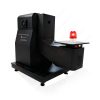
VAD Fire Alarm Visual Alert Device Goniophotometer
LSG-1930
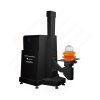
Goniophotometer for Airfield Lighting
LSG-1940
Compact Goniophotometer
LSG-1200A
LED Goniophotometer
LSG-1100
Near Field Moving Detector Goniophotometer
LSG-1900B
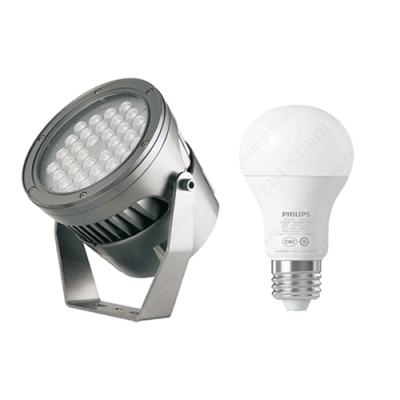 LEDs and Luminaire Test Solutions
 LM-79 and LM-80 Test Solutions
 LED Driver Test Solutions
 Household Appliances Test Solutions
 Mobile and Network Test Solutions
 Automotive Electronics Test Solutions
 Audio-Video and IT Test Solutions
 Cable and Wire Test Solutions
 Plugs and Sockets Test Solutions
 Power Switch Test Solutions
 Transformer Test Solutions
 Electric Toys Test Solutions
 Energy Meter Test Solutions
 Motor-Operated Tool Test Solutions
Select an organization
to browse standards
It is equally crucial to know the way light is scattered in space as it is that the luminaire produces a specific amount of light. In case of LED luminaires, optical behavior defines visual comfort, energy savings and lighting standard. The major instrument of measurement of this spatial light behavior is a goniophotometer. In the process of testing the professional IES, goniophotometer records finer angular intensity distribution that characterize the concentration of light at all directions of the luminaire. This data is the basis of light simulation, design validation and regulation documentations.
Some systems of simple flux measurement are focused on directionality; in contrast, goniophotometric testing does not. Lenses, reflectors or diffusers are some of the complicates optics that are used by LED luminaires to shape light. These design features cannot be measured accurately without angular measurement. Goniophotometer offers a repeatable and controlled technique of mapping light distribution in high precision.
Light distribution curves are curves of luminous intensity against angle. These curves indicate the areas of the concentration of light, the rate of decay and whether they are symmetrical or asymmetrical. The measurement of this is done using a goniophotometer by recording the intensity values at set angular positions around the luminaire.
The luminaire is powered with constant electric and thermal conditions. This is because as the process of measuring is taking place either the luminaire or the detector is moved in a controlled way. The detector records the data of luminous intensities at every angular position. Through hundreds or thousands of sites, a full spatial history is created.
This is used to transform the physical light emission to numerical data which can be analyzed, displayed and standardized.

Motion geometry is important in measurement of light distribution accuracy. Goniophotometer should be perfectly positioned in the course of the test in terms of angular positioning. Minimal mechanical error is translated directly into photometric error and is particularly relevant to the LED luminaires with a slim or sharp beam.
Angular resolution gives the opportunity to characterize beam shape carefully. Of secondary lobes, cut-off angles, and glare-associated details would have been missed otherwise in a fine resolution. In the case of wide flood lighting, coarser resolution can be used but not in directional luminaires.
Contemporary goniophotometers are built so that they offer liquid motion through all the axes so that every angle measured is a true reflection of the actual direction of emitted light by the luminaire.
The luminaire should be thermally and electrically stable before a light distribution test. LED output varies with temperature and unstable conditions cause the readings of the intensity to vary. The stabilization period should be appropriate to make the measured data to show steady state performance and not rapid change of behaviour.
Quality of supply of power is also crucial. Changes in voltage or current change the LED output distorting distribution curves. Professional testing systems eliminate this variation by using controlled sources of power.
LISUN and other manufacturers incorporate stabilized power variability and synchronization of the measurement with a goniophotometer within their range of products, which enables to provide consistent and reproducible test conditions.
When goniophotometer obtains intensity information it takes that information which is then processed by software to produce light distribution curves. Such curves are normally drawn in polar, or Cartesian-form, in order to visualize the intensity-angle relationships.
Several planes can be measured in order to completely characterize light distribution in three dimensions. In the case of symmetric luminaires, there is a possibility of reduced planes. Bigger angular coverage is necessary in asymmetrical designs like the streetlights or wall washers.
The curves obtained depict vital performance traits. Beam width, peak intensity direction as well as uniformity of distribution can be recognized by engineers. These lessons are used to refine optical design and check its use appropriateness.
Among goniophotometric measurement most significant results is the production of defaulted photometric files. In the IES testing, the measured data is encoded to industry standard such that it may be employed without any restrictions.
Such files allow lighting designers to test real life installations by use of software applications. Proper light distribution curves make sure that no assumptions are made in simulation of performance but actual performance. This is necessary to forecast illuminance, presence of glare as well as energy efficiency.
Observation of the requirements of IES testing assumes that the photometrical data can be accepted by the regulatory authority, designers, and customers in any global market.
Light Distribution Curves Light distribution curves give an indication of the efficiency with which a lamp shine throws light where it is required. An LED luminaire can exclude spill/glare because a well-designed solution focuses its light within effective angles.
Engineers use distribution curves to evaluate the performance of optical elements which may be as expected. Light leakage or non-uniformity can respectively be a pointer of design failures. Lens geometry, shape of the reflector, or property of the diffuser can then be changed and reassessed by repeating testing.
It is an iterative process whereby the correct goniophotometer data is utilized to make sound design amendments.
The light is required to be distributed differently in different applications. Lighting at the office is focused on uniformity and generation of glare. Street lighting lays stress on forward cast and regulated displacement. Industrial lighting needs a great coverage and high intensity of lighting.
Goniophotometer enables a manufacturer to ensure that the distribution curve of a luminaire fits the intended usage. Testing is necessary to ensure that performance cannot be just stated by looking at the appearance but on the basis of objective data.
This certification gives trust to designers and specifiers who are choosing the luminaires in a certain project.
Quality assurance needs a consistent measuring result. Goniophotometer should yield consistent curves of light distribution when photometry is conducted on the same luminaires of the same conditions.
Repeatability ascertained that the changes in performance measured do not stem on measurement error but on product variation. This has been specifically significant in the production set ups where consistency larger to batch needs to be tracked.
Excellent mechanical stability, controllable movements, and detectors with good stability are also associated with this feature.
Although goniophotometers concentrate on angular intensity, their results are frequently used together with other photometric measurements, e.g. total luminous flux and spectral properties. A combination of these measurements allows obtaining a bright depiction of luminaire performance.
The simultaneous analysis enables engineers to match the distribution shape to efficiency and color. This holistic strategy aids in balanced decision making in design which yields good visual performance and energy performance.
Goniophotometer is useful in measurement of light distribution curves of LED luminaires such as giving accurate angle-resolved intensities. It can demonstrate the direction and shape of light in the real space by controlled motion, stable test conditions and detailed data acquisition. When IES receives this information as input, it is converted into standardized photometric files that can cause simulation, torment, and plan.
Goniophotometric testing provides assuring repeatability with information about optical performance, and with sophisticated systems, including those of LISUN, these results are reliable. Using the effects of light distribution behavior correctly, the goniophotometer can be used to make decisions about what to design, enable a regulatory acceptance, and ensure that LED luminaires can work in the field as desired.
Your email address will not be published. Required fields are marked *

 English
 中文简体
中文简体 English
 Русский
 Español
 Português
 Türkçe
 العربية
 Deutsch
 Polski
 Italiano
 Français
 한국어
한국어 ไทย
ไทย Tiếng Việt
 日本語
日本語