LM-79 Moving Detector Goniophotometer (Mirror Type C)
LSG-6000
High Precision Rotation Luminaire Goniophotometer
LSG-1890B
High Precision Rotation Luminaire Goniospectroradiometer
LSG-1890BCCD

Goniophotometer for Automotive and Signal Lamps
LSG-1950
Goniophotometer for Traffic Signal Lamps
LSG-1950S
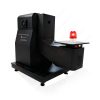
VAD Fire Alarm Visual Alert Device Goniophotometer
LSG-1930
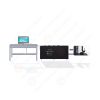
Compact Goniophotometer
LSG-1200A
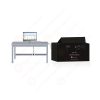
LED Goniophotometer
LSG-1100
 LEDs and Luminaire Test Solutions
 LM-79 and LM-80 Test Solutions
 LED Driver Test Solutions
 Household Appliances Test Solutions
 Mobile and Network Test Solutions
 Automotive Electronics Test Solutions
 Audio-Video and IT Test Solutions
 Cable and Wire Test Solutions
 Plugs and Sockets Test Solutions
 Power Switch Test Solutions
 Transformer Test Solutions
 Electric Toys Test Solutions
 Energy Meter Test Solutions
 Motor-Operated Tool Test Solutions
Select an organization
to browse standards
Abstract
Wavelength Dispersive Spectroscopy (WDS) is a high-precision analytical technique based on Bragg diffraction, which identifies and quantifies elemental composition by precisely measuring the wavelengths of characteristic X-rays. Compared to conventional Energy Dispersive Spectroscopy (EDS), WDS offers unparalleled advantages in analyzing trace elements and resolving complex spectral overlaps due to its superior spectral resolution (~5-20 eV) and lower detection limits. It is indispensable in fields requiring exacting compositional analysis, such as geology, metallurgy, and materials science. This article systematically explains the fundamental principles, technical characteristics, and core applications of WDS. It further explores its complementary relationship with portable X-ray Fluorescence (XRF) technology for rapid on-site screening. Using the LISUN EDX-3 series portable XRF spectrometer as an example, we discuss its role as a primary screening tool and how it synergizes with laboratory-based WDS to form a comprehensive analytical workflow from rapid survey to precise quantification.
1. Introduction: The Need for Elemental Analysis and Technological Evolution
In modern industry and research, accurately determining the chemical composition of materials is paramount. Whether ensuring alloy performance, identifying mineral resources, or screening for restricted substances in electronics, rapid and precise elemental analysis is essential. X-ray fluorescence spectrometry is a core technology addressing this need, primarily branching into two main techniques: Energy Dispersive Spectroscopy (EDS) and Wavelength Dispersive Spectroscopy (WDS).
While EDS is favored for its speed and compact design, making it ideal for portable field instruments, it faces limitations in detecting trace elements, resolving severe spectral overlaps (e.g., Nb/Zr, Mo/S), or delivering the highest quantitative accuracy. This is where Wavelength Dispersive Spectroscopy demonstrates its critical value. As a laboratory-grade precision technique, WDS achieves near-monochromatic separation of characteristic X-rays through physical dispersion, serving as the definitive quantitative tool for advanced materials R&D, geochemical reference material certification, and forensic analysis.
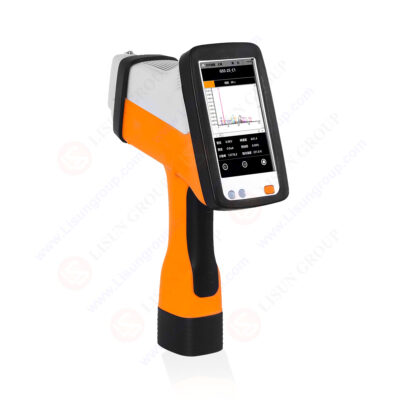
Portable X-ray Fluorescence Spectrometer | XRF Metal Analyzer | Alloy Gold TesterEDX 3 AL2
2. An In-Depth Look at the Principles of Wavelength Dispersive Spectroscopy
The fundamental physics behind WDS is the Bragg diffraction of X-rays. When a sample is excited by a high-energy electron beam (in an Electron Probe Microanalyzer, EPMA) or an X-ray beam, atoms within emit characteristic X-rays of specific wavelengths.
The core of a WDS system is a precision analyzing crystal and an X-ray detector. Its operational workflow is as follows:
• Excitation: The primary beam strikes the sample, generating characteristic X-ray fluorescence comprising multiple wavelengths.
• Collimation: Emitted X-rays pass through a set of parallel collimator slits to form a near-parallel beam.
• Diffraction (Dispersion): This parallel beam irradiates an analyzing crystal with a known lattice spacing (d), such as LiF, PET, or TAP. According to Bragg’s Law: nλ = 2d sinθ, only X-rays of a specific wavelength (λ) satisfying this condition will undergo strong diffraction at a particular incident angle (θ).
• Detection and Measurement: A precise mechanical goniometer rotates the crystal and detector in a synchronized 2:1 ratio, continuously varying the θ angle. This sequentially diffracts X-rays of different wavelengths into the detector (e.g., a proportional counter or scintillation counter). The system ultimately records the distribution of X-ray intensity versus diffraction angle (i.e., wavelength), producing the wavelength-dispersive spectrum.
The essence of Wavelength Dispersive Spectroscopy lies in the physical spatial separation of photons by wavelength. This fundamentally avoids the spectral peak overlap caused by pulse pile-up in a single EDS detector, resulting in exceptionally high energy resolution.
3. Core Technical Features and Advantages of WDS
Compared to EDS, the advantages of WDS are primarily evident in the following areas:
• Exceptionally High Spectral Resolution: WDS typically achieves an energy resolution of 5-20 eV, an order of magnitude better than that of EDS (~130-150 eV). This allows clear separation of closely spaced X-ray lines, such as V Kβ (4.952 keV) from Cr Kα (5.414 keV), or Si Kα (1.740 keV) from W Mα (1.774 keV).
• Very Low Detection Limits: Benefiting from an excellent peak-to-background ratio, WDS offers significantly better detection capability for trace and minor elements, reaching the 10-100 ppm range, whereas EDS is typically around 0.1-0.5%.
• Superior Quantitative Accuracy: Due to sharp peaks, low background, and minimal interference, WDS quantitative analysis often achieves precision better than 1% relative standard deviation, making it suitable for high-accuracy reference material development and certification.
• Light Element Analysis: Using multilayer synthetic crystals, WDS can effectively analyze light elements like boron (B), carbon (C), nitrogen (N), and oxygen (O), which are challenging for many EDS detectors.
Naturally, WDS has limitations, including complex instrumentation, high cost, relatively slower analysis speed (sequential scanning), and stringent requirements for sample surface flatness, confining it primarily to laboratory settings for precise analysis.

4. Complementary Applications: WDS and Portable XRF
Despite its exceptional accuracy, the fixed laboratory nature of WDS cannot meet the demand for rapid, non-destructive, in-situ analysis in scenarios like industrial field testing, incoming material inspection, or scrap metal sorting. This is where portable XRF analyzers excel.
Taking the LISUN EDX-3 Portable X-ray Fluorescence Spectrometer as an example, it incorporates an advanced silicon drift detector and a high-performance X-ray tube to deliver excellent performance within the energy-dispersive framework. Although its resolution is inherently lower than WDS, its ability to provide results in 1-2 seconds, achieve detection limits at ppm levels, and operate without complex sample preparation offers an unparalleled efficiency advantage for the vast majority of common applications. These include alloy grade identification (e.g., stainless steel 300/400 series, nickel-based alloys, titanium alloys), precious metal karat determination, and screening for heavy metal contamination in soil.
In a practical workflow, the two techniques form a perfect complementary partnership:
• Rapid On-Site Survey and Screening: Use a portable XRF like the EDX-3 for fast, non-destructive testing of numerous samples or large components in the field, flagging items of interest or complex composition.
• Laboratory Precise Quantification: Send the critical samples identified during screening to a laboratory instrument equipped with WDS (like an EPMA or high-end XRF spectrometer) for final, referee-grade precise quantitative analysis.
This model of “Rapid on-site screening with portable XRF + Precise laboratory quantification with WDS” establishes a complete elemental analysis chain from macro to micro, and from fast to accurate, balancing efficiency with precision.
| Feature | Wavelength Dispersive Spectroscopy (WDS) | Portable X-ray Fluorescence (XRF) |
| Core Technology | Crystal Dispersion, Bragg Diffraction | Energy Dispersion, Semiconductor Detector |
| Resolution | Exceptional (~5-20 eV) | Moderate (~140-150 eV @Mn Kα) |
| Detection Limit | Very Low (10-100 ppm range) | Low (ppm to 0.1% range) |
| Analysis Speed | Slower (Sequential scanning, minutes per element) | Very Fast (Simultaneous acquisition, seconds per full spectrum) |
| Primary Applications | Micro-area quantification, trace analysis, reference material certification, research | Grade identification, field screening, incoming inspection, scrap sorting |
| Instrument Form | Large laboratory benchtop, fixed installation | Handheld or portable, battery-powered |
| Operating Environment | Laboratory with controlled temperature/humidity | Adapts to various field environments (factory, outdoors) |
| Example Instrument | Electron Probe Microanalyzer (EPMA) | LISUN EDX-3 Series Alloy Analyzer |
5. Technical Highlights of the LISUN EDX-3 Portable Spectrometer
Designed for real-world industrial needs, the LISUN EDX-3 series incorporates several key features:
• High-Performance Hardware: Utilizes a high-resolution SDD detector and a miniaturized high-voltage X-ray tube to ensure stable and reliable spectral data during fast analysis.
• Intelligent Software & Database: Features a powerful built-in alloy grade library supporting one-click automatic matching and identification. The user-friendly interface allows easy operation even for non-specialists.
• Robust & Ergonomic Design: Built with an impact-resistant housing suited for harsh industrial environments. Incorporates intelligent radiation safety design for operator protection.
• Versatile Application Modes: Beyond alloy analysis, it can be used for coating thickness measurement and RoHS hazardous substance screening by switching modes or adding optional collimators, offering wide applicability.
6. Conclusion
Wavelength Dispersive Spectroscopy holds its position as the “ultimate referee” in elemental analysis due to its unmatched resolution and accuracy, solving challenging problems in advanced materials and scientific research. Portable XRF technology, exemplified by the LISUN EDX-3 series, acts as a highly efficient “field scout,” extending analytical capabilities to the production floor, warehouse, and field site, revolutionizing operational efficiency.
These two technologies are not replacements for each other but integral parts of a cohesive system. Understanding the principles and limits of WDS allows for a deeper appreciation of the value and appropriate application of different elemental analysis techniques. By strategically deploying and synergizing portable XRF and WDS, industries and researchers can optimize their quality control and materials characterization workflows, ultimately driving product quality and technological progress.
Tags:EDX-3Your email address will not be published. Required fields are marked *

 English
 中文简体
中文简体 English
 Русский
 Español
 Português
 Türkçe
 العربية
 Deutsch
 Polski
 Italiano
 Français
 한국어
한국어 ไทย
ไทย Tiếng Việt
 日本語
日本語