LM-79 Moving Detector Goniophotometer (Mirror Type C)
LSG-6000
High Precision Rotation Luminaire Goniophotometer
LSG-1890B
High Precision Rotation Luminaire Goniospectroradiometer
LSG-1890BCCD

Goniophotometer for Automotive and Signal Lamps
LSG-1950
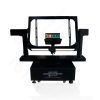
Goniophotometer for Traffic Signal Lamps (Economical Model)
LSG-1950S
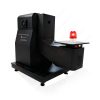
VAD Fire Alarm Visual Alert Device Goniophotometer
LSG-1930
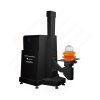
Goniophotometer for Airfield Lighting
LSG-1940
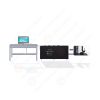
Compact Goniophotometer
LSG-1200A
LED Goniophotometer
LSG-1100
Near Field Moving Detector Goniophotometer
LSG-1900B
 LEDs and Luminaire Test Solutions
 LM-79 and LM-80 Test Solutions
 LED Driver Test Solutions
 Household Appliances Test Solutions
 Mobile and Network Test Solutions
 Automotive Electronics Test Solutions
 Audio-Video and IT Test Solutions
 Cable and Wire Test Solutions
 Plugs and Sockets Test Solutions
 Power Switch Test Solutions
 Transformer Test Solutions
 Electric Toys Test Solutions
 Energy Meter Test Solutions
 Motor-Operated Tool Test Solutions
Select an organization
to browse standards
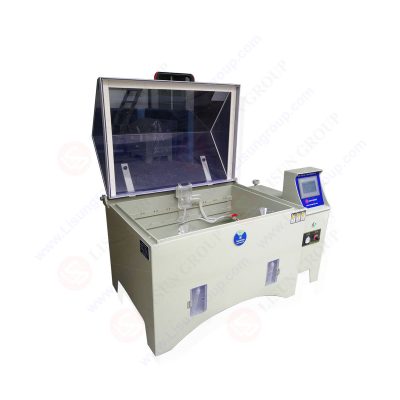
The reliability of corrosion testing is dependent on the precision of the machine that does the test. A salt spray test machine is created so as to provide controlled corrosive environment simulating long time exposure to saline atmospheres but without proper calibration, the results of such tests rapidly lose credibility. The parameters by which the salt spray corrosion tester must work in the professional labs should be within a narrow margin that ensures that corrosion rates do not indicate equipment drift but indicate material performance. Calibration helps in maintaining the same degree of density in the fog, temperature, solution concentration, and uniformity of exposure among the repeat test cycles to enable a substantial comparison between the samples and test runs.
With time mechanical wear, environmental factors and aging of components impacts on performances of chambers. The forgetting of calibration can result in the chamber designed well giving false corrosion patterns. This is why calibration is not a single exercise but a continuous process, which is part and parcel of normal laboratory operation.
The testing of salt sprays is based on environmental recreation. The rate of corrosion is much affected by few changes in salt concentration, temperature and droplet deposition. The corrosion may be expedited because of a small increase in the density of the fog, and under-exposure because of the decrease in the atomization. In the absence of such calibration, the laboratories will be left to make wrong conclusions regarding the coating durability, choice of material or effectiveness of surface treatment.
Calibration is used to match the real operating condition of the chamber with the standard requirements as specified by international methods of testing. It provides reproducibility between the tests that were performed in weeks or months ago and reproducibility between the results that were performed in other laboratories. This uniformity is critical to the product qualification, validation of suppliers as well as compliance with regulations.
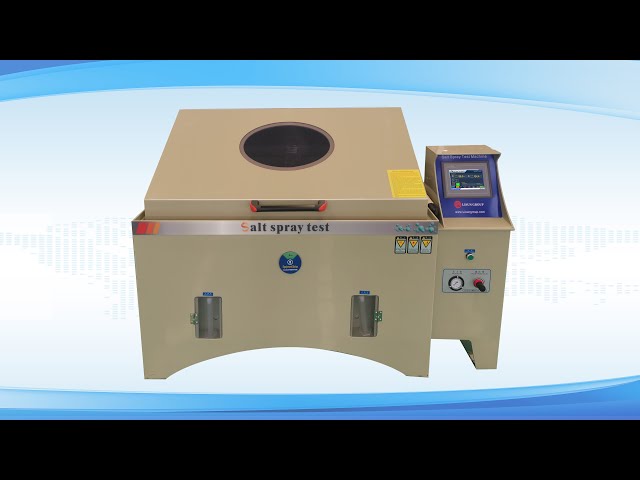
Corrosion is directly dependent on temperature. Increased temperatures accelerate the reaction process, whereas, reduced temperatures decelerate the rate of corrosion. The salt spray test machine normally runs within the small temperature range usually around 35°C depending on the standard of the tests. Calibration actually confirms that the indicated temperature is the same as the internal air temperature.
It is done by comparison of the readings of the chamber sensors and reference thermometers that were previously traceable at various sites within the test volume. Canalization or airflow unbalance refers to the existence of a difference. Calibration correction ensures that controller offsets are corrected to ensure that the chamber maintains a constant and uniform temperature during an extended period of test.
Continuous temperature control can also be used to check that the heaters are working and the insulation is effective. Increase in the heat loss when the seals or the insulation begins to degrade because of age may cause the chamber to have difficulty in maintaining setpoints, which is unwanted variation that could occur during the long tests.
Fog generation is the major feature of salt spray testing. The atomization system is calibrated such that the density of the fogs is maintained and the size of these droplets is kept within the allowed range. The rate of deposition is calculated by precision within the measure of condensate in commonplace collection funnels in the chamber over a particular stretch.
The amount of solution that is collected is compared with the standard ranges of acceptance. When the deposition is above or below the limits, air pressure, the condition of nozzle or the solution flow rate are changed. At this calibration step, it is ensured that all tests expose samples to the same corrosive loading.
Corrosion results require precise salt concentration. The salt solution applied in a salt spray corrosion tester has to have a certain level of sodium chloride percentage. Calibration A standard is the verification of the solution concentration following either conductivity meter or a titration technique to ensure that the test standards are met.
Unless solution reservoirs have been correctly sealed, evaporation during long test cycles may make the solution get concentrated. On the other hand, the concentration may be diluted due to condensation returns. Calibration protocols detect these anomalies and inform corrective measures, e.g. by changing protocols used in the preparation of solutions or by enhancing the sealing of reservoirs.
The accuracy of maintaining concentration ensures that the aggressiveness in corrosion is consistent throughout a test and this valid performance comparison can be made.
The atomization is impacted by compressed air, and the distribution of mists. Stability of atomization energy is set by calibration of air pressure regulators. Excessive pressure will cause too fine mist that does not act according to the anticipated expectations, whereas low pressure will cause the uneven distribution of mists.
Flow meters and pressure gauges are compared to reference instruments to determine the accuracy. Stable delivery of air helps to provide homogenous exposure in the chamber and avoid local corrosion anomalies.
Calibration is also dependent on-air quality. Compressed air lines may contain oil or moisture and pollute the chamber and change the effect of the fog. During routine calibration maintenance, there should be filtration system checks.
Although average conditions might be reported to be right, non-uniform distribution compromises the validity of the tests. Calibration entails ensuring that the density of fog and temperature is checked in various locations within the chamber. The collection devices and sensors are installed at various places to ensure even exposure.
Other manufacturers like LISUN offer chambers with optimized airflow geometry which makes it easy to control uniformity, but it still has to be verified in order to ascertain long-term functioning.
The chemical aggressiveness of the chemical environment being tested is indicated by its pH of the condensate collected. Calibration involves measuring pH by use of the calibrated meters to maintain it within set specifications. Deviation can also be an indication of contamination, inappropriate preparation of solutions, or disintegration of materials within the chamber. Periodic pH testing is necessary to make sure that the mechanism of corrosion is consistent and in compliance with the test requirements.
The calibration is best done at regular intervals other than doing it only when there is an issue. Temperature, deposition rate, and concentration must be checked at the regular part of activities particularly the important qualification tests. Calibration results must be documented in order to trace and serve as an audit requirement.
The comprehensive documentation enables the laboratories to see trends over time, e.g. slow drift in sensor or increasing maintenance requirement. Such precautionary measure minimizes the unforeseen malfunctions and stimulates the trust in the outcomes of the tests.
Calibration is made easier by well-designed equipment and is also accurate over a longer period. Stable control Chambers whose electronics, materials (corrosion-resistant) and mechanical construction is more stable have lower drift. LISUN salt spray test machines are designed so as to allow long-term calibration stability with durable thicknesses and easily accessible adjustment points.
Calibration easiness prevents operator error and promotes the use of standardized maintenance. Difficult-to-calibrate systems are common to lack verification, thereby putting at risk the chance of inaccurate results.
Very precise calibration has a direct impact on the credibility of the corrosion tests. Internal stakeholders, customers and regulators use the test data to make decisions regarding material selection procedure, coating processes and product life cycles. The lack of the calibration of equipment compromises these decisions and can result in expensive failures in the field.
Calibration is the transformation of a simple exposure device, a salt spray test machine, into a useful measurement system. It is used to facilitate observation of corrosion representing material performance and not uncontrolled environmental variation.
The proper corrosion performance is determined by the fact that each parameter of critical nature in a salt spray test machine runs on systematic calibration. Temperature stability and fog deposition, solution concentration, and the control of the airflow are only some of the elements that need to be checked and changed on a timely basis. Global salt spray corrosion tester is only able to inert valuable results when it is calibrated with standardized requirements as compared to actual chamber conditions.
Incorporating routine calibration in the daily laboratory processes and utilizing the solid equipment provided by such manufacturers as LISUN, the testing laboratories are capable of delivering consistent and reliable corrosion data.
Your email address will not be published. Required fields are marked *

 English
 中文简体
中文简体 English
 Русский
 Español
 Português
 Türkçe
 العربية
 Deutsch
 Polski
 Italiano
 Français
 한국어
한국어 ไทย
ไทย Tiếng Việt
 日本語
日本語