LM-79 Moving Detector Goniophotometer (Mirror Type C)
LSG-6000
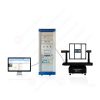
High Precision Rotation Luminaire Goniophotometer
LSG-1890B
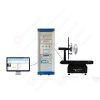
High Precision Rotation Luminaire Goniospectroradiometer
LSG-1890BCCD

Goniophotometer for Automotive and Signal Lamps
LSG-1950
Goniophotometer for Traffic Signal Lamps (Economical Model)
LSG-1950S
VAD Fire Alarm Visual Alert Device Goniophotometer
LSG-1930
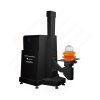
Goniophotometer for Airfield Lighting
LSG-1940
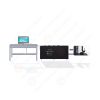
Compact Goniophotometer
LSG-1200A
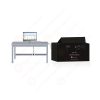
LED Goniophotometer
LSG-1100
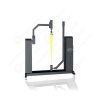
Near Field Moving Detector Goniophotometer
LSG-1900B
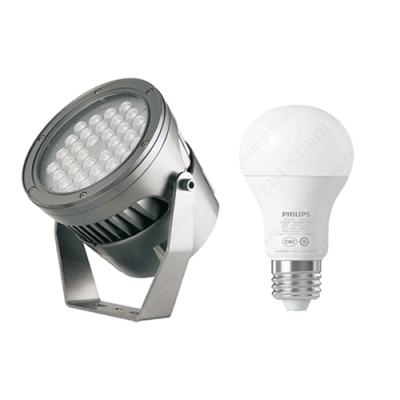 LEDs and Luminaire Test Solutions
 LM-79 and LM-80 Test Solutions
 LED Driver Test Solutions
 Household Appliances Test Solutions
 Mobile and Network Test Solutions
 Automotive Electronics Test Solutions
 Audio-Video and IT Test Solutions
 Cable and Wire Test Solutions
 Plugs and Sockets Test Solutions
 Power Switch Test Solutions
 Transformer Test Solutions
 Electric Toys Test Solutions
 Energy Meter Test Solutions
 Motor-Operated Tool Test Solutions
Select an organization
to browse standards
Abstract
Accurately assessing the quality of electronic capacitors is fundamental to ensuring the reliability and performance of electronic devices. This article systematically details the critical parameters, technical principles, and methodologies involved in how to measure capacitance and, by extension, overall capacitor quality. It provides an in-depth introduction to the series of capacitor measurement instruments developed by LISUN Electronics to address diverse application challenges. A thorough technical analysis is presented for the LS6515FN Large Capacitance Meter, the LS6515EN High-Speed Electrolytic Capacitor Taping Machine Tester, and the LS6517N Dual-Frequency Tester. Through comparative data and practical application analysis, this article offers a comprehensive measurement solution and theoretical foundation for production line quality control, incoming inspection, and laboratory R&D within the electronics manufacturing industry.
1. Introduction
In modern electronics, capacitors are core components for energy storage, filtering, coupling, and tuning. Their quality directly impacts the stability, efficiency, and longevity of entire circuit systems. Therefore, understanding how to measure capacitance and accurately evaluate key capacitor parameters—precisely, rapidly, and reliably—has become an indispensable technical requirement across the supply chain, from component manufacturing and assembly to final quality assurance. Traditional simplistic measurement methods are no longer adequate for comprehensively characterizing capacitor performance, especially at high frequencies, or for assessing loss characteristics and reliability. Leveraging profound expertise in test and measurement, LISUN has developed a series of high-precision capacitor measurement instruments tailored to the complexity and diversity of capacitance testing. These instruments not only answer the technical question of how to measure capacitance for quality assessment but also standardize and automate the measurement process through high-performance hardware and intelligent algorithms, significantly enhancing quality control standards and efficiency in the industry.
2. Core Parameters and Technical Principles for Capacitor Quality Measurement
A comprehensive answer to how to measure capacitance for quality evaluation requires defining the key electrical parameters upon which capacitor quality is judged. A high-quality capacitor must not only have accurate nominal capacitance but also maintain excellent electrical characteristics under operating conditions of frequency, temperature, and voltage.
2.1 Core Quality Parameters
•Capacitance (C): The fundamental parameter indicating charge storage capacity. Significant deviation from the nominal value directly affects circuit time constants, filtering effectiveness, etc.
•Dissipation Factor (D, tanδ): Reflects energy loss within the dielectric material and internal structure. A high D factor leads to capacitor self-heating and reduced efficiency, making it a key quality indicator.
•Equivalent Series Resistance (ESR): Comprises resistance from electrodes, leads, and dielectric losses. Particularly in high-frequency switching power supplies and filtering circuits, excessive ESR severely impairs ripple suppression and can cause thermal runaway.
•Impedance (Z): The total opposition to current at a specific frequency. Analyzing the impedance-frequency curve provides a complete view of a capacitor’s frequency response, determining its suitability for the target application bandwidth.
•Leakage Current: For electrolytic capacitors, leakage current is directly related to insulation performance and long-term stability.
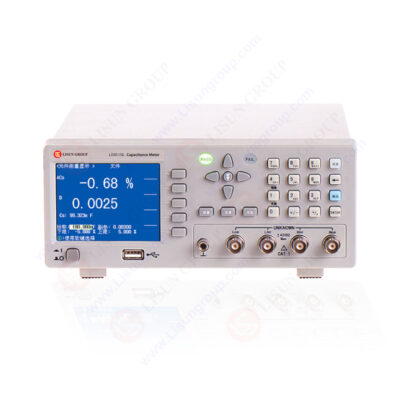
LS6515EN Capacitor meter
2.2 Predominant Measurement Technology Principle
High-precision assessment of capacitor quality primarily utilizes the Auto-Balancing Bridge method. The fundamental principle involves a precision internal circuit that uses a “null detection” and “feedback control” system to automatically adjust a known reference signal until it balances with the signal across the Device Under Test (DUT). At this balance point, the instrument can precisely calculate the vector relationship between the current through the DUT and the voltage across it, thereby separating the reactive (capacitive) and resistive components to finally compute parameters like C, D, ESR, and Z. LISUN’s instrument series is built upon this principle, further optimized with wideband signal sources, high-resolution vector voltage-current detection, and high-speed Digital Signal Processing (DSP) algorithms to achieve both high accuracy and high speed.
3. LISUN Capacitor Measurement Instruments: Comprehensive Solutions for Measurement Challenges
Addressing the variety of capacitor types, application scenarios, and differing measurement priorities, LISUN offers a specialized instrument series that systematically answers the question of how to measure capacitance for quality across different contexts.
3.1 LS6515FN Large Capacitance Meter: Precision Measurement for High-Capacitance Devices
Measuring large capacitors (e.g., aluminum electrolytic, supercapacitors) presents unique challenges: high charging currents, long stabilization times, and difficulty measuring small losses. The LS6515FN is designed specifically for this purpose.
•Wide-Range, High-Accuracy Measurement: Its capacitance measurement range extends to the Farad level with a basic accuracy of up to ±0.05%. This ensures precise metering from standard capacitors to ultra-high-capacitance supercapacitors.
•Multi-Parameter Synchronization: It simultaneously acquires C, D, ESR, and Z values in a single measurement. This provides complete data for evaluating the overall quality of large capacitors in applications like energy storage or high-current filtering (e.g., the impact of internal resistance on discharge efficiency).
•Low-Impedance Measurement Capability: Optimized 4-Terminal (4T) test fixtures and circuitry effectively minimize lead impedance effects, ensuring accurate measurement of very low ESR values—critical for judging the quality of capacitors used in switch-mode power supplies.
3.2 LS6515EN High-Speed Electrolytic Capacitor Taping Machine Tester: Efficiency and Reliability for Automated Production
On automated taping lines for electrolytic capacitors, the core demands are how to measure capacitance for quality while ensuring extremely high test throughput and 100% reliable inline inspection. The LS6515EN is engineered for this role.
•Ultra-High-Speed Testing: Through hardware parallel processing and optimized measurement sequences, test speeds can exceed 100 measurements per second, perfectly matching the pace of high-speed taping machines without impacting production output.
•Stability and Reliability: The instrument features excellent noise immunity and long-term stability, adapting to the electrical environment of factory floors. Its consistent measurement results ensure accurate binning, eliminating misclassification.
•Full Automation Integration: Standard HANDLER interface and comprehensive command sets (e.g., SCPI) enable seamless integration with robotic handlers and sorting mechanisms. This facilitates unattended fully automated testing, sorting, and data logging, forming a closed-loop quality control system.
3.3 LS6517N Dual-Frequency Tester: Meeting Composite Standards and Enabling Deep Analysis
Many capacitor specifications require testing different parameters at different frequencies (e.g., nominal capacitance at 1kHz, and loss/ESR at 100kHz or higher to evaluate high-frequency performance). Traditional single-frequency instruments require two or more separate measurements, reducing efficiency. The LS6517N’s innovative dual-frequency test capability revolutionizes this process.
•Simultaneous Dual-Frequency Measurement: It can apply two independent test frequencies (e.g., 1kHz and 100kHz) simultaneously and deliver a full set of parameters (C, D, R(ESR), Z) for both frequencies in one go. This dramatically improves test efficiency, especially for quality inspection of high-frequency, low-ESR capacitors (e.g., MLCCs, polymer electrolytics) that must meet composite frequency acceptance criteria.
•Deep Quality Insight: By comparing parameter changes of the same capacitor at two distinct frequencies, engineers can gain deeper insight into its frequency characteristics and dielectric material behavior, enabling more accurate quality prediction of the capacitor’s performance in real circuit environments.
•Flexible Automation Support: Also supporting HANDLER multi-bin sorting, users can set complex sorting conditions based on combined results from both frequencies, achieving more refined and scientific quality grading.
4. Application Practice and Performance Data Comparison
Understanding how to measure capacitance for quality involves not only instrument accuracy but also its problem-solving capability in real-world applications.
4.1 Typical Application Scenarios Analysis
•R&D and Incoming Quality Control (IQC): During R&D and material receipt, using the LS6515FN or LS6517N for precision measurement verifies if capacitor parameters match datasheet specifications, assesses their quality grade, and provides data support for circuit design and supplier selection.
•Production Line End-of-Line Test (FCT) & Quality Assurance (QA): At the end of the production line, the LS6515EN is used for in-circuit testing of capacitors on finished boards, quickly screening out defective units caused by soldering issues or early-life parameter drift.
•Automated Component Production & Sorting: In capacitor manufacturing plants, the LS6515EN and LS6517N are integrated directly into taping or sorting machines, performing 100% testing on every outgoing capacitor and performing fine sorting/binning based on parameters like C, D, and ESR value, thereby enhancing product value and customer satisfaction.
4.2 Comprehensive Instrument Performance Comparison
To clearly illustrate the different focus areas and capabilities of LISUN instruments in addressing how to measure capacitance for quality, key performance aspects are compared below:
Table 1: LISUN Capacitor Meter Core Performance and Application Positioning Comparison
| Feature Dimension | LS6515FN Large Capacitance Meter | LS6515EN High-Speed Taping Machine Tester | LS6517N Dual-Frequency Tester |
| Core Mission | Solves large capacitance, high-accuracy measurement challenges | Solves high-speed automated production line inline testing challenges | Solves multi-frequency standard composite testing and deep analysis challenges |
| Key Measured Parameters | C, D, ESR, Z | C, D, ESR, Z | C, D, R(ESR), Z (simultaneous full set for two frequencies) |
| Capacitance Range | 1pF ~ 2F (extendable) | 1pF ~ 200mF | 1pF ~ 200mF |
| Basic Accuracy | ±0.05% (typical) | ±0.1% (typical) | ±0.05% (typical) |
| Test Frequency | 100Hz, 120Hz, 1kHz | 100Hz to 100kHz programmable | 20Hz to 200kHz dual independent programmable frequencies |
| Test Speed | Medium (approx. 10/sec, prioritizing accuracy) | Ultra-High (>100/sec) | High (approx. 50/sec, dual-frequency effectively doubles efficiency) |
| Core Advantage | Exceptional accuracy across ultra-wide range, low-impedance measurement capability | Extreme test speed and stability for seamless production line integration | Dual frequencies in one unit, efficiency multiplied, provides unique frequency characteristic comparison |
| Typical User Scenario | Supercapacitor R&D, power filter capacitor inspection, lab precision metrology | Electrolytic/film capacitor manufacturer taping/sorting, PCBA inline final test | High-frequency low-ESR MLCC/polymer cap QA, incoming inspection to multi-frequency standards, R&D deep analysis |
5. Conclusion and Outlook
Mastering how to measure capacitance to assess quality is a systemic challenge permeating the entire lifecycle of electronic component manufacturing and application. It demands measurement technology that possesses not only microscopic precision (high-accuracy parameter acquisition) but also macroscopic applicability (covering various capacitor types and scenarios), along with future-oriented efficiency and intelligence. Through the series comprising the LS6515FN, LS6515EN, and LS6517N, LISUN provides a complete solution from laboratory precision analysis to automated high-volume production sorting.
Practice has proven that selecting professional measurement instruments is the cornerstone of effective capacitor quality control. LISUN’s products, with their clear application focus, reliable technical performance, and flexible integration capabilities, are helping numerous global customers improve product quality, optimize production processes, and mitigate quality risks. Looking ahead, as fields like 5G communications, new energy vehicles, and renewable energy impose more stringent demands on capacitor performance, capacitance measurement technology will continue evolving towards higher frequencies, wider ranges, and more intelligent data analysis. LISUN remains committed to technological innovation, providing the industry with more advanced measurement tools and methodologies to jointly drive the elevation of electronic component quality standards and industry progress.
Tags:LS6515ENYour email address will not be published. Required fields are marked *

 English
 中文简体
中文简体 English
 Русский
 Español
 Português
 Türkçe
 العربية
 Deutsch
 Polski
 Italiano
 Français
 한국어
한국어 ไทย
ไทย Tiếng Việt
 日本語
日本語