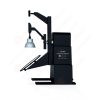
LM-79 Moving Detector Goniophotometer (Mirror Type C)
LSG-6000
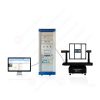
High Precision Rotation Luminaire Goniophotometer
LSG-1890B
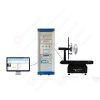
High Precision Rotation Luminaire Goniospectroradiometer
LSG-1890BCCD

Goniophotometer for Automotive and Signal Lamps
LSG-1950
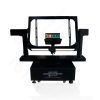
Goniophotometer for Traffic Signal Lamps
LSG-1950S
VAD Fire Alarm Visual Alert Device Goniophotometer
LSG-1930
Compact Goniophotometer
LSG-1200A
LED Goniophotometer
LSG-1100
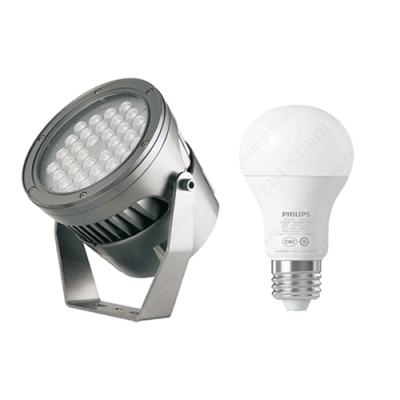 LEDs and Luminaire Test Solutions
 LM-79 and LM-80 Test Solutions
 LED Driver Test Solutions
 Household Appliances Test Solutions
 Mobile and Network Test Solutions
 Automotive Electronics Test Solutions
 Audio-Video and IT Test Solutions
 Cable and Wire Test Solutions
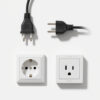 Plugs and Sockets Test Solutions
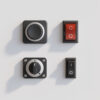 Power Switch Test Solutions
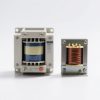 Transformer Test Solutions
 Electric Toys Test Solutions
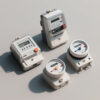 Energy Meter Test Solutions
 Motor-Operated Tool Test Solutions
Select an organization
to browse standards
To address the fundamental question of what is temperature calibrator, this study examines the critical role of precision thermal sources in modern metrology, specifically focusing on infrared thermometer verification systems. Temperature calibrators serve as reference standards that enable traceable measurements linking field instruments to international temperature scales.
This paper presents a systematic analysis of black body furnace engineering, analyzing cavity emissivity optimization, thermal uniformity mechanisms, and compliance with GB/T standards for medical infrared thermometry. Through detailed investigation of design parameters including ≥0.99 emissivity specifications and ±0.1℃ accuracy requirements, we demonstrate how advanced temperature calibration systems ensure measurement reliability in clinical and industrial applications. The findings provide essential technical guidance for metrology professionals seeking robust calibration infrastructure.
Temperature measurement accuracy represents a cornerstone of modern quality assurance, particularly in healthcare diagnostics where infrared thermometry has become ubiquitous following global health monitoring requirements. The reliability of non-contact temperature measurement devices depends fundamentally upon rigorous calibration protocols using specialized reference sources. Understanding what is temperature calibrator becomes a critical inquiry when establishing measurement traceability chains that link field instruments to national standards. A temperature calibrator encompasses specialized thermal sources capable of generating stable, uniform temperature fields with known radiometric properties, enabling the verification of sensor accuracy across defined operational ranges.
Global temperature measurement traceability relies upon the International Temperature Scale of 1990 (ITS-90), which defines fixed points and interpolation standards for thermometer calibration. For infrared thermometry applications, the International Organization for Standardization (ISO) and International Electrotechnical Commission (IEC) establish guidelines for radiation thermometry calibration procedures. These standards mandate that calibration sources maintain emissivity values exceeding 0.99 to approximate ideal black body behavior, minimizing spectral reflection errors that compromise measurement uncertainty. The IEC 80601-2-59 standard specifically addresses physiological temperature measurement requirements, establishing tolerance limits of ±0.2℃ for clinical infrared thermometers, thereby necessitating calibration sources with superior stability specifications.
Chinese national standards GB/T 21417.1-2008 and GB/T 21416-2008 provide comprehensive technical specifications for medical infrared thermometry, defining performance requirements for ear and forehead thermometers respectively. GB/T 21417.1-2008 specifies that calibration equipment must achieve temperature stability within ±0.1℃ over 10-minute intervals, ensuring repeatable measurement conditions during verification procedures. These standards establish black body cavity diameter requirements (minimum 50mm) to accommodate various infrared thermometer optical configurations, while mandating emissivity coefficients ≥0.99 to minimize reflected ambient radiation interference. Compliance with these specifications ensures that calibration results remain traceable to national metrology institutes, supporting regulatory approval processes for medical devices.
The theoretical foundation of temperature calibration rests upon Planck’s law of black body radiation, which describes the spectral radiance of an ideal thermal radiator. Practical calibration systems utilize cavity radiators with geometries designed to approximate infinite emissivity through multiple internal reflections. The effective emissivity ( ) of a cylindrical cavity depends upon the surface material emissivity and the cavity length-to-diameter ratio (L/D), following the relationship:
where A_exit represents the aperture area and A_total denotes the internal cavity surface area. High-performance calibration furnaces employ specialized coatings or oxidized metal surfaces achieving ε_s ≥ 0.95, combined with L/D ratios exceeding 3:1 to realize effective emissivity values ≥0.99. This near-unity emissivity minimizes the difference between cavity wall temperature and radiometric temperature, reducing calibration uncertainty contributions to less than 0.05℃ in the 35-50℃ range.
Achieving ±0.1℃ measurement accuracy requires sophisticated thermal management systems incorporating precision heating elements and adaptive control algorithms. Modern black body furnaces utilize distributed heating elements surrounding the cavity structure, coupled with high-conductivity aluminum or copper cores to ensure radial temperature uniformity. Proportional-integral-derivative (PID) controllers with 0.01℃ resolution temperature sensors enable real-time thermal regulation, compensating for ambient temperature fluctuations and power supply variations.
The temperature stability specification of ±(0.1-0.2)℃/10min requires thermal mass optimization and active feedback mechanisms. Advanced designs implement circulating thermal fluids or multi-zone heating to eliminate axial gradients within the cavity. Thermal imaging analysis demonstrates that well-designed systems maintain radial uniformity within 0.05℃ across the central 80% of the cavity diameter, ensuring consistent radiation characteristics regardless of the infrared thermometer’s exact targeting position.
Calibration uncertainty budgets encompass multiple contributing factors: reference thermometer uncertainty (typically ±0.05℃ for platinum resistance thermometers), emissivity deviation effects, stability variations, and geometric factors including distance-to-spot ratio alignment. The combined expanded uncertainty (k=2) for clinical infrared thermometer calibration generally ranges from ±0.1℃ to ±0.15℃, requiring calibration sources with significantly superior stability to maintain adequate measurement confidence intervals.
Environmental parameters significantly influence calibration accuracy. Ambient temperature variations affect both the reference standard and the device under test, necessitating stabilization periods exceeding 15 minutes before measurement initiation. Humidity control prevents condensation on optical surfaces, while electromagnetic shielding eliminates interference with electronic thermometer components. Comprehensive uncertainty analysis following JCGM 100:2008 (GUM) principles ensures that calibration certificates provide reliable statements of measurement capability.
Material selection for black body furnace construction balances thermal conductivity, oxidation resistance, and long-term stability. The cavity typically utilizes aluminum alloys with hard anodized coatings or specialized high-emissivity paints containing carbon nanostructures. These materials maintain emissivity characteristics across thousands of thermal cycles without degradation, ensuring calibration consistency over the equipment’s operational lifespan.
Structural engineering must minimize thermal losses while maintaining mechanical stability. Double-walled construction with intermediate thermal insulation reduces power consumption and improves temperature stability. The cavity aperture design requires careful optimization—sufficient diameter (typically 55mm) to accommodate various thermometer optical configurations, while limiting radiation losses that compromise temperature uniformity. Mechanical shutters or covers preserve thermal equilibrium during non-operational periods, reducing stabilization time between calibration sequences.
Contemporary metrology applications demand calibration systems that integrate theoretical precision with practical operational reliability. Advanced black body furnace implementations incorporate microprocessor-controlled thermal regulation, achieving the stringent stability requirements specified in GB/T 21417.1-2008 for medical infrared thermometer verification.
| Parameter | Specification | Metrological Significance |
| Operating Temperature Range | 35℃ ~ 50℃ adjustable | Covers physiological temperature monitoring range |
| Temperature Resolution | 0.01℃ | Enables precise setpoint adjustment for verification protocols |
| Temperature Stability | ±(0.1 ~ 0.2)℃ / 10min | Exceeds GB/T 21417.1-2008 requirements for reference sources |
| Cavity Emissivity | ≥0.99 | Minimizes reflected radiation errors in infrared measurements |
| Cavity Diameter | 55mm | Accommodates diverse infrared thermometer optical configurations |
| Heating Time | >15 minutes | Ensures thermal equilibrium before calibration initiation |
| Power Requirements | AC 110V~220V/50Hz, 100W | Universal compatibility with laboratory infrastructure |
| Physical Dimensions | 110mm × 270mm × 380mm (H×W×D) | Compact footprint for laboratory or field deployment |
| Mass | 3.5 kg | Portable configuration for on-site calibration services |
The Black Body Furnace | Tachometer Calibrator Product No: BBF-1 exemplifies engineering integration of these technical requirements. This system utilizes proprietary temperature circulation technology coupled with advanced cavity materials to achieve superior surface temperature uniformity. The ≥0.99 emissivity specification eliminates environmental error sources in infrared measurement systems, while the ±0.1℃ accuracy capability improves reliability of temperature monitoring networks and reduces false detection rates in screening applications.
Calibration traceability receives particular emphasis through third-party laboratory certification. The equipment holds CNAS (China National Accreditation Service) calibration certificates, establishing unbroken metrological traceability chains to national standards. This accreditation proves essential for medical device manufacturers and healthcare facilities requiring documented compliance with regulatory requirements.
Application scenarios encompass calibration of electronic infrared ear thermometers, infrared forehead thermometers, and infrared body surface screening instruments. The 35-50℃ operational range specifically targets physiological temperature measurement, while the compact mechanical design facilitates both laboratory-based calibration services and field deployment for preventive maintenance of screening infrastructure.
Selecting appropriate temperature calibration equipment requires systematic evaluation of measurement uncertainty requirements, throughput needs, and environmental constraints. Facilities conducting high-volume production testing prioritize rapid thermal stabilization and automated calibration sequences, while metrology laboratories emphasize ultimate accuracy and comprehensive documentation capabilities.
When evaluating what is temperature calibrator from a systems engineering perspective, the relationship between cavity emissivity and measurement wavelength demands careful consideration. Infrared thermometers operating in the 8-14 μm spectral range require cavity materials with stable emissivity characteristics across this bandwidth. Oxidized copper surfaces or specialized coatings provide superior performance compared to painted surfaces that may exhibit spectral variation, introducing wavelength-dependent calibration errors.
Thermal capacity versus heating speed presents an engineering trade-off. High thermal mass improves stability but increases heating duration, affecting operational efficiency. Modern implementations balance these requirements through intelligent power management and predictive thermal control algorithms that anticipate temperature setpoint approaches, minimizing overshoot and settling time.
Environmental robustness considerations include electromagnetic compatibility for operation near medical equipment, mechanical durability for field calibration services, and thermal insulation to protect operators from high-temperature surfaces during extended calibration sessions.
Understanding what is temperature calibrator extends beyond simple equipment definitions to encompass the complex metrological infrastructure ensuring measurement accuracy in critical healthcare and industrial applications. This analysis has examined the theoretical foundations, standardization requirements, and engineering implementations necessary for high-precision infrared thermometer calibration. The integration of ≥0.99 emissivity cavity design, ±0.1℃ thermal stability, and compliance with GB/T 21417.1-2008 standards establishes the technical framework for reliable temperature measurement traceability.
As infrared thermometry continues expanding into public health monitoring, industrial process control, and scientific research, the demand for sophisticated calibration systems capable of eliminating environmental error sources grows correspondingly. Engineering implementations such as the BBF-1 Black Body Furnace demonstrate how theoretical metrology principles translate into practical equipment specifications, providing metrology professionals with the tools necessary to maintain measurement confidence in an increasingly temperature-sensitive technological landscape.
Future developments in temperature calibration technology will likely emphasize enhanced automation, reduced uncertainty budgets, and expanded traceability documentation to meet evolving regulatory requirements for medical device calibration.
Tags:BBF-1Your email address will not be published. Required fields are marked *

 English
 中文简体
中文简体 English
 Русский
 Español
 Português
 Türkçe
 العربية
 Deutsch
 Polski
 Italiano
 Français
 한국어
한국어 ไทย
ไทย Tiếng Việt
 日本語
日本語