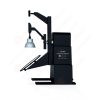
LM-79 Moving Detector Goniophotometer (Mirror Type C)
LSG-6000
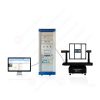
High Precision Rotation Luminaire Goniophotometer
LSG-1890B
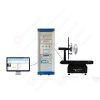
High Precision Rotation Luminaire Goniospectroradiometer
LSG-1890BCCD

Goniophotometer for Automotive and Signal Lamps
LSG-1950
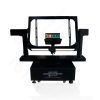
Goniophotometer for Traffic Signal Lamps (Economical Model)
LSG-1950S

VAD Fire Alarm Visual Alert Device Goniophotometer
LSG-1930
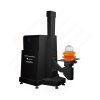
Goniophotometer for Airfield Lighting
LSG-1940
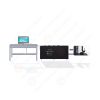
Compact Goniophotometer
LSG-1200A
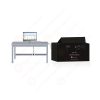
LED Goniophotometer
LSG-1100
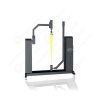
Near Field Moving Detector Goniophotometer
LSG-1900B
 LEDs and Luminaire Test Solutions
 LM-79 and LM-80 Test Solutions
 LED Driver Test Solutions
 Household Appliances Test Solutions
 Mobile and Network Test Solutions
 Automotive Electronics Test Solutions
 Audio-Video and IT Test Solutions
 Cable and Wire Test Solutions
 Plugs and Sockets Test Solutions
 Power Switch Test Solutions
 Transformer Test Solutions
 Electric Toys Test Solutions
 Energy Meter Test Solutions
 Motor-Operated Tool Test Solutions
Select an organization
to browse standards
A neutral salt spray test is one of the most popular accelerated corrosion tests used to measure metals and coating on the protective coatings. It is not aimed at exactly simulating real outside conditions but rather produce a controlled and repeatable chloride rich environment that stimulates the corrosion processes very quickly. The ability to initiate and propagate corrosion formation and coating crossover in days or weeks compared to the years can be viewed through the exposure of materials to continuous saline misting by the engineers. These results when read properly can give a great deal of understanding on the way the materials would perform in terms of long service life.
The neutral salt spray test is commonly the initial screening device employed during any industrial qualification program to site tools that compare material options surface treatment and coating systems. Despite the harshness of the test conditions and the simplification of the failure modes that they imprint, basic flaws in the barrier protection adhesion and galvanic compatibility are identified. These are the same weaknesses that usually dictate the long term corrosion performance in actual service despite that time scale may be quite different.
To determine long term behavior of corrosion, it is crucial to be aware of mechanisms that are triggered by the neutral salt spray test. Being exposed to constant sodium chloride solution forms a continuous layer of electrolyte on the surface that catalysis the electrochemical reaction. This state enhances pitting on the prone alloys, under film corrosion, on coating flaws and galvanic corrosion on interfaces of dissimilar metals.
In practice, corrosion results are usually interspersed with wet dry cycles and temperature variations together with variation in pollutants. But still it has many failures in the long term that have the same points of initiation shown in the salt spray testing like scratches edges fasteners and pores coating. In case such sites quickly disseminate corrosion when it is attempted during tests, it denotes a lack of protection margins which will probably be observed over time in service.
Coating adhesion quality is especially a good use of neutral salt spray test to distinguish quality. Coatings of low adhesion can also look sound but degenerate easily under the effects of blistering or undercutting when the electrolyte enters the interface. These failure modes are strongly associated with the premature field failures despite having less aggressive service exposure. This is why the findings of salt spray are currently mostly employed as comparative indicators but not absolute lifetime predictors.
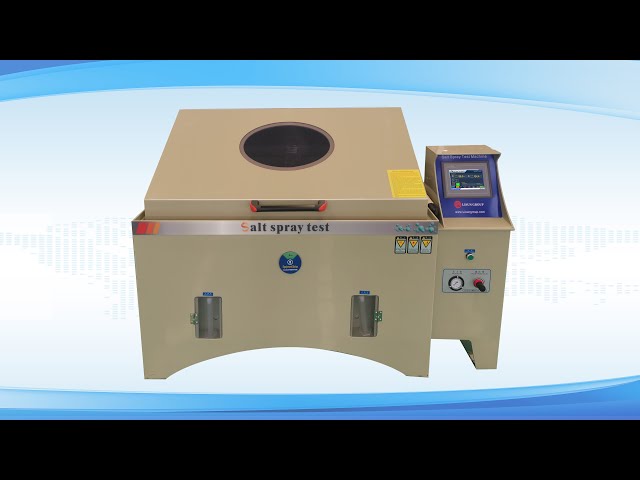
Although neutral salt spray testing is a helpful test there are warning signs that its application should be approached with caution. The persistent wet atmosphere promotes chloride inducted corrosion and inhibits those processes that need drying or oxygen replenishment processes. Consequently, materials which do not perform so well in salt spray can still be used to survive fairly well in dry exposure dominated environments whereas those which can resist long salt spray periods may fail in cyclic circumstances.
In order to enhance long term prediction engineers do not go by hours to failure alone; they emphasize on the qualitative trends. Patterns that are informative are rapid scribe creep severe pitting depth or general blister formation, rather than an exposure time. A comparison of these trends between materials and coating at the same conditions assists in determining relative durability hierarchy that would stay significant with longer service times.
To increase prediction accuracy, many organizations thus do not only use neutral salt spray testing but also use other techniques. A cyclic corrosion chamber incorporates alternating wet dry temperature and humidity cycles which are more reflective of outdoor environment. In cases where the salt spray results are applied to select the applicants with the cyclic testing is applied to prove the corrosion survivability the combination of these data gives a better understanding of the long term corrosion behavior.
The results of neutral salt spray tests are significant in material choice and development of coating. Throughout the coating formulation changes are made to enhance the adhesion of the barrier properties and defect tolerance depending upon the behavior in salt spray performance. Incremental increases in blister resistance or decreasing underfilm creep usually give meaningful improvements in service life even though the test environment may be artificial.
The early issues of galvanic compatibility are brought to the fore in the material selection salt spray results to direct the selection of materials. Such assemblies which exhibit rapid localized corrosion during testing are frequently modified in design including isolation layers sealants or the use of alternative fastener materials. This problem can be dealt with at the development stage to prevent expensive retrofit failures and field failures.
Salt spray testing is also used in a production setting as a source of quality monitoring. The alterations in the surface preparation coating thickness, or the curing conditions may be presented by the deviations of the baseline performance. In the long run, this consistency indirectly leads to better performance when it comes to long term corrosion by having the protective systems as they are supposedly specifies.
Stability and control is the predictive value of any corrosion test. The constant spray distribution provides the uniform temperature of the solution and controlled solution chemistry, making variations in results due to material behavior and not test variability. This requirement is met in well designed chambers which have dependable control systems thereby minimizing uncertainty in interpretation.
When choosing the equipment to be used in corrosion test, it is usual to find it in suppliers that are known to have a consistent repeated outcome in the projects and sites. An example LISUN offers neutral salt spray and cyclic corrosion technologies aimed at the maintenance of constant test conditions and extensive data recording. Stability in performance of equipment increases the trust that trends that are observed can be meaningful and may be applied to long term prediction activities.
The neutral salt spray test is a useful instrument in forecasting long term corrosion, provided that the results of the test are used in the right context. Although it is not the direct replication of the real environment it initiates major corrosion processes, which control the coating failure and material breakdown over time. Accelerated test results can be relied upon to make appropriate predictions about long term performance by not only trying to examine pattern of failure as opposed to exposure time but also by incorporating salt spray data with other additional methods like the cyclic corrosion chamber that engineers can apply both. With the backing of homogenous equipments trained methods and quality engineering judgment impartial salt spray testing remains at the core of prevention of corrosion and assurance of durability.
Tags:YWX/Q-015Your email address will not be published. Required fields are marked *

 English
 中文简体
中文简体 English
 Русский
 Español
 Português
 Türkçe
 العربية
 Deutsch
 Polski
 Italiano
 Français
 한국어
한국어 ไทย
ไทย Tiếng Việt
 日本語
日本語