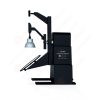
LM-79 Moving Detector Goniophotometer (Mirror Type C)
LSG-6000
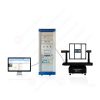
High Precision Rotation Luminaire Goniophotometer
LSG-1890B
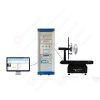
High Precision Rotation Luminaire Goniospectroradiometer
LSG-1890BCCD

Goniophotometer for Automotive and Signal Lamps
LSG-1950
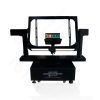
Goniophotometer for Traffic Signal Lamps
LSG-1950S
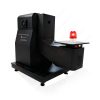
VAD Fire Alarm Visual Alert Device Goniophotometer
LSG-1930
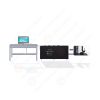
Compact Goniophotometer
LSG-1200A
LED Goniophotometer
LSG-1100
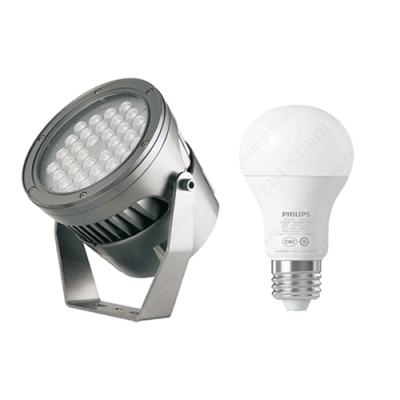 LEDs and Luminaire Test Solutions
 LM-79 and LM-80 Test Solutions
 LED Driver Test Solutions
 Household Appliances Test Solutions
 Mobile and Network Test Solutions
 Automotive Electronics Test Solutions
 Audio-Video and IT Test Solutions
 Cable and Wire Test Solutions
 Plugs and Sockets Test Solutions
 Power Switch Test Solutions
 Transformer Test Solutions
 Electric Toys Test Solutions
 Energy Meter Test Solutions
 Motor-Operated Tool Test Solutions
Select an organization
to browse standards
Type C Goniophotometer systems are used in preference in road and out light testing since they provide a convenient combination of geometry, angular coverage, and alignment that is flexible to the real-world luminaire requirements. At the beginning it is necessary to mention the goal of the measurement. The essence of roadway lighting specifications is the luminous intensity measurement of various planes in many planes such that the designers can be able to determine the lighting on pavements, confirming the glare limits and generate standard IES files in order to calculate lighting. Type C geometry maps inherently into these objectives which explains its use as the horse in the light checking business of street and area lights.
A Type C goniophotometer spins the luminaire about two orthogonal axis and the detector about a fixed distance on a gravity stable arm. This system maintains the instrument in a far field position virtually for all practical road luminaires and permits the tester to sweep through vertical and horizontal angles with constant and repeatable positioning. The optical alignment and stray light control needed both to ensure that you can adjust the detector stationary without physically moving it eases the physical stability of keeping the detector stationary.
Outdoor and road lamps are lamps that are usually designed with a long and asymmetric light distribution to provide valuable light and plane surfaces that are tens of meters away on the luminaire side. Type C configuration The Type C configuration simply captures those distributions since the scanning planes are closely aligned to the luminaire mounting orientations utilized in the field. It is easier to calculate measurement results of luminous intensity using geometry that is fed into photometric simulation tools. It is also contrasted with some other types of gonimometers that need more complicated data transformation to reproduce the same space distribution and that introduces manipulations and error.

The challenge of having the luminous source under measurement located in the far field of the detector is one of the recurring problems with outdoor photometry. The Type C layout simplifies satisfying the far field requirement due to the ability to locate the detector at a fixed long distance and also making the luminaire rotate through the necessary angles without altering the geometry of the detector. This minimizes uncertainty in measurements associated with changes in distance and reduces validation of far field conditions of other luminaire sizes. In the case of bigger luminaires the system can be scaled up or one may elect to use a bigger detector distance to maintain valid luminous intensity measurement.
Sometimes roadway optics include sharp intensity lobes that are meant to focus the light where it is required. The solution of those features necessitates high angular resolution and fine sampling in both vertical and horizontal directions. The Type C system is well specified to provide programmable angular step control and smooth motion control in order to provide the operator with detailed intensity curves without mechanical jitter. It is this fidelity that is necessary in the process of analyzing asymmetry, the highest value candela values and cutoff behavior that influence glare and even uniformity on the target surface.
Type C systems are also easier to install a luminaire on to the goniometer and position the photometric center at the points of the instrument axes since the detector is fixed. Standardized mounting plates and quick change fixtures are embraced by many manufacturers, test houses, and will save time in setting up the equipment as well as enhancing repeatability between samples. The reason why repeatability is an important consideration is not just when testing a single test in a lab but also in production acceptance testing where throughput and consistency is a essential consideration. Vendors like LISUN offer various mounting options and software routines to simplify the process of aligning as well as automate the repetitive checks in order to ensure that the laboratories follow the same approach in measurements.
Photometric information of Type C systems can take direct photometric data straight into the usual industry output standards, e.g. IES and EULUMDAT currently conveniently employed by lighting design software, lighting standards and controls. Since scan planes imply convenient mounting frames the ensuing files are barely transformed and are applied to simulations. This compatibility will make the time interval that exists between measuring and analysing shorter and will minimize chances of translation error. To ensure compliance the straightness of the Type C data path is a valuable operational quality.
Regardless of the geometry that a measurement has, the best that it is is the calibration and uncertainty accounting. Type C systems make uncertainty analysis easier to do as the geometry of the fixed determiners isolates a few sources of errors. Calibration of spectral response on the detector and calibration of the distance and angular encoder and stray light suppression checking are easy to do and to record. Strict calibration program provides a consistent uncertainty budget of luminous intensity measurement that can be relied on by the stakeholders when setting lighting plan specifications to use in open places.
The outdoor lighting tests can be required to simulate the actual installations. Type C configurations enable the luminaire to be fixed with its desired bracket and geometry that results in the test being a capture of interactions of the luminaire optic housing and external shield or reflectors. This fixed detector setup also has a smaller sensitivity to minor cable routing or operator induced misalignment. These sources of variability are controlled to minimize the scatter in repeated tests or enhance the quality of comparative evaluation in optimizing optics, select LED engines or retrofit kit validation.
In the work of a practical laboratory throughput is of interest. Type C goniophotometers are highly adapted to semi automated procedures where only one detector and a programmable rotation stage is needed to treat large sample sizes with minimum reconfiguration. The computerized purchase is capable of storing angles scan, spectroradiometric, and electrical parameter simultaneously accelerating report. Coupling to thermal fixtures and current regulated power supplies allow electrical, thermal and photometric logging settings are used simultaneously and is useful in luminous intensity measurements in realistic working conditions.
Whereas road and outdoor lighting are concerned, the Type C goniophotometer presents a sensible combination of geometric usefulness, measurement fidelity as well as operational convenience. It has simpler requirements than complex data transforms, and can achieve far field compliance easier, and allows repeatable mounting practices enhancing production testing. When incorporated together with stringent calibration and appropriate accessories provided by reputed suppliers like LISUN the Type C method brings about luminous intensity measurement values that can be fully relied upon by lighting designers, specifiers and regulators.
Tags:LSG-6000Your email address will not be published. Required fields are marked *

 English
 中文简体
中文简体 English
 Русский
 Español
 Português
 Türkçe
 العربية
 Deutsch
 Polski
 Italiano
 Français
 한국어
한국어 ไทย
ไทย Tiếng Việt
 日本語
日本語