LM-79 Moving Detector Goniophotometer (Mirror Type C)
LSG-6000
High Precision Rotation Luminaire Goniophotometer
LSG-1890B
High Precision Rotation Luminaire Goniospectroradiometer
LSG-1890BCCD

Goniophotometer for Automotive and Signal Lamps
LSG-1950
Goniophotometer for Traffic Signal Lamps (Economical Model)
LSG-1950S
Goniophotometer for Airfield Lighting
LSG-1940
VAD Fire Alarm Visual Alert Device Goniophotometer
LSG-1930
Compact Goniophotometer
LSG-1200A
LED Goniophotometer
LSG-1100
Near Field Moving Detector Goniophotometer
LSG-1900B
 LEDs and Luminaire Test Solutions
 LM-79 and LM-80 Test Solutions
 LED Driver Test Solutions
 Household Appliances Test Solutions
 Mobile and Network Test Solutions
 Automotive Electronics Test Solutions
 Audio-Video and IT Test Solutions
 Cable and Wire Test Solutions
 Plugs and Sockets Test Solutions
 Power Switch Test Solutions
 Transformer Test Solutions
 Electric Toys Test Solutions
 Energy Meter Test Solutions
 Motor-Operated Tool Test Solutions
Select an organization
to browse standards
Abstract
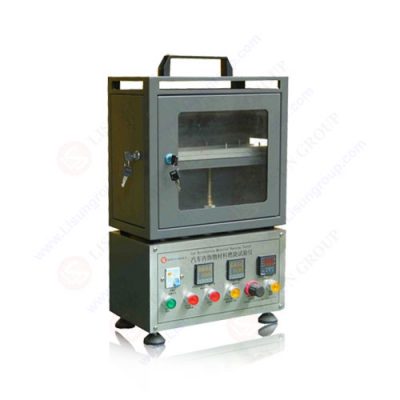
The Burning Test refers to a comprehensive series of standardized experimental methods used to scientifically evaluate a material’s ability to resist flame spread, maintain its structural integrity, and prevent fire expansion under specific ignition conditions. In the automotive industry, the flammability testing of interior materials is paramount, directly impacting occupant safety and vehicle fire risk management. This article aims to systematically answer the core question, “What is the Burning Test?“, elucidating its scientific principles, standardized methodology, and critical role in automotive interior material safety assessment. We will explore prevailing international standards and use the LISUN ZRS-4H Automotive Interior Flammability Tester as a technical case study. This analysis will detail how modern burning test equipment provides objective, authoritative, and quantifiable data on the flame retardancy of materials like seat fabrics, dashboards, and plastic components through precise and repeatable procedures, thus offering crucial support for holistic vehicle safety design and material selection.
1. Introduction: From Safety Imperative to Standardized Evaluation – The Origin and Mission of Burning Tests
Fire is one of the most significant long-term hazards faced by human society, and the behavior of materials during a fire is a critical determinant of the speed and severity of fire spread. So, What is the Burning Test? In essence, it is a preventive science that utilizes controlled laboratory conditions to quantitatively predict how a material might behave in a real fire scenario. It is far more than a simple “light-and-see” experiment; it is a highly standardized evaluation system designed to measure core parameters such as ease of ignition, flame spread rate, heat release, smoke characteristics, and self-extinguishing capability.
In the confined space of an automobile, a diverse array of interior materials—including textiles, plastics, and foams—are located in close proximity to the occupants. Should an ignition source arise (e.g., electrical fault, collision, or external fire), the flammability performance of these interior materials directly determines the safe evacuation time available to the passengers. Historically, severe vehicle fire incidents have driven the establishment and evolution of mandatory automotive interior flammability standards worldwide. Therefore, understanding “What is the Burning Test?”, especially in the context of dedicated automotive interior flammability testing, is not only a professional subject in material science and automotive engineering but also a critical societal issue concerning public safety.
2. The Core of Automotive Interior Flammability Testing: Standards, Methods, and Key Metrics
Flammability testing for automotive interior materials operates under a globalized standards framework, including China’s GB 8410, the USA’s FMVSS 302, and the internationally recognized ISO 3795, among others. While slightly differing in detail, the core testing logic and methodology across these standards are highly consistent.
2.1 Test Principle and Typical Methodology
The predominant standards typically employ a “Horizontal or Inclined Burning Test with a Specified Small Flame Source.” Taking a widely used method as an example, the core procedure involves: securing a specified size (typically 356mm x 100mm) of the material specimen in a holder within a test chamber, often at a specific angle (e.g., a 30° incline from the horizontal). A strictly calibrated standard propane gas burner (e.g., flame height of 20 ± 2mm, specific position temperature ≥ 820°C) is applied to one end of the specimen for a defined duration (e.g., 15 seconds). After the flame source is removed, the material’s burning behavior is observed and recorded.
2.2 Critical Performance Evaluation Metrics
The test yields several key quantifiable metrics that determine whether a material passes or fails:
• Burning Rate (BR): This is one of the most crucial indicators. It is calculated by measuring the time required for the flame front to travel a specified distance on the specimen (Unit: mm/min). Standards usually set an upper limit (e.g., ≤ 100 mm/min). A lower burning rate signifies a stronger ability of the material to resist flame propagation.
• Flame Spread Length: The distance from the ignition point to where the flame self-extinguished or stopped propagating. This directly reflects the actual range of flame expansion on the material.
• Self-Extinguishing Time (SET): The time the flame on the material continues to burn after the test flame source is removed. A short self-extinguishing time is a key indicator of good flame retardancy, signifying that the material will not contribute to the fire.
• Dripping Ignition Assessment: A piece of surgical cotton wool is placed beneath the specimen during the test. The observation checks whether melting or burning drips from the specimen ignite the cotton wool, assessing the material’s risk of creating secondary ignition sources.
3. Technical Implementation of Modern Burning Test Instruments: The ZRS-4H Example
Accurate and repeatable test results rely heavily on high-precision, specialized instruments. Traditional methods suffered from subjectivity and interference from ambient airflow. Modern flammability testers overcome these issues through automation, integration, and environmental control technology. The LISUN ZRS-4H Automotive Interior Flammability Tester is a prime example of this technological advancement.
3.1 Integrated Design and Environmental Control
The ZRS-4H features an integrated combustion chamber design with a windproof and heat-insulating structure. This design effectively isolates the test area from minor air current disturbances in the laboratory, creating a stable, controlled micro-environment that fundamentally guarantees the repeatability and accuracy of the test results. An integrated high-definition observation window allows experimenters to safely and clearly monitor the entire combustion process in real-time.
3.2 Precise Flame and Procedure Control
The instrument’s core strength lies in its meticulous control of test variables:
• Flame Calibration: Dual calibration is performed using precision flow meters and physical gauges to ensure the applied flame height is consistently maintained within the standard range of 20 ± 2mm, and the flame’s heat intensity meets the specified requirements for every test.
• Specimen Angle: The specimen holder can be precisely adjusted and locked at a 30° angle, strictly complying with the standard requirements for specimen orientation.
• Automated Procedure: High-precision timing systems and automatic ignition/extinguishing devices are integrated to allow programmed control of the burning duration. The equipment automatically executes the full sequence—”Flame Application—Timing—Flame Removal—Afterflame Timing”—eliminating human operational timing errors.
3.3 Comprehensive Data Acquisition and Judgment
The equipment goes beyond providing a test environment; it also integrates data acquisition features. The chamber is equipped with a ruler for direct reading of the flame spread distance, and the timing system accurately records burning time and self-extinguishing time. These features enable operators to conveniently calculate the Burning Rate and objectively assess the material’s performance against the standard criteria for “Self-Extinguishing Time,” “Spread Length,” and “Dripping Ignition.”
| Parameter Category | Specific Item | Technical Specification/Function Description | Significance in Answering “What is the Burning Test?” |
|---|---|---|---|
| Core Testing Capability |
Specimen Size | Length 356 ± 2mm, Width 100 ± 2mm, Thickness ≤ 13mm | Adheres to the specimen specifications required by major international standards, foundational for test comparability. |
| Core Testing Capability |
Flame Height | 20 ± 2mm (Calibratable) | Ensures the fire source conditions are standardized—a prerequisite for data comparability across different materials and laboratories. |
| Core Testing Capability |
Specimen Angle | Precisely adjustable and fixed at 30° | Simulates the material’s actual installation angle within a vehicle, making test conditions closer to real-world risk scenarios. |
| Core Testing Capability |
Burning Time Control |
0 to 999.9s adjustable, high precision | Achieves the exact ignition duration required by the standard (e.g., 15s), controlling variables and ensuring experimental consistency. |
| Supported Standards |
Compliance | GB 8410-2006, FMVSS 302, ISO 3795, ASTM D5132, etc. | Indicates the equipment is a universal tool for major automotive interior flammability tests worldwide. |
| Auxiliary and Safety Design |
Environmental Control | Built-in windproof structure in the chamber | Eliminates airflow interference, ensuring test results accurately reflect material properties rather than environmental variables. |
| Auxiliary and Safety Design |
Observation & Record | Equipped with ≥ 300 × 400mm high-temperature resistant viewing window; residue collection tray | Guarantees safety while facilitating process observation and post-test analysis (e.g., checking char formation and melting drops). |
| Auxiliary and Safety Design |
Judgment Features | Supports Self-Extinguishing Time, Spread Length, and Dripping Ignition assessment | Directly corresponds to the critical assessment criteria in the standards, completing the full set of performance evaluations in one go. |
| Typical Application Scenarios |
Test Materials | Seat fabrics/foams, dashboard skins, door trims, plastic parts, etc. | Covers almost all soft and rigid decorative materials inside an automobile, demonstrating broad applicability. |
| Typical Application Scenarios |
User Units | Vehicle OEMs, component suppliers, third-party testing labs (e.g., SGS, TÜV) | Serves as a crucial safety gate throughout the industry’s R&D, quality control, and certification stages. |
4. The Value of the Burning Test: The Safety Cornerstone Spanning the Entire Automotive Supply Chain
A deeper understanding of “What is the Burning Test?” ultimately translates into recognizing its immense value. This testing is deeply integrated into every stage of the automotive industry:
• Material R&D and Selection: Interior material manufacturers optimize formulations (e.g., by adding flame retardants) based on test data, developing new materials that meet both aesthetic and safety requirements.
• Component Acceptance and Quality Control: Vehicle OEMs and Tier 1 suppliers mandate the burning test as a compulsory inspection item for component entry, establishing rigid thresholds like the maximum burning rate to eliminate safety hazards at the source.
• Vehicle Design and Compliance Certification: Before a new vehicle model can be launched, proof that its interior materials have passed mandatory national standards (such as China’s GB 8410) must be submitted to secure market access.
• Third-Party Certification and Market Regulation: Independent testing bodies use this type of equipment to provide impartial test reports, supporting domestic and international product certifications (e.g., CCC, ECE) and safeguarding fair competition and consumer interests.
• Expansion to Broader Transportation Sectors: The test principles and instruments (supporting standards like BS 6853, DIN 75200) are also widely applied in areas with extremely high flame retardancy requirements, such as rail transport (high-speed rail, subways) and aerospace.
5. Conclusion: Beyond the Test Itself – Building a Safety Culture Centered on Prevention
Returning to the original question: What is the Burning Test? Based on the above discussion, we can recognize that it is far more than an ignition procedure in a laboratory. It is a bridge connecting material science, fire dynamics, and product safety engineering; a risk management tool that quantifies and front-loads potential fire hazards; and, critically, a tangible manifestation of a prevention-centric safety culture within the automotive industry and the modern manufacturing sector as a whole.
High-precision flammability testers, such as the LISUN ZRS-4H, are the materialized carriers of this safety culture. By providing objective, accurate, and repeatable test data, they transform the abstract concept of “safety” into actionable parameters on a design blueprint, verifiable clauses in a procurement contract, and trustworthy product quality for consumers. As the automotive industry rapidly advances toward electrification and intelligence, the increasing complexity of in-car electrical systems places even higher demands on the flame retardancy of interior materials. Profoundly understanding and strictly executing scientific burning tests is undoubtedly a key element in safeguarding vehicle integrity and promoting sustainable industry development.
Tags:ZRS-4HYour email address will not be published. Required fields are marked *

 English
 中文简体
中文简体 English
 Русский
 Español
 Português
 Türkçe
 العربية
 Deutsch
 Polski
 Italiano
 Français
 한국어
한국어 ไทย
ไทย Tiếng Việt
 日本語
日本語