LM-79 Moving Detector Goniophotometer (Mirror Type C)
LSG-6000
High Precision Rotation Luminaire Goniophotometer
LSG-1890B
High Precision Rotation Luminaire Goniospectroradiometer
LSG-1890BCCD

Goniophotometer for Automotive and Signal Lamps
LSG-1950
Goniophotometer for Traffic Signal Lamps (Economical Model)
LSG-1950S
VAD Fire Alarm Visual Alert Device Goniophotometer
LSG-1930
Goniophotometer for Airfield Lighting
LSG-1940
Compact Goniophotometer
LSG-1200A
LED Goniophotometer
LSG-1100
Near Field Moving Detector Goniophotometer
LSG-1900B
 LEDs and Luminaire Test Solutions
 LM-79 and LM-80 Test Solutions
 LED Driver Test Solutions
 Household Appliances Test Solutions
 Mobile and Network Test Solutions
 Automotive Electronics Test Solutions
 Audio-Video and IT Test Solutions
 Cable and Wire Test Solutions
 Plugs and Sockets Test Solutions
 Power Switch Test Solutions
 Transformer Test Solutions
 Electric Toys Test Solutions
 Energy Meter Test Solutions
 Motor-Operated Tool Test Solutions
Select an organization
to browse standards
Abstract
In the research, development, and certification of modern electronic equipment, Electromagnetic Compatibility (EMC) is a critical metric for assessing quality and reliability. A core testing environment—the “anechoic chamber”—is fundamental for achieving precise EMC measurements. This article aims to provide an in-depth answer to the professional question: “What is an anechoic chamber for electromagnetic fields?” It systematically explains its working principles, core functions, and indispensable role in Electromagnetic Interference (EMI) and Immunity (EMS) testing. The article will analyze how an anechoic chamber utilizes two core technologies—shielding and absorption—to create a pure, reflection-free “quiet zone” for electromagnetic fields. Using the LISUN SDR series electromagnetic shielding cabinet (with the SDR-2000B model as an example), it details how modular, standardized shielding solutions provide an efficient testing environment for electronic products, from pre-compliance checks to precise diagnostics, meeting the needs of the entire R&D, quality inspection, and certification workflow.
1. Introduction: Addressing the Omnipresent Electromagnetic Challenge
With the explosive growth in the density and complexity of electronic devices, the electromagnetic environment has become increasingly complex. Any electronic device can be a “victim” or a “source” of electromagnetic interference. To ensure devices operate stably without interfering with each other in a shared electromagnetic space, rigorous Electromagnetic Compatibility (EMC) testing has become a mandatory requirement of global regulations and markets. However, ordinary laboratory environments are filled with complex ambient electromagnetic noise from radio broadcasts, cellular signals, Wi-Fi, etc., akin to trying to hear a pin drop in a noisy room. Therefore, the answer to “What is an anechoic chamber for electromagnetic fields?” is, in essence: an artificially created, ideal electromagnetic space, achieved through special design and materials, capable of blocking external electromagnetic interference and significantly attenuating internal electromagnetic wave reflections. It is the “acoustic quiet room” for engineers to perform accurate EMC measurements and the cornerstone for verifying electronic product quality and reliability.
2. Core Principles and Technical Composition of an Anechoic Chamber
A true full anechoic chamber is a highly complex and expensive engineering facility. Its primary goal is to establish a test environment approximating “free space” within specific frequency bands (e.g., above 30MHz). This relies mainly on two complementary core technologies:
2.1 Electromagnetic Shielding: Building an “Impenetrable Wall” Against External Interference
Shielding is the first line of defense. The principle involves using highly conductive metal materials (such as steel plates, copper mesh) to form a continuous, enclosed cavity. Based on the principles of electromagnetic induction, incident external electromagnetic waves induce currents on the metal surface. These currents, in turn, generate opposing magnetic fields, thereby canceling out and blocking most electromagnetic waves from entering the cavity interior. Shielding Effectiveness (SE) is the key metric, often required to exceed 60dB (attenuating 99.9999% of incident energy). LISUN’s SDR series products use a structure of 2mm galvanized cold-rolled steel sheets, welded or assembled to ensure the continuity and integrity of the shield, designed in strict compliance with standards like GB/T12190 and IEEE std-299.
2.2 RF Absorber Materials: The “Acoustic Sponge” Eliminating Internal Reflections
Shielding alone only blocks external interference. The electromagnetic waves generated by the test equipment itself will reflect multiple times within the metal enclosure, creating complex standing wave fields and severely distorting measurement results. Therefore, radio frequency absorber materials must line the inner walls of the shielded room. These materials are typically made of carbon-loaded polyurethane foam shaped into cones or wedges. They dissipate incident electromagnetic waves by converting them into heat, thereby greatly absorbing reflections from all directions. The user-provided information mentions the optional addition of 300/500mm high EPP hybrid absorbers precisely to implement this function, upgrading a standard shielded room to a semi-anechoic chamber.
| Feature Parameter | SDR-5000B (Large Shielded Room) | SDR-2000B (Standard Shielded Cabinet) | SDR-800S (Compact Shielded Box) |
|---|---|---|---|
| Internal Dimensions (LWH) | 5m * 3m * 3m | 2m * 1.2m * 1.8m | 0.8m * 0.8m * 0.8m |
| Primary Purpose | System-level, large equipment EMC testing; can accommodate multiple operators. | Pre-compliance testing and diagnostics for benchtop equipment and modules; operator can enter. | Rapid isolation testing for small modules, PCBs, or cables. |
| Shielding Structure | 2mm galvanized cold-rolled steel, welded/assembled. | 2mm galvanized cold-rolled steel, assembled structure. | 2mm galvanized cold-rolled steel. |
| Door Size | 0.9m * 1.7m (for equipment access). | 0.6m * 0.6m | 0.6m * 0.6m |
| Viewing Window | 0.3m * 0.3m, with 4mm aperture shielded glass. | 0.3m * 0.3m, with 4mm aperture shielded glass. | None. |
| Filter Configuration | 30A/220V Power Line Filter, RJ-45 Data Line Filter. | 30A/220V Power Line Filter, RJ-45 Data Line Filter. | 30A/220V Power Line Filter. |
| Typical Operation Mode | Receiver, antenna, Device Under Test (DUT), and operator all inside. | Receiver, PC, DUT, and operator all inside the cabinet. | Only the DUT is inside the box, connected to an external receiver via BNC cables. |
| Applicable Scenarios | Certification labs, R&D centers of large enterprises. | Enterprise R&D departments, production line QA, third-party pre-compliance checks. | Quick troubleshooting in early R&D, fault isolation on production lines. |
3. SDR-2000B: A Modular Solution for Engineering Practice
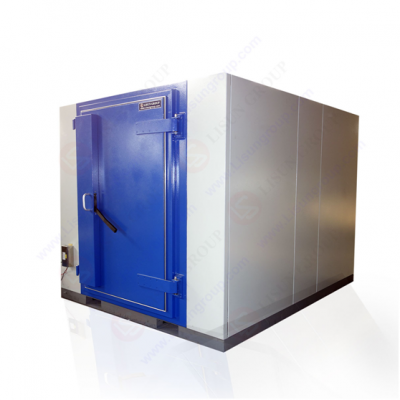
For many companies and laboratories, building a full-scale anechoic chamber is cost-prohibitive. The LISUN SDR-2000B Electromagnetic Shielding Cabinet offers an efficient and flexible compromise, integrating core shielding functionality while allowing room for future upgrades.
3.1 Standardized Design and Compliance Assurance
The SDR-2000B is designed and verified in strict accordance with authoritative standards like IEEE std-299 and EN50147 (GB/T12190). This means its shielding effectiveness comes with traceable guarantees. The standardized design ensures the reliability of test data and comparability between different laboratories, providing an authoritative environment for product pre-compliance testing and problem diagnosis.
3.2 User-Centric Integrated Test Design
Unlike compact shielded boxes that only hold the DUT, the SDR-2000B allows the operator, test instruments (e.g., the EMI-9KB receiver), and the DUT to be placed inside the cabinet simultaneously. This “all-internal” mode prevents test signal leakage that can occur when cables penetrate the shield, ensuring the integrity of the test chain. The cabinet features PVC interior finishes and a wooden floor covered with steel plate, considering both electrical safety and improved working conditions. The standard inclusion of power and data line filters ensures “clean” incoming power and signals.
3.3 Flexible Expandability
As a practical example in answering “What is an anechoic chamber for electromagnetic fields?”, the SDR-2000B is more than just a shield. Users can optionally install EPP hybrid absorber materials of varying heights on the inner walls based on test frequency and accuracy requirements. This effectively suppresses internal reflections, bringing its performance closer to that of a small anechoic chamber and making it suitable for higher-demand radiated emission pre-scans.
4. Core Application Scenarios for Anechoic Chambers and Shielding Equipment
Understanding “What is an anechoic chamber for electromagnetic fields?” clarifies its irreplaceable value:
• Pre-Compliance Testing and Debugging in R&D: Using equipment like the SDR-2000B for EMI pre-scans early in product development allows for rapid identification of non-compliant frequency points, guiding modifications in circuit board and mechanical design, significantly reducing later-stage rectification costs and project risks.
• Self-Verification Before Product Certification: Conducting rigorous internal testing in a shielded environment before sending products for formal, costly certification in a third-party full anechoic chamber ensures a high first-pass rate, saving time and certification fees.
• Production Line Quality Control and Fault Diagnosis: Performing sampled EMC tests on finished products or isolating and replicating EMI issues in field-returned faulty units ensures batch quality and enables prompt after-sales response.
• Normal Operation of Sensitive Equipment: Providing a localized clean space for measurement instruments or medical equipment sensitive to electromagnetic environments, preventing operational interference.
5. Conclusion
In summary, answering “What is an anechoic chamber for electromagnetic fields?” is not merely about defining a specialized facility but understanding the core logic of quality control for modern electronic products. It represents an engineering philosophy shift from “passively dealing with interference” to “actively creating a pure testing environment.”
For numerous electronics manufacturers, an electromagnetic shielding cabinet like the LISUN SDR-2000B offers a highly cost-effective entry point into this practice. In a relatively compact and modular form, it brings core electromagnetic shielding capability to the engineer’s side, making frequent, convenient EMC verification feasible. In a competitive market with stringent regulations, investing in such a system equates to establishing a front-line “electromagnetic firewall” for products. It safeguards not only the accuracy of test data but also the product’s path to market, the brand’s reputation, and the end-user’s safety experience.
Tags:SDR-2000BYour email address will not be published. Required fields are marked *

 English
 中文简体
中文简体 English
 Русский
 Español
 Português
 Türkçe
 العربية
 Deutsch
 Polski
 Italiano
 Français
 한국어
한국어 ไทย
ไทย Tiếng Việt
 日本語
日本語