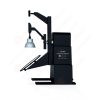
LM-79 Moving Detector Goniophotometer (Mirror Type C)
LSG-6000
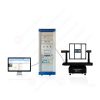
High Precision Rotation Luminaire Goniophotometer
LSG-1890B
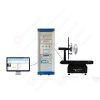
High Precision Rotation Luminaire Goniospectroradiometer
LSG-1890BCCD

Goniophotometer for Automotive and Signal Lamps
LSG-1950
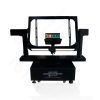
Goniophotometer for Traffic Signal Lamps (Economical Model)
LSG-1950S
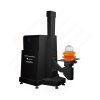
Goniophotometer for Airfield Lighting
LSG-1940
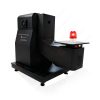
VAD Fire Alarm Visual Alert Device Goniophotometer
LSG-1930
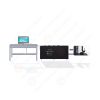
Compact Goniophotometer
LSG-1200A
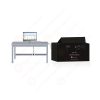
LED Goniophotometer
LSG-1100
Near Field Moving Detector Goniophotometer
LSG-1900B
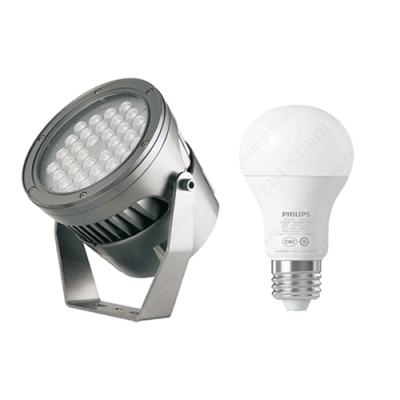 LEDs and Luminaire Test Solutions
 LM-79 and LM-80 Test Solutions
 LED Driver Test Solutions
 Household Appliances Test Solutions
 Mobile and Network Test Solutions
 Automotive Electronics Test Solutions
 Audio-Video and IT Test Solutions
 Cable and Wire Test Solutions
 Plugs and Sockets Test Solutions
 Power Switch Test Solutions
 Transformer Test Solutions
 Electric Toys Test Solutions
 Energy Meter Test Solutions
 Motor-Operated Tool Test Solutions
Select an organization
to browse standards
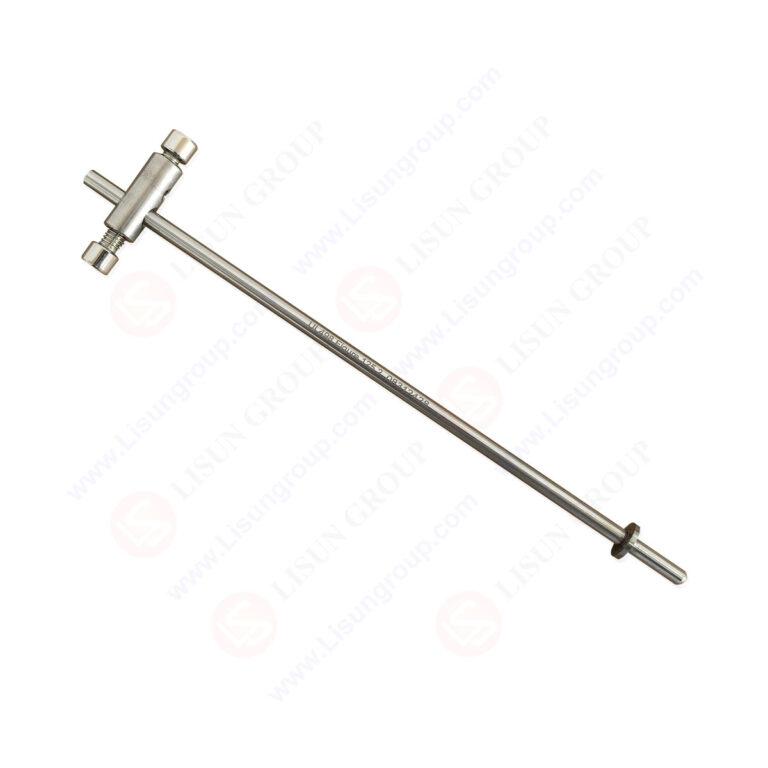
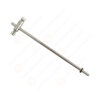
Product No: GNGPL-SB1610
SB1610 Test Pin B According to UL 498 Figure 119.2 is a high-precision, industry-specific testing component designed to fully comply with the requirements of UL 498 Figure 119.2, serving as a core tool for verifying the dimensional accuracy, insertion compatibility, and contact reliability of electrical receptacles and related connection devices. Manufactured with premium, wear-resistant materials and subjected to strict dimensional calibration, it delivers consistent and repeatable testing results, enabling manufacturers, certification bodies, and quality control teams to confirm that their products meet the stringent safety and performance standards outlined in UL 498. Its robust mechanical properties and precise structural design make it an indispensable instrument for ensuring the compliance and quality of electrical connection components across the supply chain.
Specifications
• Constructed from high-hardness alloy material with a minimum hardness rating of 58 HRC for superior wear resistance and long service life
• All dimensional parameters and tolerances are strictly aligned with the requirements specified in UL 498 Figure 119.2
• Surface is treated with a specialized anti-corrosion and anti-scratch coating to maintain dimensional stability over prolonged use
• Key dimensions including pin diameter, length, and tip geometry match the standard’s defined values with ultra-low deviation
• Compatible with both manual testing setups and automated testing platforms for flexible application scenarios
• Operating temperature range spans from -20℃ to 65℃ to accommodate various laboratory and production-line testing environments
• Features a smooth, burr-free surface finish to prevent damage to tested receptacle contacts during evaluation
Test Procedures
• Prepare the test pin and the target receptacle, ensuring both are clean and free of dust, grease, or debris that could interfere with testing accuracy.
• Secure the receptacle in a stable, fixed fixture on the testing platform to prevent position shifts during the test process.
• Align the test pin with the receptacle’s contact slot at the vertical angle prescribed in UL 498 Figure 119.2, avoiding any tilting that may cause measurement errors.
• Insert the test pin into the receptacle’s terminal at a controlled, steady speed, and utilize dedicated force-measuring equipment to record insertion force and retention force if required by testing protocols.
• Verify that the test pin can be inserted and withdrawn smoothly within the standard-specified range, and check for proper, uniform contact between the pin and the receptacle’s internal conductive components.
• Inspect both the test pin and the receptacle for any signs of deformation, scratches, or damage post-test, and document all test data in detail.
• Evaluate whether the tested receptacle meets the compliance criteria of UL 498 based on the collected data and fitting performance observed during the test.
Applications
• Batch quality inspection of household electrical receptacles in manufacturing facilities to ensure consistent product compliance with UL safety standards
• Compliance verification of industrial-grade power sockets by third-party certification institutions to support UL certification applications
• Prototype validation and design optimization of new receptacle models in R&D departments, helping engineers refine product structure to meet standard requirements
• Incoming quality control of receptacle components by electrical appliance assembly enterprises, preventing non-compliant parts from entering the production process
• Periodic safety audits of in-service receptacles in commercial and residential buildings, assessing their continued compliance with UL 498 safety benchmarks
• Educational and training use in electrical engineering labs to demonstrate receptacle safety testing protocols aligned with international standards

SB1610 Test Pin B According to UL 498 Figure 119.2
125 Grounding Contact Test 125.1 Grounding receptacles having a...
Grounding Contact Test Grounding receptacles having a 5-15R,5-20R,6-15R,6-20R,7-15R,14-15R or...

 English
 中文简体
中文简体 English
 Русский
 Español
 Português
 Türkçe
 العربية
 Deutsch
 Polski
 Italiano
 Français
 한국어
한국어 ไทย
ไทย Tiếng Việt
 日本語
日本語