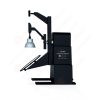
LM-79 Moving Detector Goniophotometer (Mirror Type C)
LSG-6000
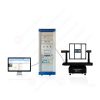
High Precision Rotation Luminaire Goniophotometer
LSG-1890B
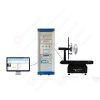
High Precision Rotation Luminaire Goniospectroradiometer
LSG-1890BCCD

Goniophotometer for Automotive and Signal Lamps
LSG-1950
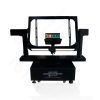
Goniophotometer for Traffic Signal Lamps
LSG-1950S
VAD Fire Alarm Visual Alert Device Goniophotometer
LSG-1930
Compact Goniophotometer
LSG-1200A
LED Goniophotometer
LSG-1100
 LEDs and Luminaire Test Solutions
 LM-79 and LM-80 Test Solutions
 LED Driver Test Solutions
 Household Appliances Test Solutions
 Mobile and Network Test Solutions
 Automotive Electronics Test Solutions
 Audio-Video and IT Test Solutions
 Cable and Wire Test Solutions
 Plugs and Sockets Test Solutions
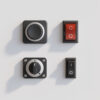 Power Switch Test Solutions
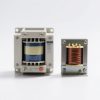 Transformer Test Solutions
 Electric Toys Test Solutions
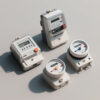 Energy Meter Test Solutions
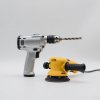 Motor-Operated Tool Test Solutions
Select an organization
to browse standards
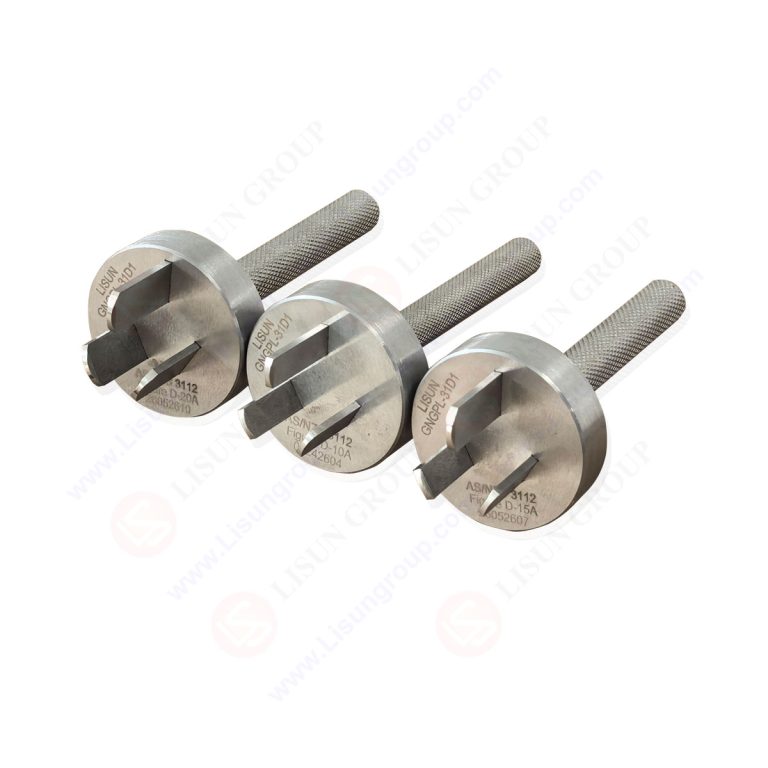
Product No: GNGPL-31D1
This AS/NZS 3112 Appendix D Three-pin Test Plug with Flat Pins for Abnormal Insertion Test with flat pins is precision-engineered in strict compliance with the normative requirements outlined in AS/NZS 3112 Appendix D, a key standard for plugs and socket-outlets in Australia and New Zealand. It is specifically designed to conduct abnormal insertion tests, simulating incorrect or improper usage scenarios to verify that sockets can resist unsafe insertion and prevent access to live parts. By ensuring sockets meet the rigorous safety criteria of AS/NZS 3112, this test plug safeguards users against electric shock and other hazards associated with abnormal plug usage.
Specifications:
| LISUN Models | GNGPL-31D1-10A | GNGPL-31D1-15A | GNGPL-31D1-20A |
| Specifications | Used for max 10A plugs test | Used for max 15A plugs test | Used for max 20A plugs test |
• Fully conforms to AS/NZS 3112 standard requirements, aligning with the normative specifications of Appendix D
• Three-pin configuration with flat pins, tailored for abnormal insertion test scenarios
• Compatible with 10A, 15A, and 20A socket systems
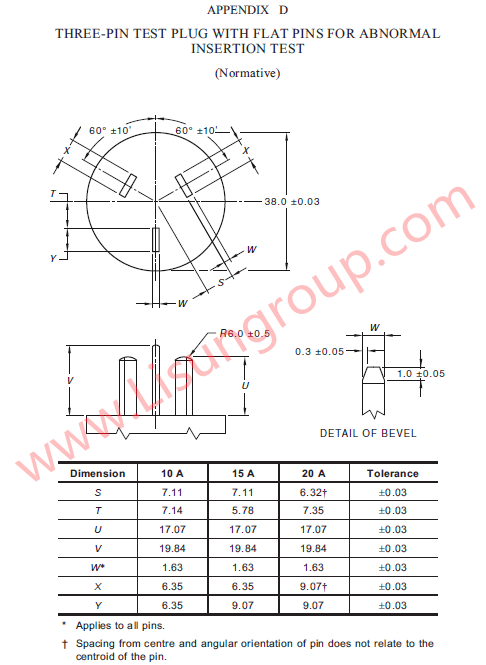
• Key dimensional tolerances (all ±0.03 mm) for different current ratings:
– Dimension S: 7.11 mm (10A/15A), 6.32 mm (20A)
– Dimension T: 7.14 mm (10A), 5.78 mm (15A), 7.35 mm (20A)
– Dimension U: 17.07 mm (all ratings)
– Dimension V: 19.84 mm (all ratings)
– Dimension W*: 1.63 mm (all ratings, applies to all pins)
– Dimension X: 6.35 mm (10A/15A), 9.07 mm (20A)
– Dimension Y: 6.35 mm (10A), 9.07 mm (15A/20A)
• Pin length: 38.0±0.03 mm
• Angular tolerance for pin bevels: 60°±10′
• Spherical radius specification: R6.0±0.5 mm
• Pin spacing from center and angular orientation are independent of the pin’s centroid (per standard note)
• Manufactured from high-quality, durable materials to maintain dimensional stability and repeatable test results
Test Procedures:
• Inspect the test plug for any damage, deformation, or dimensional deviations, and confirm its pins, dimensions, and bevels comply with AS/NZS 3112 Appendix D specifications for the target current rating (10A/15A/20A).
• Prepare the socket sample, ensuring it is clean, free from burrs, loose components, or structural defects that may affect test results.
• Secure the socket in a stable fixture to simulate real-world installation and maintain consistent positioning during testing.
• Align the test plug with the socket’s openings in an abnormal orientation (simulating improper insertion, e.g., misaligned pins, incorrect angular positioning).
• Attempt to insert the test plug into the socket with steady, controlled force—avoiding excessive pressure that could damage either the plug or the sample.
• Observe whether the plug can be partially or fully inserted in the abnormal orientation, and check if live parts of the socket are accessible during the attempt.
• Confirm compliance: The test passes if the socket resists abnormal insertion (prevents partial/complete seating) and blocks access to live components.
• Remove the test plug slowly (if inserted) and inspect both the plug and socket for any signs of wear or damage.
• Record test results, documenting insertion resistance, live part accessibility, and whether the sample meets AS/NZS 3112 safety requirements.
Applications:
• Quality control testing of 10A/15A/20A sockets in manufacturing facilities to verify resistance to abnormal insertion per AS/NZS 3112.
• Compliance assessment by certification bodies and third-party testing laboratories for AS/NZS 3112 certification of electrical products.
• R&D testing for the design optimization of sockets, enhancing safety against improper or abnormal plug usage.
• Routine inspection of production lines producing household, commercial, and industrial sockets for the Australian and New Zealand markets.
• Dimensional and safety verification of socket components supplied by vendors to meet AS/NZS 3112 Appendix D requirements.
• Post-production quality audits to confirm the safety and reliability of sockets before market release in Australia and New Zealand.
• Safety validation for electrical equipment manufacturers integrating AS/NZS 3112-compliant sockets into their products.
AS/NZS 3112 Appendix D Three-pin Test Plug with Flat Pins for Abnormal Insertion Test

 English
 中文简体
中文简体 English
 Русский
 Español
 Português
 Türkçe
 العربية
 Deutsch
 Polski
 Italiano
 Français
 한국어
한국어 ไทย
ไทย Tiếng Việt
 日本語
日本語