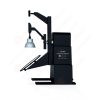
LM-79 Moving Detector Goniophotometer (Mirror Type C)
LSG-6000
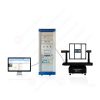
High Precision Rotation Luminaire Goniophotometer
LSG-1890B
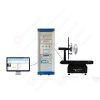
High Precision Rotation Luminaire Goniospectroradiometer
LSG-1890BCCD

Goniophotometer for Automotive and Signal Lamps
LSG-1950
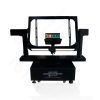
Goniophotometer for Traffic Signal Lamps (Economical Model)
LSG-1950S
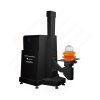
Goniophotometer for Airfield Lighting
LSG-1940
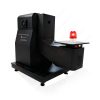
VAD Fire Alarm Visual Alert Device Goniophotometer
LSG-1930
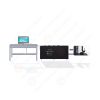
Compact Goniophotometer
LSG-1200A
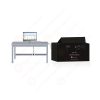
LED Goniophotometer
LSG-1100
Near Field Moving Detector Goniophotometer
LSG-1900B
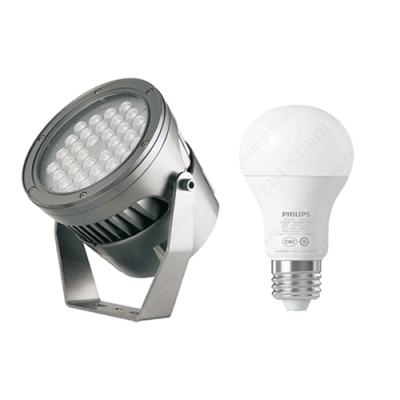 LEDs and Luminaire Test Solutions
 LM-79 and LM-80 Test Solutions
 LED Driver Test Solutions
 Household Appliances Test Solutions
 Mobile and Network Test Solutions
 Automotive Electronics Test Solutions
 Audio-Video and IT Test Solutions
 Cable and Wire Test Solutions
 Plugs and Sockets Test Solutions
 Power Switch Test Solutions
 Transformer Test Solutions
 Electric Toys Test Solutions
 Energy Meter Test Solutions
 Motor-Operated Tool Test Solutions
Select an organization
to browse standards
Product No: GNGPL-6210A
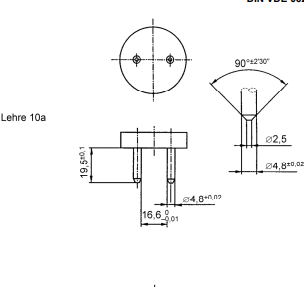
This DIN-VDE 0620-1-Lehre 10a Prüfung auf Unmöglichkeit des einpoligen Einführens A is engineered to meet the requirements of Lehre 10a in the DIN VDE 0620-1 standard (“Plugs and Sockets for Household and Similar Applications – Part 1: General Requirements for Fixed Sockets”) and is also aligned with DIN VDE 0620-2-1 (2021-02). Its core function is to test the “impossibility of single-pole insertion” in fixed sockets—a critical safety feature that prevents accidental insertion of a single electrical pole (which could expose users to live components and electrical shock hazards). With precise dimensional and angular design, the gauge ensures accurate validation of a socket’s anti-single-pole-insertion mechanism, making it an essential tool for manufacturers, testing laboratories, and quality assurance teams committed to adhering to DIN VDE safety standards for household and similar sockets.
Specifications:
• Complies with DIN VDE 0620-1 standard, specifically designed for Lehre 10a (testing the impossibility of single-pole insertion)
• Aligns with the technical requirements of DIN VDE 0620-2-1 (2021-02) to ensure up-to-date compliance
• Features a critical angular specification of 90° ± 2’30” (90 degrees plus or minus 2 minutes and 30 seconds), ensuring proper simulation of single-pole insertion attempts
• Incorporates two key diameter (ø) parameters, both specified as 4.8 mm with a tolerance of ±0.02 mm, to match the dimensional constraints of socket pole openings
• Includes a length dimension of 16.6 mm with a tolerance of ±0.1 mm, ensuring the gauge interacts with the socket’s internal safety mechanism as intended
• Core purpose: Verifies that fixed sockets block the insertion of the gauge (simulating single-pole access) to prevent electrical safety risks
Test Procedures:
• Prepare the fixed socket sample for testing, ensuring it is free from visible damage, assembled correctly according to product specifications, and meets pre-test conditions outlined in DIN VDE 0620-1.
• Position the socket sample on a stable, level testing platform, ensuring the socket’s insertion openings are easily accessible and aligned horizontally (to replicate typical user interaction).
• Inspect the gauge to confirm its dimensions (diameter, length, angle) are within the specified tolerances and that it is free from wear or deformation that could affect test accuracy.
• Hold the gauge at the specified 90° angle relative to the socket’s insertion opening, aligning one of the 4.8 mm diameter sections with a single pole opening of the socket. Gently attempt to insert the gauge into the opening, applying only moderate, hand-applied force (consistent with typical user insertion effort).
• Observe whether the gauge penetrates into the socket: A passing test requires the socket’s anti-single-pole-insertion mechanism to block the gauge from being inserted (i.e., no full or partial penetration that would indicate a safety flaw).
• Repeat steps 4–5 for all single pole openings on the socket sample (if applicable). After testing, document the results (pass/fail) and inspect both the gauge and socket for any damage, ensuring compliance with DIN VDE 0620-1 Lehre 10a.
Applications:
• Quality control testing in the manufacturing of fixed sockets for household and similar use, used to verify that each finished socket’s anti-single-pole-insertion mechanism works as required by DIN VDE standards, preventing defective products from reaching the market.
• Compliance testing for socket manufacturers seeking DIN VDE certification, as the gauge enables mandatory validation of the anti-single-pole-insertion feature— a key requirement for meeting DIN VDE 0620-1 and accessing markets that enforce European electrical safety regulations.
• R&D testing in the development of new fixed socket models, helping engineers design and optimize anti-single-pole-insertion mechanisms, validate the effectiveness of different safety structures, and ensure new products meet DIN VDE standards from the prototype stage.
• Third-party testing laboratories conducting impartial safety assessments of fixed sockets, providing a standardized tool to objectively evaluate whether client-submitted sockets block single-pole insertion, supporting regulatory compliance and consumer safety.
• Incoming quality inspection for distributors or importers of fixed sockets (especially those targeting European markets), used to spot-check batches of purchased products to confirm their anti-single-pole-insertion function complies with DIN VDE 0620-1 Lehre 10a, reducing safety risks and non-compliance costs.
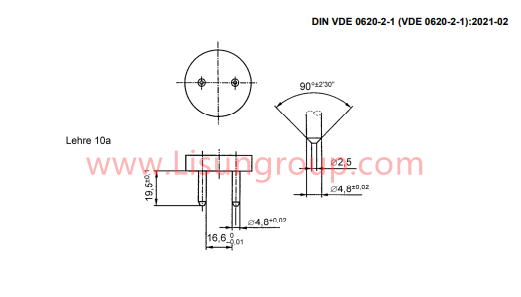
DIN-VDE 0620-1-Lehre 10-A Prüfung auf Unmöglichkeit des einpoligen Einführens A

 English
 中文简体
中文简体 English
 Русский
 Español
 Português
 Türkçe
 العربية
 Deutsch
 Polski
 Italiano
 Français
 한국어
한국어 ไทย
ไทย Tiếng Việt
 日本語
日本語