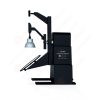
LM-79 Moving Detector Goniophotometer (Mirror Type C)
LSG-6000
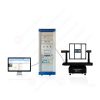
High Precision Rotation Luminaire Goniophotometer
LSG-1890B
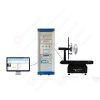
High Precision Rotation Luminaire Goniospectroradiometer
LSG-1890BCCD

Goniophotometer for Automotive and Signal Lamps
LSG-1950
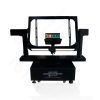
Goniophotometer for Traffic Signal Lamps (Economical Model)
LSG-1950S
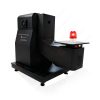
VAD Fire Alarm Visual Alert Device Goniophotometer
LSG-1930
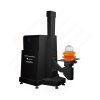
Goniophotometer for Airfield Lighting
LSG-1940
Compact Goniophotometer
LSG-1200A
LED Goniophotometer
LSG-1100
Near Field Moving Detector Goniophotometer
LSG-1900B
 LEDs and Luminaire Test Solutions
 LM-79 and LM-80 Test Solutions
 LED Driver Test Solutions
 Household Appliances Test Solutions
 Mobile and Network Test Solutions
 Automotive Electronics Test Solutions
 Audio-Video and IT Test Solutions
 Cable and Wire Test Solutions
 Plugs and Sockets Test Solutions
 Power Switch Test Solutions
 Transformer Test Solutions
 Electric Toys Test Solutions
 Energy Meter Test Solutions
 Motor-Operated Tool Test Solutions
Select an organization
to browse standards
Introduction
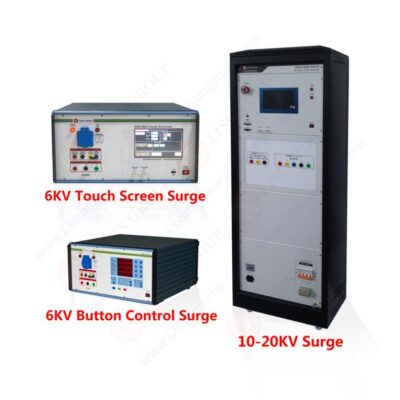
The protection that surge generators provide for sensitive electronic equipment against unexpected spikes in power is an incredibly vital function that these generators provide. These devices are used to evaluate the dependability of a variety of systems by replicating electrical disruptions that occur in the real world by generating controlled surges. This allows the systems to be tested for their ability to perform properly.
They do this by using controlled surges in the system. There is a wide variety of surge generators accessible, and every one of them was designed specifically to meet a different group of specifications and needs.
This article discusses the many types of surge generators that are currently on the market, focusing on the characteristics that differentiate one kind of surge generator from another as well as the situations in which each type of surge generator is most effective.
Impulse Generators
In the present world, impulse generators are used often in the utility grids as well as the industrial settings of many different companies. Lightning strikes and other high-energy disturbances may be replicated with the help of these generators, which create high-voltage surges with rapid increase times.
They are put to use in the process of assessing the resistance of insulation, surge arresters, and lightning protection systems, in addition to other electrical components, to transient events that occur naturally in the environment around them. The three basic components that comprise an impulse generator are the charging circuit, the capacitor bank, and the discharge trigger.
Ring Wave Generators
Ring wave generators are used by the vast majority of electrical devices that are connected to a mains supply. These devices may be found almost everywhere in the modern world. These oscillating waves have a specific waveform that is known as a ring wave, and they have the ability to replicate power outages, troubles with utilities, and switching operations.
It is important to put all electrical appliances, power supplies, and industrial gear through its paces on a ring wave generator to ensure that they are safe to use. This will ensure that electrical safety standards are met. They are important in analyzing how successfully a device runs as well as how well it can withstand the frequent disturbances that occur in power distribution networks. These disruptions may be caused by a variety of factors.
Combination Wave Generators
The capabilities of impulse and ring wave generators are combined into a single device known as combination wave generators. These generators can produce both types of waves. They are versatile instruments that can produce waves that oscillate back and forth as well as sudden transitions. In addition, they can produce abrupt transitions.
Combination wave generators are put to use in product testing on a regular basis, particularly in the area of testing electrical and electronic devices. This is a technique that is quite widespread in the business. They test the equipment to ensure that it can withstand a variety of surge conditions by simulating the types of fleeting occurrences that could take place in the real world.
Electrostatic Discharge (ESD) Generators
Electrostatic discharge (ESD) generators are devices that are used for the purpose of simulating the occurrence of likely ESD events that may take place during the handling or usage of electrical equipment.
The objective of this simulation is to ensure that no damage will be caused to the electrical equipment. These generators have the capacity to create regulated electrostatic discharges that are analogous to those produced by a human and are thus comparable.
When determining whether or not a device is immune to electrostatic discharge (ESD), it is essential to make use of ESD generators. This is due to the fact that electrostatic discharge (ESD) incidents have the ability to cause serious damage to sensitive electronic components. They are useful in determining a device’s resistance to electrostatic charges as well as its capacity to disperse electrostatic charges in a manner that does not in any way influence the device’s performance in any way.
Surge Combination Wave Generators
Modern surge combination wave generators are able to produce a wide variety of sophisticated surge waveforms that are excellent approximations of true surge occurrences. These waveforms may be used in a variety of applications. There is a wide range of possible frequencies at which these waveforms may be generated. Voltage spikes, oscillatory waves, and rapid transients are all combined into a single test signal before being sent for analysis.
Electronics, electrical equipment, and telecommunications systems, together with the electronic components that can be found in vehicles, are all put through their paces with the assistance of a surge combination wave generator to ensure that they comply with the applicable safety rules.
This includes putting the electronic components that can be found in automobiles through their paces as well. They make it possible to perform thorough testing of the equipment’s ability to assure its safety and survive high surge situations. These tests are necessary to verify the equipment’s reliability.
Applications
The large variety of purposes that may be served by the several surge generators that are presently on the market can be broken down into several categories. Utility companies employ impulse generators in order to test the performance of different kinds of insulation, such as that of transmission lines and surge arresters, transformers, and other critical components.
These evaluations are performed in order to determine whether or not the insulation meets the required standards.
Inspection of electrical appliances, power supplies, and other forms of industrial machinery and equipment to guarantee compliance with safety rules is a popular use for ring wave generators. LISUN provides the best surge generators in the market.
Because they are able to simulate such a wide variety of surge conditions, combination wave generators are the instruments of choice for evaluating the capacity of electrical devices to tolerate sudden spikes in power. These generators may be used to determine whether or not electronic devices have the capacity to withstand surges in the incoming power supply.
The electrostatic discharge (ESD) immunity of integrated circuits, electronic modules, and other sensitive components may be assessed with the use of ESD generators, which are an important component of the electronics industry. Other methods of evaluation include testing the ESD immunity of the components.
It is necessary to conduct compliance testing using surge combination wave generators for a wide variety of electronic products. These products include telecommunications systems, electronic components for autos and medical equipment, electronic components for other types of medical equipment, and many more.
Conclusion
In the modeling and analysis of the implications of voltage surges and transient disturbances, surge generators are an essential instrument. As such, they are an integral element of the safety infrastructure for electrical and electronic systems.
These generators serve to improve the robustness of the system by identifying vulnerabilities, evaluating protective measures, and simulating actual surge conditions. There are a variety of uses for generators, with the more common ones being electronic static discharge (ESD) generators and power system impulse generators.
These generators find applications across a broad variety of business sectors and serve a multitude of distinct functions. Those who work in the disciplines of electrical and electronic system design, testing, and maintenance are expected to have a full understanding of the different varieties of surge generators as well as the applications for which they are deployed. This is because surge generators may cause damage to electrical and electronic systems.
Lisun Instruments Limited was found by LISUN GROUP in 2003. LISUN quality system has been strictly certified by ISO9001:2015. As a CIE Membership, LISUN products are designed based on CIE, IEC and other international or national standards. All products passed CE certificate and authenticated by the third party lab.
Our main products are Goniophotometer, Integrating Sphere, Spectroradiometer, Surge Generator, ESD Simulator Guns, EMI Receiver, EMC Test Equipment, Electrical Safety Tester, Environmental Chamber, Temperature Chamber, Climate Chamber, Thermal Chamber, Salt Spray Test, Dust Test Chamber, Waterproof Test, RoHS Test (EDXRF), Glow Wire Test and Needle Flame Test.
Please feel free to contact us if you need any support.
Tech Dep: Service@Lisungroup.com, Cell/WhatsApp:+8615317907381
Sales Dep: Sales@Lisungroup.com, Cell/WhatsApp:+8618117273997
Your email address will not be published. Required fields are marked *

 English
 中文简体
中文简体 English
 Русский
 Español
 Português
 Türkçe
 العربية
 Deutsch
 Polski
 Italiano
 Français
 한국어
한국어 ไทย
ไทย Tiếng Việt
 日本語
日本語