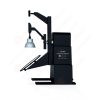
LM-79 Moving Detector Goniophotometer (Mirror Type C)
LSG-6000
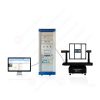
High Precision Rotation Luminaire Goniophotometer
LSG-1890B
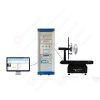
High Precision Rotation Luminaire Goniospectroradiometer
LSG-1890BCCD

Goniophotometer for Automotive and Signal Lamps
LSG-1950
Goniophotometer for Traffic Signal Lamps (Economical Model)
LSG-1950S
VAD Fire Alarm Visual Alert Device Goniophotometer
LSG-1930
Goniophotometer for Airfield Lighting
LSG-1940
Compact Goniophotometer
LSG-1200A
LED Goniophotometer
LSG-1100
Near Field Moving Detector Goniophotometer
LSG-1900B
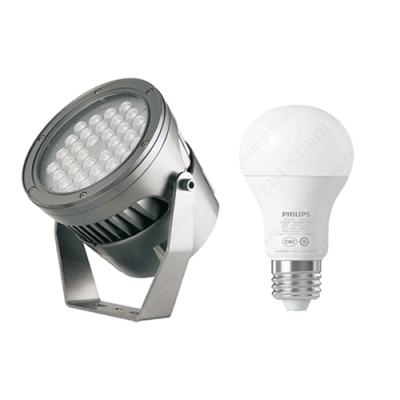 LEDs and Luminaire Test Solutions
 LM-79 and LM-80 Test Solutions
 LED Driver Test Solutions
 Household Appliances Test Solutions
 Mobile and Network Test Solutions
 Automotive Electronics Test Solutions
 Audio-Video and IT Test Solutions
 Cable and Wire Test Solutions
 Plugs and Sockets Test Solutions
 Power Switch Test Solutions
 Transformer Test Solutions
 Electric Toys Test Solutions
 Energy Meter Test Solutions
 Motor-Operated Tool Test Solutions
Select an organization
to browse standards
The static electricity generated by the human body to an object or between two objects may cause the circuit of electrical and electronic equipment to malfunction or even be damaged. Therefore, ESD test widely used all over the world.
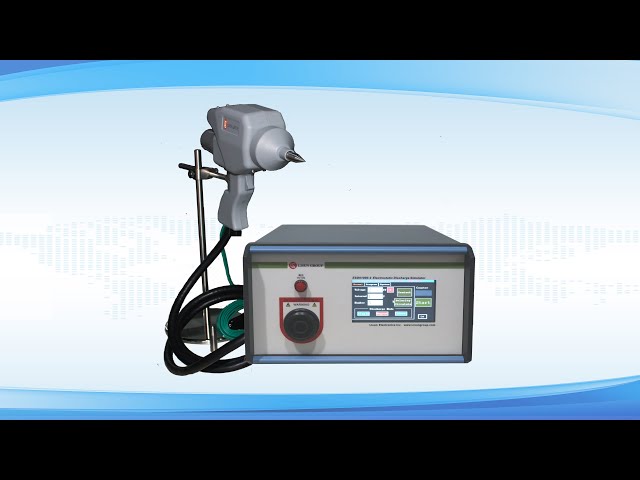
The electrostatic discharge generator is also known as electrostatic discharge gun is an important equipment in the electrostatic discharge immunity test in the electromagnetic compatibility measurement and test. The purpose is to test whether the electronic equipment can work normally when it is subjected to external electrostatic discharge.
The electrostatic discharge gun is mainly used in the anti-human body metal model electrostatic discharge test of system-level electronic equipment such as mobile phones and computers. Includes electrostatic generator and electrostatic discharge gun.
The output of the electrostatic generator in the electrostatic discharge gun is both positive and negative, and some of them can be switched between positive and negative. Their voltage bipolar high-precision output is continuously adjustable.
At the same time, it is suitable for more application fields and the requirements of new standards in the future. Therefore, the electrostatic discharge generator can be used for electrostatic discharge tests of most electrical and electronic equipment.
What is ESD testing?
ESD test is Electrostatic Discharge test, also known as electromagnetic compatibility (EMC) test, which is used to test the stability of electronic components to start or operate equipment.
Impulse voltage is applied to the object under test during the test to simulate the ESD that may occur in the use environment to check whether the device can cope with electrical and magnetic interference.
Purpose of ESD test:
The purpose of ESD testing is to ensure that the object under test can perform its function correctly and reliably without being damaged by ESD.
The purpose of ESD testing is to ensure that the product can perform its functions correctly and reliably in the environment of use, including storage, transportation and maintenance, without being affected by excessive temperature, excessive voltage, excessive compression, excessive direct power supply or electromagnetic wave interference .
It verifies the electrical and magnetic compatibility of the product to ensure that it will function properly in the environment of use and magnetic interference.
ESD test principle:
ESD testing is usually carried out by applying a certain amount of EESD (Electronic Electrostatic Discharge) to the object under test. Based on this principle, the power/system line is separated by resistance or capacitance, and the formed cable system (arranged on a specific line) touches the ESD optical fiber with good mechanical properties,
They will generate a certain amount of charge, the quality of this charge and how much the load state of the tested position (including connected components and resistance) changes, which can make the object under test reach the maximum value of the electric shock of EESD.
Therefore, the ESD test can make the object under test be affected by a certain magnetic field and electric field under the action of EESD, so as to achieve a certain test purpose.
ESD Test – Contact Discharge:
In the contact discharge method, stress can be applied directly to the EUT or to the coupling plane adjacent to the EUT. Before each test pulse, the capacitor is charged to the required level, but its voltage is maintained at the probe of the generator via a vacuum relay.
Apply the probes to appropriately selected points on the EUT or coupling plane. The generator is then triggered, closing the relay contacts, and the capacitor voltage is applied to the EUT through the probe.
This produces a current pulse as the voltage discharges through the combined series impedance of the generator, EUT and ground plane. Repeat the movement as many times as needed in each position with the appropriate polarity and level.
ESD Test – Air Discharge:
The same generator is used for the air discharge method, but with rounded rather than pointed probe tips. The capacitor is charged to the required level as before, but the voltage is now continuously applied to the probe, which is kept away from the EUT.
For each test pulse, the tip is subtly lifted to a selected point on the EUT until it makes contact. Just before that, the air gap between the tip and the EUT will be broken down and the discharge current will flow, limited as before by the combined series impedance of the generator, air gap, EUT and return path. Again, repeat the movement as many times as needed in each position with proper polarity and level.
Electrostatic Discharge ESD Test Layout:
ESD pulses have sub-nanosecond rise times, so RF layout precautions are critical.
1. The test must recreate the fast rise time actually found, as this is an important parameter in determining the path of the discharge through the EUT and the response of the EUT itself. The Ground Reference Plane (GRP) is an integral part of the setup to which the return lead of the generator must be well connected, as this connection forms part of the current return path.
2. The indirect discharge portion of the test uses two other planes different from the GRP, called the Horizontal Coupling Plane (HCP) and the Vertical Coupling Plane (VCP). The electrical discharges from these planes simulate the stresses that would arise from real-life radiation fields emanating onto nearby objects.
3. Each coupling plane is connected to the GRP through resistive leads to ensure that any charge flows out within a few microseconds. The construction of these leads is critical: each end should be close to a resistor so that the length of lead between them is isolated from the connection and stray coupling to it is neutralized.
4. While the power rating is not critical, the resistor itself should be able to withstand high pulse dV/dt without damage, so the carbon composition type is suitable.
5. For an ESD event of tens of nanoseconds, the plane carries the full stress voltage, which is capacitively coupled to the EUT. Any stray capacitance from the plane to objects other than the EUT will modify the voltage and current waveforms at the plane and thus the applied stress.
6. Therefore, it is important to maintain a clear space of at least 1 meter around the EUT, which means some separation of the table setup from walls or other objects.
7. Likewise, the separation from the VCP to the EUT is specified as 10cm; even small changes in this distance can cause large changes in the coupling to the EUT, so a convenient method of controlling it, such as a plastic 10cm spacer on a planar surface, is helpful.
ESD simulator guns (Electrostatic Discharge Generator/Electrostatic Gun/ESD Guns) is in full compliance with IEC 61000-4-2, EN61000-4-2, ISO10605, GB/T17626.2, GB/T17215.301 and GB/T17215.322.
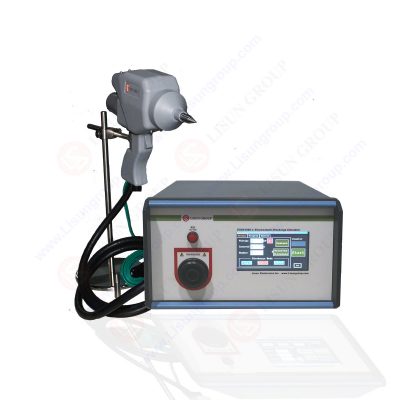
ESD61000-2_Electrostatic Discharge Simulator
Lisun Instruments Limited was found by LISUN GROUP in 2003. LISUN quality system has been strictly certified by ISO9001:2015. As a CIE Membership, LISUN products are designed based on CIE, IEC and other international or national standards. All products passed CE certificate and authenticated by the third party lab.
Our main products are Goniophotometer, Integrating Sphere, Spectroradiometer, Surge Generator, ESD Simulator Guns, EMI Receiver, EMC Test Equipment, Electrical Safety Tester, Environmental Chamber, Temperature Chamber, Climate Chamber, Thermal Chamber, Salt Spray Test, Dust Test Chamber, Waterproof Test, RoHS Test (EDXRF), Glow Wire Test and Needle Flame Test.
Please feel free to contact us if you need any support.
Tech Dep: Service@Lisungroup.com, Cell/WhatsApp:+8615317907381
Sales Dep: Sales@Lisungroup.com, Cell/WhatsApp:+8618117273997
Your email address will not be published. Required fields are marked *

 English
 中文简体
中文简体 English
 Русский
 Español
 Português
 Türkçe
 العربية
 Deutsch
 Polski
 Italiano
 Français
 한국어
한국어 ไทย
ไทย Tiếng Việt
 日本語
日本語