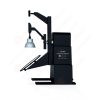
LM-79 Moving Detector Goniophotometer (Mirror Type C)
LSG-6000
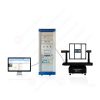
High Precision Rotation Luminaire Goniophotometer
LSG-1890B
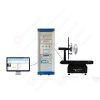
High Precision Rotation Luminaire Goniospectroradiometer
LSG-1890BCCD

Goniophotometer for Automotive and Signal Lamps
LSG-1950
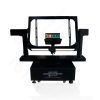
Goniophotometer for Traffic Signal Lamps (Economical Model)
LSG-1950S
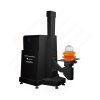
Aviation Ground Light Distribution Photometer Test System
LSG-1940
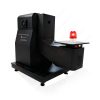
VAD Fire Alarm Visual Alert Device Goniophotometer
LSG-1930
Compact Goniophotometer
LSG-1200A
LED Goniophotometer
LSG-1100
Near Field Moving Detector Goniophotometer
LSG-1900B
 LEDs and Luminaire Test Solutions
 LM-79 and LM-80 Test Solutions
 LED Driver Test Solutions
 Household Appliances Test Solutions
 Mobile and Network Test Solutions
 Automotive Electronics Test Solutions
 Audio-Video and IT Test Solutions
 Cable and Wire Test Solutions
 Plugs and Sockets Test Solutions
 Power Switch Test Solutions
 Transformer Test Solutions
 Electric Toys Test Solutions
 Energy Meter Test Solutions
 Motor-Operated Tool Test Solutions
Select an organization
to browse standards
Abstract
A Surge Generator IEC 61000‑4‑5 serves as the core test instrument for electronic product surge immunity evaluation. Its performance directly determines the validity of EMC surge immunity test results and constitutes a fundamental prerequisite for global electromagnetic compatibility certification. The IEC 61000‑4‑5 standard specifies complete technical requirements including test waveforms, test levels, test setup and test procedures for surge immunity tests, and its Chinese equivalent standard is GB/T 17626.5‑2019. Centered on the key technical specifications of a Surge Generator IEC 61000‑4‑5 and combined with the LISUN SG61000‑5 series surge generator, this paper carries out product selection analysis and describes the technical characteristics and engineering applications of this highly integrated fully‑automatic EMC test equipment, providing a reliable reference for R&D laboratories and third‑party testing institutes to select surge test instruments.
In real‑world power grid environments, lightning‑induced surges and switching operations of large‑capacity inductive and capacitive loads generate high‑energy transient disturbances on power supply lines and internal wiring of equipment. Such transient interference features high voltage amplitude and huge energy, which may easily damage internal electronic components, trigger functional malfunctions or even lead to complete equipment failure. To assess the immunity of devices against such disturbances, standardized test instruments are required to reproduce real‑world interference conditions, and a Surge Generator IEC 61000‑4‑5 is the dedicated test equipment for this simulation test.
The LISUN SG61000‑5 series lightning surge generator, also known as lightning surge immunity tester, combination wave generator, current surge generator, voltage surge generator, or combined voltage‑current surge generator, is a highly integrated fully‑automatic electromagnetic compatibility test device. Its core function is to simulate high‑energy transient interference caused by natural lightning induction and the switching of large‑capacity inductive and capacitive loads. It evaluates the immunity of power supply ports and internal connection cables of electrical and electronic equipment against such disturbances and provides a standardized test environment for equipment electromagnetic immunity compliance verification. This series of instruments is widely adopted by manufacturers, R&D centers and third‑party testing laboratories in industries including LED lighting, consumer electronics, new energy, communication and industrial control. However, a wide variety of surge generator models are available on the market. Many devices can only output high‑voltage pulses and fail to fully meet the strict technical requirements defined for a Surge Generator IEC 61000‑4‑5 regarding waveform accuracy, output impedance and coupling‑decoupling networks. Improper selection will produce non‑certifiable test data, cause product misjudgment and result in certification failure and market risks.
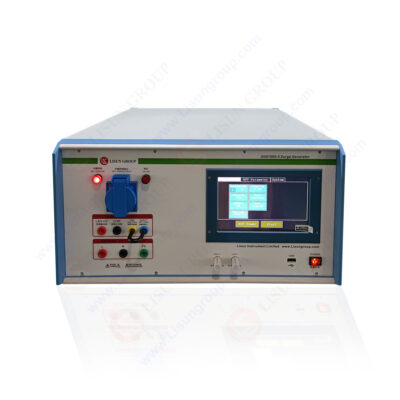
Surge Generator SG61000-5
The Surge Generator IEC 61000‑4‑5 standard enforces clear mandatory waveform requirements for combination wave generators. Power port tests mainly adopt the 1.2/50μs open‑circuit voltage waveform and the 8/20μs short‑circuit current waveform, while communication signal ports require the 10/700μs open‑circuit voltage waveform and the 5/320μs short‑circuit current waveform with a permitted time parameter deviation of ±20%. The standard also defines generator output impedance values: 2 Ω and 12 Ω are commonly used for power surge tests, and a 500 Ω output impedance is required for communication line testing. The output impedance directly determines whether the output voltage and current waveforms of the generator under different load conditions comply with the standard.
In addition to waveform parameters, the Surge Generator IEC 61000‑4‑5 standard defines detailed specifications for coupling‑decoupling networks (CDN), surge polarity, phase synchronization control and the number of surge pulses. For alternating‑current equipment under test, surge pulses shall be triggered at any phase angle from 0° to 360°, with both positive and negative polarities, and a specified quantity of surge pulses shall be delivered for each polarity. A coupling‑decoupling network couples surge interference to the equipment under test while preventing surge energy from back‑feeding into the external power grid. A compliant Surge Generator IEC 61000‑4‑5 cannot complete a full test without a matched CDN. Ordinary high‑voltage pulse sources can generate high voltage but lack the standard‑defined combination‑wave characteristics and supporting CDNs, so they cannot be used for official EMC surge immunity certification. Regular metrological calibration is required during equipment operation to maintain long‑term waveform compliance.
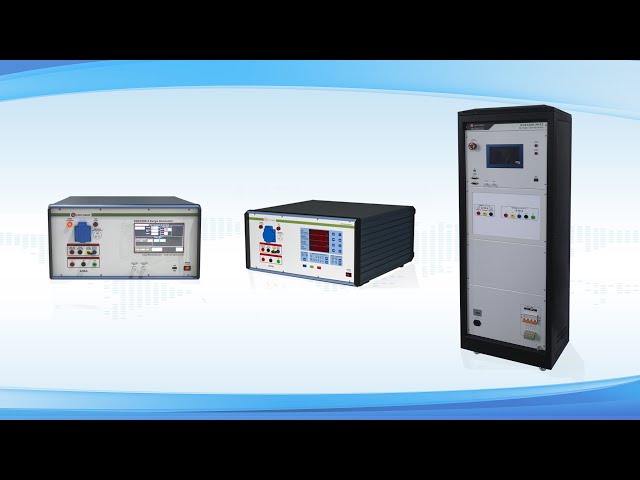
The LISUN SG61000‑5 series surge generator fully complies with the requirements of a Surge Generator IEC 61000‑4‑5. It adopts a modular mechanical design covering open‑circuit output voltage levels ranging from 4.8 kV up to 30 kV, with a maximum short‑circuit current of 15 kA, which covers most test level requirements for civil electronic products and industrial equipment. Selected models in this series integrate voltage‑current attenuating probes and a digital oscilloscope. Operators can directly observe real‑time output waveforms on the LCD touchscreen without connecting extra external measuring instruments, which intuitively verifies surge waveform compliance, greatly simplifies test workflows and reduces measurement errors introduced by peripheral equipment. The instrument runs on an Android touch‑control operating system and supports configurable surge counts, polarity switching, phase‑synchronized and asynchronous testing for single‑phase and three‑phase DUTs. An external CDN can be optionally equipped to complete surge immunity tests for communication signal lines. Key specifications of major SG61000‑5 models are listed in the table below.
| Technical Parameter | SG61000‑5SB | SG61000‑5 | SG61000‑5H‑SP | SG61000‑5H15‑SP | SG61000‑5C |
|---|---|---|---|---|---|
| Open‑circuit Voltage Waveform | 1.2/50μs±20% | 1.2/50μs±20% | 1.2/50μs±20% | 1.2/50μs±20% | 10/700μs±20% |
| Short‑circuit Current Waveform | 8/20μs±20% | 8/20μs±20% | 8/20μs±20% | 8/20μs±20% | 5/320μs±20% |
| Output Impedance | 2Ω, 12Ω | 2Ω, 12Ω | 2Ω, 12Ω, 500Ω | 2Ω, 12Ω, 500Ω | 15Ω, 40Ω |
| Output Voltage Range | 0~4.8kV±5% | 0~6kV±5% | 0~10kV±5% | 0~15kV±5% | 0~6kV±5% |
| Output Current Range | 0~2.4kA±5% | 0~3kA±5% | 0~5kA±5% | 0~7.5kA±5% | 0~150A±5% |
| Surge Count | 1‑9999 | 1‑9999 | 1‑9999 | 1‑9999 | 1‑9999 |
| Phase Control | Asynchronous, Synchronous 0°‑360° | Asynchronous, Synchronous 0°‑360° | Asynchronous, Synchronous 0°‑360° | Asynchronous, Synchronous 0°‑360° | Asynchronous, Synchronous 0°‑360° |
| Built‑in CDN | AC240V/16A Single‑phase | AC240V/16A Single‑phase | Three‑phase Coupling Network | Three‑phase Coupling Network | 4‑wire Symmetrical CDN |
In terms of product positioning, the SG61000‑5SB and SG61000‑5 are desktop‑type units suitable for pre‑compliance R&D tests of most household appliances, LED lighting products and consumer electronics. The SG61000‑5 model adds a built‑in oscilloscope to help R&D engineers quickly verify waveform quality. The SG61000‑5H‑SP and SG61000‑5H15‑SP are cabinet‑mounted high‑voltage versions designed for new‑energy products and high‑power industrial equipment, supporting 10 kV and 15 kV high‑level surge tests respectively. The SG61000‑5C is specially developed for communication signal line surge testing and generates 10/700μs and 5/320μs waveforms. Apart from the main unit, the complete system can be optionally equipped with the PD‑E01 surge test protection device, SG‑DESK surge test bench and isolation transformer to build a full‑featured surge test laboratory environment.
When enterprises and laboratories select a Surge Generator IEC 61000‑4‑5, the maximum output voltage should not be the only evaluation criterion. Comprehensive assessment from multiple dimensions is required. First, users must confirm that the instrument fully meets the definition of a Surge Generator IEC 61000‑4‑5, verify the complete set of standard‑compliant combination wave outputs, check waveform timing parameters and output impedance values, and review calibration certificates to ensure waveform deviations stay within permitted tolerances. Second, test levels shall be determined according to the equipment under test. Common consumer electronics generally require a maximum test level of 6 kV, while industrial and new‑energy products may demand 10 kV or higher output ratings. Users shall distinguish between power port tests and communication signal port tests, where communication ports require 10/700μs waveform capability.
Third, the configuration of coupling‑decoupling networks must be evaluated. CDNs are available in built‑in and external types and shall match the phase quantity and operating current of the DUT; three‑phase CDNs are mandatory for high‑power three‑phase equipment. Fourth, operational functions shall be verified. Phase synchronization control, polarity switching and adjustable surge count are mandatory functions specified in the standard, and a built‑in oscilloscope greatly facilitates R&D testing. Fifth, supporting accessories should be considered. Surge testing belongs to high‑voltage experiments, and supplementary equipment such as surge protection units, test benches and isolation transformers improve test safety and consistency. After‑sales service shall also be taken into account, since long‑term laboratory stable operation relies on subsequent metrological calibration, maintenance and technical support.
In the LED lighting industry, the LISUN SG61000‑5 Surge Generator IEC 61000‑4‑5 is adopted for surge immunity evaluation of LED luminaires and LED driver power supplies. It simulates power‑grid lightning surges and verifies whether lamps will freeze, get damaged or trigger false protection under surge impact, providing test evidence for the optimization of hardware protection circuits. For household appliances and consumer electronics, this instrument performs pre‑compliance verification for air conditioners, washing machines, power adapters and other products to identify surge immunity defects in advance and reduce the risk of certification failure. For new‑energy and industrial control applications, high‑voltage models satisfy high‑grade surge immunity requirements for photovoltaic inverters and industrial power supplies. Third‑party testing laboratories use the LISUN SG61000‑5 series Surge Generator IEC 61000‑4‑5 for official certification tests, delivering compliant test data to support CE, CB and other international certifications and helping products access global markets smoothly.
A Surge Generator IEC 61000‑4‑5 is the core equipment for EMC surge immunity testing. Waveform accuracy, output impedance and coupling‑decoupling network configuration directly determine whether test results are valid for compliance certification. The LISUN SG61000‑5 series lightning surge generator is a highly integrated fully‑automatic electromagnetic compatibility test instrument. It simulates high‑energy transient disturbances induced by lightning and load switching, evaluates the surge resistance of power ports and internal wiring of electrical and electronic equipment, and provides a standardized test environment for electromagnetic immunity compliance assessment. Laboratories and manufacturing enterprises shall select suitable models according to test objects, test levels and certification requirements. Attention should also be paid to supporting test accessories and regular metrological calibration to guarantee accurate and reliable surge immunity measurement results and assist electronic products in completing global EMC compliance certification.
Tags:SG61000-5Your email address will not be published. Required fields are marked *

 English
 中文简体
中文简体 English
 Русский
 Español
 Português
 Türkçe
 العربية
 Deutsch
 Polski
 Italiano
 Français
 한국어
한국어 ไทย
ไทย Tiếng Việt
 日本語
日本語