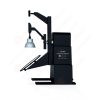
LM-79 Moving Detector Goniophotometer (Mirror Type C)
LSG-6000
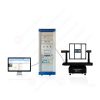
High Precision Rotation Luminaire Goniophotometer
LSG-1890B
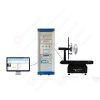
High Precision Rotation Luminaire Goniospectroradiometer
LSG-1890BCCD

Goniophotometer for Automotive and Signal Lamps
LSG-1950
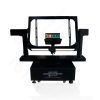
Goniophotometer for Traffic Signal Lamps (Economical Model)
LSG-1950S
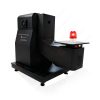
VAD Fire Alarm Visual Alert Device Goniophotometer
LSG-1930
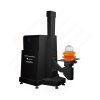
Goniophotometer for Airfield Lighting
LSG-1940
Compact Goniophotometer
LSG-1200A
LED Goniophotometer
LSG-1100
Near Field Moving Detector Goniophotometer
LSG-1900B
 LEDs and Luminaire Test Solutions
 LM-79 and LM-80 Test Solutions
 LED Driver Test Solutions
 Household Appliances Test Solutions
 Mobile and Network Test Solutions
 Automotive Electronics Test Solutions
 Audio-Video and IT Test Solutions
 Cable and Wire Test Solutions
 Plugs and Sockets Test Solutions
 Power Switch Test Solutions
 Transformer Test Solutions
 Electric Toys Test Solutions
 Energy Meter Test Solutions
 Motor-Operated Tool Test Solutions
Select an organization
to browse standards
Abstract
Products are continuously subjected to complex climatic stresses such as low temperature, high temperature, high humidity and alternating dry-wet conditions during natural service, storage and transportation, which may easily lead to performance degradation, structural failure and insulation damage. The temperature and humidity chamber can accurately reproduce various extreme and cyclic temperature & humidity working conditions and conduct accelerated aging tests to evaluate the environmental adaptability of products. Taking the LISUN GDJS-015B temperature and humidity alternating test chamber as the research object, this paper illustrates the structural principles and implementation methods of four typical climate simulations.
Combined with comparative tables of parameter data, the testing performance is analyzed, and standardized testing procedures for industries including LED lighting and automotive electronic components are summarized. This paper verifies the core application value of the temperature and humidity chamber in product reliability verification and compliance testing, and provides standardized equipment selection and test scheme references for environmental testing of electronic and optoelectronic products
1. Introduction
Electronic and electrical products, LED light sources and vehicle-mounted electronic components worldwide are applied in diverse climatic regions featuring severe cold, high temperature, coastal high humidity and large diurnal temperature difference. Dynamic alternation of temperature and humidity in natural environments continuously imposes stress damage on products: low temperature causes plastic embrittlement and drift of chip resistance; high temperature accelerates aging of insulating materials and failure of electronic components due to temperature rise; high humidity induces metal corrosion and short circuit of circuit boards; alternating dry and wet conditions create breathing effect, allowing water vapor to penetrate into products repeatedly and accelerating failures of sealing structures, solder joints and coatings.
Traditional outdoor natural aging tests last for months or even years, resulting in extremely low efficiency in R&D and quality inspection. Equipped with closed-loop temperature control and constant humidity circulation systems, the temperature and humidity chamber can controllably reproduce four major climate scenarios including low temperature resistance, high temperature heat resistance, humidity aging and dry-wet alternation inside a sealed chamber, shorten the test cycle and expose defects in product design and craftsmanship in advance. As a large-volume standard temperature and humidity chamber, the LISUN GDJS-015B complies with a full range of domestic and international environmental testing standards such as GB/T 2423, IEC 60068 and IES LM-80. It is widely adopted for LED lumen maintenance rate tests, climatic load tests of automotive electronics and alternating humidity-heat verification of electrical products, serving as the core equipment for reliability laboratories of industrial products.
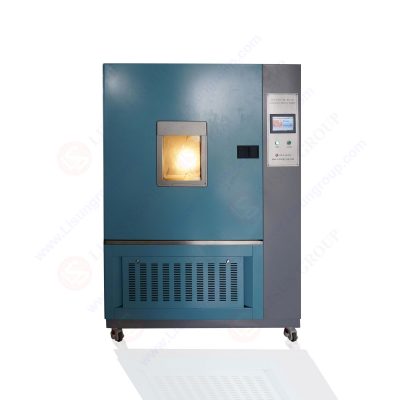
GDJS-015B Temperature Humidity Chamber | Thermal Chamber
2. Structure and Core Technical Parameters of LISUN GDJS-015B Temperature and Humidity Chamber
2.1 Composition of the Whole System
This temperature and humidity chamber realizes accurate climate simulation through coordinated operation of five core systems:
Temperature sensing and control system: PT100 platinum resistance temperature measurement, self-developed dual-core control with PLC and touch controller, independent nichrome heating pipes, fully enclosed air-cooled compressors manufactured by TECUMSEH of France, and linearly controllable temperature change rate.
Humidity regulation system: High-precision humidity sensors from Vaisala of Finland, automatic purified water supply for humidification and condensation dehumidification, eliminating regular maintenance of wet and dry bulbs.
Air circulation system: Low-noise centrifugal wind wheel for full-area circulation, realizing uniform temperature and humidity distribution without dead zones inside the chamber.
Chamber structure: SUS304 stainless steel inner tank, composite thermal insulation layer of polyurethane and glass fiber, and silicone rubber sealing to prevent temperature leakage.
Safety and data system: Multiple protections against overload, overheating and electric leakage; USB/RS485 data export and remote program control.
2.2 Comparison Table of Core Technical Parameters
Table 1 Core Specifications of LISUN GDJS Series Temperature and Humidity Chamber
| Parameter Item | GDJS-100 | GDJS-225 | GDJS-500 | GDJS-015B | GDJS-020 |
| Inner Chamber Size (cm) | 41×55×45 | 50×60×75 | 70×80×90 | 100×100×150 | 100×100×200 |
| External Dimension (cm) | 105×105×156 | 105×102×200 | 132×132×217 | 245×160×231 | 160×254×214 |
| Rated Power (kW) | 5.5 | 7 | 13.5 | 16.5 | 26.5 |
| General Temperature Range | A: -20~150℃; B: -40~150℃; C: -60~150℃; D: -70~150℃ | ||||
| Temperature Fluctuation / Uniformity | ±0.5℃ / ±2℃ | ||||
| Temperature Rising & Falling Rate | Heating: 1.0~3.0℃/min; Cooling: 0.7~1.0℃/min | ||||
| Humidity Control Range | 20%~98%RH | ||||
| Humidity Deviation | -2%~-3%RH | ||||
As shown in Table 1, GDJS-015B features a large 1500L inner chamber, which can hold multiple groups of lamps and complete vehicle electronic modules simultaneously. With wide temperature range and high-precision control indicators, it meets stringent reliability cycle tests and supports synchronous accelerated aging tests of mass samples.
3. Simulation Principle and Test Application of Four Climate Scenarios by Temperature and Humidity Chamber
3.1 Low Temperature Resistance Environment Simulation
It simulates low-temperature working conditions such as winter in northern regions, outdoor storage and cold chain transportation. In accordance with GB/T 2423.1 and IEC 60068-2-1, low-temperature holding sections at -20℃/-40℃/-60℃/-70℃ are set with holding duration of 24~72 hours. The refrigeration system of the temperature and humidity chamber maintains stable low temperature. After testing, products are restored to normal temperature for function inspection to identify low-temperature failures such as cracking of plastic housings, attenuation of battery capacity and drift of circuit signals. Typical applications include verification of vehicle sensors, outdoor LED street lamps and low-temperature performance of lithium batteries.
3.2 High Temperature Heat Resistance Environment Simulation
It reproduces high-temperature conditions under open-air exposure in summer and enclosed equipment cabins, supporting constant high-temperature aging up to 150℃ according to GB/T 2423.2 and GB 7000.1. The independent heating system provides uniform heat without local hot spots. Long-term high temperature is adopted to assess heat resistance of insulating materials, light attenuation of LED light sources, volatilization of capacitor electrolyte and aging deformation of wire harnesses. GDJS-015B supports continuous constant high-temperature operation for 1000 hours, fully meeting the requirements of IES LM-80 long-term aging tests for LED lumen maintenance rate.
3.3 Constant Humidity Aging Simulation
It simulates static high-humidity environments such as coastal areas and plum rain seasons with adjustable constant humidity ranging from 20% to 98%RH. Static storage is conducted under standard damp heat condition of 40℃ & 93%RH. Water vapor under high humidity slowly penetrates gaps of products, accelerating oxidation of metal pins, corrosion of PCB circuits and failure of sealing adhesive. This test evaluates the reliability of waterproof and moisture-proof coatings and outer shell sealing structures of products, and applies to inspection of cameras, switching power supplies and LED drivers.
3.4 Alternating Dry-Wet Cycle Simulation (Core Advantage Function)
It reproduces dynamic temperature and humidity changes caused by natural day-night and seasonal alternations, implementing 24-hour cycle programs of 12-hour high temperature & high humidity plus 12-hour low temperature & low humidity complying with GB/T 2423.4 and IEC 60068-2-30. The temperature and humidity chamber automatically adjusts temperature and humidity following preset programs. Water vapor penetrates into product cavities in high-temperature and high-humidity phases and precipitates when water vapor contracts in low-temperature and dry phases. Repeated cycles generate periodic stress. Compared with static damp heat tests, alternating dry-wet tests are more likely to expose hidden failures such as tiny sealing defects, microcracks on solder joints and delamination of potting materials, making it a core test item for reliability verification of automotive electronics and optoelectronic devices.
4. Standardized Test Application Cases in Industries
LED Lighting Industry: The GDJS-015B temperature and humidity chamber is adopted to carry out LM-80 light attenuation tests under constant damp heat condition of 60℃ & 85%RH for 6000 consecutive hours. Luminous flux attenuation of light sources is monitored to judge lamp service life and satisfy the reliability requirements of GB 7000.1 for luminaires.
Automotive Electronic Industry: Referring to ISO 16750-4 and GB/T 28046.4, alternating temperature & humidity cycles ranging from -40℃ to 85℃ are configured to verify signal stability and weather resistance of vehicle central control units and radar modules under alternating high-low temperature and dry-wet conditions.
Electrical Component Industry: Resistors, capacitors and connectors are subjected to 24-hour alternating damp heat cycles to accelerate the detection of insulation resistance drop and rust of metal terminals, meeting the AEC-Q102 stress test specifications for optoelectronic semiconductors.
5. Conclusion
The temperature and humidity chamber serves as core equipment for multi-climate environment simulation and accelerated reliability testing of products. Featuring a large-volume chamber, wide adjustable temperature & humidity range and high-precision closed-loop control system, the LISUN GDJS-015B can fully simulate four major natural climatic stresses: low temperature resistance, high temperature heat resistance, constant humidity aging and dry-wet alternation, greatly shortening the verification cycle of product aging. All technical indicators of the equipment conform to authoritative domestic and international testing standards including GB, IEC, IES and ISO, suitable for R&D verification and quality inspection in multiple industries such as LED and automotive electronics.
During iterative product R&D, systematic accelerated temperature & humidity cycle tests carried out via the temperature and humidity chamber can identify defects in materials, structures and circuit designs in advance, optimize the weather resistance of products, reduce the risk of failure in outdoor application, and provide an accurate and reproducible standardized test platform for environmental adaptability evaluation of industrial electronic products.
Tags:GDJS-015BYour email address will not be published. Required fields are marked *

 English
 中文简体
中文简体 English
 Русский
 Español
 Português
 Türkçe
 العربية
 Deutsch
 Polski
 Italiano
 Français
 한국어
한국어 ไทย
ไทย Tiếng Việt
 日本語
日本語