LM-79 Moving Detector Goniophotometer (Mirror Type C)
LSG-6000
High Precision Rotation Luminaire Goniophotometer
LSG-1890B
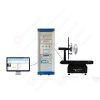
High Precision Rotation Luminaire Goniospectroradiometer
LSG-1890BCCD

Goniophotometer for Automotive and Signal Lamps
LSG-1950
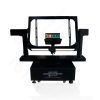
Goniophotometer for Traffic Signal Lamps
LSG-1950S
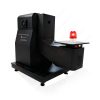
VAD Fire Alarm Visual Alert Device Goniophotometer
LSG-1930
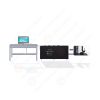
Compact Goniophotometer
LSG-1200A
LED Goniophotometer
LSG-1100
 LEDs and Luminaire Test Solutions
 LM-79 and LM-80 Test Solutions
 LED Driver Test Solutions
 Household Appliances Test Solutions
 Mobile and Network Test Solutions
 Automotive Electronics Test Solutions
 Audio-Video and IT Test Solutions
 Cable and Wire Test Solutions
 Plugs and Sockets Test Solutions
 Power Switch Test Solutions
 Transformer Test Solutions
 Electric Toys Test Solutions
 Energy Meter Test Solutions
 Motor-Operated Tool Test Solutions
Select an organization
to browse standards
Abstract
Electrostatic Discharge (ESD) poses a significant threat to sensitive electrical and electronic equipment, as unexpected discharges can lead to malfunction or irreversible damage. Electrostatic discharge test equipment, like the LISUN ESD61000-2 ESD Simulator Gun, is essential for evaluating the ESD resilience of devices by simulating real-world discharge events. With the ability to generate electrostatic voltages as high as 30 kV, the LISUN ESD61000-2 meets and exceeds the stringent requirements of the highest ESD immunity level (level 4). This paper discusses the technical aspects of ESD testing, the importance of simulating high-level discharges, and presents data illustrating the simulator’s efficacy in maintaining testing comparability and repeatability.
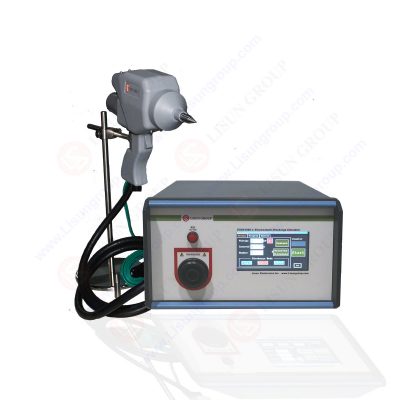
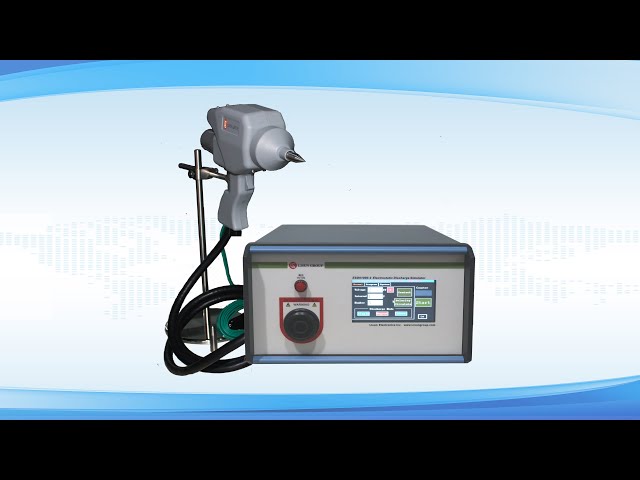
ESD61000-2_Electrostatic Discharge Simulator
Introduction to Electrostatic Discharge Testing
Electrostatic discharge occurs when there is a sudden flow of electricity between two objects with different electrical potentials. ESD events are commonly seen in environments with low humidity, where materials can easily accumulate and discharge static electricity. For electronic devices, ESD can cause both immediate and latent damage, impacting performance or causing failure. To mitigate this risk, ESD testing is crucial, particularly in manufacturing and quality control for industries where sensitive equipment is widely used, such as computing, automotive, telecommunications, and aerospace.
Electrostatic discharge test equipment, such as the LISUN ESD61000-2, allows manufacturers to simulate ESD events under controlled conditions, ensuring that products meet industry standards and regulatory requirements. The ESD61000-2 ESD Simulator Gun, in particular, can deliver discharge voltages up to 30 kV, exceeding the most stringent standard requirements, which specify a maximum of 15 kV for level 4 air discharge.
Overview of Electrostatic Discharge Test Equipment
The LISUN ESD61000-2 ESD Simulator Gun is designed for accurate and reliable ESD testing. It simulates different types of discharges, including air and contact discharge, allowing manufacturers to assess product resilience to electrostatic events that may occur in a typical environment.
Key Features of LISUN ESD61000-2:
• Voltage Range: The simulator can generate voltages between 0.2 kV and 30 kV, covering both contact discharge (up to 8 kV) and air discharge (up to 30 kV).
• Discharge Modes: Supports both contact and air discharge modes, suitable for comprehensive testing across different scenarios.
• Pulse Repetition Rate: Adjustable repetition rate to simulate frequent discharges, providing insight into a product’s long-term reliability.
• Compliance with Standards: Meets IEC 61000-4-2 standards, which set international benchmarks for ESD immunity.
These features make the LISUN ESD61000-2 suitable for testing a variety of electronic devices, from household appliances to industrial machinery. By enabling precise voltage and mode control, this equipment allows for the simulation of both controlled discharges and sporadic, high-voltage events.
Importance of High-Voltage Testing in ESD
The capability to generate up to 30 kV of static discharge in the LISUN ESD61000-2 provides several critical benefits for electronic device testing:
• Adherence to Stringent Standards: With requirements reaching up to 15 kV for air discharge (level 4 of IEC 61000-4-2), high-voltage testing is mandatory to ensure that products meet global safety and quality standards.
• Enhanced Device Protection: By exposing devices to voltage levels higher than those commonly encountered, manufacturers can identify vulnerabilities and implement design improvements to enhance device robustness.
• Comparability and Repeatability in Testing: High-voltage ESD testing provides consistent, comparable results that are essential for standardized testing processes. Devices tested under repeatable conditions exhibit reliable performance across various operating environments, ensuring the longevity and resilience of the product in the field.
Electrostatic Discharge Testing Methodology
The ESD testing process with the LISUN ESD61000-2 typically involves the following steps:
Preparation of the Test Setup:
• The device under test (DUT) is placed on an insulated surface, and all necessary ground connections are established according to IEC 61000-4-2 standards.
• The ESD gun is set to the desired discharge mode (air or contact) and voltage level.
Executing Discharges:
• For contact discharge, the gun is positioned directly on the conductive surface of the DUT, and a direct discharge is applied.
• For air discharge, the gun is held slightly away from the DUT to simulate real-world conditions where static electricity discharges through the air.
Observation and Recording of Results:
• Record the behavior of the DUT during each discharge, noting any malfunctions or abnormal behavior.
• If the DUT fails, adjust and retest after design modifications to assess improvements in ESD resilience.
Data Collection: For each test, data such as discharge voltage, DUT response time, and whether the discharge caused temporary or permanent damage are recorded.
Table 1 provides an overview of typical test parameters when using the LISUN ESD61000-2.
| Test Parameter | Specification |
| Discharge Voltage | 0.2 kV to 30 kV |
| Air Discharge Maximum | 30 kV |
| Contact Discharge Maximum | 8 kV |
| Discharge Mode | Air and Contact |
| Pulse Rate | Adjustable |
| Compliance Standard | IEC 61000-4-2 |
Analysis of Test Results
During ESD testing, data is collected to evaluate the resilience of each DUT. Key indicators of performance include discharge tolerance and response to repeated exposure. Table 2 shows sample data from tests conducted on various electronic devices.
| Device | Test Voltage (kV) | Discharge Type | Response | Pass/Fail |
| Device A | 15 | Air Discharge | Temporary interference | Pass |
| Device B | 30 | Air Discharge | No effect | Pass |
| Device C | 8 | Contact Discharge | Permanent damage | Fail |
| Device D | 15 | Contact Discharge | No effect | Pass |
This table demonstrates that devices with robust design (Device B) can withstand higher discharge levels without permanent damage, whereas devices with weaker ESD resilience (Device C) may suffer irreversible harm at lower discharge levels.
Applications of High-Voltage ESD Testing
The high-voltage ESD testing capability of the LISUN ESD61000-2 makes it suitable for a wide range of applications:
• Consumer Electronics: Ensuring devices like smartphones, laptops, and wearable electronics can withstand static discharges commonly encountered during handling.
• Automotive Industry: Testing in-car electronics and sensors for durability against static discharge, which is crucial for driver and passenger safety.
• Industrial and Medical Equipment: Protecting critical systems from ESD damage to maintain functionality and compliance with safety standards.
The use of high-voltage electrostatic discharge test equipment in these industries helps manufacturers produce safer, more durable devices that can reliably function in diverse environments.
Conclusion
Electrostatic discharge test equipment such as the LISUN ESD61000-2 ESD Simulator Gun is essential for assessing and enhancing the ESD resistance of modern electronic devices. By offering up to 30 kV of discharge potential, this equipment meets even the most stringent ESD testing standards, ensuring the safety and reliability of devices across numerous applications. Through repeatable, high-voltage testing, manufacturers can confidently assess and mitigate ESD risks, delivering products that are better protected against static discharge events.
Your email address will not be published. Required fields are marked *

 English
 中文简体
中文简体 English
 Русский
 Español
 Português
 Türkçe
 العربية
 Deutsch
 Polski
 Italiano
 Français
 한국어
한국어 ไทย
ไทย Tiếng Việt
 日本語
日本語