LM-79 Moving Detector Goniophotometer (Mirror Type C)
LSG-6000
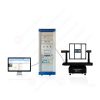
High Precision Rotation Luminaire Goniophotometer
LSG-1890B
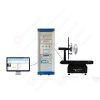
High Precision Rotation Luminaire Goniospectroradiometer
LSG-1890BCCD

Goniophotometer for Automotive and Signal Lamps
LSG-1950
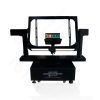
Goniophotometer for Traffic Signal Lamps (Economical Model)
LSG-1950S
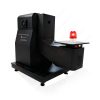
VAD Fire Alarm Visual Alert Device Goniophotometer
LSG-1930
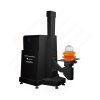
Goniophotometer for Airfield Lighting
LSG-1940
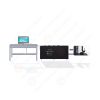
Compact Goniophotometer
LSG-1200A
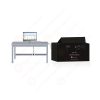
LED Goniophotometer
LSG-1100
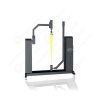
Near Field Moving Detector Goniophotometer
LSG-1900B
 LEDs and Luminaire Test Solutions
 LM-79 and LM-80 Test Solutions
 LED Driver Test Solutions
 Household Appliances Test Solutions
 Mobile and Network Test Solutions
 Automotive Electronics Test Solutions
 Audio-Video and IT Test Solutions
 Cable and Wire Test Solutions
 Plugs and Sockets Test Solutions
 Power Switch Test Solutions
 Transformer Test Solutions
 Electric Toys Test Solutions
 Energy Meter Test Solutions
 Motor-Operated Tool Test Solutions
Select an organization
to browse standards
Abstract
Conventional single-function color temperature meters can only display the correlated color temperature of light sources. They fail to fully analyze comprehensive light quality indicators including light source spectrum, color rendering, flicker and blue light hazard, making it difficult to meet high-precision testing requirements in various industries such as LED lighting, display technology, agricultural supplementary lighting and certification testing. Taking the LISUN LMS-6000 series handheld CCD spectrometer as the research object, this equipment integrates the core functions of a professional color temperature meter and adopts a long-focus asymmetric crossed CT spectroscopic system. It enables all-round testing of color temperature, illuminance, color rendering index, spectral distribution, flicker, blue light hazard, photosynthetic parameters for plants and more in a single measurement. This paper sorts out the functional differences among all models of the LMS-6000 series, elaborates on core technical parameters, applicable measurement standards and practical applications across industries.
By comparing the performance limitations of traditional simple color temperature meters, it demonstrates the core advantages of integrated spectral color temperature meters in light source quality inspection, project acceptance and scientific experiments, providing references for the selection of lighting testing instruments.
1. Introduction
Correlated Color Temperature (CCT) serves as the basic indicator for evaluating the visual warm and cold perception of light sources, and a color temperature meter is standard testing equipment in the lighting industry. Traditional simple color temperature meters available on the market estimate chromaticity coordinates and color temperature merely via optical filters, featuring obvious drawbacks such as low accuracy, lack of spectral traceability and single testing dimensions. They cannot generate complete test reports complying with CIE and national standards. With the standardized development of solid-state LED lighting, eye-protective classroom lamps, plant supplementary lighting, film and stage lighting and other segmented fields, the market requires testing equipment to simultaneously output composite parameters including color temperature, Color Rendering Index (CRI), TM-30 color quality, flicker depth, blue light hazard and photosynthetically active radiation.
The LISUN LMS-6000 series handheld CCD spectrometer acts as a full-function spectral color temperature meter. Laboratory-grade spectral detection modules are miniaturized and integrated into a handheld body. On the basis of accurate color temperature measurement, dozens of chromaticity, optical safety and professional industry parameters are expanded, supporting measurement covering visible light, ultraviolet and near-infrared bands. It balances portability and laboratory-level precision, and is widely applied in factory quality inspection, third-party testing, architectural lighting acceptance, agricultural scientific research and other scenarios. Based on official product documents, this paper systematically analyzes the model configuration, technical indicators and application value of this series of spectral color temperature meters.
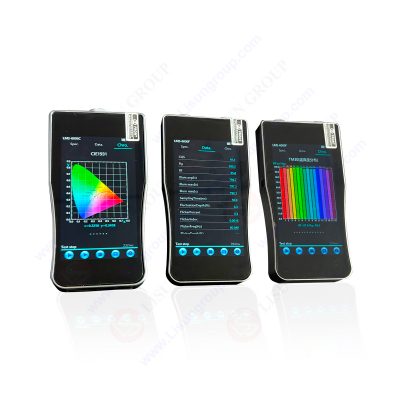
LMS-6000 Portable CCD Spectroradiometer
2. Model and Function Comparison of LMS-6000 Series Spectral Color Temperature Meters
All models of the LMS-6000 series are equipped with a high-precision color temperature meter module, with the color temperature measuring range from 1500 K to 100000 K and accuracy of ±0.6%. Different models add special testing functions such as flicker detection, blue light hazard testing and plant lighting measurement. The core configuration of each model is shown in Table 1.
Table 1 Parameter Comparison of LMS-6000 Series Spectral Color Temperature Meters
| Model | Positioning (Base Model with Color Temperature Meter) | Exclusive Testing Functions | Wavelength Coverage |
| LMS-6000 | Standard Spectral Color Temperature Meter | Basic color temperature, illuminance, CRI, TM-30, SDCM, spectral curve | 380–780 nm |
| LMS-6000C | Economical Color Temperature Meter | Basic color temperature and chromaticity test (without TM-30 and PC software) | 380–780 nm |
| LMS-6000UV | UV Color Temperature Detector | UVA/UVB/UVC irradiance and ultraviolet hazard testing | 200–400 nm |
| LMS-6000F | Flicker Color Temperature Analyzer | All standard color temperature parameters + flicker depth and modulation depth analysis | 380–780 nm |
| LMS-6000L | Luminance Color Temperature Meter | Added luminance measurement: 0.1–500000 cd/m² | 380–780 nm |
| LMS-6000B | Blue Light Hazard Color Temperature Meter | Color temperature measurement + retinal blue light hazard test (compliant with GB/T20145) | 350–800 nm |
| LMS-6000BF | Flicker & Blue Light Hazard Integrated Instrument | All parameters of Model B plus flicker testing | 350–800 nm |
| LMS-6000P | Plant Lighting Color Temperature Meter | Color temperature + PAR/PPFD photosynthetic radiation, red-to-blue radiation ratio | 350–850 nm |
| LMS-6000S | Plant Lighting & Blue Light Safety Color Temperature Meter | All parameters of Model P plus blue light hazard testing | 350–950 nm |
| LMS-6000SF | Full-Function Top-Grade Spectral Color Temperature Meter | All parameters of Model S plus flicker analysis, full functions covered | 350–950 nm |
| LMS-6000TLCI | Professional Color Temperature Meter for Film & Television | Standard color temperature parameters + TLCI lighting color rendering indicator | 380–780 nm |
| LMS-6000I | Industrial Control Color Temperature Meter | Basic color temperature testing + RS485 communication and I/O control interface | 380–780 nm |
As illustrated in the table, all models retain the core module of high-precision color temperature meter. Special testing modules are selectively integrated to adapt to demands from different industries. Compared with separately purchasing simple color temperature meters, flicker meters, blue light detectors and plant light testers, the integrated equipment effectively reduces procurement costs and workload for on-site testing.
3. Core Technical Parameters and Testing Standards of LMS-6000 Spectral Color Temperature Meter
3.1 Core Hardware and Optical Indicators
As a CCD spectral device integrated with a color temperature meter, the instrument adopts a long-focus asymmetric crossed CT spectroscopic architecture to guarantee spectral resolution and stability of color temperature measurement. Key technical parameters are listed below:
• Optical precision: wavelength accuracy ±0.5 nm, spectral resolution ±0.2 nm, chromaticity coordinate error Δx, Δy ≤ ±0.005, color temperature accuracy ±0.6%;
• Photometric range: illuminance 0.1–500000 lx; the luminance-supported model reaches up to 500000 cd/m²; integration time ranges from 0.1 ms to 5 s to adapt to light sources of different intensities;
• Hardware configuration: 5-inch IPS capacitive touch screen, 4000 mAh lithium battery supporting 20 hours of continuous operation, 8 GB local storage for tens of thousands of test reports containing color temperature data;
• Portable size: 135 mm × 80 mm × 23 mm. The handheld body supports instant testing outdoors, on production lines and construction sites.
3.2 Applicable Testing Standards
The calculation algorithm of this spectral color temperature meter complies with authoritative international and domestic standards. Test data can be directly adopted for certification reports: CIE 13.3 Method of Measuring and Specifying Colour Rendering Properties of Light Sources, CIE 177 Colour Rendering of White LED Light Sources, IEEE 1789 standard for flicker safety, GB/T 20145 standard for retinal optical radiation hazard of lamps and lamp systems. It is also compatible with the CQS color quality evaluation system, meeting compliance requirements of third-party testing laboratories.
4. Industrial Applications of LMS-6000 Spectral Color Temperature Meter
4.1 Quality Inspection in LED Lighting Production
LED luminaire production requires batch sorting according to color temperature bins. Conventional simple color temperature meters suffer from insufficient accuracy and may cause rework due to batch chromatic aberration. Using the basic LMS-6000 spectral color temperature meter, users can obtain CCT, Duv, SDCM and CRI in one measurement to quickly screen products with excessive color temperature deviation. The LMS-6000F flicker version can synchronously detect flicker depth of driving power supplies to fulfill compliance testing for classroom lamps and desk lamps.
4.2 Healthy Lighting and Optical Safety Testing
Blue light hazard is under strict control in educational and medical lighting. The LMS-6000B/BF spectral color temperature meter automatically calculates blue light weighted irradiance while measuring color temperature, judging whether lamps meet eye protection standards. Circadian lighting in hospitals requires precise calibration of dynamic color temperature ranging from 2700 K warm light to 6500 K cool light, and real-time spectral curves of the instrument support calibration of color temperature drift for dimmable light sources.
4.3 Plant Factories and Agricultural Supplementary Lighting
The agricultural dedicated LMS-6000P/S color temperature meter outputs PPFD photosynthetic photon flux density and red-blue radiation ratio besides basic color temperature measurement. It assists researchers in adjusting spectra for plant growth. Field testing of supplementary lamps in greenhouses can be completed without laboratory equipment.
4.4 Film, Display and Construction Acceptance
The TLCI professional color temperature meter is selected for calibrating color temperature and color reproduction of studio and photographic lighting. For construction lighting acceptance, the LMS-6000L luminance color temperature meter synchronously tests space illuminance and color temperature uniformity on wall surfaces to generate complete acceptance test reports.
5. Comparative Analysis between Traditional Simple Color Temperature Meters and LMS-6000 Spectral Color Temperature Meter
• Testing coverage: Simple color temperature meters only output CCT and xy coordinates; the LMS-6000 spectral color temperature meter provides spectral curves, color rendering, flicker, blue light, photosynthetic parameters and dozens of other indicators simultaneously.
• Measurement accuracy: Ordinary color temperature meters have color temperature error ≥2% and chromaticity coordinate error ±0.01; the LMS-6000 achieves color temperature error of only ±0.6%, satisfying certification-grade precision.
• Traceability: Simple color temperature meters do not record original spectral data and lack calibration traceability; the spectral color temperature meter stores complete spectral curves, making test data legally valid.
• Applicable scenarios: Simple color temperature meters are only suitable for rough visual comparison; the LMS-6000 can be used for factory quality inspection, third-party testing, scientific experiments, project acceptance and other compliance scenarios.
6. Conclusion
Single-function simple color temperature meters can no longer satisfy refined testing demands in the modern lighting industry. Represented by the LISUN LMS-6000 series, handheld CCD spectral color temperature meters integrate high-precision spectroscopic technology for color temperature measurement into portable devices. One single instrument realizes comprehensive testing of color temperature, spectrum, color rendering, optical safety and industry-specific parameters. Adopting a modular multi-model design, this series covers general lighting, UV testing, eye-protective lighting, agricultural planting, film lighting, industrial automation and other segmented fields. It achieves laboratory-grade measurement accuracy as well as handheld on-site portability and conforms to multiple CIE and national testing standards, forming a standardized instrument solution for light source chromaticity quality inspection. In the future, integrated spectral color temperature meters will gradually replace traditional single-parameter color temperature meters and become mainstream measuring equipment for R&D, quality inspection and testing in the lighting industry.
Your email address will not be published. Required fields are marked *

 English
 中文简体
中文简体 English
 Русский
 Español
 Português
 Türkçe
 العربية
 Deutsch
 Polski
 Italiano
 Français
 한국어
한국어 ไทย
ไทย Tiếng Việt
 日本語
日本語