LM-79 Moving Detector Goniophotometer (Mirror Type C)
LSG-6000
High Precision Rotation Luminaire Goniophotometer
LSG-1890B
High Precision Rotation Luminaire Goniospectroradiometer
LSG-1890BCCD

Goniophotometer for Automotive and Signal Lamps
LSG-1950
Goniophotometer for Traffic Signal Lamps (Economical Model)
LSG-1950S
VAD Fire Alarm Visual Alert Device Goniophotometer
LSG-1930
Goniophotometer for Airfield Lighting
LSG-1940
Compact Goniophotometer
LSG-1200A
LED Goniophotometer
LSG-1100
Near Field Moving Detector Goniophotometer
LSG-1900B
 LEDs and Luminaire Test Solutions
 LM-79 and LM-80 Test Solutions
 LED Driver Test Solutions
 Household Appliances Test Solutions
 Mobile and Network Test Solutions
 Automotive Electronics Test Solutions
 Audio-Video and IT Test Solutions
 Cable and Wire Test Solutions
 Plugs and Sockets Test Solutions
 Power Switch Test Solutions
 Transformer Test Solutions
 Electric Toys Test Solutions
 Energy Meter Test Solutions
 Motor-Operated Tool Test Solutions
Select an organization
to browse standards
Abstract
Tiny needle-shaped flames generated by short circuits and component overheating faults in electrical equipment constitute a major cause of electrical fires. As an internationally universal detection method for simulating fault flames, the needle flame test method can accurately evaluate the flame resistance of various insulating plastics and complete machine components under ignition by small flames. It is a mandatory testing item for safety certifications including CCC, CE and UL. Taking LISUN ZY-3 needle flame tester as the research object, this paper centers on the core technical requirements of the needle flame test method. It analyzes the equipment’s capability to precisely reproduce key parameters such as flame height, temperature rise curve, flame application angle and timing accuracy. The differences in hardware configuration between the cabinet-equipped ZY-3 and open-type ZY-3S are compared. This paper sorts out domestic and international standard systems including GB/T 5169.5-2020 and IEC 60695-11-5:2016 supported by the equipment. It elaborates how intelligent modules such as automatic timing, full-process data recording and multi-mode flame application suppress test errors in the needle flame test method. Combined with application scenarios covering electrical & electronic products, home appliances, lighting and automotive electronics, this paper demonstrates the data stability and versatility of the ZY-3 needle flame tester in tests adopting the needle flame test method. It provides technical references for manufacturers’ quality inspection departments, third-party testing laboratories and material R&D institutions to select standardized needle flame testing equipment.
During long-term operation of home appliances, IT equipment, lighting products and on-board electrical devices, circuit overload, component breakdown and loose wiring easily produce local tiny open flames. Such flames feature concentrated energy and continuously burn insulating parts, which may readily trigger fire accidents of complete equipment. Conventional combustion tests can only simulate large-area open flames and fail to reproduce tiny fault flames inside equipment. The needle flame test method is specially designed for this risk scenario. A standardized needle burner generates stable tiny flames to burn specimens in a targeted manner. Key indicators including ignition, persistent combustion and ignition caused by molten drips are recorded to quantify the fire safety grade of materials. It serves as a fundamental testing method for global market access of electrical products.
The current standards GB/T 5169.5-2020 and IEC 60695-11-5:2016 for the needle flame test method set strict mandatory requirements for testing equipment: the flame height must be stably maintained at 12 mm ± 1 mm; the copper block needs to heat from 100 ℃ ± 2 ℃ to 700 ℃ ± 3 ℃ within 23.5 s ± 1 s; the burner shall be placed vertically for calibration and inclined at 45° during testing; the timing accuracy for flame application and persistent combustion shall be controlled within ±0.1 s. Traditional manual needle flame devices rely on manual gas valve adjustment and stopwatch timing. The flame size, temperature curve and flame application duration fluctuate greatly. The data obtained from repeated needle flame test method on the same specimen show high dispersion, and the generated test reports may not be accepted by certification bodies.
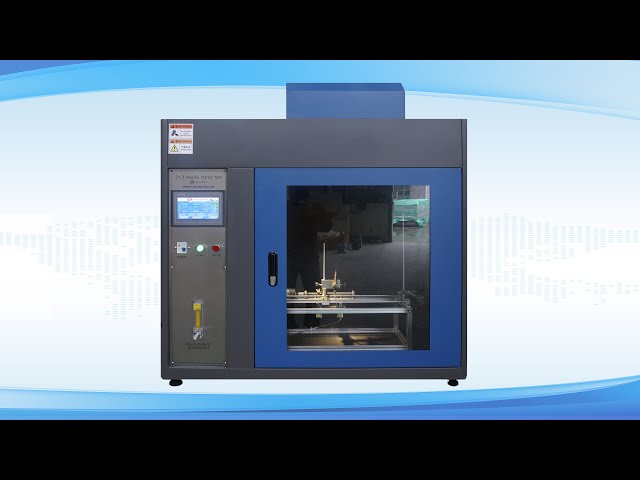
LISUN develops the ZY-3 series needle flame tester. Its overall hardware and control logic fully comply with all specifications of the needle flame test method. Adopting an integrated high-temperature cabinet, closed-loop temperature-controlled gas regulation and PLC automatic timing system, one set of equipment can complete the whole testing process of raw material plates, complete machine housings and wiring insulating parts in accordance with the needle flame test method. It supports single and continuous multi-stage flame application modes, suitable for routine testing and continuous combustion durability tests specified in IEC 62368-1. The equipment addresses common industry pain points of traditional devices such as insufficient precision, cumbersome operation and untraceable data.
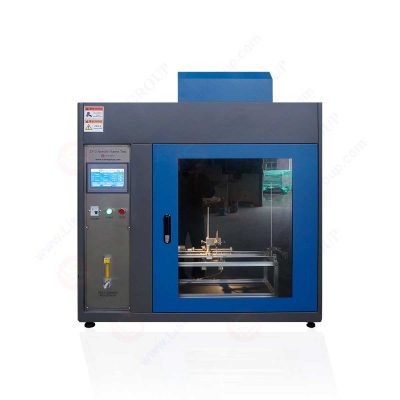
Needle Flame Test ZY-3
Domestic and International Authoritative Standards Corresponding to Needle Flame Test Method
A unified domestic and international standard system has been established for the needle flame test method. The hardware structure and software algorithm of the ZY-3 needle flame tester fully conform to standard provisions. The list of applicable specifications is shown in Table 1.
| Standard System | Standard No. | Full Standard Name | Core Control Content of Needle Flame Test Method |
| Chinese National Standard | GB/T 5169.5-2020 | Fire hazard testing for electrotechnical products – Part 5: Test flames – Needle-flame test method, apparatus, confirmatory test method and guidance | General specifications for needle burner, temperature calibration, flame application procedure and result judgment |
| Old International IEC Standard | IEC 60695-2-2:2004 | Test flames – Needle-flame test method | Apparatus requirements for early versions of needle flame test method (superseded by new editions) |
| Current International IEC Standard | IEC 60695-11-5:2016 | Fire hazard testing – Part 11-5: Test flames – Needle-flame test method | Globally adopted needle flame test method, mandatory standard for exported products |
| Home Appliance Safety Standard | GB/T 4706.1-2024 | Household and similar electrical appliances – Safety | Market access test of complete home appliances adopting needle flame test method |
| IT Equipment Standard | IEC 62368-1:2023 | Audio/video, information and communication technology equipment – Safety requirements | Requirements for continuous needle flame durability test method for power components |
| Lighting Safety Standard | GB 7000.1-2015 | Luminaires – Part 1: General requirements and tests | Needle flame test method for LED lamp holders and driver housings |
| Automotive Electronic Standard | ISO 6722-1:2019 | Road vehicles – 60 V and 600 V cables | Evaluation of vehicle wiring insulation layers by needle flame test method |
Comparison of Core Parameters between Two ZY-3 Models against Mandatory Indicators of Needle Flame Test Method
The ZY-3 series includes two models: ZY-3 with closed cabinet and open-type ZY-3S. The core combustion, temperature measurement and timing parameters of both models are identical and fully satisfy the limit requirements of the needle flame test method. The comparison of key parameters is shown in Table 2.
| Technical Index | Specified Value in Needle Flame Test Method | ZY-3 (With Cabinet) | ZY-3S (Open Type) | Function for Needle Flame Test Method |
| Flame Height | 12 mm ± 1 mm | Adjustable 12 mm ± 1 mm | Adjustable 12 mm ± 1 mm | Ensure consistent flame energy during each combustion and avoid judgment deviation of persistent combustion duration caused by size errors |
| Temperature Rise Curve | Heating from 100 ℃ ± 2 ℃ to 700 ℃ ± 3 ℃ within 23.5 s ± 1 s | Fully compliant | Fully compliant | Reproduce the actual heat release rate of fault flames and restore thermal shock during real ignition |
| Flame Application Time Range | 0~999.9 s, accuracy ±0.1 s | 0~999.9 s, accuracy ±0.1 s | 0~999.9 s, accuracy ±0.1 s | Standard routine flame application lasts 30 s; duration of durability test can be customized to eliminate manual timing errors |
| Persistent Combustion Recording Range | 0~999.9 s, accuracy ±0.1 s | Automatically record after-flame duration | Automatically record after-flame duration | Precisely capture continuous combustion duration of specimens after flame removal, serving as core judgment data of needle flame test method |
| Burner Angle | Vertical for calibration, adjustable to 45° during testing | Electric angle adjustment | Manual angle adjustment | Strictly follow flame contact angle specifications of needle flame test method and guarantee unified heat transfer area |
| Temperature Measuring Thermocouple | Φ0.5 mm K-type sheathed thermocouple | Φ0.5 mm K-type | Φ0.5 mm K-type | Dedicated for standard copper block temperature calibration to ensure compliance of flame confirmatory test in needle flame test method |
| Combustion Gas | Butane with purity ≥95% | Standard gas circuit, optional electronic flowmeter | Standard gas circuit, optional electronic flowmeter | Stabilize flame combustion and prevent gas pressure fluctuation from changing flame shape |
| Overall Weight | — | 180 kg | 40 kg | Closed cabinet isolates flue gas and avoids air flow interference with test environment during needle flame test method |
The needle flame test method clearly requires that the test environment shall be free of convective air flow interference. The closed high-temperature coated cabinet of ZY-3 can isolate ventilation and air conditioning airflow inside workshops, and the dark inner wall of the cabinet prevents light reflection from interfering with flame observation. The lightweight ZY-3S is suitable for spot inspection and rapid testing in small laboratories. Both models support automatic single and continuous multi-stage flame application, and can complete the needle flame durability test method specified in Appendix S of IEC 62368-1.
Testing errors in the needle flame test method mainly stem from unstable flames, manual timing deviation, flame application angle offset and ambient air flow interference. The ZY-3 avoids deviations fundamentally via hardware and software intelligent design and improves test repeatability.
Integrated Temperature-controlled Gas Circuit Stabilizes Flames to Meet Calibration Requirements of Needle Flame Test Method
The equipment is equipped with a closed-loop gas flow regulation module. Matched with the optional electronic flowmeter accessory, it stabilizes butane gas output in real time, so the flame height and temperature rise curve maintain long-term stability without drift. Before each needle flame test method, the equipment can start the one-click flame calibration procedure, automatically record the whole heating process of the copper block and archive calibration data. It fully meets the flame confirmatory test required by standards. Operators do not need to adjust valves repeatedly, greatly lowering the threshold of calibration operation.
Automatic Timing and Data Storage Eliminate Manual Observation Errors
Conventional needle flame test method relies on operators to record ignition and extinguishing time with naked eyes. Manual observation leads to a delay error ranging from 0.3 s to 2 s, which directly causes distorted judgment of flame retardant grades. The ZY-3 is equipped with a PLC high-precision timing unit. Timing starts synchronously the moment the burner contacts the specimen. Once the flame sensor detects open flame, the system automatically marks ignition time Ti; when the flame is completely extinguished, persistent combustion time Tb is locked automatically. All data including temperature, duration and flame application times are stored on the touch screen in real time and support export of original records. All data from the needle flame test method can be traced throughout the whole process, satisfying specifications for issuing reports in third-party laboratories.
Dual Operation via Touch Screen and Remote Controller Simplifies Procedure of Needle Flame Test Method
The equipment is fitted with self-developed large LCD touch screen. All parameters for the needle flame test method (flame application duration, continuous flame application times, temperature alarm threshold) can be set visually with one click. Equipped with a wireless remote control, operators can start and stop testing outside the cabinet to avoid burns caused by high-temperature flames. The modular body structure supports rapid replacement of specimen clamps, adapting to specimens of different specifications such as circuit boards, switch panels, wiring harnesses and lamp housings. One piece of equipment covers the demand of needle flame test method for all categories of products.
Quality Inspection of Electrical Equipment and Switches & Sockets
Relays, circuit breakers, plastic panels of sockets and cable insulation layers all need to adopt the needle flame test method to simulate tiny flames generated by electric arcs from contact short circuits. The cabinet-type ZY-3 can complete batch incoming sampling inspection and rapidly screen materials with excessive persistent combustion time, helping products smoothly pass GB/T 2099.1, VDE safety certifications.
Safety Testing of IT and Audio & Video Equipment
Power supplies for computers, chargers and router housings shall adopt the needle flame test method in accordance with IEC 62368-1. Some high-voltage components require multiple continuous flame application durability tests. The automatic continuous flame application function of ZY-3 eliminates repeated manual operation and raises the efficiency of long-term aging needle flame test method by more than 70%.
Testing of Lighting and Special Luminaires
Plastic parts inside LED drivers, halogen lamp supports and outdoor floodlights work under long-term high temperature and face fire risks caused by component overheating. The needle flame test method is used to evaluate material flame resistance. Test data comply with GB 7000.1 luminaire safety standards and support CE certification for exported lighting products.
Testing of Automotive Electronics and New Energy Supporting Components
Vehicle central control units, wiring harnesses and insulation parts of charging piles operate under complicated conditions. High temperature in summer and engine compartments increases fire risks. The needle flame test method is carried out in accordance with ISO 6722. The accurately temperature-controlled flame of ZY-3 can restore vehicle-mounted fault heat sources and provide reliable data for fire prevention design of new energy vehicles.
R&D Laboratories for Polymer Materials
During the R&D of flame retardant modified plastics such as ABS, PC and PA, a large number of parallel needle flame test method tests are required to compare differences among flame retardant formulations. The automatic data export function of ZY-3 can summarize persistent combustion and dripping data of multiple groups of specimens in batches and shorten the R&D cycle of new materials.
The needle flame test method serves as a standardized core detection method to evaluate the resistance of electrical equipment and insulating materials to ignition by tiny flames. The precision and automation level of testing equipment directly determine the validity of test data and recognition of certification reports. The LISUN ZY-3 series needle flame tester fully complies with all specifications of the needle flame test method including GB/T 5169.5-2020 and IEC 60695-11-5:2016. Core indicators such as flame height, temperature rise curve, timing accuracy and burner angle exceed standard limit values.
The closed cabinet ZY-3 adopts airflow-isolated cabinet and fully automatic control, suitable for standardized needle flame test method in third-party certification laboratories and large and medium-sized enterprises. The lightweight ZY-3S adapts to small factories and spot inspection scenarios. Intelligent functions including automatic flame calibration, full-process data recording and multi-stage continuous flame application effectively eliminate systematic errors caused by manual operation and guarantee the repeatability and authenticity of data obtained from the needle flame test method.
Against the background of increasingly strict fire safety control for global electrical products, the ZY-3 needle flame tester can complete needle flame test method for raw materials and finished products in one-stop mode. It meets both routine flame retardant judgment and long-term combustion verification requirements, and delivers a complete standardized testing solution for product development, factory outgoing quality inspection and international market access certification./html>
Tags:ZY-3Your email address will not be published. Required fields are marked *

 English
 中文简体
中文简体 English
 Русский
 Español
 Português
 Türkçe
 العربية
 Deutsch
 Polski
 Italiano
 Français
 한국어
한국어 ไทย
ไทย Tiếng Việt
 日本語
日本語