LM-79 Moving Detector Goniophotometer (Mirror Type C)
LSG-6000
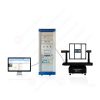
High Precision Rotation Luminaire Goniophotometer
LSG-1890B
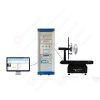
High Precision Rotation Luminaire Goniospectroradiometer
LSG-1890BCCD

Goniophotometer for Automotive and Signal Lamps
LSG-1950
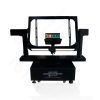
Goniophotometer for Traffic Signal Lamps
LSG-1950S
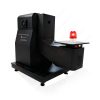
VAD Fire Alarm Visual Alert Device Goniophotometer
LSG-1930
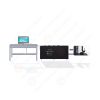
Compact Goniophotometer
LSG-1200A
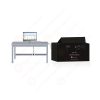
LED Goniophotometer
LSG-1100
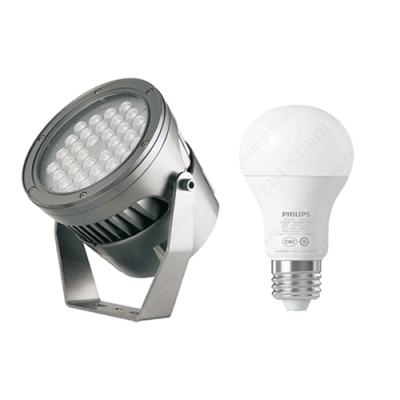 LEDs and Luminaire Test Solutions
 LM-79 and LM-80 Test Solutions
 LED Driver Test Solutions
 Household Appliances Test Solutions
 Mobile and Network Test Solutions
 Automotive Electronics Test Solutions
 Audio-Video and IT Test Solutions
 Cable and Wire Test Solutions
 Plugs and Sockets Test Solutions
 Power Switch Test Solutions
 Transformer Test Solutions
 Electric Toys Test Solutions
 Energy Meter Test Solutions
 Motor-Operated Tool Test Solutions
Select an organization
to browse standards
Abstract
Salt fog test is a core accelerated environmental detection method to evaluate the corrosion resistance of metal coatings, paint films and complete electronic products. The cavity corrosion resistance, temperature and humidity control accuracy and automatic functions of the salt fog test chamber directly affect the stability of test data. Taking the LISUN YWX/Q-010 salt fog test chamber as the research object, this paper describes the collaborative working logic of the integrally molded PP anti-corrosion chamber, high-precision temperature control system and automatic spraying device. The equipment can stably carry out three mainstream salt fog test modes including NSS, AASS and CASS. Equipped with intelligent modules such as automatic monitoring of salt fog sedimentation volume, long-term timing within 0~9999 hours, acousto-optic alarm for water shortage and over-temperature, it can simulate marine and industrial salt-containing corrosive environments steadily for a long time, providing a standardized test platform for material selection, product reliability verification and compliance certification.
Outdoor electronics, hardware metal parts and new energy equipment are continuously exposed to salt-laden atmospheric environments such as coastal areas and chemical industrial zones. Chloride ions can penetrate protective layers and cause failures including rusting, electrical short circuits and coating peeling. As an accelerated corrosion test, salt fog test predicts long-term weather resistance of products within a short period, which is a mandatory testing item specified in domestic and international standards such as GB/T 2423.17, ISO 9227 and ASTM B117. Conventional simple salt fog test chambers mostly adopt welded metal enclosures, which tend to leak and corrode after long-term operation. Without automatic monitoring functions, operators need continuous on-site work to record sedimentation volume and control test duration, and manual intervention easily leads to data deviation. Targeting the above deficiencies, the LISUN YWX/Q-010 salt fog test chamber has optimized structure and control modules. The seamless integrally molded PP chamber eliminates leakage risks. Multi-mode spraying and multiple safety alarm functions meet salt fog test requirements across various industries, and the equipment is widely used in enterprise laboratories and third-party testing institutions.
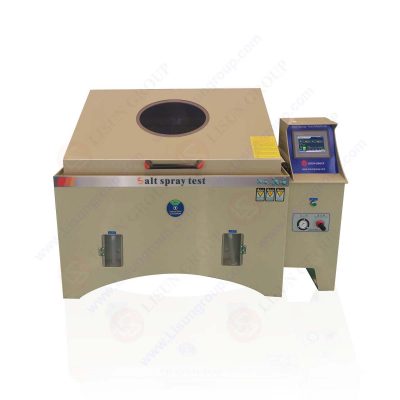
YWX/Q-010_Salt Spray Test Machine
Structural Advantages of Integrally Molded PP Anti-corrosion Chamber
The salt fog test chamber is continuously exposed to high-concentration sodium chloride corrosive solution. Cavity leakage and self-corrosion will directly interfere with the test environment. YWX/Q-010 is integrally molded with imported corrosion-resistant PP sheet without welding seams, fundamentally preventing salt water leakage from the structural perspective. PP material features high temperature resistance and acid-alkali resistance, and can withstand long-term erosion of salt solutions with different pH values in NSS, AASS and CASS tests without releasing metal ions to contaminate the spraying environment. The internal working dimension is 1200mm×800mm×500mm, equipped with stainless steel gas spring cover for convenient loading and unloading of large specimens. Combined V-type and O-type sample racks are installed inside to hold specimens at 20°±5° as required by standards, ensuring uniform adhesion of salt fog on sample surfaces.
Multi-mode Spraying and High-precision Temperature Control System
The equipment is fitted with an independent saturation tank heating unit and wall-mounted atomizing nozzle. The temperature control range covers ambient temperature to 55℃, with temperature uniformity ≤2℃ and fluctuation controlled within ±0.5℃, which can accurately match the temperature requirements of the three salt fog test types. The automatic spraying device supports continuous, intermittent and programmable segmented spraying. The salt fog sedimentation volume can be stably maintained at 1~2ml/80cm²/h to meet sedimentation rate requirements of national and international standards without repeated manual air pressure adjustment. The whole system can freely switch among neutral salt spray (NSS), acetic acid salt spray (AASS) and copper accelerated acetic acid salt spray (CASS) modes to satisfy corrosion assessment demands of different coatings and materials.
Intelligent Monitoring and Safety Protection Functions
The LISUN YWX/Q-010 salt fog test chamber integrates a complete automatic control module to realize real-time automatic monitoring of salt fog sedimentation volume without regular manual collection and measurement. The test duration can be set from 0 to 9999 hours, supporting one-time setting for long-term aging tests with reliable timing accuracy. Multiple safety protection mechanisms are built in. Acousto-optic alarm will be triggered and spraying will be suspended automatically when salt water tank water shortage, chamber over-temperature or low air supply pressure occurs, avoiding faults such as dry heating and idle operation without salt fog. It reduces equipment wear and test failure probability, and greatly lowers manual workload for on-site monitoring.
Comparison of Working Conditions for Three Main Salt Fog Test Modes
The table below shows core parameters and applicable objects of the three salt fog test types supported by the LISUN YWX/Q-010 salt fog test chamber, which intuitively distinguishes application scenarios of different test modes:
| Test Mode | Solution pH Value | Standard Test Temperature | Main Test Specimens | Corrosion Acceleration Intensity |
| Neutral Salt Spray (NSS) | 6.5~7.2 | 35℃ | General metals, galvanized parts, outdoor electronic housings, coating panels | Basic standard corrosion rate |
| Acetic Acid Salt Spray (AASS) | 3.1~3.3 | 35℃ | Cu-Ni-Cr decorative coatings, aluminum anodized parts | Medium accelerated corrosion |
| Copper Accelerated Acetic Acid Salt Spray (CASS) | 3.1~3.3 | 50℃ | Automotive exterior chrome-plated parts, high-grade decorative hardware | High accelerated severe corrosion |
• Specimen pretreatment: Clean oil stains and oxide layers on sample surfaces, fix specimens on equipment racks at specified angles, and prepare sodium chloride solution corresponding to test standards;
• Mode selection: Select NSS/AASS/CASS test mode on the touch screen, set test temperature, spraying cycle and total test duration;
• Environment stabilization: Start heating and saturation tank system, wait until chamber temperature and salt fog sedimentation volume reach standard ranges;
• Automatic spraying test: The system continuously atomizes salt water and monitors sedimentation volume in real time. Automatic alarm and shutdown will be activated under abnormal conditions such as water shortage and over-temperature;
• Test completion judgment: Spraying stops automatically when reaching preset duration. Take out samples and observe rusting, blistering and coating peeling conditions, then complete corrosion resistance rating against relevant standards.
The complete procedure complies with ISO 9227 and GB/T 10125 specifications, and test data can be recognized by third-party certification bodies.
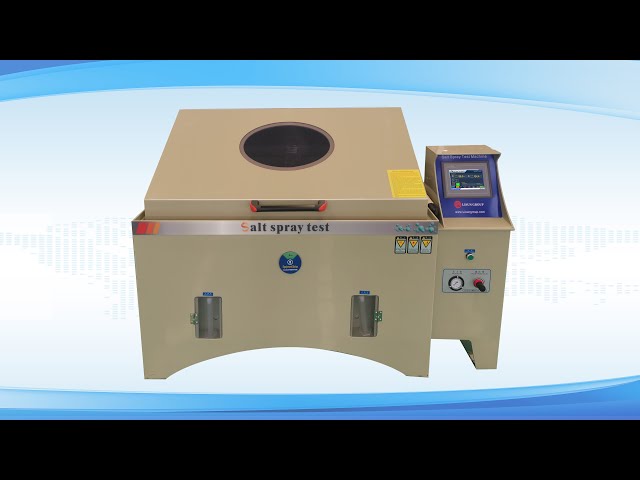
During product R&D, engineers conduct salt fog test with the YWX/Q-010 salt fog test chamber to quickly compare corrosion resistance of different coatings, paints and base materials and optimize surface treatment processes. In mass production quality inspection, unified automatic control eliminates manual operation errors and steadily controls anti-corrosion performance of incoming materials and finished products. For export manufacturers, the equipment’s compatibility with international standards enables one single unit to complete salt fog tests required for domestic, European and American markets and reduces investment in multiple testing devices. This salt fog test chamber fits demands of electronics, hardware processing, coating, household appliances, photovoltaic new energy and other industries. Reliable data obtained from salt fog test helps enterprises identify anti-corrosion design defects in advance and extend service life of products in coastal and industrial corrosive environments.
Salt fog test is a critical detection method to measure product anti-corrosion reliability. The cavity anti-corrosion capability, temperature and fog control precision and intelligence level of the salt fog test chamber exert direct influence on credibility of test results. The LISUN YWX/Q-010 salt fog test chamber solves leakage and corrosion problems with seamless integrally molded imported PP chamber. Combined with high-precision temperature control and automatic spraying device, it can stably perform NSS, AASS and CASS salt fog tests. It is also equipped with intelligent functions including automatic sedimentation monitoring, 0~9999h timing and acousto-optic alarm for water shortage and over-temperature to minimize test deviations caused by manual operation. The equipment meets multiple scenarios including laboratory R&D, batch quality inspection and third-party certification. It provides accurate and repeatable test environment for corrosion resistance evaluation of various metals, coatings and electrical products, and serves as essential salt fog testing equipment in the field of industrial reliability testing.
Tags:YWX/Q-010Your email address will not be published. Required fields are marked *

 English
 中文简体
中文简体 English
 Русский
 Español
 Português
 Türkçe
 العربية
 Deutsch
 Polski
 Italiano
 Français
 한국어
한국어 ไทย
ไทย Tiếng Việt
 日本語
日本語