LM-79 Moving Detector Goniophotometer (Mirror Type C)
LSG-6000
High Precision Rotation Luminaire Goniophotometer
LSG-1890B
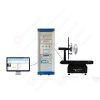
High Precision Rotation Luminaire Goniospectroradiometer
LSG-1890BCCD

Goniophotometer for Automotive and Signal Lamps
LSG-1950
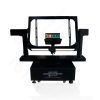
Goniophotometer for Traffic Signal Lamps
LSG-1950S
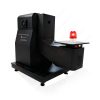
VAD Fire Alarm Visual Alert Device Goniophotometer
LSG-1930
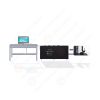
Compact Goniophotometer
LSG-1200A
LED Goniophotometer
LSG-1100
 LEDs and Luminaire Test Solutions
 LM-79 and LM-80 Test Solutions
 LED Driver Test Solutions
 Household Appliances Test Solutions
 Mobile and Network Test Solutions
 Automotive Electronics Test Solutions
 Audio-Video and IT Test Solutions
 Cable and Wire Test Solutions
 Plugs and Sockets Test Solutions
 Power Switch Test Solutions
 Transformer Test Solutions
 Electric Toys Test Solutions
 Energy Meter Test Solutions
 Motor-Operated Tool Test Solutions
Select an organization
to browse standards
Abstract:
In natural sandstorm, industrial production, outdoor operation and other scenarios, dust intrusion is a major cause of failures in electrical and electronic equipment, auto parts, lamps and other products. As special testing equipment for simulating dry dust environments, the Dust Test Chamber can precisely regulate core parameters including dust concentration, air blowing pressure and test duration to reproduce the actual operating conditions of products. It quantitatively analyzes the adverse impacts of dust on internal circuits, mechanical structures and overall operating performance of equipment. Taking LISUN SC-015 Dust Test Chamber as the research object, this paper expounds its working principle, technical parameters, test procedures and application value. Combined with domestic and international prevailing standards, it explores the practical effect of this equipment in IP dust protection grade testing, and provides reference for dustproof design, quality inspection and performance optimization of industrial products.
1. Introduction
With the rapid development of industrial manufacturing and electronic industry, various electrical equipment, auto accessories and lighting appliances are widely used in highly dusty environments such as mines, construction sites and outdoor roads. Fine dust can invade the interior of equipment through shell gaps, heat dissipation holes, wiring ports and other positions, which easily leads to circuit short circuit, mechanical stagnation, component wear and reduced insulation performance. These problems will greatly shorten the service life of products and even cause potential safety accidents. To predict the operating status of products in dusty environments in advance, conducting simulation tests in accordance with standardized procedures has become an industry necessity.
The Dust Test Chamber, also known as sand and dust test chamber, is an environmental test equipment developed based on GB 4208-2008 and IEC 60529 standards. It can artificially build a controllable dry dust environment and complete mainstream dust protection grade tests such as IP5X and IP6X. As a mainstream model in the industry, LISUN SC-015 Dust Test Chamber is widely applied in product research and development, factory inspection and third-party testing due to its accurate parameter control, stable operating performance and comprehensive safety configurations. Centering on this Dust Test Chamber, this paper analyzes its logic and practical application in simulating dust environments and evaluating the dust resistance of products.
2. Working Principle and Core Functions of Dust Test Chamber
2.1 Working Principle
The Dust Test Chamber adopts dry talc powder as the test medium, and forms a closed-loop test system consisting of fans, vibration devices, vacuum systems and heating systems. Inside the sealed chamber, dust is evenly dispersed in the form of free falling particles. The adjustable fan generates directional airflow to simulate working conditions including natural dust emission, industrial dust deposition and sand impact. The matching vibration device prevents dust from adhering to the chamber wall and caking, so as to maintain long-term stable dust concentration in the chamber. The vacuum system can apply negative pressure to the tested samples, simulating the scenario that dust is sucked in due to pressure difference inside and outside the equipment, which restores the actual service environment of products to the greatest extent. During the test, the control system manages air blowing, vibration, timing and other processes in real time. After the test, the influence of dust intrusion on product structure and performance can be determined through disassembly and power-on inspection.
2.2 Core Test Objectives
Tests carried out by the Dust Test Chamber mainly achieve three major goals. First, inspect the sealing performance of product shells and find design defects of gaps, sealing rings and shell joints. Second, observe the impact of invading dust on internal circuit systems such as circuit boards, wires and contacts, and judge whether faults like short circuit, electric leakage and poor contact occur. Third, check whether mechanical structures including gears, rotating shafts and bearings suffer from stagnation and wear. The overall operating reliability of products in dusty environments is comprehensively evaluated, providing data support for product structure optimization and sealing process improvement.
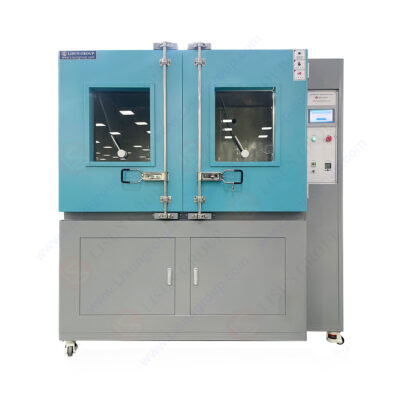
SC-015_AL
3. Technical Parameters and Configuration of LISUN SC-015 Dust Test Chamber
Developed in strict accordance with GB 2423.37-89, GB/T 4942.2-93 and IEC 60529 series standards, LISUN SC-015 Dust Test Chamber can independently complete IP5X and IP6X dust protection grade tests, and can be customized and upgraded to meet the requirements of IP5KX and IP6KX tests specified in ISO 20653. The overall structure of the equipment is divided into five modules: chamber body, control system, dust circulation system, vacuum system and heating system. The core technical parameters are shown in the table below:
| Parameter Category | Specific Index | Parameter Description |
| Chamber Dimension | 1000×1500×1000mm | Vertical chamber; samples can be placed horizontally or vertically, suitable for medium and large tested products |
| Temperature Range | RT+10 ~ 60℃ | Heating via circulating air duct to avoid dust condensation caused by low temperature |
| Test Dust | Dry talc powder, dosage: 2~4kg/m | Filtered by standard metal sieve with wire diameter of 50μm and spacing of 75μm |
| Vacuum System | Adjustable vacuum degree: 0~10KPa; pumping speed: 0~4800L/H | Suitable for negative pressure dust test, simulating dust ingress caused by internal and external pressure difference |
| Time Control | Total test duration and vibration duration: 0~999H adjustable, accuracy: ±1s | Support two modes: continuous air blowing and periodic air blowing |
| Power Supply | 380V/50Hz three-phase power supply | Current of sample interface ≤10A, compatible with conventional electrical products |
| Material Configuration | Shell: painted steel plate; Inner chamber & sample rack: stainless steel | Anti-corrosion and rust-proof, applicable for long-term continuous tests |
| Safety Function | Leakage protection, short circuit protection | Ensure the safety of equipment and tested samples during tests |
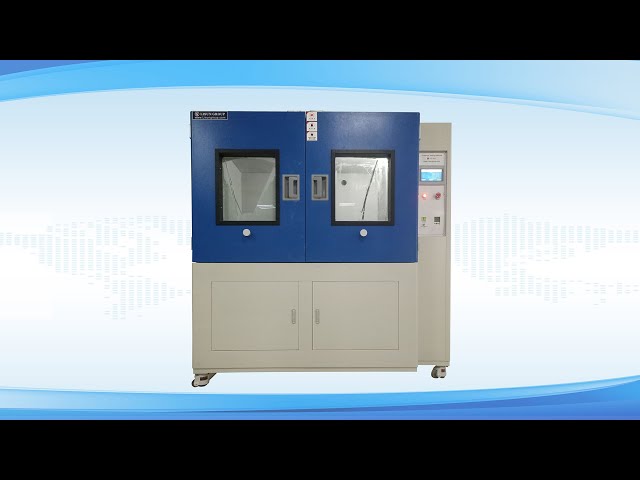
The chamber is equipped with tempered glass observation window and LED lighting, allowing operators to monitor the status of samples in real time. A detachable dust replacement device is installed at the bottom to completely replace waste dust and ensure consistent data in multiple tests. The dedicated vibration device can start and stop regularly to break up dust attached to the chamber wall and maintain uniform dust concentration. The control system adopts a 7-inch touch screen combined with Panasonic PLC, featuring convenient operation and precise parameter adjustment. It can automatically complete the whole process of air blowing, vibration and timing to reduce manual operation errors.
4. Standard Test Procedures Based on Dust Test Chamber
In accordance with IP5X and IP6X test specifications, the standard test procedures of LISUN SC-015 Dust Test Chamber are divided into four stages: preparation, parameter commissioning, formal test and result inspection.
• The first stage is sample and equipment preparation. Clean the test chamber, add dry talc powder at the dosage of 2~4kg/m, and check the operating status of fans, vacuum pumps and heating systems. Fix the tested samples on the stainless steel sample rack, and place them horizontally or vertically according to their actual usage posture. Connect the air extraction pipe and reserve air extraction holes if negative pressure test is required.
• The second stage is parameter commissioning. Set test temperature, total test duration, vibration interval, vacuum degree and other parameters via the touch screen. For high-grade tests such as IP6X, adjust the vacuum degree to 6~10KPa to simulate dust inhalation under negative pressure.
• The third stage is formal test. After starting the equipment, the heating system works first to prevent dust from dampening and caking. Then the fan operates to form free falling dust, and the vibration device works intermittently to distribute dust evenly. The whole system runs continuously for the set duration. Operators can observe the appearance and shell sealing state of samples through the observation window during the whole process.
• The fourth stage is result judgment. Stop the equipment after the test and wait for all dust to settle down before taking out the samples. First, visually inspect dust accumulation on the shell, joints and interfaces, then disassemble the samples to check the dust deposition inside. Afterwards, power on the samples and test circuit continuity, operating power, mechanical transmission and other performances. Judging criteria based on standards: IP5X allows a small amount of dust to enter, which shall not affect the normal operation of products; IP6X requires no dust deposition inside the samples to achieve full dust tightness.
5. Application Value and Industrial Significance of Dust Test Chamber
In the product research and development stage, pre-tests with the Dust Test Chamber can identify problems in shell sealing, heat dissipation structure and interface design in advance, so as to optimize the structure before mass production and greatly reduce the failure rate of finished products. In production and quality inspection, the Dust Test Chamber is the core equipment for factory sampling inspection and batch testing, ensuring that the dust resistance of each batch of products complies with industrial standards and customer requirements. For products subject to mandatory certification including automobiles, outdoor lamps and low-voltage electrical appliances, test reports generated by the Dust Test Chamber are essential documents for products to pass domestic GB standards and international IEC standard certification.
From the perspective of the whole industry, LISUN SC-015 and other similar Dust Test Chambers realize standardization, precision and automation of dust environment tests, unify test standards among different enterprises and laboratories, and promote the standard development of industrial dust testing. Compared with traditional field tests in outdoor environments, laboratory simulation tests are not restricted by weather and sites, with shorter test cycles, controllable parameters and reproducible data, which effectively reduce enterprises’ costs on research and development and inspection. Meanwhile, the equipment can be customized with walk-in chambers and enhanced dust circulation systems to adapt to special products such as large cabinets and complete vehicle parts. It has been widely used in electronics, automobile, lighting, industrial control and many other fields.
6. Conclusion
Equipment failures caused by dusty environments are important research topics in the field of industrial product reliability. With powerful capability of environment simulation, the Dust Test Chamber acts as a key device connecting laboratory inspection and actual working conditions. Equipped with complete hardware, rigorous parameter system and standardized control logic, LISUN SC-015 Dust Test Chamber can accurately simulate various dry dust working conditions, quantitatively analyze the impacts of dust on product circuits, mechanical structures and operating performance, and provide strong support for product dustproof design, quality control and certification testing.
As industrial products develop towards higher reliability and longer service life, the requirements for dust environment tests will keep rising, and the Dust Test Chamber will also develop towards higher precision, intellectualization and multi-function integration. In the future, composite test equipment integrating temperature & humidity, sand dust, vibration and other environmental factors will further improve the reliability test system of products, and help various industrial products operate stably and safely in complex dusty environments.
Tags:SC-015Your email address will not be published. Required fields are marked *

 English
 中文简体
中文简体 English
 Русский
 Español
 Português
 Türkçe
 العربية
 Deutsch
 Polski
 Italiano
 Français
 한국어
한국어 ไทย
ไทย Tiếng Việt
 日本語
日本語