LM-79 Moving Detector Goniophotometer (Mirror Type C)
LSG-6000
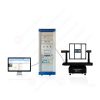
High Precision Rotation Luminaire Goniophotometer
LSG-1890B
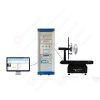
High Precision Rotation Luminaire Goniospectroradiometer
LSG-1890BCCD

Goniophotometer for Automotive and Signal Lamps
LSG-1950
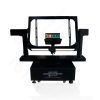
Goniophotometer for Traffic Signal Lamps (Economical Model)
LSG-1950S
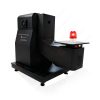
VAD Fire Alarm Visual Alert Device Goniophotometer
LSG-1930
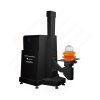
Goniophotometer for Airfield Lighting
LSG-1940
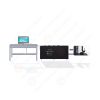
Compact Goniophotometer
LSG-1200A
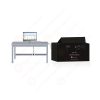
LED Goniophotometer
LSG-1100
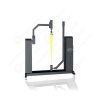
Near Field Moving Detector Goniophotometer
LSG-1900B
 LEDs and Luminaire Test Solutions
 LM-79 and LM-80 Test Solutions
 LED Driver Test Solutions
 Household Appliances Test Solutions
 Mobile and Network Test Solutions
 Automotive Electronics Test Solutions
 Audio-Video and IT Test Solutions
 Cable and Wire Test Solutions
 Plugs and Sockets Test Solutions
 Power Switch Test Solutions
 Transformer Test Solutions
 Electric Toys Test Solutions
 Energy Meter Test Solutions
 Motor-Operated Tool Test Solutions
Select an organization
to browse standards
Abstract
Aiming at the pain points of traditional discrete safety compliance testing equipment for household appliances, lighting fixtures, medical electrical devices, motors and other electrical products, such as multiple stations, low testing efficiency, inconsistent data, and complex coordinated debugging of multiple instruments, this paper proposes an integrated development scheme for electrical safety tester. Taking LISUN LS9955 automatic safety compliance tester as the research carrier, the system integrates five core testing modules: AC/DC Withstand Voltage Test, Insulation Resistance (IR) Test, Leakage Current (LLC) Test, Ground Resistance (GR) Test and Power (POWER) Test. A single electrical safety tester can complete all compliance tests for electrical safety in one-stop operation. This paper elaborates the design concept of the integrated system, hardware module architecture and programmable software control logic, lists the key technical parameters of the complete machine, and demonstrates the application value of integrated electrical safety tester in production line end-of-line inspection, laboratory R&D and third-party certification scenarios by comparing with traditional separate testing schemes. It provides references for the development of electrical safety testing equipment and automatic transformation of production lines.
Introduction
With the continuous improvement of domestic 3C mandatory certification system and export standards for household electrical appliances, lighting lamps, medical electrical equipment, drive motors and other products, standards including GB 4706.1-2024, IEC 60335-1:2023, GB 7000-2023 and GB 9706.1-2020 put forward strict requirements of full-item testing, high repeatability and data traceability for electrical safety inspection. The traditional testing mode adopts separate instruments including withstand voltage tester, insulation resistance meter, leakage current tester, ground resistance tester and power analyzer, which has four obvious drawbacks. First, multiple instruments occupy independent stations, leading to large floor space and high transfer cost of production lines. Second, frequent manual wiring switching between different instruments causes big human operation errors and long testing cycle. Third, test data of each device is stored independently, which cannot be archived and traced uniformly. Fourth, the calibration and maintenance cost of multiple instruments remains high, and linkage control of different devices is difficult to realize.
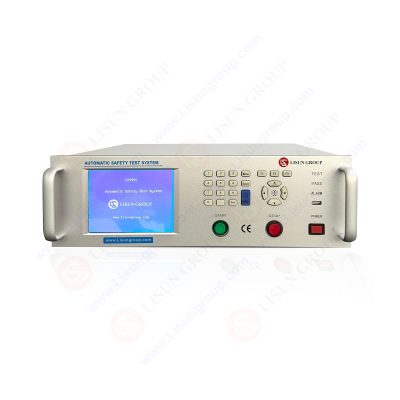
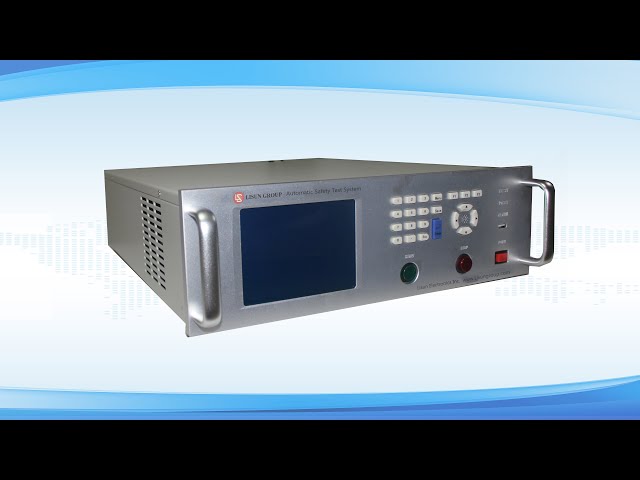
Against this industrial backdrop, integrated electrical safety tester has become the mainstream R&D direction of safety compliance testing equipment. As a mature commercial integrated electrical safety tester, LISUN LS9955 automatic safety compliance tester highly integrates five core safety testing functions, supports dual-frequency test of 50/60Hz, programmable test sequences and remote upper computer linkage, with audible and visual alarm for failed results. It can simultaneously meet the reliability verification demands of R&D laboratories and end-of-line inspection of mass production lines, effectively solving the industry pain points of traditional discrete instruments. This paper conducts in-depth analysis on the integrated system development logic, technical parameters and application scenarios based on this electrical safety tester.
1 Overall System Architecture Design of Integrated Electrical Safety Tester
1.1 Integrated Hardware Design Idea
The integrated electrical safety tester abandons the simple splicing mode of multiple instruments, and adopts a dual-core control architecture combining FPGA and ARM main controller. Five independent signal generation and acquisition sub-modules are built inside, sharing a set of LCD human-machine interaction screen, power loop, safety discharge loop and communication interface. The hardware is divided into five functional units:
• AC/DC Withstand Voltage Generation Unit: Wide-range high voltage output from 100V to 4000V with independent AC/DC switching circuit. Real-time breakdown leakage current acquisition is realized to verify the insulation strength under high voltage.
• Insulation Resistance Measuring Unit: DC test voltage ranges from 100V to 1000V with high-precision high-resistance sampling circuit, which quantifies defects such as aging and damage of insulating medium.
• Leakage Current Excitation & Acquisition Unit: Simulates actual power grid supply with AC 10~300V input to detect electric leakage risk on product shell under normal working conditions.
• Ground Continuity Test Unit: High AC output current (1~30A) to measure the resistance of protective grounding circuit and verify the reliability of fault current discharge channel.
• Power Electrical Parameter Analysis Unit: Collects voltage, current, active power and power factor synchronously, realizing integrated detection of electrical safety and load performance.
The whole machine is equipped with an electric safety barrier and rapid discharge loop. Residual high voltage charge is automatically released after each test to avoid potential safety hazards of high-voltage operation. A unified signal acquisition bus eliminates synchronous sampling deviation among separate instruments, and the overall measurement accuracy is superior to the combination of discrete equipment.
1.2 Design of Programmable Software Control System
This electrical safety tester is equipped with an embedded programmable testing system, supporting storage of 50 groups of programs. Each program can be edited with 8 continuous test steps, and users can freely combine withstand voltage, insulation resistance, leakage current, ground resistance and power test sequences to adapt to standard testing procedures of various products. Core software functions are listed as follows:
• Customizable threshold judgment: PASS/FAIL limit values can be preset by users, and audible & visual alarms with red screen prompt will be triggered automatically once test results exceed limits.
• Synchronous single-screen display: Real-time set parameters, measured data and judgment results are displayed on one LCD screen without switching among different instruments.
• Remote control interface: Reserved communication ports can connect to factory MES systems and upper computer testing software to realize unattended automatic testing.
• Adaptive test duration: Test time adjustable from 0 to 999.9s, meeting requirements of short-time factory inspection and long-term reliability aging test.
• Adaptive frequency switching: Built-in 50Hz/60Hz power frequency switch to adapt to product certification tests for domestic and overseas markets.
2 Core Technical Parameters of LISUN LS9955 Electrical Safety Tester
As an integrated electrical safety tester, LS9955 covers five safety compliance tests simultaneously. The measuring range, accuracy and output specifications of each module are shown in Table 1:
Table 1 Full-Function Technical Parameters of LISUN LS9955 Integrated Electrical Safety Tester
| Test Item | Measuring Range | Measurement Accuracy | Key Output Conditions |
| AC/DC Withstand Voltage Test | Voltage: 100~4000V | ±(5%FS+3V) | 50/60Hz supported, rapid high-voltage discharge protection |
| AC Current: 0.10~20.00mA | |||
| DC Current: 0.10~12.00mA | |||
| Insulation Resistance (IR) Test | Resistance: 1.00~2000MΩ | ±(5%FS+0.5MΩ) | DC high voltage output, high-precision high-resistance sampling |
| Test Voltage: DC100~1000V | |||
| Leakage Current (LLC) Test | Current: 0.10~20mA | ±(0.3%FS+5μA) | Simulate actual power grid operating conditions to detect shell leakage |
| Supply Voltage: AC10.0~300.0V | |||
| Ground Resistance (GR) Test | Resistance: 0~600mΩ | ±(5%FS+2mΩ) | High-current continuity test to verify grounding continuity |
| Output Current: AC1.00~30.00A | |||
| Power (POWER) Test | Voltage: 10~300V; Current: 0.010~20.00A | Class 0.5 accuracy | Synchronous electrical performance collection, integrated safety & performance test |
| Power: 1.0~6000.0W; PF: 0.2~1.0 |
As shown in the table above, all indicators of this integrated electrical safety tester fully meet the limit requirements of mainstream domestic and international safety standards including GB 4706 and IEC 60335. Its measuring range covers testing demands of small adapters to high-power household appliances and lighting equipment. Compared with discrete instruments, the integrated scheme adopts unified calibration reference, with higher overall measurement consistency and elimination of systematic errors among multiple devices.
3 Core Advantages of Integrated Electrical Safety Tester vs. Traditional Discrete Equipment
3.1 Greatly Improved Production Line Efficiency
Traditional discrete testing requires 4 to 5 times of manual wiring replacement and instrument switching, and the testing time for a single product reaches 60~90s. By adopting LISUN LS9955 integrated electrical safety tester, all five tests can be completed with one-time wiring, and programmable sequences run automatically in turn. The testing time for a single product is reduced to 20~35s, increasing daily production capacity of the production line by more than 50%. Fewer manual operations lower misjudgment risks caused by wiring errors.
3.2 Simplified Equipment Cost and Operation & Maintenance
The discrete solution requires purchasing five separate instruments including withstand voltage tester, insulation tester, leakage current tester, ground resistance tester and power analyzer, leading to high procurement, calibration and spare parts maintenance costs. One single integrated electrical safety tester replaces five discrete instruments, cutting floor space by 70% and annual calibration expenses by 60%, which significantly reduces equipment management difficulty on production lines.
3.3 Integrated and Traceable Test Data
All test data of the integrated system is uniformly stored in the local storage unit, and can be uploaded to factory MES systems synchronously via remote communication. The withstand voltage, insulation resistance, leakage current, ground resistance and power data of each tested product are bound to a unique product serial number, satisfying data traceability requirements of CCC and CE certifications. In contrast, data of discrete instruments are stored separately, prone to loss or tampering during manual summarization, failing to meet modern quality control systems.
3.4 Integrated Safety Protection Design
The complete machine integrates electric safety barrier, rapid high-voltage discharge, over-current and over-voltage multi-layer protections. Residual high voltage is discharged automatically after each test. Multiple high-voltage sources in discrete equipment bring overlapping high-voltage safety risks, while integrated electrical safety tester adopts unified safety loop to reduce electric shock accidents in laboratories and production lines.
4 Application Scenarios of Integrated Electrical Safety Tester
4.1 Mass Production End-of-Line Inspection for Household Appliances & Lighting Products
End-of-line inspection for household air conditioners, electric irons, LED lamps, kitchen and bathroom appliances requires simultaneous verification of insulation, grounding, leakage and power parameters. LISUN LS9955 electrical safety tester can be deployed on automatic production lines, matched with automatic wiring fixtures to complete full-item safety compliance testing in batches, with audible and visual alarms to automatically sort out unqualified products.
4.2 Reliability Verification in R&D Laboratories
Product R&D stage requires repeated high-voltage aging, long-term insulation and load power cycle tests. Programmable test sequences can set multiple rounds of cyclic testing and automatically record long-term test data, replacing manual monitoring of multiple discrete instruments and shortening safety compliance verification cycle of new products.
4.3 Testing for Medical Electrical Equipment
In accordance with GB 9706.1 medical electrical safety standard, the equipment realizes high-precision low leakage current measurement, meeting strict leakage limit requirements of patient monitors, physiotherapy devices and other medical equipment, and providing compliant test data for medical device registration inspection.
4.4 Third-Party Testing & Certification Institutions
One single instrument covers basic safety testing items for multiple categories of products, reducing the quantity of instruments configured in laboratories, enabling rapid pre-testing of customer samples and improving order receiving capacity of certification labs.
5 Conclusion and Prospect
Represented by LISUN LS9955, integrated electrical safety tester realizes one-stop integration of five testing functions including AC/DC withstand voltage, insulation resistance, leakage current, ground resistance and power test through integrated hardware modules and programmable coordinated software control. It solves the shortcomings of traditional discrete safety testing schemes in terms of testing efficiency, equipment cost, data management and operation safety, fully adapting to full-life-cycle safety testing demands of household appliances, lighting, medical devices, motors and other electrical products.
In the future, R&D of electrical safety tester will develop toward higher intelligence: AI defect identification algorithms will be added to automatically locate fault points such as insulation breakdown and poor grounding; wireless IoT data upload will be expanded; multi-channel parallel testing modules will be integrated to further adapt to unmanned intelligent manufacturing factories. Integration, automation and digitalization will become the core R&D trends of electrical safety tester, delivering more efficient and accurate testing technical support for safety quality control of electrical products.
Tags:LS9955Your email address will not be published. Required fields are marked *

 English
 中文简体
中文简体 English
 Русский
 Español
 Português
 Türkçe
 العربية
 Deutsch
 Polski
 Italiano
 Français
 한국어
한국어 ไทย
ไทย Tiếng Việt
 日本語
日本語