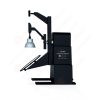
LM-79 Moving Detector Goniophotometer (Mirror Type C)
LSG-6000
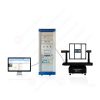
High Precision Rotation Luminaire Goniophotometer
LSG-1890B
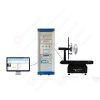
High Precision Rotation Luminaire Goniospectroradiometer
LSG-1890BCCD

Goniophotometer for Automotive and Signal Lamps
LSG-1950
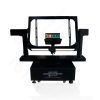
Goniophotometer for Traffic Signal Lamps (Economical Model)
LSG-1950S
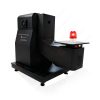
VAD Fire Alarm Visual Alert Device Goniophotometer
LSG-1930
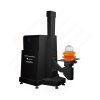
Goniophotometer for Airfield Lighting
LSG-1940
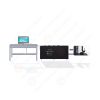
Compact Goniophotometer
LSG-1200A
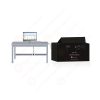
LED Goniophotometer
LSG-1100
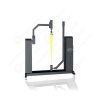
Near Field Moving Detector Goniophotometer
LSG-1900B
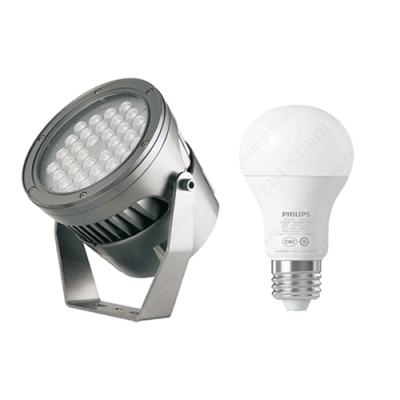 LEDs and Luminaire Test Solutions
 LM-79 and LM-80 Test Solutions
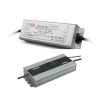 LED Driver Test Solutions
 Household Appliances Test Solutions
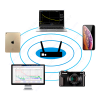 Mobile and Network Test Solutions
 Automotive Electronics Test Solutions
 Audio-Video and IT Test Solutions
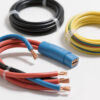 Cable and Wire Test Solutions
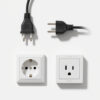 Plugs and Sockets Test Solutions
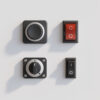 Power Switch Test Solutions
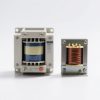 Transformer Test Solutions
 Electric Toys Test Solutions
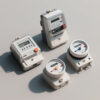 Energy Meter Test Solutions
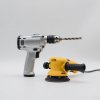 Motor-Operated Tool Test Solutions
Select an organization
to browse standards
A surge, also known as a transient voltage or spike, refers to the phenomenon of voltage exceeding the normal operating voltage for a brief moment. Essentially, a surge is a rapid voltage pulse that occurs within microseconds. Common causes of surges include the startup or shutdown of heavy equipment, short circuits, power switching, and the operation of large engines.
Surges can potentially cause serious damage to electrical equipment. Therefore, products equipped with surge suppression devices can effectively absorb sudden bursts of enormous energy, protecting connected equipment from harm. The use of these protective devices significantly enhances the safety and reliability of electrical equipment.
Surges have an extremely short duration, typically ranging from nanoseconds to microseconds. When surges occur, the amplitude of voltage and current exceeds normal values by more than double. Due to the rapid charging of input filter capacitors, the peak current of surges is much greater than the steady-state input current. To address surges, power supply designs should consider limiting the surge levels that AC switches, rectifier bridges, fuses, and EMI filtering devices can withstand.
During repetitive switching processes, AC input voltage should not damage the power supply or cause fuse blowing. This phenomenon usually lasts only for a few nanoseconds to milliseconds, but its voltage and current values significantly exceed normal operating levels. Surges are widespread in distribution systems and can be considered ubiquitous.
• Voltage fluctuations: Machines and equipment automatically stop or start under normal operating conditions.
• Interference with electrical devices: For example, air conditioners, compressors, elevators, pumps, or motors.
• Abnormalities in computer control systems: Frequent inexplicable resets.
• Frequent replacement or rewinding of motors.
• Shortened lifespan of electrical equipment: Reduced lifespan due to faults, resets, or voltage issues.
• Voltage breakdown of semiconductor devices.
• Destruction of metalized layers on components.
• Damage to printed circuit board traces or contact points.
• Damage to bidirectional thyristors/triacs, etc.
• Equipment lock-up, thyristor or bidirectional thyristor loss of control.
• Partial damage to data files.
• Errors in data processing programs.
• Errors and failures in data reception and transmission.
• Unexplained malfunctions, and more.
• Components aging prematurely, significantly reducing the lifespan of electronics.
• Decreased output audio and visual quality.
Sources of Surges:
Surges can originate from both external and internal sources. Approximately 20% of surges come from external sources, primarily lightning and other system impacts. About 80% of surges come from internal sources, mainly the impact of internal electrical loads.
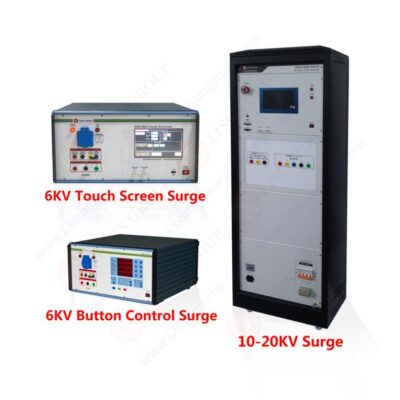
Surge generator_SG61000-5
Direct lightning strikes: Direct hits on lightning rods, lightning conductors, buildings, or refinery towers.
Electromagnetic radiation from lightning: Strong magnetic fields radiate from the lightning strike point, damaging microelectronics even if the strike does not hit a building directly.
Lightning-induced currents in power and signal lines.
Lightning induction: Strong alternating magnetic fields form around the lightning discharge, inducing voltage on nearby metal conductors.
Lightning-induced high local potentials.
Lightning intrusion: Direct lightning strikes on power lines or down conductors can cause lightning overvoltages on power lines and strong electromagnetic pulses around power cables. These induced overvoltages can propagate to the input ports of equipment, causing equipment malfunction or damage.
Internal surges mainly result from switching operations of electrical equipment within the power grid and other factors, including:
Switching in and out of high electrical loads, such as air conditioners, compressors, pumps, or motors.
Switching in and out of inductive loads.
Switching in and out of power factor correction capacitors.
Short circuit faults.
Mechanical contacts: Mechanical switches including relay switch contacts, push-button switches, key switches, potentiometers with switches, etc.
According to IEEE definitions, surges can be classified into several categories:
• Pulse-type surges: Voltage ranges from several hundred volts to 20,000 volts within microseconds.
• Oscillatory surges: Voltage ranges from several hundred volts to 6000 volts within microseconds to milliseconds.
• Burst-type surges: Peak voltage or current of repetitive cycles.
To protect electronic equipment from lightning surges, relevant immunity test standards have been established. The national standard for lightning surge immunity tests for electronic equipment is GB/T17626.5 (equivalent to international standard IEC61000-4-5). This standard mainly simulates various situations caused by indirect lightning strikes, including:
• Lightning strikes on external lines, generating large currents flowing into external lines or ground resistors, resulting in interference voltage.
• Induced voltage and current from indirect lightning strikes (such as inter-cloud or intra-cloud lightning) on external lines.
• Strong electromagnetic fields formed around objects adjacent to lightning strikes, inducing voltage on external lines.
• Lightning strikes near the ground, where ground currents introduce interference through the common ground system. Additionally, the standard simulates interference introduced by switching actions in substations (voltage transients during switchgear operations), such as:
• Interference generated when switching main power systems (e.g., switching capacitor banks).
• Interference from minor switch toggling within the same power grid.
• Interference from thyristor equipment with resonant circuits.
• Various systematic faults, such as short circuits and arcing faults between equipment grounding networks or ground systems, are also simulated.
• Waveforms induced on power lines: Narrow surge waveforms (50µs) with steep fronts (1.2µs).
• Waveforms induced on communication lines: Broad surge waveforms with gentle fronts.
Simulated lightning pulses induced in power lines due to lightning strikes or surge pulses caused by lightning discharge through common ground resistance. Typical parameters include open-circuit output voltage (0.5 to 6 kV), short-circuit output current (0.25 to 2 kA) for different test levels, internal resistance (2 ohms), and additional resistances (10, 12, 40, 42 ohms) for various test levels. Surge output polarity can be positive/negative, and surge output can be synchronized with the power supply with a phase shift of 0 to 360 degrees. Repetition frequency should be at least once per minute.
• Level 1: Good protection environment.
• Level 2: Environment with some protection.
• Level 3: Ordinary electromagnetic interference environment, without specified special installation requirements for equipment, such as industrial workplaces.
• Level 4: Environment with severe interference, such as civilian overhead lines or unprotected high-voltage substations.
• Level X: Determined by agreement between the user and the manufacturer.
Your email address will not be published. Required fields are marked *

 English
 中文简体
中文简体 English
 Русский
 Español
 Português
 Türkçe
 العربية
 Deutsch
 Polski
 Italiano
 Français
 한국어
한국어 ไทย
ไทย Tiếng Việt
 日本語
日本語