LM-79 Moving Detector Goniophotometer (Mirror Type C)
LSG-6000
High Precision Rotation Luminaire Goniophotometer
LSG-1890B
High Precision Rotation Luminaire Goniospectroradiometer
LSG-1890BCCD

Goniophotometer for Automotive and Signal Lamps
LSG-1950
Goniophotometer for Traffic Signal Lamps (Economical Model)
LSG-1950S
VAD Fire Alarm Visual Alert Device Goniophotometer
LSG-1930
Goniophotometer for Airfield Lighting
LSG-1940
Compact Goniophotometer
LSG-1200A
LED Goniophotometer
LSG-1100
Near Field Moving Detector Goniophotometer
LSG-1900B
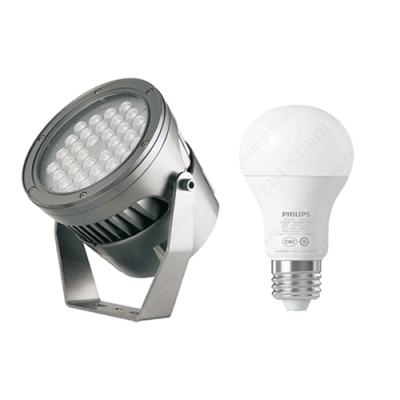 LEDs and Luminaire Test Solutions
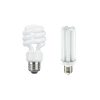
 LM-79 and LM-80 Test Solutions
 LED Driver Test Solutions
 Household Appliances Test Solutions
 Mobile and Network Test Solutions
 Automotive Electronics Test Solutions
 Audio-Video and IT Test Solutions
 Cable and Wire Test Solutions
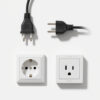 Plugs and Sockets Test Solutions
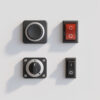
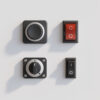 Power Switch Test Solutions
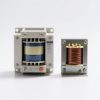
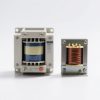 Transformer Test Solutions
 Electric Toys Test Solutions
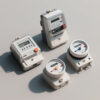 Energy Meter Test Solutions
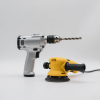
 Motor-Operated Tool Test Solutions
Select an organization
to browse standards
With the continuous improvement of integration level and operating frequency of electrical and electronic products, electromagnetic interference generated during equipment operation has become increasingly prominent. Electromagnetic interference is mainly divided into conducted emission and radiated emission. Conducted emission transmits interference signals through conductors such as power lines and signal lines, which may pollute the public power grid and interfere with precision equipment connected to the same circuit. Radiated emission propagates in the form of electromagnetic waves in space, which will affect the normal operation of surrounding equipment such as broadcasting, communication and instruments. In accordance with domestic standards including GB 17743, GB 6113.101 and international standards such as CISPR15, CISPR16-1, FCC and EN55015, all listed electrical, lighting and electronic products must complete conducted emission and radiated emission tests to ensure the electromagnetic interference limits comply with relevant specifications.
Traditional discrete test equipment has disadvantages such as low integration, complicated operation and poor data compatibility. Fully integrated automatic EMI conducted & radiated interference test systems have become the mainstream choice in the industry. As a mature automatic EMI test device, LISUN EMI-9KB is specially designed for conducted emission and radiated emission testing. It integrates receiving, coupling, shielding, signal acquisition and other modules, and is compatible with mainstream domestic and foreign EMC standards. It is widely applied in testing fields of lighting appliances, consumer electronics, industrial electrical equipment and other products. This paper analyzes the working logic, configuration advantages and application effects of the device in conducted emission and radiated emission testing.
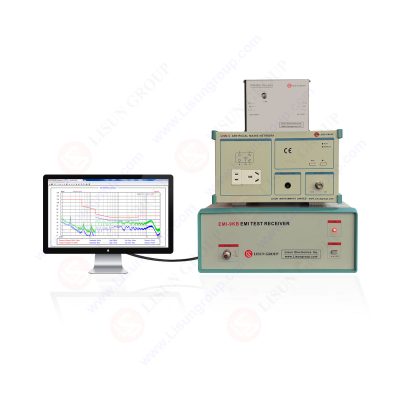
EMI-9KB_EMI Receiver Test
Conducted Emission (CE)
Conducted emission refers to the electromagnetic phenomenon that high-frequency interference signals generated by internal circuits of electrical and electronic products propagate outward through tangible conductors including power lines, signal lines and grounding lines. The interference is divided into common-mode interference and differential-mode interference, which mainly appears in low frequency bands. This type of interference spreads along the power grid and causes signal distortion and malfunction of equipment on the same power supply circuit. The conventional test frequency range for conducted emission is 9kHz~30MHz. The core test component is the Line Impedance Stabilization Network (LISN). It isolates background noise of the power grid, simulates standard grid impedance, accurately extracts conducted interference signals from Equipment Under Test (EUT), and transmits signals to the EMI receiver for quantitative detection.
Radiated Emission (RE)
Radiated emission means the energy generated by high-speed circuits and switching devices inside equipment radiates to free space in the form of electromagnetic waves without relying on conductors, which is obvious in medium and high frequency bands. Radiation below 30MHz is mainly magnetic field, while electric field radiation dominates in the range of 30MHz~300MHz. It severely interferes with radio frequency equipment such as wireless communication and radio and television devices. Radiated emission tests require accessories like coupling/decoupling networks and receiving antennas to collect spatial electromagnetic wave signals in a shielded environment, so as to judge whether the radiated field strength meets standard limits. For electrical lighting equipment, the current standard CISPR15:2018 clearly stipulates to adopt CDNE-M316 coupling/decoupling network for radiated emission testing within 30MHz~300MHz, replacing traditional CDN network and improving detection accuracy.
Main Testing Standards
Current tests for conducted emission and radiated emission follow a number of universal domestic and international standards. Domestic mainstream standards are GB 17743 and GB 6113.101, corresponding to international standards CISPR15 and CISPR16-1. Export products need to comply with European and American standards including FCC, EN55015 and EN55022. Different standards define clear regulations on frequency range, limit values and test methods of conducted emission and radiated emission, which are the core basis for R&D and calibration of EMI test systems.
LISUN EMI-9KB is a fully automatic integrated test system dedicated to conducted emission and radiated emission testing. The whole device adopts fully enclosed high-conductivity material for the cabinet with excellent shielding performance. It avoids the influence of the equipment’s own electromagnetic interference on test results at the hardware level, and ensures the authenticity of conducted emission and radiated emission data.
System Hardware Configuration
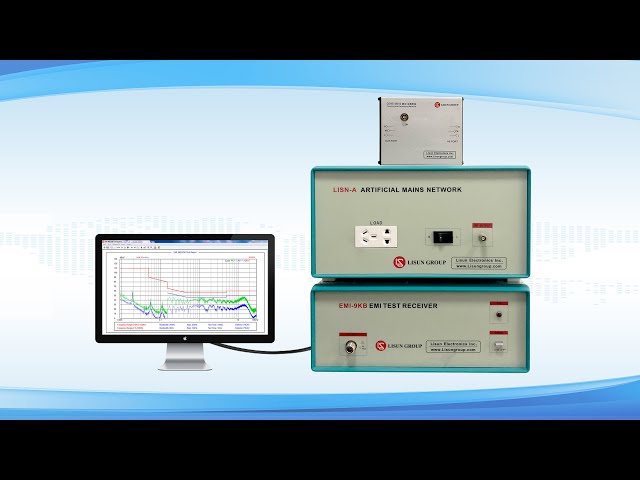
Targeting different test requirements of conducted emission and radiated emission, EMI-9KB is equipped with a complete set of dedicated hardware modules. The core host is EMI-9KB EMI receiver, matched with LISN, CDNE-M316 coupling/decoupling network, isolation transformer, attenuator and dedicated coaxial cables. Among them, LISN is used for signal acquisition of conducted emission; CDNE-M316 coupling/decoupling network is specially applied to radiated emission testing of electrical lighting equipment within 30MHz~300MHz in accordance with new standards. Isolation transformers and attenuators realize voltage stabilization and amplitude adjustment of signals, while coaxial cables ensure low-loss signal transmission. The complete configuration supports integrated testing of conducted emission and radiated emission without frequent equipment replacement.
The system can be expanded with peripheral auxiliary devices: LSP-500VARC programmable pure sine wave power supply provides power for EUT; SDR-2000B EMI shielding room builds a standard test environment; VVLA-30M loop antenna completes low-frequency radiated emission testing within 9kHz~30MHz; AB-CLP absorbing clamp and VOL-CP RF current probe expand the test scope to special conducted emission tests for power tools and interface disturbance voltage. The system features strong compatibility.
Software and Operating Environment
The system is equipped with bilingual operation software (Chinese & English), compatible with Win7, Win8, Win10 and Win11 operating systems, adapting to general computer environments of domestic laboratories and enterprise test workshops. The software supports automatic frequency scanning, data acquisition and result analysis, and outputs test reports in international standard formats which can be directly accepted by various certification bodies. It greatly improves the test efficiency and report standardization of conducted emission and radiated emission.
The technical parameters of EMI-9KB directly determine the detection range, accuracy and stability of conducted emission and radiated emission. The table below summarizes the core parameters of the system and analyzes parameter adaptability combined with test requirements.
| Parameter Category | Technical Index | Parameter Interpretation (for Conducted Emission and Radiated Emission Test) |
| Test Frequency Range | 9kHz~300MHz | Fully covers mainstream frequency band of conducted emission (9kHz~30MHz) and medium & low frequency band of radiated emission (30MHz~300MHz), meeting test requirements of mainstream products such as lighting equipment and home appliances |
| Frequency Stability | 1×10⁻⁶ | Extremely low frequency drift, ensuring accurate frequency points during full-band scanning of conducted emission and radiated emission, and preventing data distortion caused by frequency offset |
| Frequency Resolution | 9kHz~150kHz: 30Hz; 150kHz~30MHz: 1kHz | Higher resolution in low-frequency conducted emission band, which can accurately capture narrowband interference signals and facilitate precise location of interference sources |
| Test Error | ±2 dB | High precision meeting the error limit requirements of national and international standards for conducted emission and radiated emission, and the test data is valid for certification |
| Detector Mode | PK (Peak), QP (Quasi-Peak), AV (Average) | Three detector modes comply with CISPR, GB and other standards, realizing comprehensive detection on peak value, weighted value and average value of conducted emission and radiated emission |
| Level Range | 20dBμV~140dBμV | Wide level range, covering various EUT with low to strong interference and adapting to limit detection of conducted emission and radiated emission of different levels |
| Scan Step | 20Hz~2MHz | Adjustable step size, taking into account fine scanning for conducted emission and fast frequency sweeping for radiated emission, suitable for various test conditions |
| Resolution Bandwidth | 200Hz, 9kHz, 120kHz | Multiple optional bandwidth gears, complying with bandwidth test requirements for conducted emission and radiated emission under different standards |
As shown in the table above, the frequency range, resolution, detector modes and other core parameters of EMI-9KB fully meet the requirements of GB 17743, CISPR15, EN55015 and other standards for conducted emission and radiated emission. The test error of ±2 dB reaches the precision standard for commercial test equipment, so the system can be used for R&D self-test, factory quality control and third-party authoritative certification. Compared with EMI-9KA (9kHz~30MHz), EMI-9KB expands the radiated emission frequency band to 30MHz~300MHz. Compared with high-frequency model EMI-9KC (9kHz~1GHz), this system focuses on mainstream medium and low frequency scenarios with higher cost performance, which is the preferred model for lighting and home appliance manufacturers.
Standard Test Process
• Test Environment Setup: Place EMI-9KB system inside SDR-2000B shielding room, connect LISN, CDNE-M316 network and isolation transformer, then connect EUT to the test circuit to eliminate external electromagnetic interference.
• Parameter Configuration: Select corresponding test standards (GB 17743 / CISPR15) in system software, and set scanning frequency band, detector mode, resolution bandwidth and other parameters.
• Conducted Emission Test: Start the system. LISN collects power line conducted emission interference signals. The receiver automatically scans the band of 9kHz~30MHz and records interference level at each frequency point.
• Radiated Emission Test: Switch to CDNE-M316 coupling/decoupling network to complete radiated emission signal acquisition within 30MHz~300MHz and record radiated field strength data.
• Data Comparison and Report Generation: The software automatically compares measured data of conducted emission and radiated emission with standard limits to judge product compliance, and generates standardized test reports.
Typical Application Scenarios
• Electrical Lighting Equipment Test: As the core application field of this system, it fully complies with CISPR15:2018. CDNE-M316 network is adopted for radiated emission test of lighting products, and LISN is used for conducted emission test on power ports of lamps. It is essential equipment for market access certification of lighting products.
• Home Appliances and Small Power Tools: Matched with absorbing clamps and current probes to test conducted emission on signal lines and power lines of tools. Combined with spatial radiated emission data, the system completes EMC compliance test for the whole machine.
• Product R&D and Interference Rectification: R&D personnel can locate specific frequency points and interference sources where conducted emission and radiated emission exceed limits by virtue of the system’s high resolution, and conduct targeted optimization on filtering, shielding and wiring to shorten product rectification cycle.
• Mass Production Quality Control: The system features simple operation and fast test speed, which is suitable for sampling inspection on production lines to control conducted emission and radiated emission indicators of products in batches and prevent unqualified products from entering the market.
Conducted emission and radiated emission are core test items for EMC inspection of electrical and electronic products, which are directly related to product market access and electromagnetic environment safety. Equipped with complete hardware configuration, accurate technical parameters and full standard adaptability, LISUN EMI-9KB EMI conducted & radiated interference test system can efficiently and accurately complete quantitative detection of full-band conducted emission and radiated emission, with advantages of automatic operation, expandable functions and high stability.
Covering the mainstream test frequency band of 9kHz~300MHz, the system complies with domestic and international mainstream EMI standards including GB, CISPR, EN and FCC, and has strong applicability in electrical lighting, consumer electronics, small industrial equipment and other fields. Whether for authoritative certification in third-party test laboratories, or product R&D rectification and mass production quality control in manufacturers, EMI-9KB provides reliable technical support for conducted emission and radiated emission testing. Under the background of increasingly strict EMC management, such integrated EMI test systems will become important infrastructure for the electrical and electronic industry to ensure electromagnetic safety of products and enhance market competitiveness.
Tags:EMI-9KBYour email address will not be published. Required fields are marked *

 English
 中文简体
中文简体 English
 Русский
 Español
 Português
 Türkçe
 العربية
 Deutsch
 Polski
 Italiano
 Français
 한국어
한국어 ไทย
ไทย Tiếng Việt
 日本語
日本語