LM-79 Moving Detector Goniophotometer (Mirror Type C)
LSG-6000
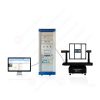
High Precision Rotation Luminaire Goniophotometer
LSG-1890B
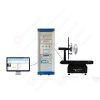
High Precision Rotation Luminaire Goniospectroradiometer
LSG-1890BCCD

Goniophotometer for Automotive and Signal Lamps
LSG-1950
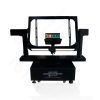
Goniophotometer for Traffic Signal Lamps (Economical Model)
LSG-1950S
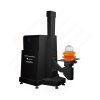
Goniophotometer for Airfield Lighting
LSG-1940
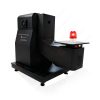
VAD Fire Alarm Visual Alert Device Goniophotometer
LSG-1930
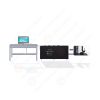
Compact Goniophotometer
LSG-1200A
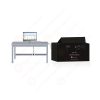
LED Goniophotometer
LSG-1100
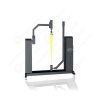
Near Field Moving Detector Goniophotometer
LSG-1900B
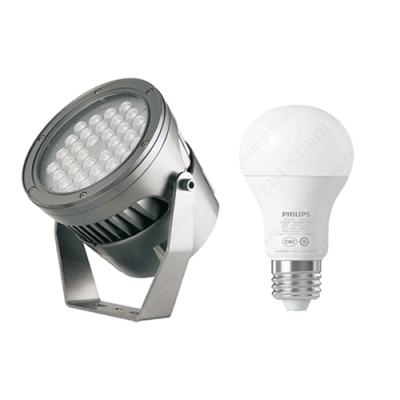 LEDs and Luminaire Test Solutions
 LM-79 and LM-80 Test Solutions
 LED Driver Test Solutions
 Household Appliances Test Solutions
 Mobile and Network Test Solutions
 Automotive Electronics Test Solutions
 Audio-Video and IT Test Solutions
 Cable and Wire Test Solutions
 Plugs and Sockets Test Solutions
 Power Switch Test Solutions
 Transformer Test Solutions
 Electric Toys Test Solutions
 Energy Meter Test Solutions
 Motor-Operated Tool Test Solutions
Select an organization
to browse standards
Abstract
The salt corrosion test is a core detection method to simulate marine and industrial salt fog corrosion environments. Relying on professional salt fog test equipment to accelerate corrosion aging tests, it can accurately evaluate the salt fog corrosion resistance of metal coatings, paint coatings, electronic components and complete machine products. Taking the LISUN YWX/Q-010 Salt Spray Test Chamber | Salt Fog Corrosion Testing Machine as the research carrier, this paper expounds the working principle, test modes, technical parameters and industry application scenarios of the salt corrosion test, analyzes its important value in product reliability verification, material selection and quality improvement, and provides theoretical and practical reference for corrosion resistance detection in various industries.
1 Overview of Salt Corrosion Test
1.1 Test Principle
The salt corrosion test mainly simulates the corrosion process of chloride salt fog in the atmosphere. Chloride ions in sodium chloride have strong penetrating ability, which can break through the oxide layer and protective coating on the metal surface, and undergo electrochemical reactions with the internal metal, causing metal oxidation, coating peeling, component short circuit and other damage phenomena.
The natural salt fog corrosion process is slow, while the salt corrosion test artificially accelerates the corrosion process by adjusting parameters such as temperature, salt fog concentration and spraying mode, reproduces the corrosion defects of products after long-term service in a short time, and quickly determines the protection capability of materials and products.
1.2 Main Test Types
The salt corrosion test includes three core modes suitable for different materials and testing standards: Neutral Salt Spray (NSS) is applicable to the detection of conventional metal coatings and hardware products; Acetic Acid Salt Spray (AASS) is used for accelerated corrosion testing of decorative electroplated layers; Copper Accelerated Acetic Acid Salt Spray (CASS) is mostly applied to high-standard corrosion resistance testing of high-grade coatings and aluminum alloy oxide films. All three modes can be switched with one key via the LISUN YWX/Q-010 salt spray test chamber to meet the standardized testing requirements of multiple industries.

YWX/Q-010_AL
2 Equipment Characteristics of LISUN YWX/Q-010 Salt Spray Test Chamber
2.1 Structural Composition and Core Advantages
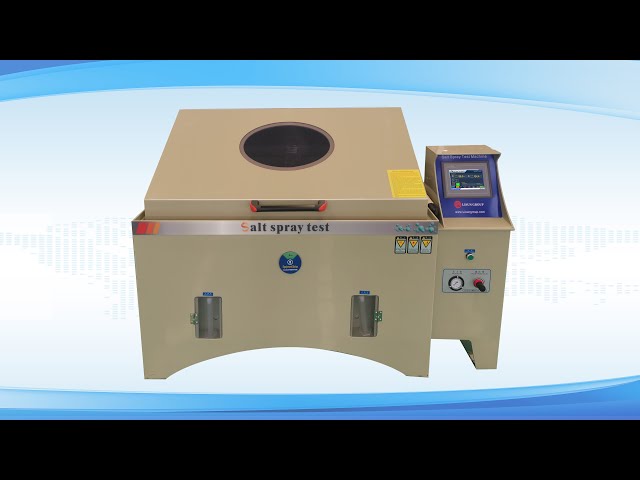
The LISUN YWX/Q-010 salt fog corrosion testing machine is specially developed for the salt corrosion test. The chamber is integrally formed of imported corrosion-resistant PP plate without welding gaps, featuring anti-leakage and corrosion resistance, suitable for long-term high salt fog working conditions.
The equipment is equipped with a high-precision temperature control system and automatic spraying device, with intelligent functions such as automatic salt fog sedimentation monitoring, 0~9999-hour timing control, and acousto-optic alarm for water shortage and over temperature. The temperature uniformity is ≤2℃ and the fluctuation is ≤±0.5℃, which can accurately and stably control the environmental parameters of the salt corrosion test.
2.2 Key Specification Parameters
| Parameter Item | Technical Index of YWX/Q-010 |
| Working Chamber Size | 1200×800×500mm |
| Chamber Volume | 480L |
| Brine Tank Volume | 32L |
| Power Supply | Single-phase AC 220V/50HZ, Power 2.5KW |
| Temperature Range | Test Chamber: Normal Temperature ~ 55℃; |
| Saturation Barrel: Normal Temperature ~ 70℃ | |
| Salt Fog Sedimentation Rate | 1-2ml/80cm²/h (16-hour average) |
| Spraying Mode | Continuous, Intermittent, Programmable Spraying |
| Cover Opening Mode | Stainless Steel Gas Spring Assisted Opening |
| Safety Protection | Triple Alarm for Low Water Level, Over Temperature and Low Air Pressure |
2.3 Compliance with Testing Standards
This equipment fully complies with mainstream domestic and international standards for the salt corrosion test, including national standards such as GB/T 2423.17-2021, GB/T 10125-2021; international standards such as ASTM B117-2022, ISO 9227:2017, IEC 60068-2-11:2013, meeting the standard compliance requirements of electronic, hardware, coating and other industries.
3 Application Fields of Salt Corrosion Test
The salt corrosion test carried out relying on the LISUN YWX/Q-010 salt spray test chamber is widely used in five core industries to accurately assess the corrosion resistance of various products:
• Electrical and Electronic Industry: Test chip pins, connectors, sensors, router shells and other components, evaluate the reliability of coatings, and prevent short circuits and poor contact caused by salt fog, suitable for reliability verification of coastal computer rooms and outdoor electrical equipment.
• Hardware and Metal Industry: Test screws, hinges, aluminum alloy profiles, bicycle parts and other products, verify the effect of anti-corrosion processes such as galvanizing, chromium plating and passivation, and screen metal materials and processing technologies suitable for coastal and humid working conditions.
• Coating Surface Treatment Industry: Test paint, varnish and powder coating samples, observe coating blistering, peeling and rusting, quantify coating corrosion resistance, and provide data support for the research and development of automotive and furniture coatings.
• Home Appliance and Household Industry: Conduct salt corrosion test on air conditioner outdoor units, washing machine accessories, outdoor metal furniture frames and lamp housings to verify the service life of products in humid kitchen and outdoor balcony salt-containing environments.
• New Energy and Outdoor Equipment Industry: Test photovoltaic module frames, communication base station shells, wind power generator parts, simulate alternating environments of sunlight and salt fog, eliminate structural design defects, and avoid potential safety hazards in long-term outdoor service.
4 Value and Significance of Salt Corrosion Test
In the R&D and mass production quality inspection of industrial products, the salt corrosion test is an indispensable reliability detection link. On the one hand, it quickly identifies protective defects of metal coatings and paint coatings as well as product structural design loopholes by accurately simulating the corrosion environment, helping enterprises optimize material selection and surface treatment processes. On the other hand, unified evaluation standards are formed relying on standardized salt spray test equipment, ensuring products comply with national industrial and international specifications, and improving the adaptability and market competitiveness of products in coastal and industrial polluted areas.
With the advantages of precise temperature control, stable spraying and multi-mode compatibility, the LISUN YWX/Q-010 salt spray test chamber perfectly meets the needs of laboratory sample testing and production line batch testing, and becomes the core equipment for implementing the salt corrosion test and controlling product corrosion resistance quality. With the development of high-end manufacturing and new energy industries in the future, the salt corrosion test will play a more important supporting role in material innovation and product upgrading.
Conclusion
As a key technology for artificial simulated corrosion detection, the salt corrosion test accurately evaluates the corrosion resistance of various materials and products through accelerated salt fog aging. With excellent structural design, precise parameter control and comprehensive standard adaptability, the LISUN YWX/Q-010 salt spray test chamber provides reliable equipment support for the salt corrosion test and covers multi-industry testing scenarios.
Reasonable application of the salt corrosion test and professional test equipment by enterprises and research institutions can effectively improve product anti-corrosion performance, shorten R&D cycles, reduce later operation and maintenance costs, and continuously promote the improvement of industrial product reliability.
Tags:YWX/Q-010Your email address will not be published. Required fields are marked *

 English
 中文简体
中文简体 English
 Русский
 Español
 Português
 Türkçe
 العربية
 Deutsch
 Polski
 Italiano
 Français
 한국어
한국어 ไทย
ไทย Tiếng Việt
 日本語
日本語