LM-79 Moving Detector Goniophotometer (Mirror Type C)
LSG-6000
High Precision Rotation Luminaire Goniophotometer
LSG-1890B
High Precision Rotation Luminaire Goniospectroradiometer
LSG-1890BCCD

Goniophotometer for Automotive and Signal Lamps
LSG-1950
Goniophotometer for Traffic Signal Lamps
LSG-1950S
VAD Fire Alarm Visual Alert Device Goniophotometer
LSG-1930
Compact Goniophotometer
LSG-1200A
LED Goniophotometer
LSG-1100
 LEDs and Luminaire Test Solutions
 LM-79 and LM-80 Test Solutions
 LED Driver Test Solutions
 Household Appliances Test Solutions
 Mobile and Network Test Solutions
 Automotive Electronics Test Solutions
 Audio-Video and IT Test Solutions
 Cable and Wire Test Solutions
 Plugs and Sockets Test Solutions
 Power Switch Test Solutions
 Transformer Test Solutions
 Electric Toys Test Solutions
 Energy Meter Test Solutions
 Motor-Operated Tool Test Solutions
Select an organization
to browse standards
Abstract
Electromagnetic compatibility testing serves as an indispensable technical procedure for electrical and electronic products to access the market. As the core instrument for conducted and radiated emission measurement, an EMI test receiver complying with specifications of the CISPR 16‑1‑1 EMI test receiver determines the validity of EMC test results directly. Centered on the key technical requirements for the CISPR 16‑1‑1 EMI test receiver and combined with the LISUN EMI‑9K series conducted and radiated interference test system, this paper analyzes the selection criteria for EMI receivers, introduces the technical features and engineering applications of the EMI‑9KB system, and provides reference for R&D laboratories and third‑party testing institutes to perform EMC compliance verification and interference source location.
Internal modules such as switching power supplies, motor drivers and digital circuits within modern electrical and electronic products continuously generate electromagnetic disturbances. Disturbances are classified into conducted interference propagated through power lines and signal cables, as well as radiated interference transmitted through free space. EMC compliance testing for products requires quantitative acquisition of the above‑mentioned two types of interference signals, evaluating whether disturbance levels meet the limit values specified in national and international product standards, and completing the location analysis of excessive interference sources to provide measured data for hardware modification of products.
The CISPR 16‑1‑1 EMI test receiver represents the fundamental international standard for radio disturbance measuring instruments, which has been nationally adopted as GB/T 6113.101‑2021 in China. This standard defines mandatory parameters for EMI test receivers, including frequency bandwidth, detector characteristics, pulse response, voltage standing wave ratio and measurement accuracy. Only receivers conforming to this standard can generate test data valid for compliance certification. Ordinary spectrum analyzers cannot be directly used for formal EMC certification tests due to non‑compliant detector time constants and pulse response. The LISUN EMI‑9K series conducted and radiated interference test system adopts a receiving unit that meets the requirements of the CISPR 16‑1‑1 EMI test receiver as its core component. Equipped with supporting accessories such as LISN artificial networks, isolation transformers and coaxial cables, the system realizes quantitative measurement of conducted and radiated interference from electrical and electronic equipment during operation, and is widely applied in pre‑compliance verification and third‑party certification tests for information technology equipment, household appliances, lighting fixtures and other products.
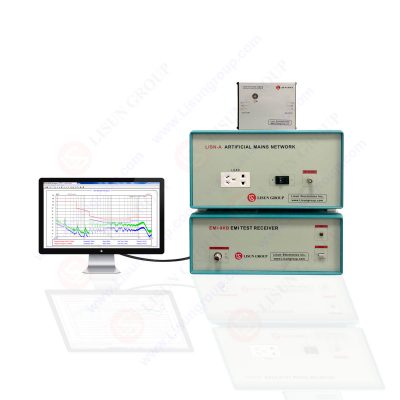
EMI-9KB EMI Test Receiver
The standard CISPR 16‑1‑1:2019 specifies multiple mandatory performance indicators for the CISPR 16‑1‑1 EMI test receiver. First of all, segmented ‑6 dB intermediate measurement bandwidths are defined: 200 Hz for the frequency range from 9 kHz to 150 kHz, 9 kHz for 150 kHz to 30 MHz, and 120 kHz for 30 MHz to 1000 MHz. Each bandwidth corresponds to dedicated charge‑discharge time constants for detectors to reproduce the real impact of radio disturbance on electronic devices. In addition, the receiver shall support three detector modes including Peak (PK), Quasi‑peak (QP) and Average (AV). Quasi‑peak detection is critical for EMC certification tests, whose charge and discharge time constants must strictly follow standard specifications to guarantee accurate measurement of pulse‑type disturbance signals.
The input impedance is defined as 50 Ω, with a voltage standing wave ratio not exceeding 2 under 0 dB RF attenuation and not exceeding 1.2 under 10 dB RF attenuation, so as to minimize measurement errors caused by signal reflection at the port. The measurement accuracy for reference pulse disturbance signals shall be controlled within ±2 dB. The pulse response accuracy shall satisfy standard limits when the pulse repetition frequency is no less than 20 Hz. Further indicators including intermediate frequency rejection, noise floor and terminal voltage measurement range must also comply with the specifications of the CISPR 16‑1‑1 EMI test receiver. Non‑compliant equipment may lead to significant deviations in test results, resulting in misjudgment of products, namely rejecting qualified samples or passing non‑compliant ones, which brings certification risks and market risks.
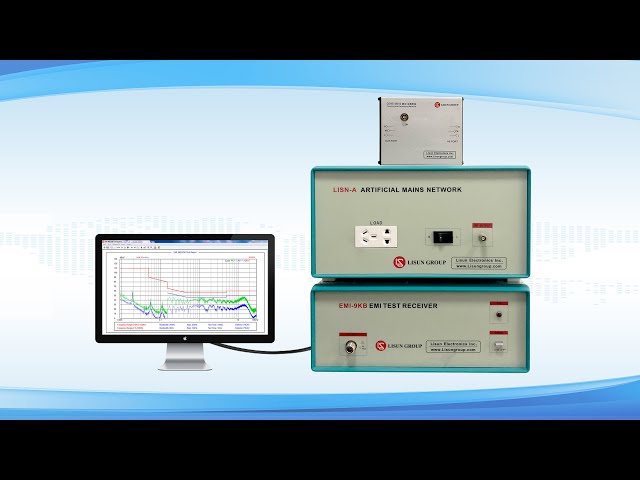
The LISUN EMI‑9K series conducted and radiated interference test system consists of multiple sub‑models including EMI‑9KA, EMI‑9KB, EMI‑9KBS and EMI‑9KC. The core receiving units are designed in accordance with the specifications of the CISPR 16‑1‑1 EMI test receiver. The whole instrument adopts a fully enclosed high‑conductivity housing with excellent shielding performance, eliminating self‑generated electromagnetic disturbance that may affect test results. The complete system enables quantitative measurement of conducted and radiated interference of electrical and electronic products under operating conditions, supporting EMC compliance inspection and interference source localization.
Differences among sub‑models mainly lie in frequency coverage. EMI‑9KA covers 9 kHz‑30 MHz and is only suitable for conducted emission testing; EMI‑9KB and EMI‑9KBS cover 9 kHz‑300 MHz to support both conducted and low‑to‑medium frequency radiated disturbance measurement; EMI‑9KC covers 9 kHz‑1000 MHz, fully covering the full EMI test frequency range for civil products. The standard configuration includes a test receiver, LISN artificial power network, isolation transformer and coaxial cables. EMI‑9KC can be further equipped with a CDNE coupling‑decoupling network to expand signal line disturbance testing. The software provides a bilingual PC‑based operating program compatible with Windows 7 to Windows 11. It supports manual and automatic scanning, fixed‑point measurement and sweep measurement. R&D engineers can quickly scan disturbance levels across the full frequency band to locate excessive frequency points, or perform certification‑level tests automatically following standard procedures and export test records. Key parameter comparison is shown in the table below.
| Technical Parameter | EMI‑9KA | EMI‑9KB | EMI‑9KC |
|---|---|---|---|
| Frequency Range | 9kHz~30MHz | 9kHz~300MHz | 9kHz~1000MHz |
| Detection Modes | PK, QP, AV | PK, QP, AV | PK, QP, AV |
| Input Impedance | 50Ω | 50Ω | 50Ω |
| Input VSWR | ≤2 (RF ATT=0dB); ≤1.2 (RF ATT=10dB) | ≤2 (RF ATT=0dB); ≤1.2 (RF ATT=10dB) | ≤2 (RF ATT=0dB); ≤1.2 (RF ATT=10dB) |
| Pulse Characteristics | Compliant with GB/T 6113.101, CISPR 16‑1‑1 | Compliant with GB/T 6113.101, CISPR 16‑1‑1 | Compliant with GB/T 6113.101, CISPR 16‑1‑1 |
| Basic Measurement Accuracy | ±1.8dB | ±1.8dB | ±1dB |
| ‑6dB Measurement Bandwidth | 200Hz; 9kHz | 200Hz; 9kHz; 120kHz | 200Hz; 9kHz; 120kHz |
| System Composition | Receiver, LISN, Isolation Transformer, Coaxial Cables | Receiver, LISN, Isolation Transformer, Coaxial Cables | Receiver, LISN, CDNE, Isolation Transformer, Coaxial Cables |
Taking the EMI‑9KB model as an example, its receiver fully meets the pulse characteristic requirements defined for the CISPR 16‑1‑1 EMI test receiver. Measurement bandwidths are configured strictly according to segmented standard requirements with three complete detection modes. It is suitable for pre‑compliance and preliminary certification tests for most household appliances, lighting products and IT peripherals. If full radiated emission testing from 30 MHz to 1000 MHz is required, the EMI‑9KC model is recommended. It adopts a two‑stage programmable automatic tracking frequency pre‑selector to suppress image and intermediate‑frequency interference, delivering a lower noise floor and improved measurement accuracy for certification‑grade testing in third‑party laboratories. The complete system supports optional accessories such as a three‑loop antenna, absorbing clamp, RF current probe, shielded chamber and programmable pure sine‑wave source meter to expand testing capabilities for various scenarios.
In the field of information technology equipment, the LISUN EMI‑9K series conducted and radiated interference test system is applied to test desktop computers, printers, mobile phone chargers and Type‑C docking stations. Supported by a receiving unit compliant with the CISPR 16‑1‑1 EMI test receiver, the system captures conducted noise generated by switching power supplies and radiated disturbance from wireless modules for evaluation against limit values specified in GB/T 9254.1‑2021 and CISPR 32, helping enterprises identify interference sources such as power‑supply noise and complete preliminary pre‑tests for 3C and CE certification. For household appliances and power tools including air conditioners, washing machines and electric drills, the system measures pulse‑type disturbance caused by brush sparks and drive circuits, locates interference origins and guides optimization on filters, grounding schemes and PCB layout. In the lighting industry, LED luminaires and driver power supplies are tested in compliance with GB 17743‑2022 and CISPR 15 to evaluate whether lamps interfere with smart home equipment. Third‑party testing laboratories rely on hardware that satisfies the specifications of the CISPR 16‑1‑1 EMI test receiver to generate credible test reports for international certifications such as CE and FCC, while providing EMI over‑limit diagnosis services and modification guidance for manufacturers.
When selecting an EMI test receiver, frequency coverage shall not be the only consideration. Users must confirm that the instrument is explicitly declared to comply with the specifications of the CISPR 16‑1‑1 EMI test receiver, and verify detector types, segmented ‑6 dB IF bandwidths and pulse‑response indicators. Even spectrum analyzers with adequate frequency coverage can only be used for preliminary pre‑compliance screening rather than formal certification tests due to non‑compliant quasi‑peak time constants and pulse characteristics. The required frequency range shall be determined based on the equipment under test. A 9 kHz‑30 MHz model is sufficient for power‑line conducted emission testing only. Systems covering up to 300 MHz or even 1000 MHz are required for combined conducted and radiated disturbance measurement. Supporting accessories including LISN, CDNE, antennas and absorbing clamps shall also match corresponding product standards. The whole test system shall be calibrated periodically to guarantee long‑term measurement reliability. Software functions such as automatic sweep, standard limit libraries and report export will significantly improve laboratory testing efficiency.
The CISPR 16‑1‑1 EMI test receiver defines the fundamental standard for EMC emission‑test instruments, and the performance of the receiver directly determines the credibility of electromagnetic compatibility measurement results. The LISUN EMI‑9K series conducted and radiated interference test system is built around a receiving unit conforming to the CISPR 16‑1‑1 EMI test receiver. It achieves full‑scale quantitative measurement of conducted interference and radiated interference generated by electrical and electronic products during operation, and delivers comprehensive technical support for product EMC compliance assessment and interference‑source identification. Enterprises and testing institutes shall select appropriate configurations from EMI‑9KA, EMI‑9KB and EMI‑9KC according to product types, test frequency bands and certification requirements. Regular calibration of supporting test accessories shall be emphasized to ensure accurate and reliable EMI measurement data and facilitate successful global EMC compliance certification for end products.
Tags:EMI-9KBYour email address will not be published. Required fields are marked *

 English
 中文简体
中文简体 English
 Русский
 Español
 Português
 Türkçe
 العربية
 Deutsch
 Polski
 Italiano
 Français
 한국어
한국어 ไทย
ไทย Tiếng Việt
 日本語
日本語