LM-79 Moving Detector Goniophotometer (Mirror Type C)
LSG-6000
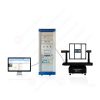
High Precision Rotation Luminaire Goniophotometer
LSG-1890B
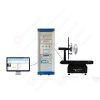
High Precision Rotation Luminaire Goniospectroradiometer
LSG-1890BCCD

Goniophotometer for Automotive and Signal Lamps
LSG-1950
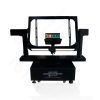
Goniophotometer for Traffic Signal Lamps (Economical Model)
LSG-1950S
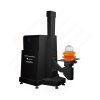
Goniophotometer for Airfield Lighting
LSG-1940
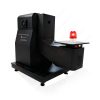
VAD Fire Alarm Visual Alert Device Goniophotometer
LSG-1930
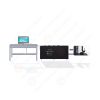
Compact Goniophotometer
LSG-1200A
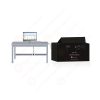
LED Goniophotometer
LSG-1100
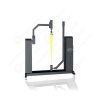
Near Field Moving Detector Goniophotometer
LSG-1900B
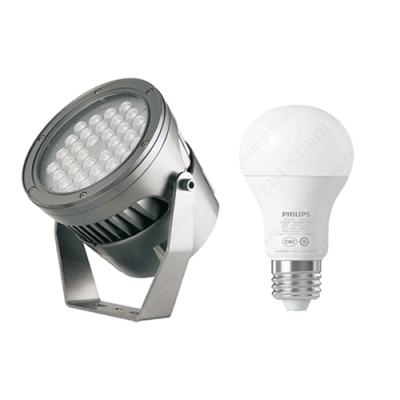 LEDs and Luminaire Test Solutions
 LM-79 and LM-80 Test Solutions
 LED Driver Test Solutions
 Household Appliances Test Solutions
 Mobile and Network Test Solutions
 Automotive Electronics Test Solutions
 Audio-Video and IT Test Solutions
 Cable and Wire Test Solutions
 Plugs and Sockets Test Solutions
 Power Switch Test Solutions
 Transformer Test Solutions
 Electric Toys Test Solutions
 Energy Meter Test Solutions
 Motor-Operated Tool Test Solutions
Select an organization
to browse standards
Abstract:
Thermal chamber is a core instrument for verifying the environmental adaptability and reliability of industrial products, and plays a critical role in R&D and quality inspection of LED lighting, electronic appliances, components and other fields. Taking LISUN GDJS-015B thermal chamber as the research object, this paper analyzes its core technical advantages, precise temperature and humidity control performance, and multi-scenario applicability. It focuses on the technical performance of the equipment in the lumen maintenance test of LED luminaires, and demonstrates its application value in industrial product R&D verification, production quality inspection and compliance certification based on relevant international and domestic standards, so as to provide a reference for related industries to select environmental simulation test equipment.
1. Introduction
In the process of industrial production and technological R&D, the performance stability of products under extreme temperature and humidity environments directly determines their market value and operational safety. As key equipment for simulating natural climate environments, thermal chamber can accurately reproduce low-temperature resistance, high-temperature heat resistance, damp-heat alternating and other conditions to accelerate the evaluation of product weatherability. It has become an indispensable test tool for LED lighting, electronic appliances, components and other industries throughout the whole process from R&D to mass production.
The GDJS-015B thermal chamber developed by LISUN focuses on the core testing requirements of various industries. Integrating the technical advantages of wide temperature range coverage and high-precision temperature and humidity control, together with imported components and multiple safety protection systems, it achieves the unity of accuracy, stability and safety during testing. Especially in the lumen maintenance test of LED luminaires, it fully meets the IES LM-80-08 standard, making it an ideal choice for environmental simulation tests in the industry.
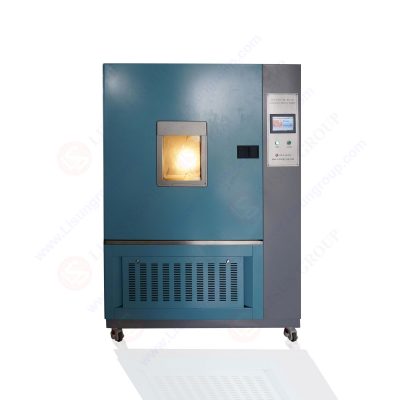
GDJS-015B Temperature Humidity Chamber | Thermal Chamber
2. Core Technical Characteristics of GDJS-015B Thermal Chamber
2.1 Wide Temperature Range and High-Precision Temperature & Humidity Control
As the core model of the GDJS series, the GDJS-015B thermal chamber has industry-leading temperature and humidity control capabilities. Its temperature range is available in four grades: A (-20℃~150℃), B (-40℃~150℃), C (-60℃~150℃) and D (-70℃~150℃), with humidity ranging from 20%RH to 98%RH, meeting the extreme environmental test requirements of different products.
The temperature fluctuation is controlled at ±0.5℃, uniformity at ±2℃, and humidity deviation is only -2%~-3%, far exceeding conventional industry standards, providing a stable temperature and humidity environment for long-term testing. In terms of heating and cooling efficiency, the temperature rise rate can reach 1.0℃~3.0℃/min, and the cooling rate 0.7℃~1.0℃/min, enabling rapid temperature cycle tests and greatly improving test efficiency.
2.2 Imported Core Components and Stable System Configuration
The accurate operation of the equipment relies on high-quality core components and scientific system design. The inner chamber is made of SUS304 stainless steel, which is corrosion-resistant and easy to clean, suitable for long-term damp-heat test scenarios. The insulation layer adopts a composite structure of rigid polyurethane foam and ultra-fine glass fiber, matched with high-temperature aging silicone rubber sealing strips to prevent temperature and humidity leakage structurally.
Temperature detection uses PT100Ω/MV platinum resistance sensors with high precision and strong anti-interference ability to ensure accurate temperature data collection. Humidity detection is equipped with Vaisala humidity sensors from Finland, which feature higher precision than traditional dry-wet bulb sensors and require no regular maintenance, reducing equipment operation and maintenance costs.
In terms of control and power systems, the GDJS-015B adopts a dual-core control system of self-developed temperature controller + PLC, supporting Chinese and English operation. It is equipped with USB/RS-232/RS-485 interfaces, allowing connection to a computer for remote monitoring and test data traceability, meeting the digital management needs of modern laboratories.
The heating system uses independent nickel-chromium alloy electric heaters with uniform heating and no local overheating. The refrigeration system is equipped with original French TECUMSEH hermetic air-cooled single-stage compressors with a complete global after-sales system to ensure long-term stable operation. The circulation system consists of temperature-resistant low-noise air-conditioning motors (≤65dB) and multi-blade centrifugal fans to ensure uniform distribution of temperature and humidity inside the chamber and avoid local environmental differences affecting test results.
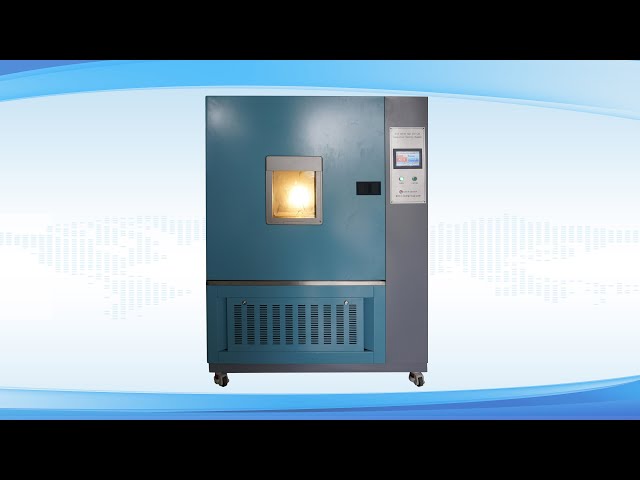
2.3 Multiple Safety Protections and Compliant Operating Environment
The equipment integrates multiple safety protection mechanisms including leakage, short circuit, heater overheating, motor overheating, compressor overvoltage, overload and overcurrent, ensuring the safety of equipment and samples during testing at the hardware level. Its operating voltage is three-phase AC 380V±10%, supporting 50Hz/60Hz, adaptable to power grid standards in different regions.
The equipment operating environment requires a temperature of 5℃~30℃ and humidity ≤85%RH (no condensation, good ventilation), which conforms to the conventional conditions of industrial laboratories without additional dedicated test space.
3. Core Industrial Application Scenarios of GDJS-015B Thermal Chamber
3.1 LED Lighting Industry: Professional Adaptation for Lumen Maintenance Test
Lumen maintenance is a core indicator for evaluating the lifetime and performance of LED lighting products. As an internationally authoritative standard for lumen maintenance testing of LED light sources, the IES LM-80-08 standard imposes strict requirements on the stability of test environment, test duration and data acquisition accuracy.
The standard requires tests to be performed at 55℃, 85℃ and specified temperatures, with at least 20–25 samples per temperature point, a test duration of no less than 6,000 hours, temperature fluctuation ≤±1.2℃, and humidity ≤65%RH during the test.
The GDJS-015B thermal chamber can accurately meet the above test requirements. Its high-precision temperature and humidity control ensures stable environmental parameters during long-term tests of more than 6,000 hours without obvious fluctuations, providing a reliable environmental basis for lumen maintenance and chromaticity maintenance tests of LED chips and modules.
Meanwhile, the remote monitoring and data traceability function of the equipment enables automatic data collection every 1,000 hours without manual supervision, which not only ensures the continuity and accuracy of data but also reduces labor costs for testing. It has become important test equipment for LED lighting enterprises applying for Energy Star, DLC and other international certifications.
3.2 Electronic Appliances and Components Industry: High-Low Temperature Performance and Damp-Heat Resistance Test
Electronic appliances and core components face climate differences in different regions during use, so high-low temperature performance and damp-heat resistance are core contents of reliability verification. The GDJS-015B thermal chamber can simulate extreme temperature environments from -70℃ to 150℃ and damp-heat environments from 20%RH to 98%RH, meeting the requirements of high-low temperature cycle tests and damp-heat aging tests for electronic chips, circuit boards, sensors, small household appliances and other products.
For electronic components, the equipment can eliminate potential defects such as oxide layer damage and poor welding through high-temperature storage and low-temperature cycle tests. For complete electronic appliances, it can simulate temperature and humidity changes in different seasons to test battery life, screen display performance at low temperatures and heat dissipation stability at high temperatures, ensuring operational performance in all climate scenarios.
At the same time, the equipment complies with many international and domestic standards such as GB/T 2423.1-2008, GB/T 2423.2-2008, IEC 60068-2-14:2009. Test data can be directly used for product compliance certification, saving certification time and costs for enterprises.
3.3 Materials Industry: Damp-Heat Aging and Weatherability Evaluation
In the fields of polymer materials, metal materials, composite materials and others, temperature and humidity environments significantly affect the physical and chemical properties of materials. The GDJS-015B thermal chamber can accelerate the evaluation of material damp-heat aging performance by simulating dry-wet alternation, high temperature and high humidity environments, testing structural stability, corrosion resistance and mechanical property changes during long-term use.
For example, for plastic materials and rubber seals, it can test anti-brittleness and anti-deformation ability under high-low temperature cycles. For coatings and paints, it can evaluate adhesion and anti-shedding performance under damp-heat conditions, providing scientific test data for material formula optimization and application scenario design.
4. Key Technical Parameter Table of GDJS-015B Thermal Chamber
As the main model of LISUN GDJS series, the GDJS-015B has specific technical parameters forming a gradient with other products in the series. The following table shows the core parameters of this model and the GDJS series to intuitively reflect its equipment characteristics:
| Item | GDJS-015B Value | General Standard of the Series |
| Inner Chamber Size (cm) | 100*100*150 | 41*55*45 ~ 100*100*200 |
| External Dimensions (cm) | 245*160*231 | 105*105*156 ~ 160*254*214 |
| Operating Power | 16.5kW | 5.5kW ~ 26.5kW |
| Temperature Range | A/-20~150℃, B/-40~150℃, C/-60~150℃, D/-70~150℃ | Same as left |
| Temperature Fluctuation / Uniformity | ±0.5℃ / ±2℃ | Same as left |
| Temperature Rise Rate | 1.0~3.0℃/min | Same as left |
| Cooling Rate | 0.7~1.0℃/min | Same as left |
| Humidity Range | 20%~98%RH | Same as left |
| Humidity Deviation | -2%~-3% | Same as left |
| Operating Voltage | Three-phase AC 380V±10% | Same as left |
5. Conclusion and Prospect
With the core advantages of wide temperature range coverage, high-precision temperature and humidity control, imported components and multiple safety protections, the LISUN GDJS-015B thermal chamber has become key equipment for environmental adaptability testing in LED lighting, electronic appliances, components and other industries.
Its perfect adaptation to the IES LM-80-08 standard in LED luminaire lumen maintenance testing, as well as compliance with many international and domestic test standards, enables it not only to provide scientific test data for product R&D but also authoritative test support for production quality inspection and compliance certification, helping enterprises improve product quality and market competitiveness.
Against the background of industrial intelligence and digital development, thermal chambers will develop toward higher precision, smarter operation and higher energy efficiency. The remote monitoring and data traceability functions realized by the LISUN GDJS-015B thermal chamber are in line with the digital management needs of modern laboratories. In the future, with the integration of IoT and artificial intelligence technologies, thermal chambers will further automate test processes and intelligently analyze test data, providing more efficient environmental simulation test solutions for product innovation and quality improvement in various industries.
As a core tool for industrial product reliability verification, thermal chambers represented by the GDJS-015B thermal chamber will play an increasingly important role in promoting the high-quality development of the manufacturing industry.
Tags:GDJS-015BYour email address will not be published. Required fields are marked *

 English
 中文简体
中文简体 English
 Русский
 Español
 Português
 Türkçe
 العربية
 Deutsch
 Polski
 Italiano
 Français
 한국어
한국어 ไทย
ไทย Tiếng Việt
 日本語
日本語