LM-79 Moving Detector Goniophotometer (Mirror Type C)
LSG-6000
High Precision Rotation Luminaire Goniophotometer
LSG-1890B
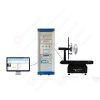
High Precision Rotation Luminaire Goniospectroradiometer
LSG-1890BCCD

Goniophotometer for Automotive and Signal Lamps
LSG-1950
Goniophotometer for Traffic Signal Lamps (Economical Model)
LSG-1950S
Goniophotometer for Airfield Lighting
LSG-1940
VAD Fire Alarm Visual Alert Device Goniophotometer
LSG-1930
Compact Goniophotometer
LSG-1200A
LED Goniophotometer
LSG-1100
Near Field Moving Detector Goniophotometer
LSG-1900B
 LEDs and Luminaire Test Solutions
 LM-79 and LM-80 Test Solutions
 LED Driver Test Solutions
 Household Appliances Test Solutions
 Mobile and Network Test Solutions
 Automotive Electronics Test Solutions
 Audio-Video and IT Test Solutions
 Cable and Wire Test Solutions
 Plugs and Sockets Test Solutions
 Power Switch Test Solutions
 Transformer Test Solutions
 Electric Toys Test Solutions
 Energy Meter Test Solutions
 Motor-Operated Tool Test Solutions
Select an organization
to browse standards
Abstract
Electrostatic discharge (ESD) is a common electromagnetic interference source during the production, transportation, and operation of electrical and electronic equipment, which may easily cause performance abnormalities, malfunctions, or even permanent damage to the equipment. Electrostatic test equipment (also known as ESD simulator, ESD immunity tester, ESD generator) is the core instrument for evaluating the ESD immunity of electrical and electronic equipment. Its testing accuracy and reliability directly affect product compliance and market competitiveness. Taking LISUN ESD61000-2 Electrostatic Test Equipment as the research object, this paper elaborates on its product design, core technical parameters, compliance with international and domestic standards, and typical application scenarios. Through standardized test data, it verifies the equipment’s advantages in accurately reproducing ESD pulses and simulating real ESD interference environments. It provides a reliable immunity testing solution for electronic equipment manufacturers, helping products meet global market access requirements.
1. Introduction
With the development of electronic technology towards high integration, high sensitivity, and miniaturization, electrical and electronic equipment has become significantly more sensitive to electrostatic discharge. Statistics show that more than 30% of electronic equipment failures are caused by ESD interference, which may lead to data loss and functional disorders in mild cases, or chip burnout and equipment scrapping in severe cases, resulting in huge economic losses for enterprises. To ensure the stability and safety of products throughout their life cycle, institutions such as the International Electrotechnical Commission (IEC) and the Standardization Administration of the People’s Republic of China (SAC) have successively formulated ESD immunity test standards, requiring electronic equipment to pass strict ESD tests before entering the market.
As the core equipment for implementing this test, electrostatic test equipment can accurately simulate ESD pulses in different scenarios such as human-body electrostatic discharge and machine electrostatic discharge, providing a standardized test environment for equipment. It helps manufacturers identify product design defects and optimize protection performance. As a globally leading electronic test instrument manufacturer, LISUN has extensive experience in the field of immunity testing. Based on rich industry experience and advanced technical accumulation, LISUN has developed and launched the ESD61000-2 Electrostatic Test Equipment. Strictly complying with mainstream international and domestic standards, this product features high precision, high stability, and easy operation. It has been widely used in consumer electronics, automotive electronics, industrial control, and other fields, becoming the preferred tool for enterprises’ product compliance testing.
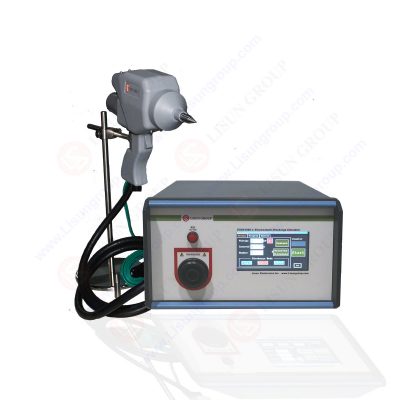
ESD61000-2_Electrostatic Discharge Simulator
2. Product Design and Core Functions of LISUN ESD61000-2 Electrostatic Test Equipment
2.1 Product Structure Design
The LISUN ESD61000-2 Electrostatic Test Equipment adopts an integrated and portable design. The main body consists of a high-voltage generation module, a pulse formation module, a control module, a display and operation module, and a discharge electrode. With an overall weight of only 5.8kg, it is suitable for both fixed laboratory testing and on-site mobile testing. The equipment shell is made of high-strength ABS material, featuring good insulation and impact resistance. It is also equipped with a non-slip handle and stable foot pads to ensure safety and stability during testing.
The operation panel adopts a 7-inch color touch screen with physical function keys, featuring an intuitive interface that supports multi-language switching including Chinese and English. Operators can quickly set test parameters, start test procedures, and view test results in real time. The discharge electrode adopts a replaceable design, equipped with contact discharge electrodes and air discharge electrodes to meet the needs of different test scenarios. The electrode tip is treated with special materials to ensure discharge stability and service life.
2.2 Core Functional Features
The core function of the LISUN ESD61000-2 Electrostatic Test Equipment is to accurately reproduce ESD pulses and provide a standardized immunity test environment for equipment. Its main functional features are as follows:
• Multi-mode discharge support: Supports both contact discharge and air discharge modes. The contact discharge voltage range is 0.5kV~30kV, and the air discharge voltage range is 0.5kV~30kV, covering the test needs of most electronic equipment. It can simulate different scenarios such as human-body model (HBM) electrostatic discharge and machine model (MM) electrostatic discharge.
• High-precision voltage control: Adopts advanced high-voltage regulation technology with a voltage setting accuracy of ±2% and a voltage step of 0.1kV, ensuring the accuracy and repeatability of test parameters to meet strict test standard requirements.
• Flexible setting of discharge times and frequency: The number of discharges can be arbitrarily set between 1~9999 times, and the discharge frequency can be adjusted in the range of 1Hz~100Hz. It supports two modes: single discharge and continuous discharge, adapting to the needs of different test procedures.
• Standard pulse waveform output: Strictly complies with the requirements of IEC 61000-4-2 standard. The rise time, pulse width, and other parameters of the output ESD pulse meet the standard specifications, ensuring the authority and comparability of test results.
• Comprehensive protection functions: Equipped with multiple protection mechanisms such as overvoltage protection, overcurrent protection, and short-circuit protection. When an abnormal situation occurs during the test, the equipment will automatically cut off the high-voltage output to protect the safety of operators and the tested equipment.
• Data storage and export functions: Supports storing 100 groups of test data, including test parameters and test results. Data can be exported to a computer via a USB interface, facilitating the generation of test reports and data traceability.
2.3 Key Technical Parameters
| Parameter Name | Technical Specifications |
| Discharge Mode | Contact Discharge, Air Discharge |
| Contact Discharge Voltage Range | 0.5kV ~ 30kV (Step: 0.1kV) |
| Air Discharge Voltage Range | 0.5kV ~ 30kV (Step: 0.1kV) |
| Voltage Setting Accuracy | ±2% (Full Scale) |
| Number of Discharges | 1 ~ 9999 Times (Configurable) |
| Discharge Frequency | 1Hz ~ 100Hz (Adjustable) |
| Pulse Rise Time (Contact Discharge) | 0.7ns ~ 1ns (Compliant with IEC 61000-4-2) |
| Pulse Rise Time (Air Discharge) | 0.7ns ~ 2ns (Compliant with IEC 61000-4-2) |
| Pulse Width (At 30kV) | 60ns ~ 100ns (Compliant with IEC 61000-4-2) |
| Power Supply | AC 100V ~ 240V, 50Hz/60Hz |
| Equipment Weight | Approx. 5.8kg |
| Operating Temperature | 0℃ ~ 40℃ |
| Storage Temperature | -20℃ ~ 60℃ |
3. Compliance with International and Domestic Standards
The design and production of the LISUN ESD61000-2 Electrostatic Test Equipment strictly comply with mainstream international and domestic ESD immunity test standards, ensuring the compliance and authority of test results. The main compliant standards are as follows:
• International Standard: IEC 61000-4-2:2008 (Electromagnetic compatibility – Part 4-2: Testing and measurement techniques – Electrostatic discharge immunity test)
• European Standard: EN 61000-4-2:2009 (Electromagnetic compatibility – Part 4-2: Testing and measurement techniques – Electrostatic discharge immunity test)
• Chinese National Standard: GB/T 17626.2-2018 (Electromagnetic compatibility – Testing and measurement techniques – Electrostatic discharge immunity test)
• American Standard: ANSI C63.16-2008 (Standard for electrostatic discharge immunity testing)
• Automotive Industry Standard: ISO 10605:2008 (Road vehicles – Electrostatic discharge testing)
By complying with the above standards, the LISUN ESD61000-2 Electrostatic Test Equipment can provide test services that meet global market access requirements for electronic equipment in different industries and types, helping enterprises successfully pass tests by certification bodies worldwide and enhance their international competitiveness.
4. Typical Application Scenarios of LISUN ESD61000-2 Electrostatic Test Equipment
With its wide voltage range, flexible test modes, and reliable performance, the LISUN ESD61000-2 Electrostatic Test Equipment has been successfully applied in multiple industries, becoming an important tool for product R&D, production inspection, and quality control. The typical application scenarios are as follows:
4.1 Consumer Electronics Industry
Consumer electronic products (such as smartphones, tablets, laptops, smart watches, etc.) are highly susceptible to ESD interference during production, transportation, and use, affecting product performance and user experience. The LISUN ESD61000-2 Electrostatic Test Equipment can perform ESD tests on the shells, interfaces, displays, and other parts of consumer electronic products to verify their operational stability under ESD interference. For example, on smartphone production lines, this equipment is used to conduct contact discharge tests on USB ports and charging ports of mobile phones to ensure that the ports can still normally transmit data and charge under ESD interference; air discharge tests are performed on mobile phone displays to verify that there are no abnormalities such as screen glitches or black screens under electrostatic action.
4.2 Automotive Electronics Industry
Automotive electronic equipment (such as car navigation systems, in-vehicle entertainment systems, engine control systems, airbag controllers, etc.) operates in complex environments. ESD may cause equipment malfunctions, affecting driving safety. The LISUN ESD61000-2 Electrostatic Test Equipment complies with the ISO 10605:2008 automotive industry standard and can perform strict ESD tests on automotive electronic equipment. For example, ESD tests are conducted on the touch screens and buttons of car navigation systems to ensure that the navigation system can still accurately display routes and operate normally under ESD interference; ESD tests are performed on the sensors and control modules of engine control systems to verify that the system has no misoperations under electrostatic action, ensuring the normal operation of the engine.
4.3 Industrial Control Industry
Industrial control equipment (such as PLC controllers, inverters, sensors, touch screens, etc.) is widely used in factory automation production lines, and its operational stability directly affects production efficiency and product quality. There are a large number of ESD interference sources in industrial environments (such as dust, chemical fiber clothing, machinery and equipment, etc.), which may easily cause performance abnormalities of industrial control equipment. The LISUN ESD61000-2 Electrostatic Test Equipment can perform ESD tests on the input/output interfaces, control panels, and other parts of industrial control equipment to verify their immunity performance under ESD interference. For example, contact discharge tests are conducted on the digital input interfaces of PLC controllers to ensure that the interfaces can still accurately receive signals under ESD interference; air discharge tests are performed on the operation panels of inverters to verify that there are no phenomena such as crashes or garbled codes on the panels under electrostatic action.
4.4 Medical Device Industry
Medical devices (such as electrocardiographs, blood pressure monitors, blood glucose meters, ventilators, etc.) are directly related to patients’ lives and safety, and have extremely high requirements for performance stability and reliability. ESD may cause inaccurate measurement data and functional failure of medical devices, posing serious risks to patients. The LISUN ESD61000-2 Electrostatic Test Equipment can perform ESD tests on the shells, interfaces, sensors, and other parts of medical devices to ensure that products comply with relevant standards in the medical device industry. For example, ESD tests are conducted on the cuff interfaces and displays of blood pressure monitors to verify that the blood pressure monitors can still accurately measure blood pressure values under ESD interference; ESD tests are performed on the control buttons and sensors of ventilators to ensure that the ventilators work normally under electrostatic action and provide stable breathing support for patients.
5. Market Value and Development Trends
5.1 Market Value
The launch of the LISUN ESD61000-2 Electrostatic Test Equipment provides electronic equipment manufacturers with a high-precision, high-reliability, and cost-effective ESD immunity testing solution. Its market value is mainly reflected in the following aspects:
• Assisting product compliance certification: Complying with mainstream international and domestic standards, this product can help enterprises quickly complete ESD immunity tests of products, successfully pass certifications such as CE, FCC, and CCC, and reduce the threshold for product market entry.
• Enhancing product quality and competitiveness: Through accurate ESD tests, enterprises can timely identify product design defects, optimize product protection performance, improve product stability and reliability, and enhance product competitiveness in the market.
• Reducing production costs and risks: This product is easy to operate and has high test efficiency, which can effectively shorten the product R&D cycle and production inspection time, and reduce the R&D and production costs of enterprises; at the same time, by identifying ESD interference risks in advance, it avoids losses caused by product recalls and repairs due to ESD issues.
• Wide application range: This product can be applied in multiple industries such as consumer electronics, automotive electronics, industrial control, and medical devices, meeting the test needs of different types of electronic equipment, and has broad market application prospects.
5.2 Development Trends
With the continuous development of electronic technology, electronic equipment will have higher integration and lower power consumption, and will be more sensitive to ESD. This will drive electrostatic test equipment to develop in the direction of higher precision, wider voltage range, and more intelligence. In the future, LISUN will continue to invest in R&D resources, continuously optimize product performance, and launch more ESD test equipment to meet market needs:
• Higher precision and wider range: Improve voltage control accuracy and pulse waveform accuracy, expand the voltage test range, and meet the test needs of high-sensitivity electronic equipment.
• Intelligence and automation: Integrate Internet of Things (IoT) technology to realize remote control and data transmission of equipment; cooperate with automated test platforms to realize automation and intelligence of test processes, and improve test efficiency.
• Multi-function integration: Integrate ESD test with other immunity test functions (such as surge test, burst test) into one, launch multi-function immunity test systems, and reduce equipment procurement costs for enterprises.
• Industry customization: Launch customized ESD test solutions for the special needs of different industries, such as special test equipment for 5G communication equipment and artificial intelligence equipment.
6. Conclusion
ESD interference has become an important factor affecting the performance and reliability of electronic equipment. As the core tool for evaluating the ESD immunity of electronic equipment, electrostatic test equipment plays an irreplaceable role in the R&D, production, and quality control of electronic equipment. Based on advanced technical concepts and strict standard requirements, the LISUN ESD61000-2 Electrostatic Test Equipment features high precision, high stability, and easy operation. It can accurately reproduce ESD pulses and provide a standardized test environment for electronic equipment.
Complying with international and domestic standards such as IEC 61000-4-2 and GB/T 17626.2, this product is widely used in consumer electronics, automotive electronics, industrial control, medical devices, and other industries. It helps enterprises successfully pass product compliance certifications and enhance product quality and market competitiveness. In the future, with the continuous development of electronic technology, LISUN will continue to focus on the field of ESD testing, innovate technologies, optimize products, and launch more high-precision test instruments to meet market needs. It will provide better test solutions for global electronic equipment manufacturers and contribute to the high-quality development of the electronic industry.
Tags:ESD61000-2Your email address will not be published. Required fields are marked *

 English
 中文简体
中文简体 English
 Русский
 Español
 Português
 Türkçe
 العربية
 Deutsch
 Polski
 Italiano
 Français
 한국어
한국어 ไทย
ไทย Tiếng Việt
 日本語
日本語