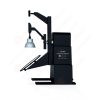
LM-79 Moving Detector Goniophotometer (Mirror Type C)
LSG-6000
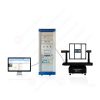
High Precision Rotation Luminaire Goniophotometer
LSG-1890B
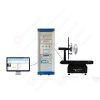
High Precision Rotation Luminaire Goniospectroradiometer
LSG-1890BCCD

Goniophotometer for Automotive and Signal Lamps
LSG-1950
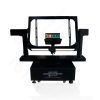
Goniophotometer for Traffic Signal Lamps (Economical Model)
LSG-1950S
Goniophotometer for Airfield Lighting
LSG-1940
VAD Fire Alarm Visual Alert Device Goniophotometer
LSG-1930
Compact Goniophotometer
LSG-1200A
LED Goniophotometer
LSG-1100
Near Field Moving Detector Goniophotometer
LSG-1900B
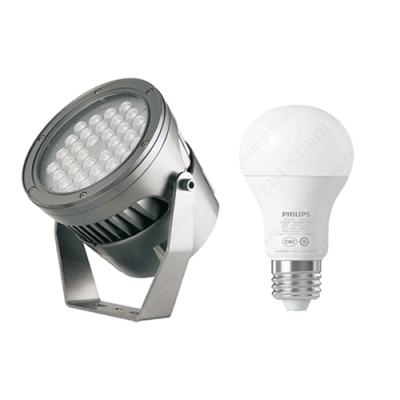 LEDs and Luminaire Test Solutions
 LM-79 and LM-80 Test Solutions
 LED Driver Test Solutions
 Household Appliances Test Solutions
 Mobile and Network Test Solutions
 Automotive Electronics Test Solutions
 Audio-Video and IT Test Solutions
 Cable and Wire Test Solutions
 Plugs and Sockets Test Solutions
 Power Switch Test Solutions
 Transformer Test Solutions
 Electric Toys Test Solutions
 Energy Meter Test Solutions
 Motor-Operated Tool Test Solutions
Select an organization
to browse standards
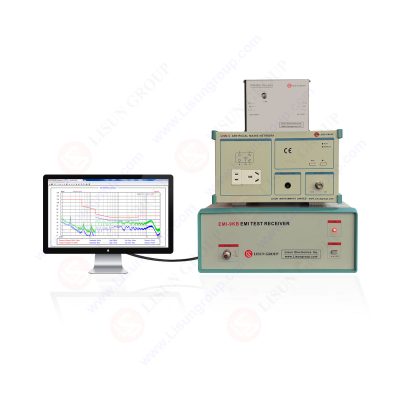
What is EMI? EMI stands for Electromagnetic Interference. It refers to electromagnetic noise emitted by electronic equipment during operation, which interferes with other equipment through two paths: wire conduction and space radiation. Minor interference may cause screen noise and signal distortion, while severe interference will lead to equipment shutdown, circuit failure and even safety hazards. EMI is the core control indicator for EMC (Electromagnetic Compatibility) certification of electronic products. Mandatory certifications including domestic CCC, EU CE and US FCC all require complete EMI conducted and radiated emission tests. LISUN EMI-9KB Conducted & Radiated Interference Test System is a standardized automatic EMI testing instrument. It can accurately capture excessive electromagnetic noise generated by switching power supplies, motors, LED drivers and other components, and is widely applied to R&D pre-testing, production line sampling and third-party compliance testing of information technology equipment, household appliances, lighting luminaires and industrial control devices. This paper first clarifies What is EMI and the formation mechanism of conducted interference and radiated interference, then elaborates the hardware composition, technical indicators and applicable standards of EMI-9KB system, compares parameter differences among all LISUN EMI receivers, analyzes the practical value of this equipment in multi-industry EMI fault location and EMC certification acquisition, and provides a complete electromagnetic interference detection solution for electronic manufacturers and testing laboratories.
With the high-frequency and integrated development of electronic devices, components such as switching power supplies, variable frequency motors, LED drivers and high-speed chips continuously generate high-frequency electromagnetic noise, namely EMI. Clarifying What is EMI and mastering accurate EMI detection methods are essential work in electronic product design and quality inspection. According to the propagation path, EMI is divided into conducted interference and radiated interference: conducted interference pollutes the power grid through power lines and signal cables, while radiated interference spreads to surrounding equipment via electromagnetic waves in space, both of which will destroy the stability of the electromagnetic environment.
A large number of market feedback shows that about 35% of electronic product failures after launch are caused by excessive EMI. Products failing EMI tests cannot obtain market access certifications at home and abroad, and export enterprises will face risks such as customs detention and high rectification costs. Traditional simple spectrum analyzers feature poor shielding and incomplete standard compatibility, which cannot complete integrated conducted and radiated tests simultaneously and lead to low efficiency of interference location. LISUN has launched EMI-9KB Conducted & Radiated Interference Test System with fully enclosed high-shield housing, matched LISN artificial mains network and CDNE coupling decoupling network. It fully covers mainstream EMI test standards including CISPR15, GB17743, EN55022 and FCC, can quickly locate noise frequency points and distinguish common-mode/differential-mode conducted interference, and completes pre-testing and certification-level testing in one stop. Centering on What is EMI, this paper explains basic theoretical knowledge and systematically discusses the hardware configuration, parameters and industrial applications of EMI-9KB system.
Core Definition of EMI
What is EMI? EMI means Electromagnetic Interference. It refers to useless electromagnetic energy generated during the operation of electrical and electronic products, which couples to other equipment through conduction or radiation and causes performance degradation and functional abnormalities of target equipment. It is the control item of “external disturbance of equipment” in the EMC system, corresponding to EMS (Electromagnetic Susceptibility) which represents the anti-interference capability of equipment against external signals. EMI only focuses on the noise level emitted outward by equipment, and all electronic products on sale must control EMI noise within the limit values specified by national and international standards.
Two Major Classifications of EMI: Conducted Interference and Radiated Interference
1. Conducted EMI
Interference propagates through conductors such as power lines, data cables and ground wires, with a frequency range of 9kHz~30MHz. Fast switching of switching devices produces voltage and current spikes, which are divided into common-mode interference and differential-mode interference. Typical sources include LED drive power supplies, adapters and frequency converters, which may cause black screen, remote control failure and communication disconnection of electrical appliances on the same circuit.
2. Radiated EMI
Interference radiates outward in the form of electromagnetic waves within the test frequency band of 30MHz~300MHz (the upper limit covered by EMI-9KB). Gaps on equipment shells, long cables and PCB antenna effects will emit noise outward. It is commonly seen in high-power motors, complete lighting luminaires and wireless modules, which tend to interfere with broadcasting, medical instruments and vehicle electronics.
Industrial Risks Caused by Excessive EMI
Products with excessive EMI cannot pass mandatory certifications such as CCC, CE and FCC and cannot be circulated on the market. Mass shipments will easily trigger customer complaints and product recalls. If precision medical, aviation and vehicle equipment are disturbed by EMI, safety accidents may occur. Adopting Conducted & Radiated Interference Test System to screen noise in advance can complete rectification in the R&D stage and greatly reduce compliance and after-sales costs.
LISUN Conducted & Radiated Interference Test System includes three receiver models: EMI-9KA, EMI-9KB and EMI-9KC, applicable to different test frequency bands. Core parameters are shown in Table 1. As a mid-to-high-end universal model, EMI-9KB covers full frequency band from 9kHz to 300MHz, supports both conducted tests and 30~300MHz radiated tests, and is the mainstream selection for laboratories engaged in lighting, household appliances and IT equipment.
| Parameter Item | EMI-9KA | EMI-9KB | EMI-9KC |
| Detection Frequency Range | 9kHz~30MHz | 9kHz~300MHz | 9kHz~1GHz |
| Frequency Stability | 1×10⁻⁶ | 1×10⁻⁶ | 1×10⁻⁶ |
| Frequency Resolution | 9kHz~150kHz: 30Hz 150kHz~30MHz: 1kHz |
9kHz~150kHz: 30Hz 150kHz~30MHz: 1kHz |
9kHz~150kHz: 30Hz 150kHz~30MHz: 1kHz |
| Standard Detector Modes | PK, QP, AV | PK, QP, AV | PK, QP, AV |
| Level Measurement Range | 20dBμV~140dBμV | 20dBμV~140dBμV | 20dBμV~140dBμV |
| Test Error | ±2dB | ±2dB | ±2dB |
| Standard Supporting Accessories | LISN, Isolation Transformer, Attenuator, Coaxial Cable | LISN, CDNE-M316, Isolation Transformer, Attenuator, Coaxial Cable | LISN, CDNE-M316, Isolation Transformer, Attenuator, Coaxial Cable |
| Max Radiated Test Frequency | 30MHz | 300MHz | 1GHz |
| Applicable Industries | Small Switching Power Supplies, Low-Voltage Components | LED Lighting, Household Appliances, Desktop IT Equipment | New Energy, Wireless Communication, Vehicle Electronics |
It can be seen from the table that EMI-9KB expands the 30~300MHz radiated test frequency band compared with EMI-9KA, and is equipped with the new standard CDNE-M316 coupling decoupling network, which fully meets the radiated EMI test requirements of lighting products specified in CISPR15:2018. No extra high-frequency testing instrument is required, balancing cost and testing comprehensiveness, making it a cost-effective choice for small and medium-sized enterprises and third-party testing institutions.
Complete System Configuration
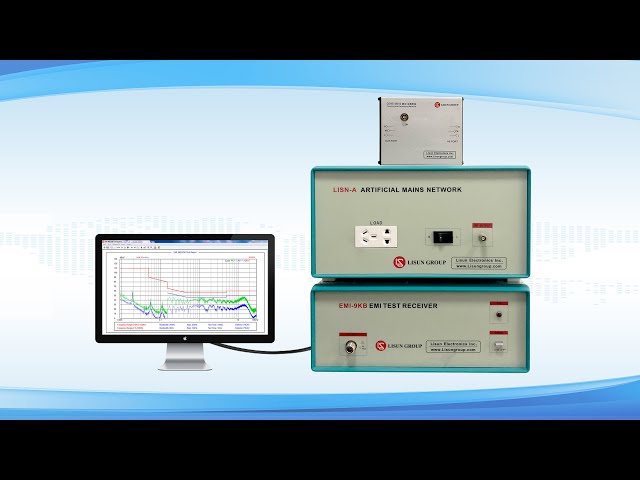
A standard set of EMI-9KB Conducted & Radiated Interference Test System includes core EMI-9KB electromagnetic interference receiver, LISN artificial mains network, CDNE-M316 coupling/decoupling network, isolation transformer, attenuator and matched coaxial cables. Optional accessories including three-loop antenna, absorbing clamp, RF current probe, shielding room and programmable pure sine wave source can be added to expand testing capacity, covering all EMI test items such as conducted emission, radiated emission and current disturbance.
Anti-interference Design of Hardware Structure
The whole EMI-9KB receiver adopts fully closed high-conductivity shielding housing, which eliminates self-EMI leakage of the equipment from the hardware level and solves the problem of distorted data caused by self-interference of ordinary spectrum analyzers. A high-precision attenuation unit is built inside with wide dynamic measurement range, which can capture weak noise and strong interference signals simultaneously and accurately identify excessive frequency points.
Compatibility with Multiple International and Domestic Standards
This Conducted & Radiated Interference Test System supports all mainstream EMI regulations: GB17743/CISPR15 standard for lighting equipment, GB6113.101/CISPR16 measuring equipment specification, EN55015, EN55022 standard for information technology equipment, FCC Part15 radio frequency equipment specification. The generated test reports adopt international general format and can be directly submitted for domestic CCC, EU CE and North American FCC certification applications.
Intelligent Software and Convenient Operation
Matched bilingual test software in Chinese and English is compatible with all Windows versions from Win7 to Win11. It automatically completes frequency band scanning, limit comparison, noise marking and report export. Tens of thousands of test curves can be stored automatically. Engineers can trace back excessive frequency points to quickly locate EMI interference sources such as switching tubes, transformers and cables, greatly shortening product rectification cycles.
Adaptation to Radiated Tests under New Standards
In accordance with the latest requirements of CISPR15:2018 standard, the system is equipped with standard CDNE-M316 coupling decoupling network to replace old CDN devices, which can accurately complete radiated EMI tests of lighting equipment within 30MHz~300MHz and meet the mandatory export testing requirements of LED street lamps, panel lights and drive power supplies.
LED Lighting Industry
LED luminaires, drive power supplies and COB light sources are high-incidence EMI products. High-frequency switching of switching power supplies easily generates conducted noise, and long cables of complete luminaires will lead to excessive radiation. EMI-9KB Conducted & Radiated Interference Test System can synchronously complete conducted and radiated tests complying with CISPR15 standard, accurately locate filter defects of power supplies and shielding loopholes on shells, help products pass EMC certification for lighting products, and is also a common instrument for supporting electromagnetic environment tests in IES LM-80 lumen maintenance aging laboratories.
Household Appliance Industry
Frequency conversion motors of refrigerators, air conditioners and washing machines as well as adapters of small household appliances carry EMI risks, and conducted noise of equipment will pollute household power grids. EMI-9KB can quickly scan the 9kHz~30MHz conducted frequency band, distinguish common-mode and differential-mode interference, guide engineers to optimize EMI filter circuits and meet national standard EMI limit requirements for household appliances.
Information Technology (IT) Equipment
Products such as computers, monitors, printers and routers shall comply with EN55022 standard. EMI generated by mainboard chips and switching power supplies will interfere with mouse, keyboard and network signals. This Conducted & Radiated Interference Test System can carry out pre-testing in the R&D stage to avoid mass rectification during mass production.
Third-Party Testing Institutions
Third-party laboratories need to issue credible EMI test reports. The test data error of EMI-9KB is controlled within ±2dB, and its hardware and software fully comply with CISPR16 measuring equipment specifications for certification-level testing. One set of equipment can undertake samples of lighting, household appliances and IT products to improve equipment utilization rate of laboratories.
Electronic Component R&D Enterprises
Manufacturers of power modules, transformers, connectors and PCBs can use this system for incoming and semi-finished EMI screening to suppress electromagnetic interference at the component source and reduce the difficulty of whole-machine EMI rectification.
After clarifying What is EMI, the core demand is to quickly find the source of excessive noise. EMI-9KB Conducted & Radiated Interference Test System has three major location advantages:
First, it marks excessive frequencies through segmented scanning and directly displays the difference between noise amplitude and standard limit values, allowing engineers to quickly lock corresponding circuit components;
Second, it separates interference of power ports and signal ports with LISN and CDNE to distinguish two types of EMI (conducted and radiated) and judge rectification directions (adding filters / optimizing shielding);
Third, test curves can be saved for comparison, and data before and after rectification can be visually contrasted to verify the effectiveness of EMI suppression schemes and shorten product R&D cycles. Traditional dedicated EMI receivers require repeated iterative testing, while EMI-9KB can cut EMI debugging time by more than 60%.
Clarifying What is EMI is the foundation of electromagnetic compatibility design and testing for electronic products. Excessive EMI will directly hinder product market access and trigger equipment safety hazards, and standardized Conducted & Radiated Interference Test System is the core instrument to solve such problems. Supported by complete test frequency band of 9kHz~300MHz, fully shielded anti-interference housing, full set of standard matching components and multi-regulation compatibility capability, LISUN EMI-9KB Conducted & Radiated Interference Test System covers R&D, quality inspection and third-party certification scenarios of mainstream industries including LED lighting, household appliances and information technology equipment.
Compared with the same-series EMI-9KA and high-end EMI-9KC, EMI-9KB balances test frequency band, equipment cost and detection accuracy. It can not only complete pre-testing in the R&D stage to quickly locate EMI interference sources such as switching power supplies and motors, but also issue compliant certification-level test reports, realizing one-stop testing of conducted EMI and 30~300MHz radiated EMI. Against the background of increasingly strict global electromagnetic control of electronic products, EMI-9KB Conducted & Radiated Interference Test System equipped with CDNE-M316 coupling network can help manufacturers control EMI risks in advance, reduce costs of certification, after-sales service and product recalls, and provide reliable testing support for stable and compliant launch of all types of electrical and electronic products.
Tags:EMI-9KBYour email address will not be published. Required fields are marked *

 English
 中文简体
中文简体 English
 Русский
 Español
 Português
 Türkçe
 العربية
 Deutsch
 Polski
 Italiano
 Français
 한국어
한국어 ไทย
ไทย Tiếng Việt
 日本語
日本語